Latest Comments

Guest - Aislinn Dyestuff Citizen Science.
09. Oktober 2026
This is a great project. I look forward to the results. Thanks for letting us know.
Guest - Aislinn Time for...
09. Oktober 2026
Looks delicious!
Guest - Katrin Sprang Discussion
18. September 2026
Hi Rachel, I have looked for more photos of you, but that was not very successful. I found a link on...
Guest - Beatrix Sprang Discussion
15. September 2026
That lozenge pattern element is not a photograph, but a scan. So it should be to scale. But I pinned...
Guest - Katrin Sprang Discussion
15. September 2026
I was not referring to Rachel's reconstruction (is the reconstruction you refer to the one photograp...
SEP.
14
0

Archaeology Stuff.

Archaeologists are the only group of scientists who actually destroy their sources when they do research. Really, we do - because you can only dig a site once, and then... it's gone. That is the main reason why we try to leave things in the ground unless a dig becomes really necessary - if it has kept well in its place for a couple of hundred years, it will keep for another fifty or so, and with all the progress in imaging technology, conservation technology and other technology, we'll be able to get much more information out of the site in a few more years than right now.

The fact remains, though, that archaeologists are a destructive bunch of folks. Sometimes even if we cannot dig. Case in point? See the blog "A Life in Fragments", where Matt writes about his studies on the destruction of Bronze Age metalwork.

Less destructive: The Winter Issue of Fornvännen is out (thank you Aardvarchaeology for listing the contents up so nicely!) and it's online, for free. Articles are partly in Swedish and partly in English.
0
AUG.
26
0

More cakes (not mine, this time).

After yesterday's damson cake, here's more baked goods links for your delectation. Firstly, spectacular archaeology cakes as "Edible Archaeology" at Current Archaeology. Whenever I see cakes like these - basically edible works of art - I get a little sad because mine never look really nice. Which is probably due to the fact that I concentrate on getting them done in a yummy way and don't spend more time decorating and neatening than mixing and baking, and would choose taste over looks any time when picking coverings. But still. Beautiful cakes. I'm slightly jealous.

If you need something chocolaty now, here's a recipe for a giant chocolate cake (and the same recipe on Ruth Reichl's site, explained slightly differently) - Gillian has recently tested the recipe and says it's rich and a really nice cake. She also says they cut way down on the sugar, though. The recipe reminds me of the cake recipes from the 1970s in Germany - if I make one of them today, I cut the sugar by at least half. Sweet years, these were!
0
AUG.
11
0

Postdoctoral Fellowship in Dublin

If you have a completed PhD in Archaeology, Experimental Archaeology, or a related discipline, and are looking for something to do now, you can apply for a Postdoctoral Fellowship, starting October 2017, at the Centre for Experimental Archaeology and Material Culture, at UCD School of Archaeology, University College Dublin, Ireland.

You can apply for this, which is part of the Government of Ireland Postdoctoral Fellowship Scheme, from October 12 to November 30, and the results will be announced in April 2017.

To find out more, check out this page of the UCD Archaeology website, and if you think it could be for you, get into contact directly with Aidan O'Sullivan.
0
JUNI
29
1

Summer Slump? Already?

I think we're almost in the summer slump - at least there's not much in my blog list these days that shouts for re-blogging. Well, apart from more Brexit stuff that comes up here and there and everywhere, but I had planned not to write more about that today...

A few staunch bloggers still keep up things, and put up posts, though. Such as Doug, who has a list of videos from a conference, all on the topic of young people in archaeology.

A little more summery? The Medieval Manuscripts blog has tips on how to organise your summer library road trip. The article is mostly about the British Library, but a lot of the hints (on how to prepare, and that you should make sure you'll actually be able to see the things you were coming for, for instance) are not only relevant when you are planning a library trip, but also any other research trip to a museum or archive - a lot of the hints can be adapted to work for other things.

On a completely unrelated note - there is a lemon hanging out in my kitchen, and I'm wondering what to do with it... maybe it could find a few more friends and turn into a lemon cake? Hmm...
0
JUNI
08
0

Linkapalooza.

I am (still) surrounded by stacks of things - things to pack, things to get ready, things to sort and things to do. Tomorrow afternoon is set-up time for the Nadelwelt, where Margit and I will be selling our things Friday to Sunday, so it's high time for me to get all the things done.

Meanwhile, here are some links for you...

VAT Moss (or VAT Mess) had a consultation (something like a public questionnaire) last year, and they have closed it now and are (hopefully) taking all the criticism from small traders into account. Here's a little bit of info about it, along with links to the raw data and some more articles.

The Glasgow Textile Conservation blog has an article about storage boxes for textiles.

Doug's Archaeology features a number of conference videos about archaeological mapping.

And speaking of maps, XKCD has a flowchart on dating an undated map.

That's it for today. I'll be off to the fair tomorrow, and I'll be taking off a few days afterwards to make up for the last two weekends, so I'll be back here and posting stuff on Thursday.

And if you're near Karlsruhe - drop by at the Nadelwelt fair and see me at stall F2.3!
0
MAI
02
1

Reconstructions...

Reconstructions are a wonderful thing to show how something actually looked like in the past. However, they are also a dangerous thing - almost all reconstructions require a bit (often much more than a bit) of guesswork or conjecture, which, of course, also means they can include wrong guesses.

When a reconstruction is well made, though, it looks very convincing, no matter whether it includes wrong guesses or not. Which means that a reconstruction might lead to wrong assumptions. There's also the problem of where to reconstruct... and of how much. Building reconstructed houses right on top of their original sites, for instance, was sometimes done in the past, resulting in open-air museums... however, there's a bunch of issues associated with doing the in situ things, one of them being extra disturbance of the ground (where a future dig will not yield anything useful anymore, because of the modern building activities). The same is true for partially surviving buildings - putting the reconstructed part on top of the ruins is not only an issue for the ruin itself, it also usually means that it is hard to tell where the original ends and the reconstruction starts.

On the other hand, reconstructions are invaluable in showing how something actually looked, giving a much better idea of the importance of buildings and objects. Most lay people will need some help in understanding a ruin or bits and bobs from archaeological digs, and reconstructing does give that help, while also putting things into context nicely.

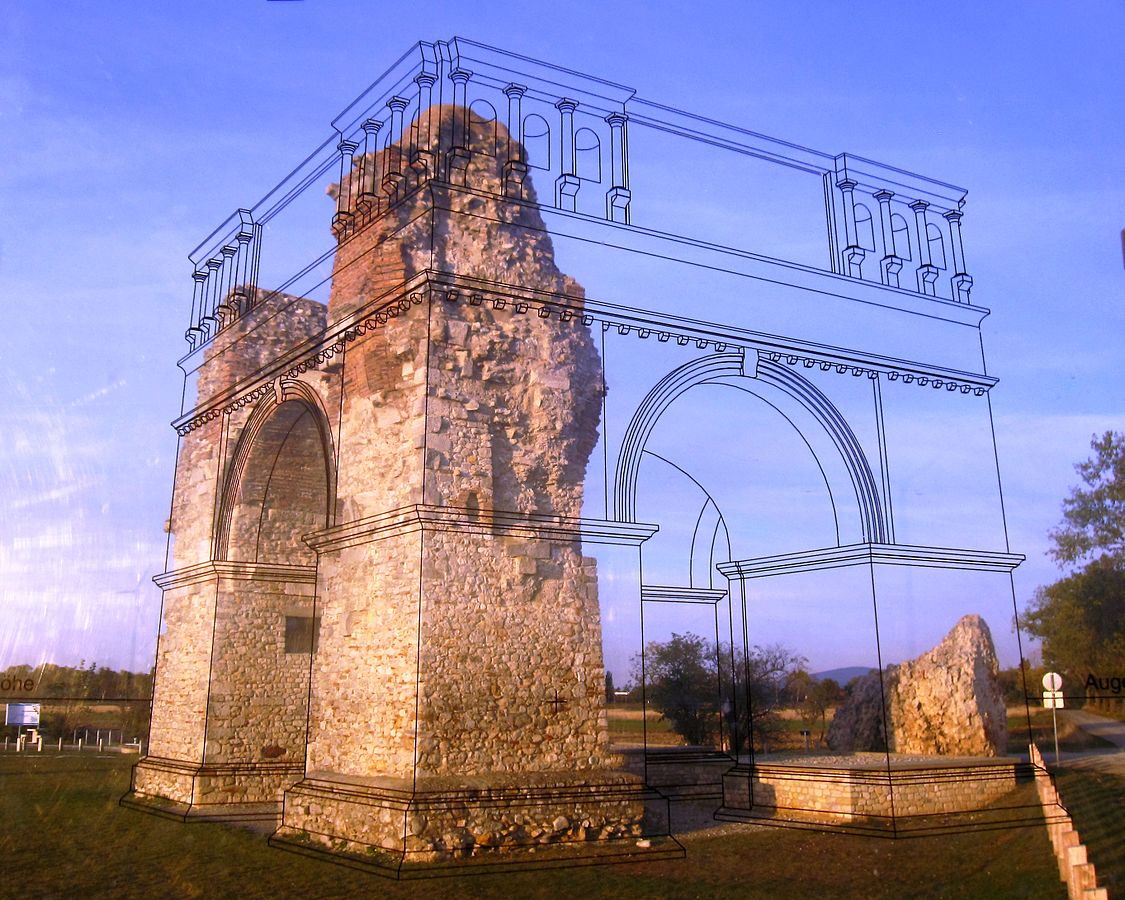
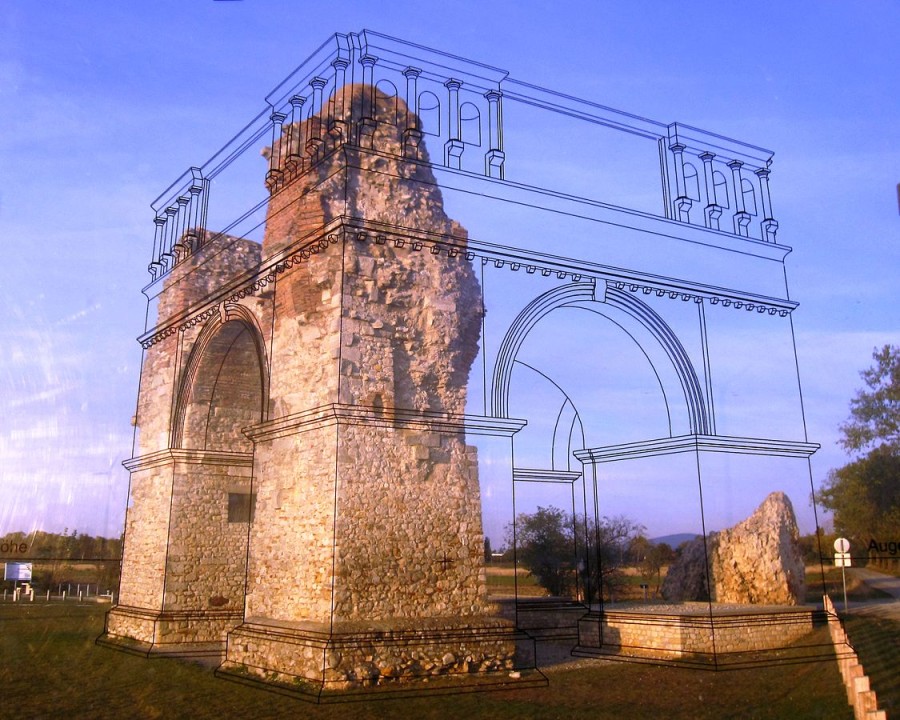
This is easier for artefacts, when you can just place the reconstruction next to the original in a museum case. It's a little more difficult for an ensemble such as a grave find or a large artefact, but still possible. Buildings pose a much bigger challenge - but there's a totally brilliant, easily reversible and very flexible way of showing how something might have looked:

[caption id="attachment_2390" align="alignnone" width="640"]Heidentor, Austria. Photo: Gryffindor, CC BY-SA 3.0, https://commons.wikimedia.org/w/index.php?curid=16996191 Heidentor, Austria. Photo: Gryffindor, CC BY-SA 3.0, https://commons.wikimedia.org/w/index.php?curid=16996191


Placing a glass or plastic sheet with the reconstruction lined out in a place where you can visually overlap them - this really is a wonderful way to show how a building might have looked; easy to update and easily reversible.
0
APR.
28
0

Hallstatt Bands in ATR!

I blame the weather for still feeling tired - it's mostly grey outside, and rather cold, though today there is a little more sunshine (which is nice).

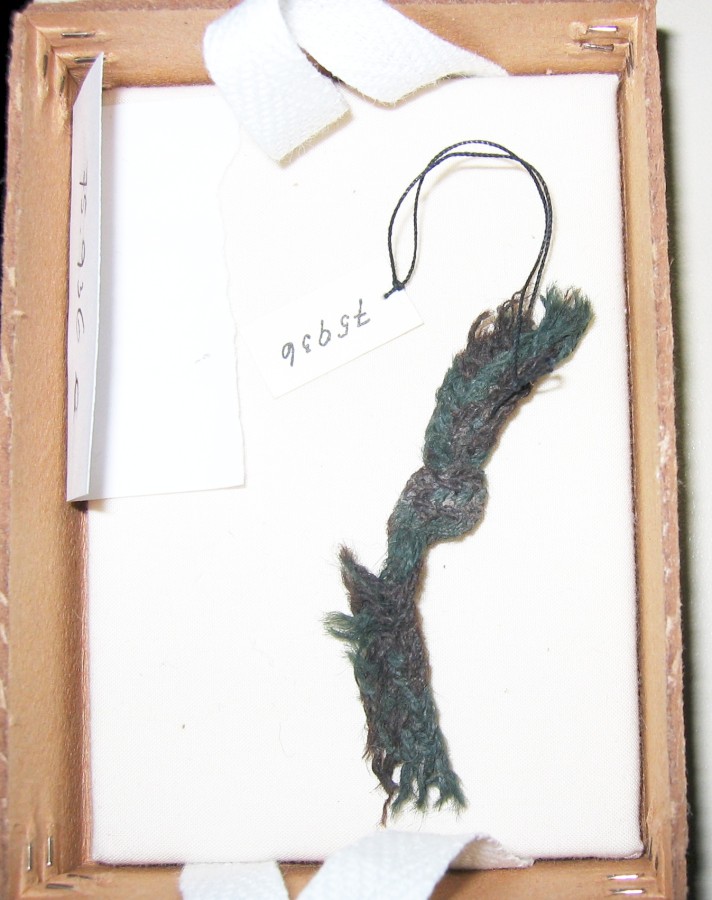
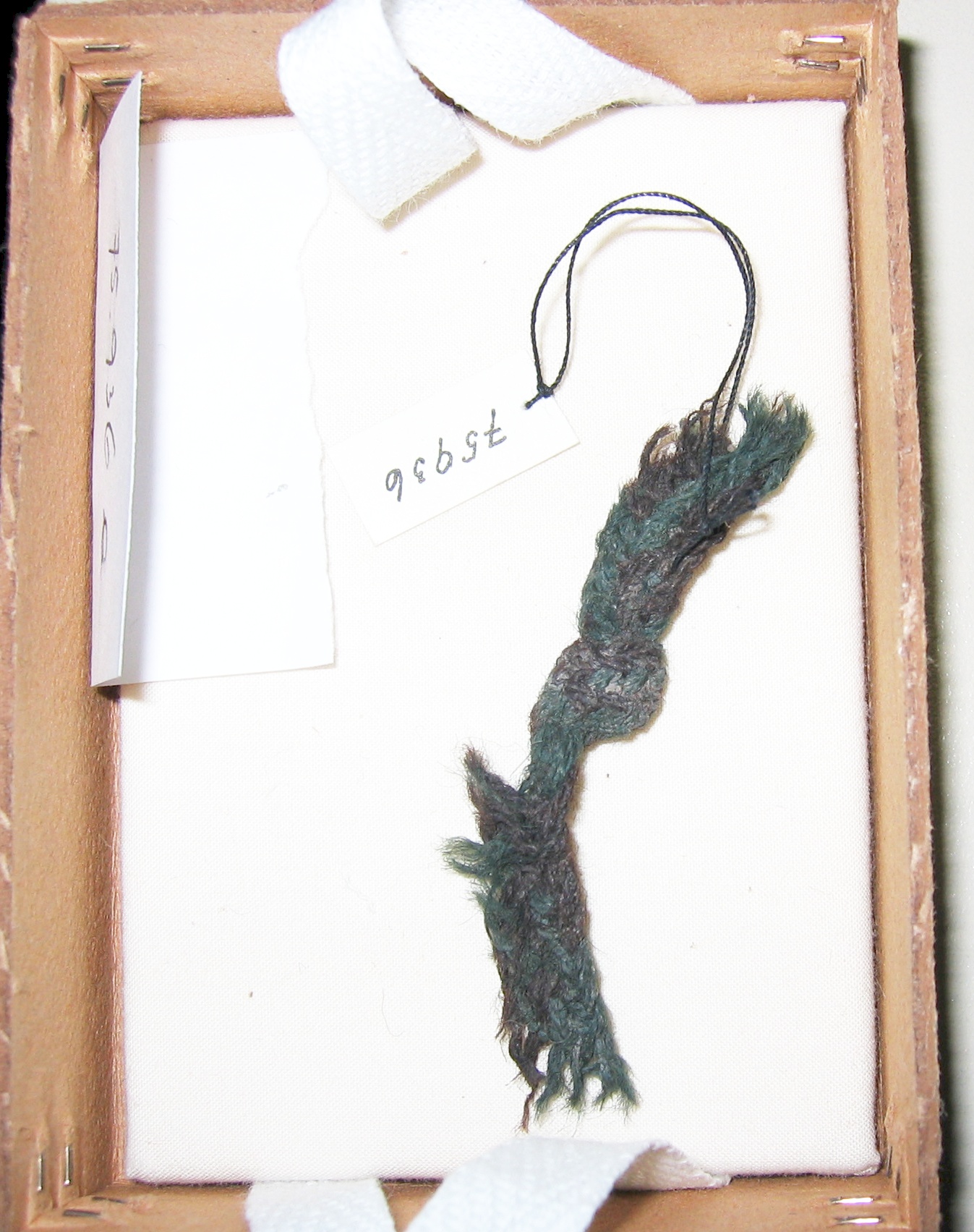
There's better news than bad weather, though! A good while ago, I had the opportunity to take a closer look at two braided bands from the Hallstatt salt mines. Ah, it is always a wonderful thing to sit in the basement depot and see the original textiles, dating back to the Bronze Age, all sitting nicely in their little protective boxes and those in turn in a chest of drawers. (It's cold down there, though. I caught more than one cold during my visits... being so wrapped up in fascination that I did not realise I was cooling out too much.)

[caption id="attachment_2385" align="alignnone" width="421"]One of the two bands discussed in the article. One of the two bands discussed in the article. This is one of my working photos - the article has nicer images than this, of course.


From that close look and some trials in braiding, plus cooperation with Karina Grömer and Joy Boutrup, the two bands are now finally published in form of a proper, nice article, printed in the latest issue (n. 57) of the Archaeological Textiles Review.
If you have an academia.edu-account, you can find it here.
0

By accepting you will be accessing a service provided by a third-party external to https://www.pallia.net/

Kontakt