Latest Comments

Guest - Aislinn Dyestuff Citizen Science.
09. Oktober 2026
This is a great project. I look forward to the results. Thanks for letting us know.
Guest - Aislinn Time for...
09. Oktober 2026
Looks delicious!
Guest - Katrin Sprang Discussion
18. September 2026
Hi Rachel, I have looked for more photos of you, but that was not very successful. I found a link on...
Guest - Beatrix Sprang Discussion
15. September 2026
That lozenge pattern element is not a photograph, but a scan. So it should be to scale. But I pinned...
Guest - Katrin Sprang Discussion
15. September 2026
I was not referring to Rachel's reconstruction (is the reconstruction you refer to the one photograp...
JAN.
27
0

Yay Friday!

It's finally Friday, the weekend is beckoning (and it's promising to be a nice one, with a local boardgaming event and possibly also a round of going bouldering with friends), my Windows update problems might finally be fixed, and the warp yarn for the next batch of cloth is almost finished, making the weaving of the sail cloth something bound to happen very soon.

In other news, Current Archaeology is holding a bake-off competition for archaeological baking (and even if you don't plan to participate, the thing is worth a look for the previously done stuff, which is really awesome).

More food stuff? Gillian has written about food in fiction.

If you didn't get as much nice sunny weather as we did in the last days and you are feeling melancholy about it now, Ask the Past has a cure for that. Or, well, at least suggestions. From 1303.

Brogues and Shoes has a picture series about making a leather bottle.

And finally, again on the topic of spinning and weaving, there's been a two-part column in Knitty about weaving with singles - part one and part two.

That's it for today (still too many tabs open, but it's a little better now.) Have a nice weekend, everybody!
0
JAN.
20
0

Things for your amusement.

The sun is shining, it's cold outside, and here are things from around the Internet!

There's a project on indiegogo to get a Mini-Mill from Canada all the way to Iceland, to spin the wool from local sheep into nice yarn. You can support that project starting with a 4 USD donation, and there are multiple perks to get hand-picked wool or yarns. So if you are looking for some really special fibre or yarn... you might find it just there.

Hugo Nomination Season is upon us, and will run until March 17. While I am, as usually, abysmally behind in reading current stuff, I do intend to nominate at least a few things. EscapePod, for one thing - and since there's some more spinning hours in the weeks ahead, I think I might find one or two more stories from 2016. In the "Best Related Work" category, Gillian Polack's "History and Fiction" is actually eligible... and I hope to find some more exciting stuff before the deadline. Hints about books and short stories published in 2016 that blew you away are utterly welcome!

While we're on the topic of reading, Aarhus Press Free Ebook of the month is "Elephants are not picked from trees", a book with stories about the taxidermied animals in Gothenburg National History museum.

Not free, but available again in digital version after they went out of print: past issues of Experimentelle Archäologie in Deutschland/Europa. You can have a look at the volumes on the EXAR website and click through the "buy" link to land on the publisher's homepage, where you can buy pdf downloads of individual articles from out of print volumes.
0
DEZ.
20
2

Happy Holidays!

It's almost that time of the year... when most of us get a few days off work to hang out with friends and family. When the nights are longest, and the days shortest, and we know it will get lighter again, and warmer, in time.

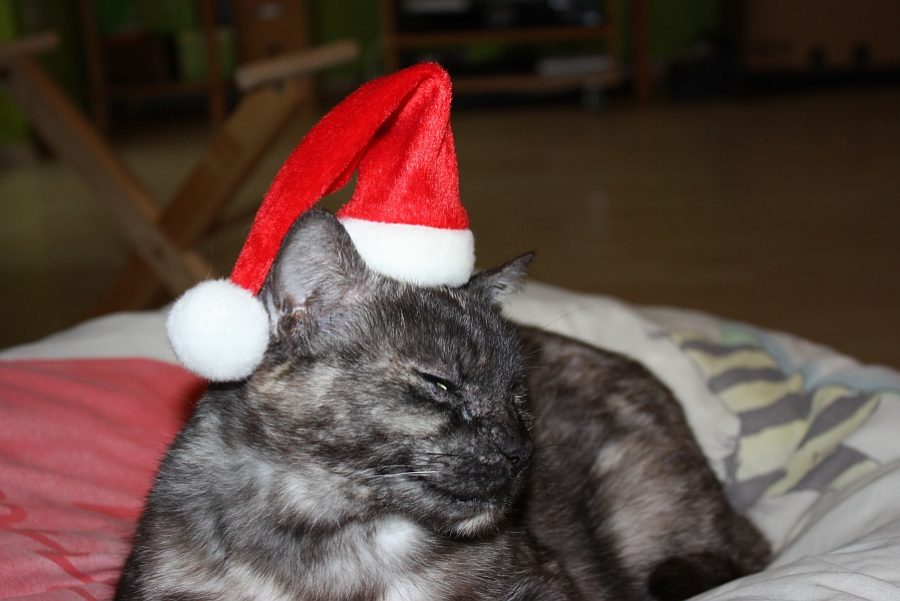
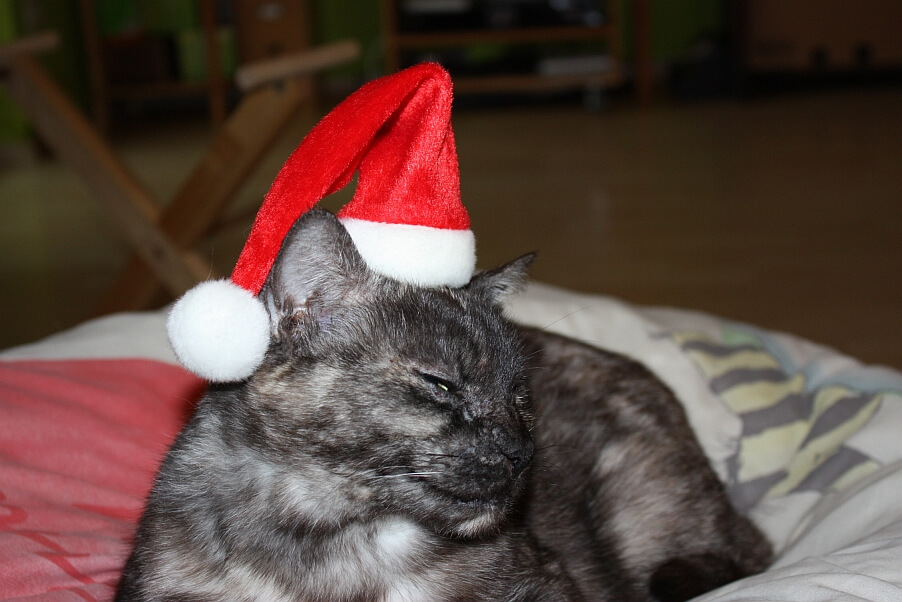
The time of the year when all kinds of delicious things flood our tables, to be shared with loved ones and enjoyed together. The time of year to bribe small, peacefully resting, unsuspecting cats into letting you put plush toy hats on their heads and take silly photos.

xmascat
Because that is obviously really necessary at this time of year, right?

Whether you are celebrating Christmas, Yule, the Winter Solstice, Hanukkah, something else or nothing at all, I hope you will have a few nice days, filled with whatever activities (or non-activities) that make you happy, and spent with people whose company you enjoy, or in glorious solitude if you need a breather and prefer to be on your own for a while.

I hope you had a good year 2016 - mine certainly was good, and full of exciting things, plus quite a bit of change. Let's see what the rest of this year will bring, and the next one.

I'll be back on the blog on January 9, sharing tales of my shenanigans again, and I hope you'll be back to read them. Until then - have a glorious time, thank you for stopping by and sharing my 2016, and I'll see you on the flipside!
0
DEZ.
02
0

Random-ish Friday Thoughts.

It's raining outside, which is not nice since I need to run errands - and that means cycling... so soon now, I will be venturing out into the rain.

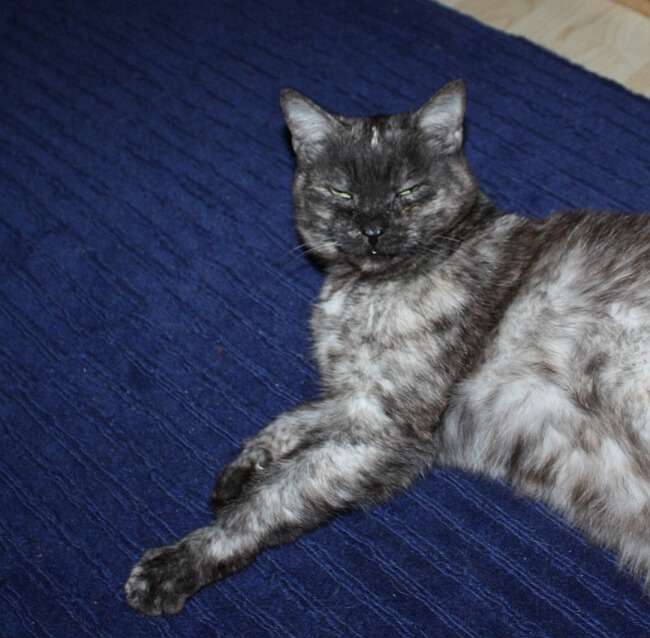
The cat, meanwhile, is not venturing out into the Great Big Cat Shower - of course not:

What? Outside? In that rain? And what else are you fantasies, huh?
Smart cat.

In other news, I've been successful in testing material for a box for my new market/fair stall display boards (which are incredibly nice to have, since they save me a gazillion of setup and takedown time), so I can do the final design now. Which is nice - and a project for this winter.

I also made candied orange peel - which is used for quite a few traditional German Xmas baked things, such as Stollen. Which I am contemplating. (The baking, that is.) Making the candied peel wasn't such a great act as I had thought. Basically, you cut the peel (from untreated oranges, preferably organic, obviously) into small bits, boil them in water for 3 minutes, repeat that again with fresh water (this removes most of the bitterness) and drain them. Now you weigh the boiled peel. Take that amount of sugar, add enough water to make a thick syrup, and simmer the peel in the syrup for one hour.

Once they are done simmering, drain them (you can use the leftover syrup for sweetening other things) and dry them in the fan oven at 60° C for about two hours, periodically stirring them. Store in a glass with some added sugar to prevent them from sticking together.

There you go. Candied orange peel. Tastes lovely!

 
0
NOV.
25
0

Vanillekipferl.

Like every year, I do the seasonal baking some weeks in advance of Xmas - because a) it would be way too much stress to try and get everything done in just a few days, and b) some of the cookies benefit from hanging out in a tin for a while. As in "for a few weeks" while.

One of the kinds that get better by sitting and doing nothing for a few weeks are Vanillekipferl (vanilla horns, more or less literally), which are an utter staple of German Xmas baking. Like most cookies, they are a shortcrust dough, and there's a gazillion recipes around. However, about all of them have one thing in common: They will tend to crumble if you try to form the dough by rolling it into small rolls to shape the typical crescent form. Which is... annoying, to put it mildly.

These days, there are workarounds: Special baking trays with the crescents, or cookie cutters. However, traditionally, these things are shaped by hand.

My method to shape them is a little less conventional, but also traditional - because the shape is what my one granny's Kipferl shape used to be.

Now, my granny (who died several years ago) was a rather, um, complicated character. Cooking and baking was very much her thing, and every year at Christmas, we would get several large tins filled with cookies of many varieties, stacked neatly by sorts. There were at least a dozen different kinds of cookies, and I loved them all - some more, some less. They were also lovingly decorated.

To this day, because the wonders inside these tin boxes made such an impression on me as a child, Xmas cookies are one of the things that makes the festivity for me. This means a large variety of cookies, in abundant quantity (because it seemed like lots and lots and lots to me, and there were lots, really) and of course with a lovely taste.

So when said Granny had a stroke and could not bake anymore. I decided that there had to be cookies, and they had to be similar to hers. However, my gran would not share her recipes - so I had to find my own basic recipes. I also found out very quickly that baking a large number of different varieties, and decorating them, takes a lot of time - so I cut down on said number (having a life and studies, and later a job, to also take care of). I couldn't find recipes for some of the kinds, and some others just didn't fit into the time slot anymore, and some I couldn't remember properly (because they might have been there some years and others in some other years), but the all-time favourites of myself, my mum and my dad stayed in.

Among these were, of course, the Vanillekipferl. Which, when my gran made them, had a very distinct shape - and one I never saw anywhere else.

It took me a while to figure out how to make that shape, but I finally succeeded. So this is how I make them these days:

Ingredients:

50 g almonds (without peel)
50 g hazelnuts
300 g flour
90 g sugar
40 g vanilla sugar (I use the stuff with real vanilla)
pinch of salt
200 g butter
2 egg yolks
powdered sugar to decorate

Make shortcrust dough out of the ingredients, let it sit in the cold for 2 hours (or longer, that doesn't hurt). Form crescents and bake for about 6 minutes at 180° C in a fan oven.

And this is how I shape them:

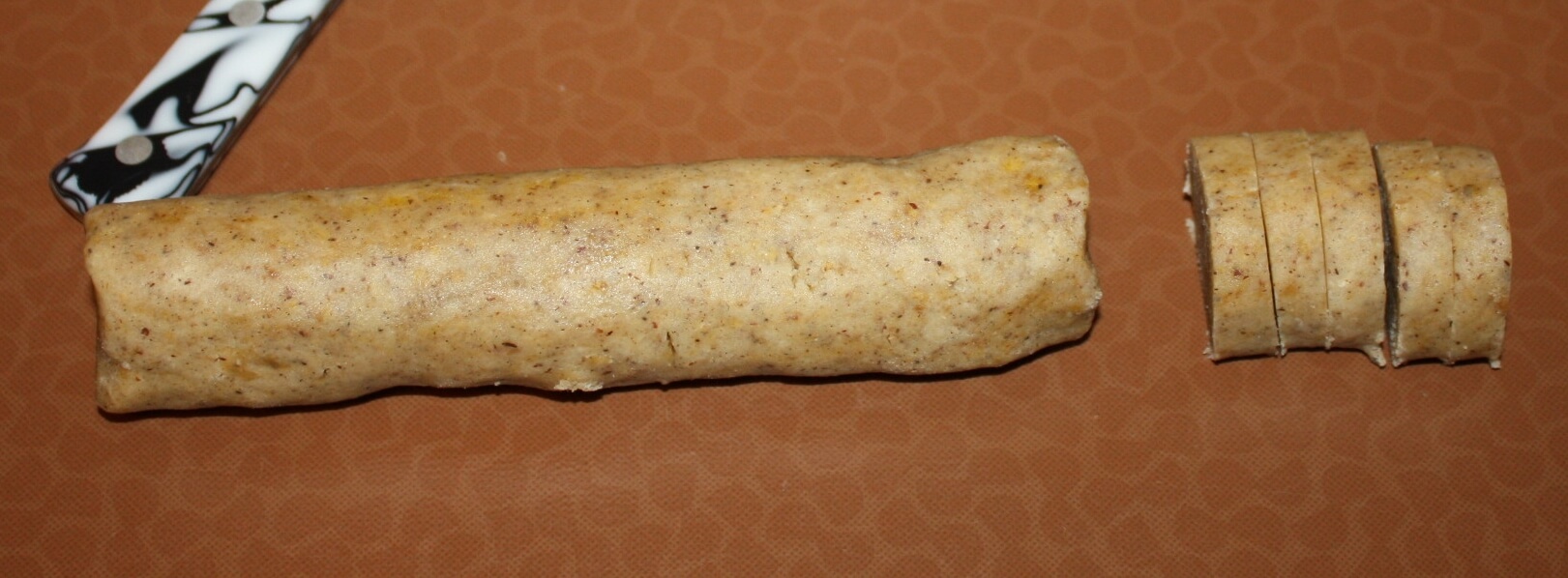
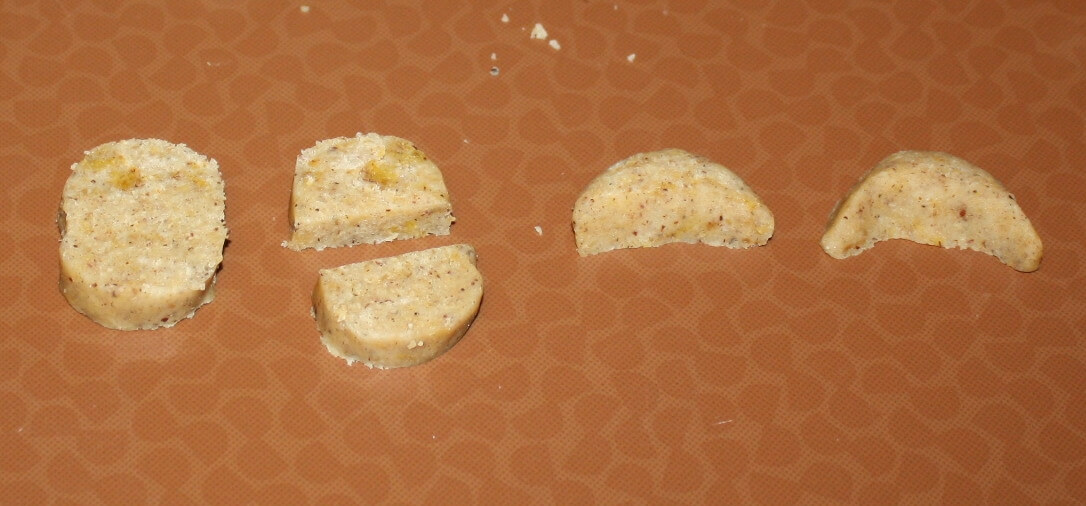
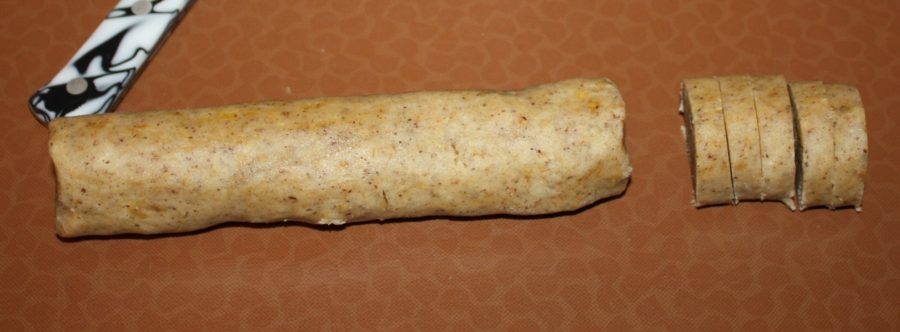
Form dough into rolls of about 3-4 cm diameter (I like my Kipferl small, just like I remember them). Cut rolls into slices of about 6-7 mm thickness.
IMG_1531
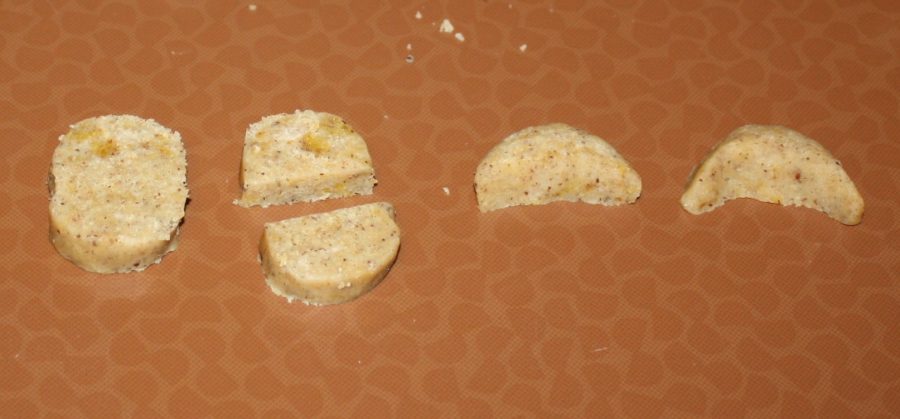
Cut each round in half.

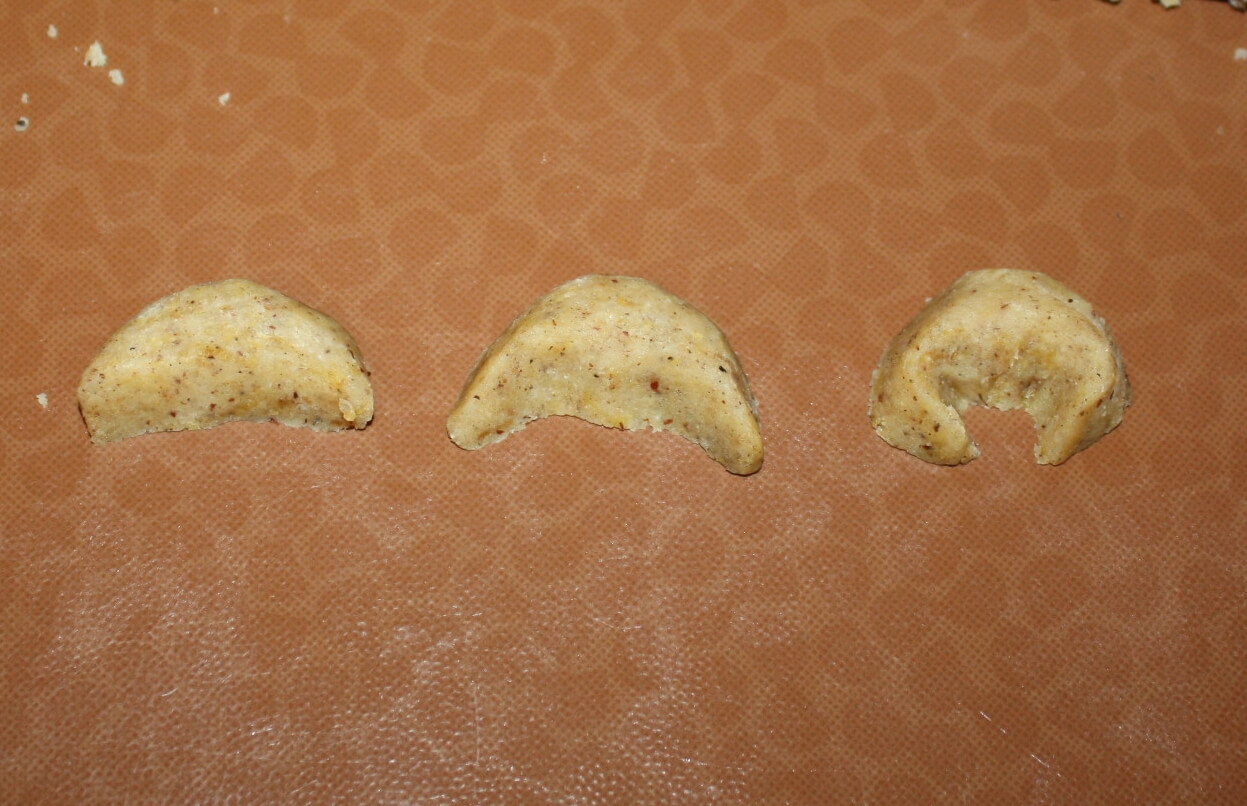
Then, using your fingers, round the upper middle of the half-round shape, and tweak the two corners a little longer. This results into something already vaguely crescent-shaped.
IMG_1532
(The yellowish blotches are from the mascobado sugar I used this year, the black spots are the vanilla and hazelnuts.)

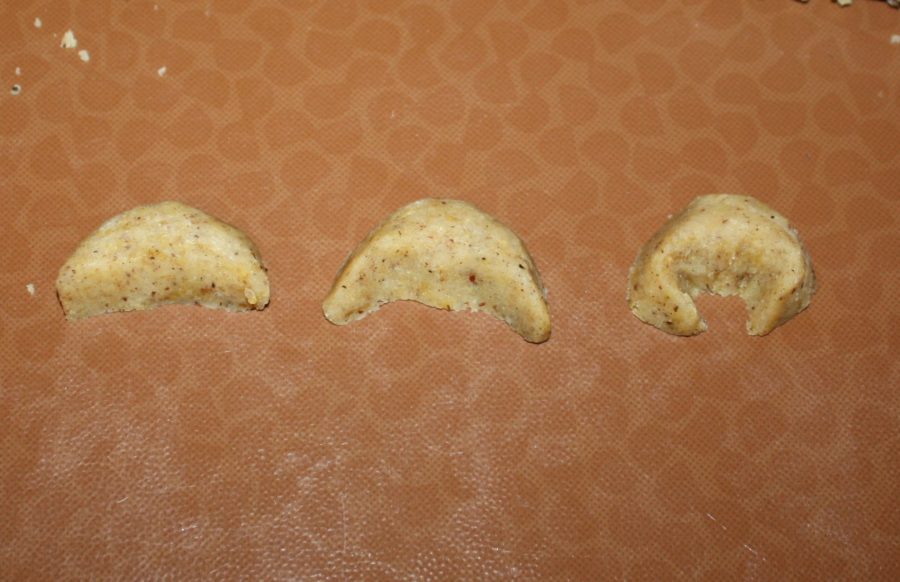
Now pinch the ends of the crescent even more - this will make them thinner and at the same time, the middle will get a little "nose". Like one of those children's book moons that have a nose.

My gran's Kipferl had that, so I was totally happy about them (and still am). If you don't like the nose, you can probably smooth it out... but for me, it is central to the whole shape. (Hah.)

As a last step, press the ends of the crescent inwards to get a compact shape.
IMG_1534
And that's it. You're done shaping.

Once they are baked and have cooled off, dust them with powdered sugar, then store them in a box until ready to be eaten.

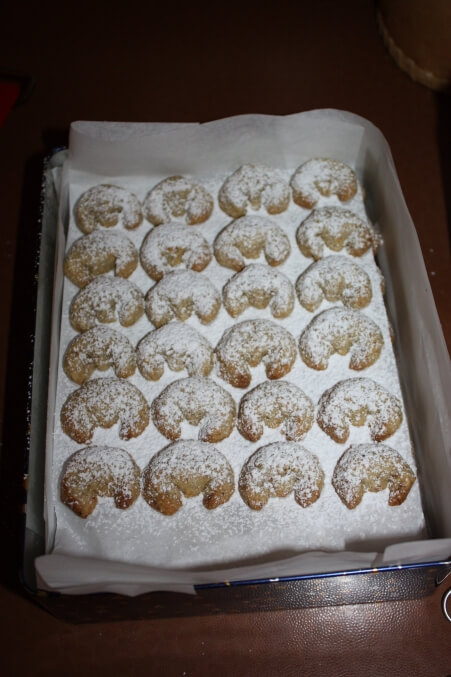
This is how mine looked in the end, this year:
IMG_1536
Happy baking!

The other seasonal recipes that I blogged in the past are:
0
NOV.
24
1

And still more links.

I'm almost through the incredible link backlog - so here's the last drop for now:

If you are looking for a new way to practice your early Mesopotamian writing skills, you might want to bake some cuneiform cookies.

Here's an article about the sequence of adjectives in English - a "crazy grammar rule".

A list of sheep breeds (though there's not much information about many of them, especially not much information about the wool).

Speaking of wool, Hakai Magazine has a nice article about the importance of wool for the vikings.

Jonathan Jarrett has posted a book review about "Debunking History" by Ed Rayner and Ron Stapley.

And that finally clears my list. I hope there was something enjoyable among the links for you!
0
OKT.
24
0

Madder Madness in the Garden.

Some years ago, when we moved into our current home, I planted a little madder plant in the garden. That little madder plant has since grown... and taught me that madder grows like, well, mad.

It's not a really beautiful plant with its long stalks that are prone to fall and lie flat. It doesn't have spectacular blooms (they are small and yellow, and the madder berries are round and black, so nothing eye-catching either). It has no lovely smell, and it's not nice to touch - quite the opposite, in fact.

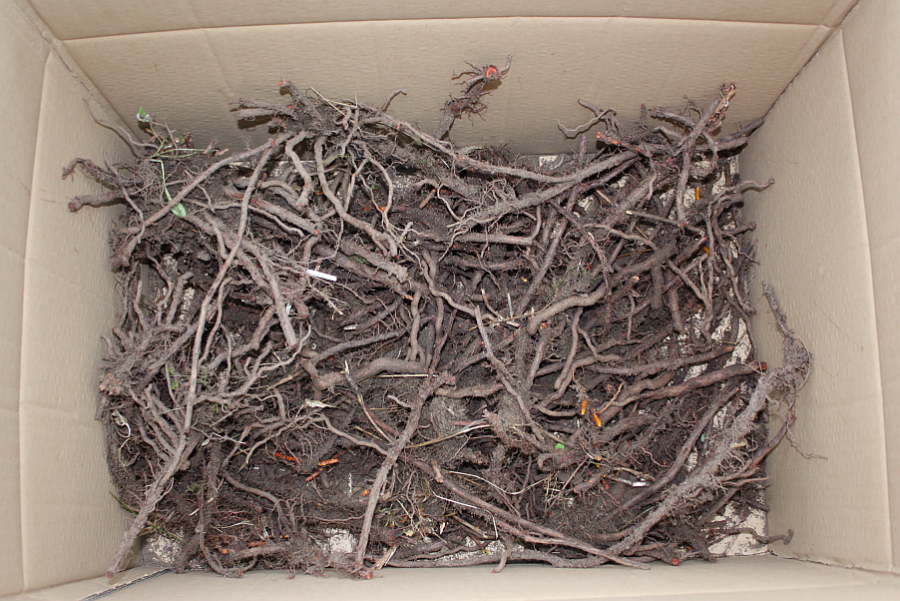
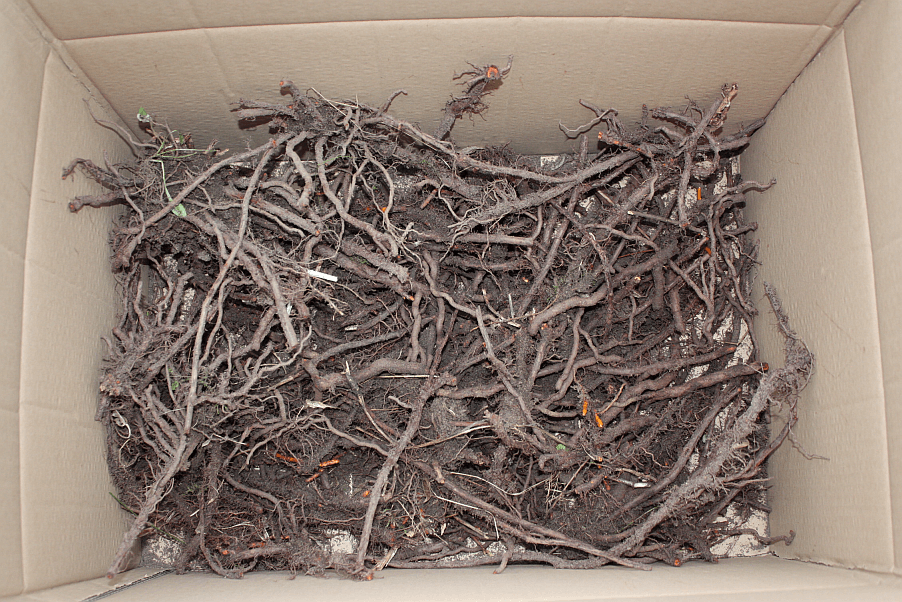
What it does, though, is grow. Grow and take over as much of the garden bed as it can, sending out its roots below ground and suddenly sprouting up. This year, it ate at least two of my tomato plants that I, foolishly, set too close to the madder patch. Thus I decided it's time for the madder to be harvested... and the beautiful sunny weather yesterday was just the right invitation to dig some red roots.

madder1
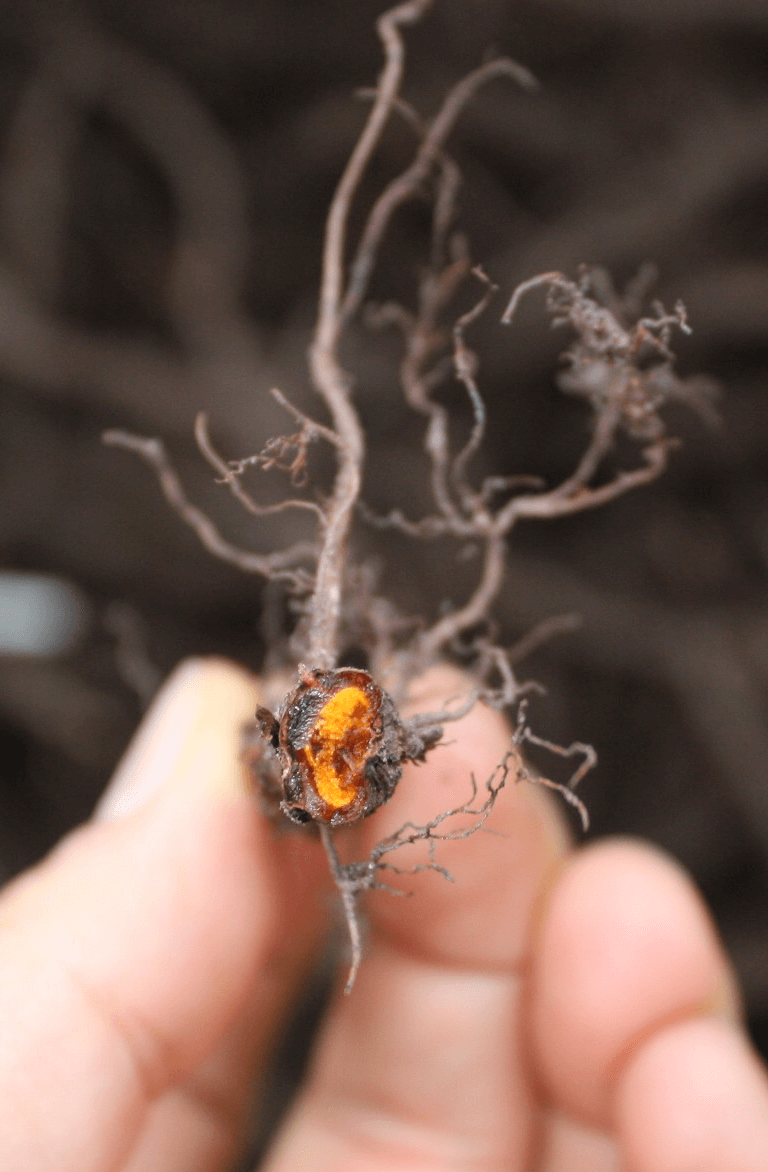
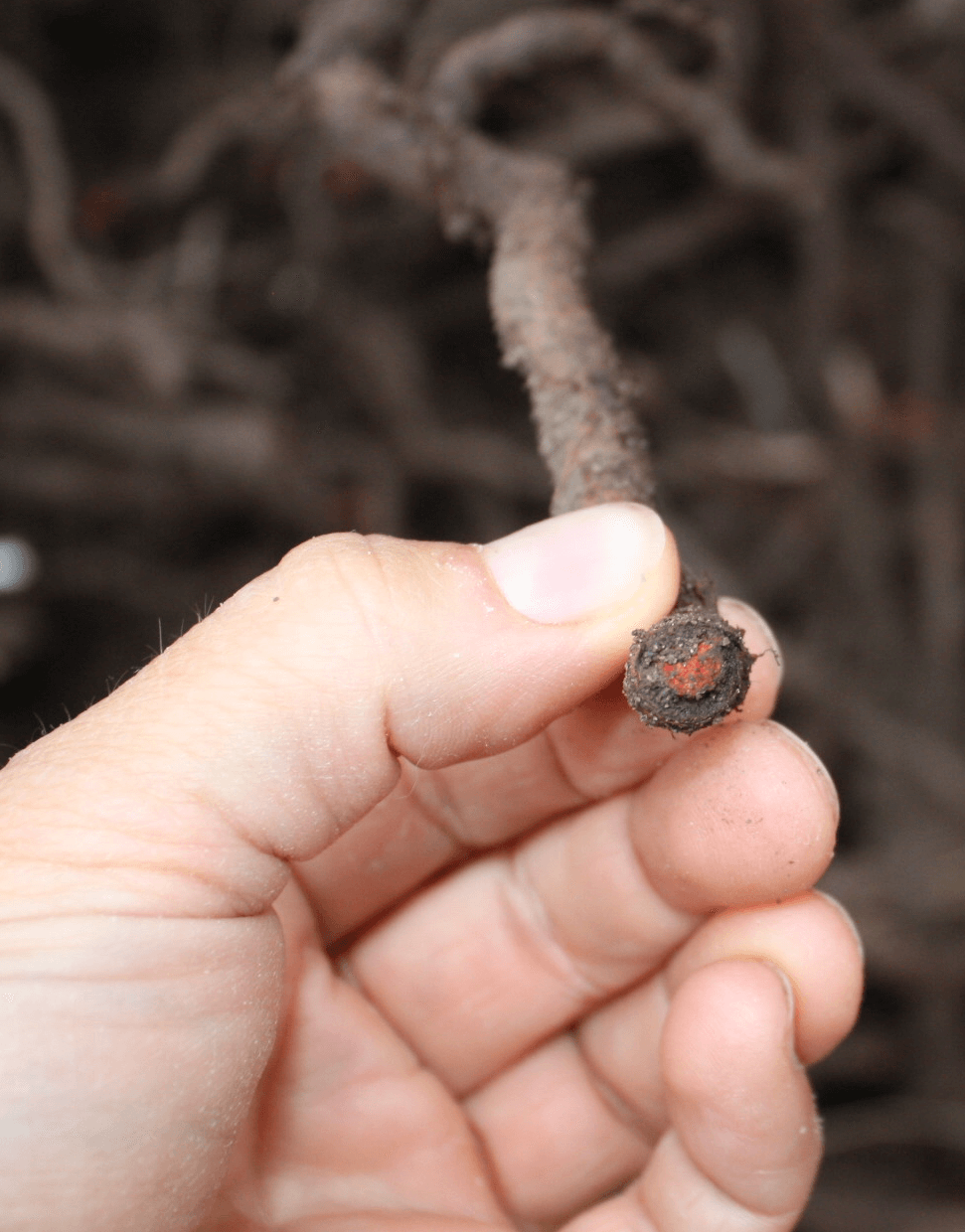
I got about one bucket full of roots, and there is still some left to harvest. The roots are brittle, and have colours ranging from bright orange to a deep red inside, the older the darker. They also have a very interesting, kind of sweet-ish smell to them.

[caption id="attachment_2693" align="alignnone" width="368"]madder3 Madder root with an orange core...


[caption id="attachment_2694" align="alignnone" width="363"]madder2 ...and with a dark red one.


Now they will need to dry, and then they'll be cleaned and shredded into pieces, and then... they will hopefully dye a nice deep red. And my tomatoes will be safe for a few years. Probably.
0

By accepting you will be accessing a service provided by a third-party external to https://www.pallia.net/

Kontakt