Latest Comments

Guest - Aislinn Dyestuff Citizen Science.
09. Oktober 2026
This is a great project. I look forward to the results. Thanks for letting us know.
Guest - Aislinn Time for...
09. Oktober 2026
Looks delicious!
Guest - Katrin Sprang Discussion
18. September 2026
Hi Rachel, I have looked for more photos of you, but that was not very successful. I found a link on...
Guest - Beatrix Sprang Discussion
15. September 2026
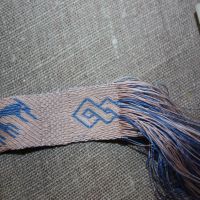
That lozenge pattern element is not a photograph, but a scan. So it should be to scale. But I pinned...
Guest - Katrin Sprang Discussion
15. September 2026
I was not referring to Rachel's reconstruction (is the reconstruction you refer to the one photograp...
MAI
10
0

Musée des Tissus, Lyon

If you're a long-time blog reader, you might remember that the Musée es Tissus in Lyon was in danger of being closed forever a while ago. This has, thank goodness, been averted, and there is a future for the museum.

To make this future even better, the museum is asking for donations in a funding campaign, with the goal of modernising the exhibitions and, if there is enough money, restauration of objects in the care of the museum.

There were emails about that landing in my inbox for a while, but I've only now gotten around to really look at them, and finally go over to the crowdfunding site and donate. If you would like to jump in at last minute as well, here's the link - you can have nice little items as thank-you as well! The campaign is only running for three more days, though - so don't put it off as long as I did!
0
MAI
09
2

Back home again.

I'm back home from the fair, and now there's a nice stretch of time without fairs, for a change - time to take care of all the other things that need doing.

As always, it was great fun to share a booth with Margit. Also as always, it was both totally lovely and totally exhausting. Too much coffee was consumed. Chocolate was consumed, too, of course - there always is during fairs. It's quick energy for those times when there is too little time to eat something proper, and it's a wonderful excuse to have choc. Not that there really should be any excuse needed to have chocolate...

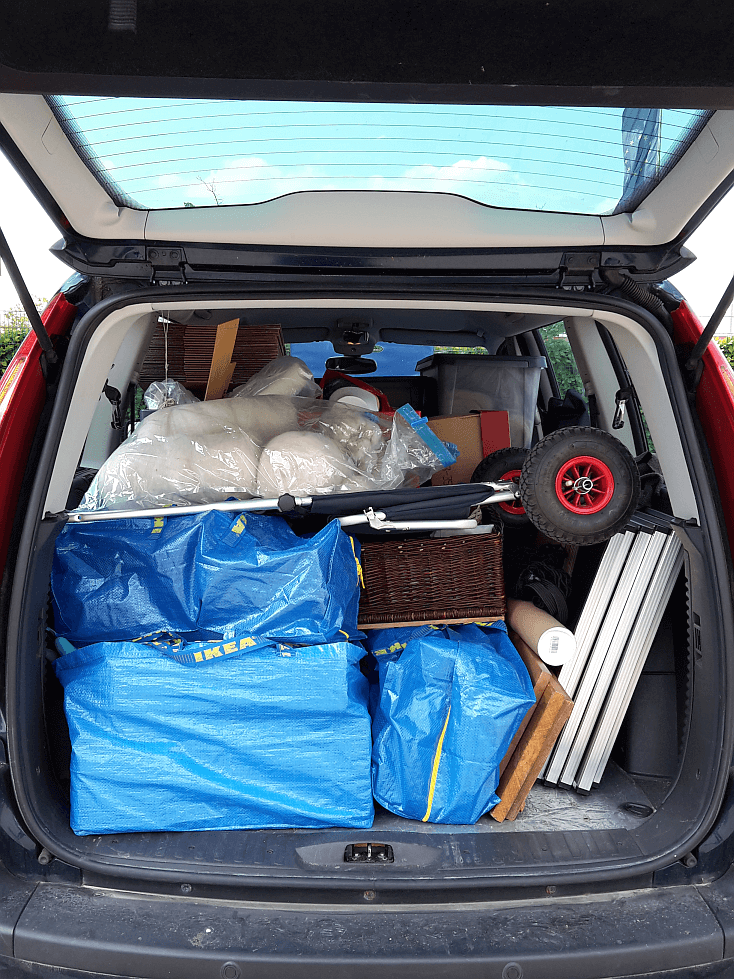
Also as always, there was a lot of stuff to unload, and to set up, and then, later, to stuff back into tha car and bring home again. So basically, this:

messeauto

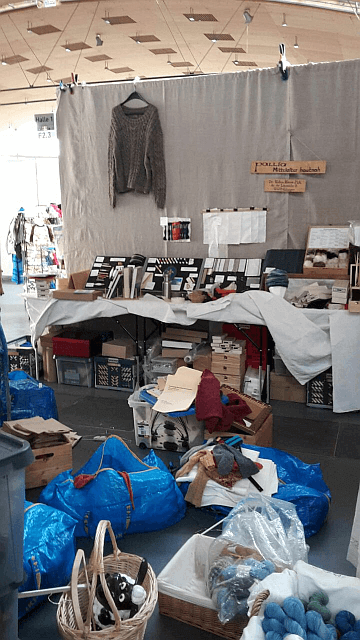
turned into this:

aufbau

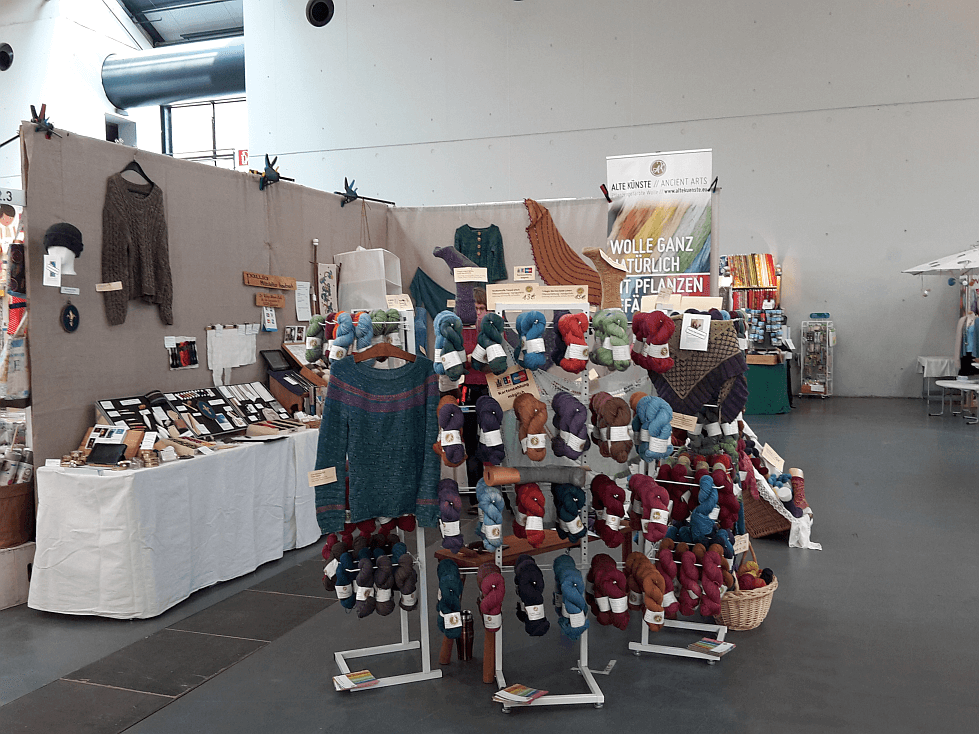
and then, finally, this:

nadelwelt_18

And now I have the usual long list of post-fair affairs, and stuff to sort away (that hasn't all happened yet), and then it's back to normal. If there is a normal. I'll let you know once I found out...
0
MAI
03
1

And I'm off to the Nadelwelt!

It's fair time again - I am packing up my stuff and leaving for the Nadelwelt. This is one of the most exciting fairs for me each year, in the huge buildings of the Karlsruhe fair halls, right in the middle of everything.

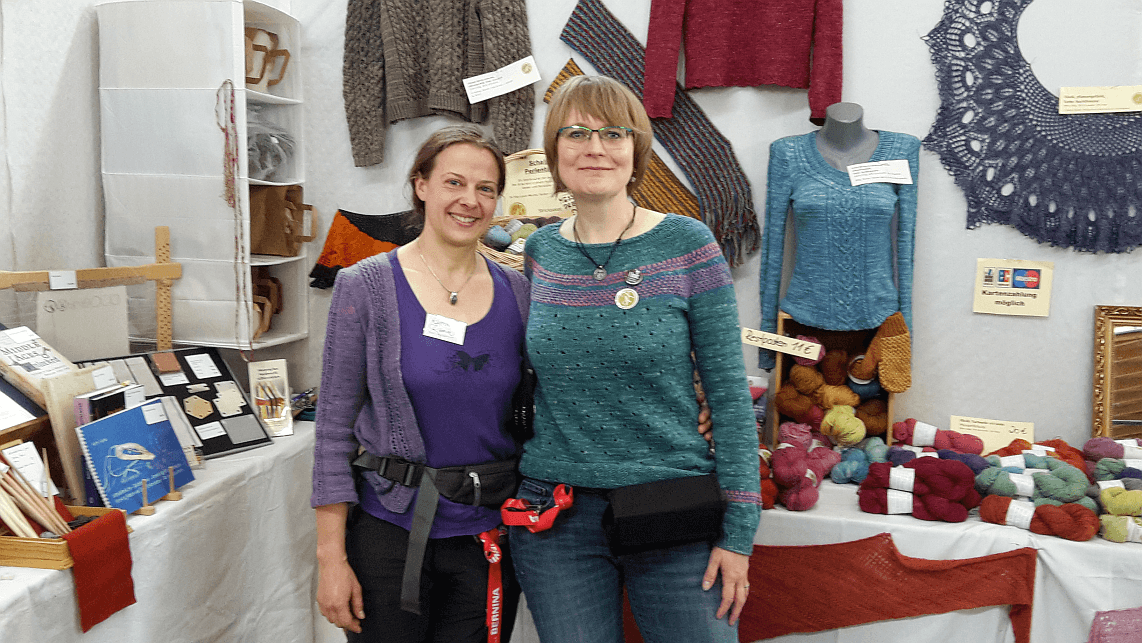
[caption id="attachment_3096" align="alignnone" width="1142"]nadelwelt_beide Margit and me at our Nadelwelt stall last year.


If you are into quilting, sewing, knitting or other textile-y stuff (modern, predominantly, of course) and can get into the Karlsruhe area, it definitely is worth a visit. There is a huge lot to see (and buy, if you want to spend some money). If you come, make sure to drop by and say hello!

So while I'm away, fairing, returning and then recuperating, there will be a little blogging break - I'll be back here and posting things on Wednesday next week.
0
MAI
02
0

Getting Sidetracked: Image Databases Part 8.

Amazing how long my bookmarks list is... the unsorted end of it is getting shorter, though.

A large collection of images, although not very searchable and not very straightforward to use (in my opinion, at least) is the Digital Imaging Project with art and architecture (mostly architecture) from North America and Europe, from prehistoric to modern times.

Kornbluth Photography (documenting the Luxury Arts) has photographs from a multitude of objects. The site is not searchable, and it was last updated in 2014, but does have spectacular images of objects from different periods, places and cultures.

The Database Machine Drawings is exactly that - you can search for machine drawings from 1235 to 1650. There's even a carding machine and several spinning mills in there, if you are textile-inclined.

 
0
MAI
01
0

Getting Sidetracked: Image Databases Part 7.

After getting sidetracked from getting sidetracked, here we are again - a few more sources for pictures, and this time, I actually have another proper picture database for you. Yay!

It's the Bildindex für Kunst und Architektur, a German-language database that lets you search in the Marburger Bildarchiv (well-known to architects) as well as the image archives of a lot of museums, institutes for heritage conservation and universities. That means oodles of images. Gazillions. No, really, it's lots. Bonus trackback: If you search for "Spindel", you get an image of Mary and the child with spindle by Luis de Morales, featuring a grasped probably perpendicular-armed yarnwinder.

Free1000s has selected artwork from the Middle Ages and more modern times. It has no really good search function, but is nice for a bit of a browse, and there's not too much to browse through if you are looking for medieval art. There's also a link to a newer version of the site, which has different pictures from this one.

Another good database is the Rijksstudio, the image database of the National Museum of the Netherlands. You can even search in English, though using Dutch search terms might be the better choice - as usual.

A collection of stained glass from Britain is available at the Corpus Vitrearum Medii Aevi website. The advanced search allows to look for a specific subject, but my trusted trial search for "spindle" turned up weird results, so it might not be very reliable.
0
APR.
30
0

Getting Sidetracked: Image Databases Part 6.

Arachne is an object database for objects of the Deutsches Archäologisches Institut (DAI) and the Archäologisches Institut der Universität zu Köln. There's predominantly really old stuff - we're talking Antiquity here, so Greek and Roman things prevail.

Europeana is an art and object database that searches collections from various places in Europe. It's available in several different languages, and thus it's possibly worth it to try searching in more than one language for what you are looking for. Not so cool: There's a possibility to use some filters, but I haven't found a filter for the date yet, so you will get all kinds of things from all times.

REALonline is one of my favourite databases, one of the first places I search for stuff, and generally just wonderful. It is mainly a database for artwork, with some objects thrown in for good measure. The site is available in both German and English.

A last one just for the sake of completeness - archREAL is an object database with archaeological small finds; unfortunately this project sort of petered out, and has lain dormant since about 2004. If you want to use the database, you have to ask for a login (due to copyright reasons). It's only available in German.

 
0
APR.
27
2

Spindles, now with optional notches.

One of the recurring questions about my spindle sticks, especially from modern spinners, is "Why don't they have a hook?" followed by "why don't they have a notch?" and "how do you fix the yarn without hook or notch?"

Finds of medieval spindle sticks are not too common (wood has that tendency to rot, and can be burned, and a spindle stick is not very spectacular so you'd want to carefully preserve it somewhere like you would a wooden altar, for instance) and they are published here and there, so putting together a good collection takes some rootling around. Even with surviving sticks, they are not always complete (the tips are often broken off), and then they may not be published in detail, with a drawing of the tips.

However... it does seem that the plain, un-notched and un-hooked spindle was very, very common, and I personally usually spin with the plain tips and am very comfortable with them.

There are instances of notched spindles in the medieval finds, though, and since I've been asked time and again about notches, I have finally looked through my sources, sharpened my little knife, practised some more... and am now offering optional notch cuts with my spindle sticks.

[caption id="" align="alignnone" width="900"] Notches! From left to right: plain un-notched tip, horizontal notch, diagonal notch for z-spun yarn, diagonal notch for s-spun yarn.
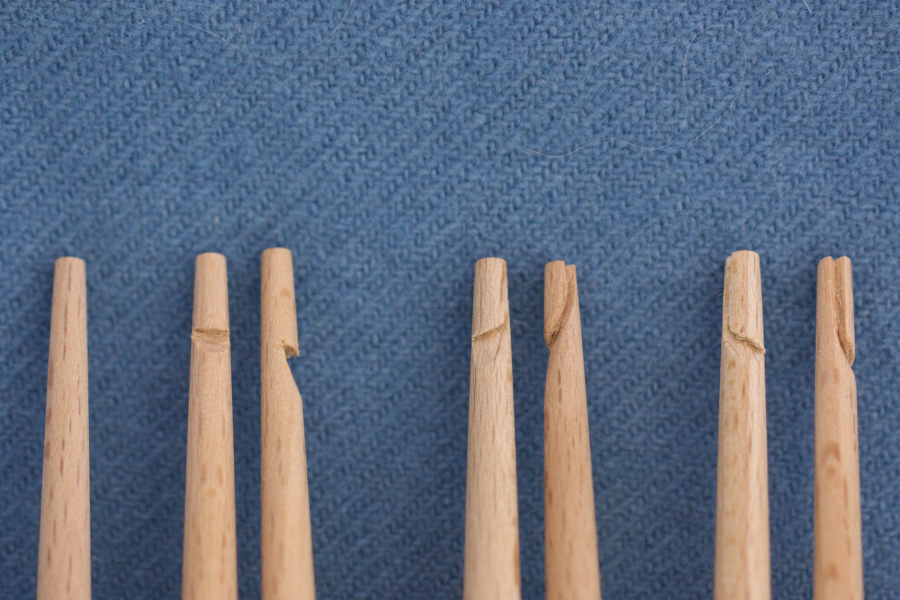

They are available both in horizontal, where they will very securely keep a half-hitch for either spinning direction, and in diagonal, where they will either keep a half-hitch, or, if the thread is thin enough and you wind it around the spindle in the right way, hold the thread all by themselves. I've tested the diagonal notches, and they usually need a bit of getting used to, but then they work fine. They accommodate a thin thread, and the notch sort of latches onto the thread to hold it securely enough for spinning. It's not as secure as the hitch, though, so the probability of the spindle slipping out and falling down is a bit higher throughout.

When it works, though... it's really, really fun!
0

By accepting you will be accessing a service provided by a third-party external to https://www.pallia.net/

Kontakt