Latest Comments

Guest - Aislinn Dyestuff Citizen Science.
09. Oktober 2026
This is a great project. I look forward to the results. Thanks for letting us know.
Guest - Aislinn Time for...
09. Oktober 2026
Looks delicious!
Guest - Katrin Sprang Discussion
18. September 2026
Hi Rachel, I have looked for more photos of you, but that was not very successful. I found a link on...
Guest - Beatrix Sprang Discussion
15. September 2026
That lozenge pattern element is not a photograph, but a scan. So it should be to scale. But I pinned...
Guest - Katrin Sprang Discussion
15. September 2026
I was not referring to Rachel's reconstruction (is the reconstruction you refer to the one photograp...
SEP.
17
0

Random Linky Stuff.

Here are things, randomly assorted, that might be of interest.

If you like manuscripts and haven't checked out the medievalbooks blog yet, I thoroughly recommend doing it. Take a look at this post about Medieval Super Models, or this one about personal touches or personal statements in the margins.

A 3,500 to 3,900 year old suit of armor, made of bone, was found in Siberia.

Chloe Giordano is making really beautiful, really detailed animal embroideries. (h/t Heather)

Modern stair solutions - some of them really breathtaking.

And now for something completely different: Transgender people tell about the differences between how men and women are treated at work.
0
SEP.
16
0

Gratuitous Cat Pics.

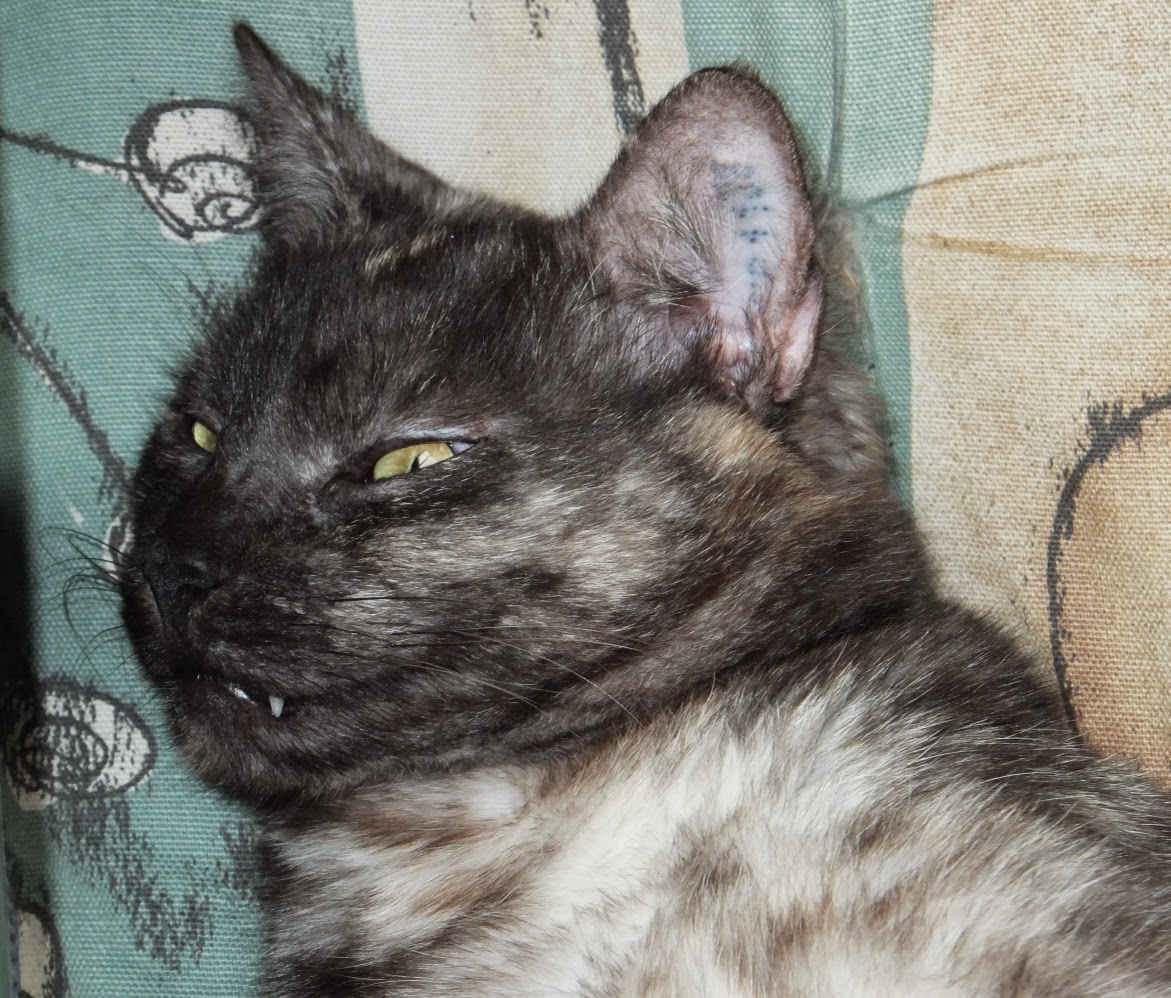
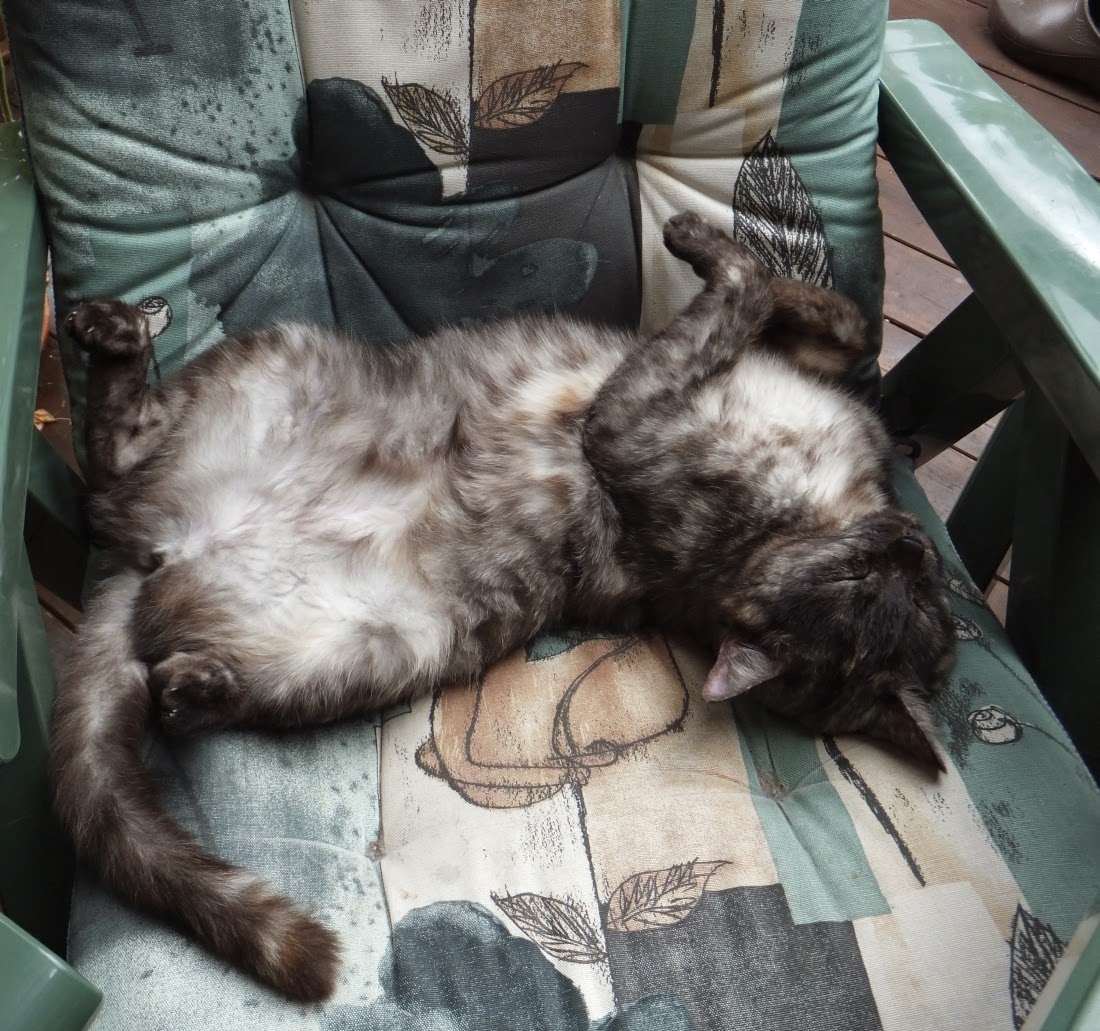
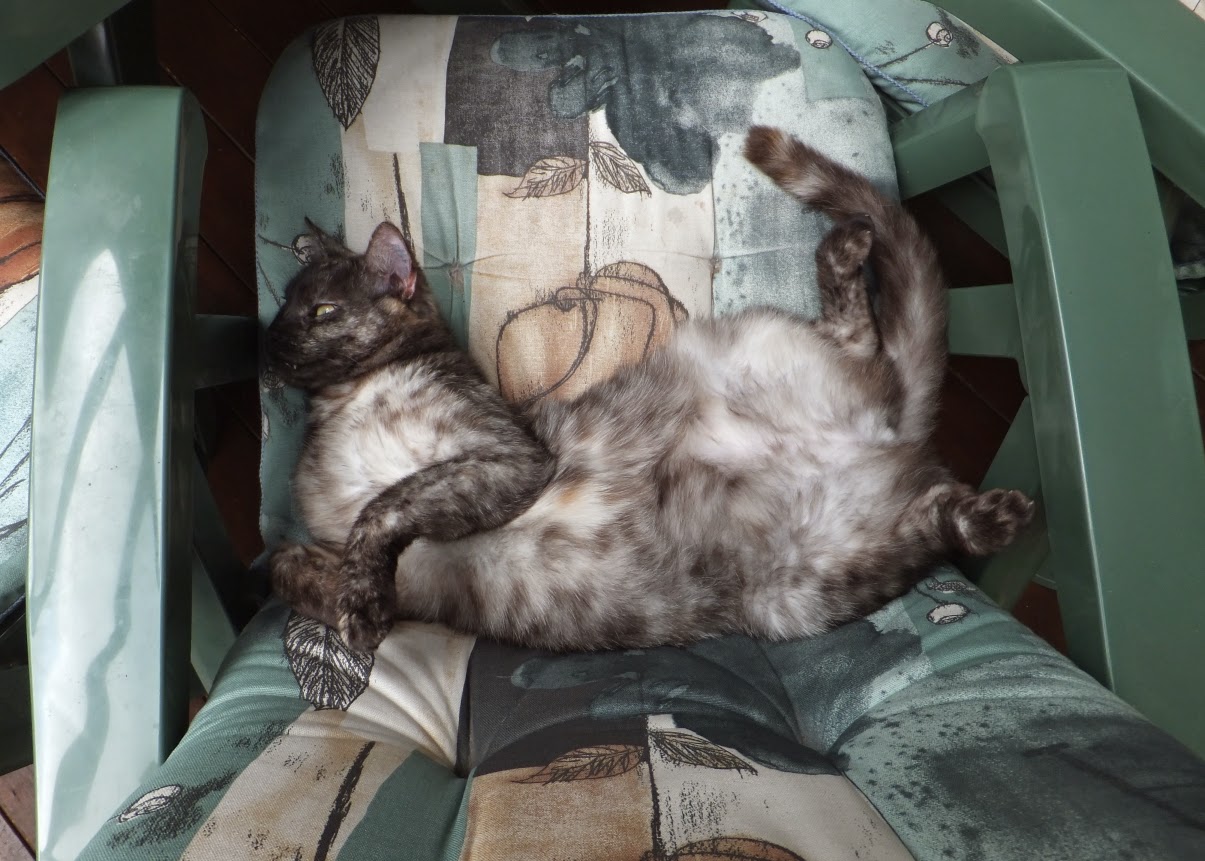
It has been way, way too long since the last cat pictures here. And this weekend, Madame was sleeping especially... um... curiously, so here you go.


Portrait of a Sleepy Cat with Vampire Teeth:


Sleepy Cat Snoozing on her Back:


Not Elegant, But Oh So Comfy:


She's having a vet appointment today, so she'll be less relaxed and comfy this afternoon... but surely everything will be fine again in the evening.
0
SEP.
15
0

Games of a different kind.

I like games. I like board games (especially cooperative ones), and I also like computer games. Most of the ones I play (or we play together) are not very deep - more like light entertainment to pass some time, such as hidden objects or lightweight adventures.

Recently, though, I stumbled across two very different games. Both are online, both are free to play, and neither of them can be called lightweight.

The first one is called "Depression Quest", and it lets you explore the life of a person with depression. Depression is a nasty illness, and the game captures very nicely how it takes away perfectly sensible choices that seem obvious, easy and attainable - unless, that is, you are too depressed to be able to make them. DQ is a pay-what-you-want game, and it might be a good help in explaining to someone else how depression works.

The second one is called "Buried" and you play an archaeologist, newly returned from fieldwork, grappling with burial and death in both personal and professional circumstances. ("Buried" is not intended for the archaeologist, but more for the lay person. Plus, according to the game, it's possible to write a short paper in one evening even when starting out tired. Talk about game superheroes!) 

Both are not recommended if you are currently struggling with depression or grief, or if you have problems with death and burial as game items; but if you are not, and willing to explore these topics - I do hope you have a memorable experience doing it, and I'd love to hear what you thought of the games in the comments!


0
SEP.
12
3

Ah, the joy of learning.

I am trying it again. Even though the last two tries did not last for very long, or were very successful, this time I have an event to work toward which is far enough in the future to actually be realistic.

If you are wondering what I am talking about - the next NESAT conference will be in Liberec, in the Czech republic, and since the last one was in 2014, it will be in 2017. (NESAT is, sadly, only every three years.)

I do not, yet, speak Czech, nor do I understand spoken Czech. That is true for a lot of languages, though - quite important for reading archaeological stuff - I can read a lot more languages than I can speak. I cannot even read basic Czech, though. That is something that I would like to remedy, and having a NESAT in two and a half years should give me enough time to learn some. Add to this the motivational tidbit extra - the most patient of all husbands and myself have a challenge going to do a ten minute foreign language improval stint every weekday - and it might just work. So yesterday I invested in a computer language learning programme. We'll see where it goes from here.

Did you ever, successfully or unsuccessfully, learn a language using a computer lesson packet? Or some other alternative way? I'd love to know. Life interaction would surely be better than just the 'puter, but Czech lessons hereabouts are hard to find, and I can deal better, time-wise, with ten minutes a day than with longer lessons with larger gaps inbetween.
0
SEP.
11
0

Isn't it Friday already?

Well, yes, I know it isn't. Yet. Would be nice, though!

My parents dropped by yesterday evening, having been in the area, and we had an impromptu cooking session together with two friends, serving them a nice three-course meal. That was a lot of fun, but also a bit exhausting - and now I'd much prefer today to be Saturday, or at least Friday.

So while I am trying to bring my brain into gear, you are getting links (again). One of them is a book review on "Experimental Archaeology" by John Coles. Another friend and colleague recommended that book to me, saying it would be a very good read. The book is from 1979, so it's not the newest work about ExpArch, but seems to be worth a look.

Speaking of books, Doug is posting about Archaeology and publishing, another series of posts, starting with #1: Formatting. If you, like so many others, use Word for your work and wish to do layouting, I recommend taking a look at editorium.com - when I was layouting and tweaking my PhD thesis for handing it in, their information did help me a huge lot. And while it's not easy-peasy, my impression is that Word will do everything you want it to - if you know how to kick its (micro-)soft little backside hard enough and in the right way. (Mind you, it might mean having to record and edit, or write, a macro or two. Expands the horizon. Never a bad thing.)
0
SEP.
10
1

Pirate Hat offer ends today!


After all these linky posts, it's time to do a "what is happening here" post again.

Yesterday, I finished the current state of a project - sewing basic garments for a new open-air museum, the Freilichtlabor Lauresham - and sent the things on their merry way to their new home. The project is not completely finished yet, but the next part will have to wait until the cloth for tunic and hose have been woven and dyed, which will take at least a few more weeks. I'd have loved for them to have all the clothes in time for the opening on this Sunday, but unfortunately, we were not able to get the cloth issue sorted out in time for that. (This proves again: textile stuff just gobbles up time.)

With this off my back and off my agenda, it is time to turn to the next exciting bits on the to-do list. So today, I'll do my level best to get some more work done on the Textile Forum. Check our website at www.textileforum.org tonight or tomorrow for the preliminary programme. And if you want to join, you can still register for the conference!

Another conference I have to prepare for is Crafting Textiles from the Bronze Age to AD 1600, taking place on October 10 and 11 in London. (This year is the year of travelling to England for me!) I will be giving a presentation about spinning as a historical craft, and I'm looking forward to that conference very, very much already. The programme is full of interesting papers!

Today's the last day of the Free Shipping offer on the Dread Pirate Roberts knitting pattern. If you were planning to get one, today is the day to do it!
0
SEP.
09
0

Foooood.

I've been blogging about food before. Naturally, since it is a thing that I enjoy a lot. (Especially baking. I've been called a "cake extremist" recently, and man, I'm proud of that. My cakes tend to feed legions.)

With my recent forays into different-nutrition-land, due to the elimination diet, I have read what feels like gazillions of articles about food and what you should eat, and what not. Eliminating a lot of the previous staples and mainstays of a diet does pose a challenge, and I was happy to find that there are a lot of suitable or almost-suitable recipes out there already. You can find them if you search the 'net for "paleo AIP recipe". AIP stands for "Auto-Immune Protocol", and that's basically the elimination diet scheme. It is a sub-section of eaters who eat what they call "paleo".

Now. I'm of the opinion that "who heals is right" - no matter what the approach. But I am also, due to my profession, attentive to things such as proper terminology. And calling a modern diet "paleo"... that just... gah. GAH. (I'm not alone in that, by the way! See here. Or here, where "archaeologists officially declare collective sigh over the paleo diet". I'm in!) I have enough colleagues who try to learn more about diets from the past - medieval, 19th century, and inbetween - and if you talk to them at any length, one of the things guaranteed to come up is the impossible task of sourcing raw materials that are like they used to be back then. (Just like in textiles. Ah, I can so relate.)

Mind you, we're talking about foodstuffs less than 300 years old, in some of these cases. Or less than 2000 in most. Paleolithic stuff? That's at least 12 000 years ago. More than twelve thousand! Folks! We know about nothing on how food was back then! (I blogged a very nice video about that ages ago, by the way. Here.)

There are a few other things that irk me. Some are due to personal tastes, such as the liberal use  of coconut flour about everywhere where baking is concerned, or the liberal use of other coconut products. (I like coconut a lot - but only in very specific circumstances. Not everywhere.) Some are due to a different personal stance on things, such as the declaration that sugar is really, really bad because it's so nutrition-poor and has been processed so much - but then these same authors happily use stevia (processed) or other weird sugar replacements, also very much processed; or honey which is less processed and yes, not as nutrition-poor as honey, but not that far away from sugar either. (There are some who agree with me in that stance, though. Like this one.)

So. My summary? There's this scene that calls itself "paleo". While the name still makes my hackles rise, a lot of the articles and essays on nutrition for healing are interesting, helpful, and do give food for thought. As always, though, every person is different, and different things will work for each and everyone, so finding out things for yourself is still the thing to do. That said, the recipes - both "normal paleo" and AIP - are really worth looking at, if only for interesting combinations of things to cook or prepare. And if you suspect having a food intolerance, they will be insanely helpful when you try to figure out what to eat and what to forego.



0

By accepting you will be accessing a service provided by a third-party external to https://www.pallia.net/

Kontakt