Latest Comments

Guest - Aislinn Dyestuff Citizen Science.
09. Oktober 2026
This is a great project. I look forward to the results. Thanks for letting us know.
Guest - Aislinn Time for...
09. Oktober 2026
Looks delicious!
Guest - Katrin Sprang Discussion
18. September 2026
Hi Rachel, I have looked for more photos of you, but that was not very successful. I found a link on...
Guest - Beatrix Sprang Discussion
15. September 2026
That lozenge pattern element is not a photograph, but a scan. So it should be to scale. But I pinned...
Guest - Katrin Sprang Discussion
15. September 2026
I was not referring to Rachel's reconstruction (is the reconstruction you refer to the one photograp...
MäRZ
08
0

Deutsche Bahn on Strike.

With absolutely impeccable timing, the German Rail is on strike since yesterday and all of today. Fortunately, this was announced a few days beforehand, so I could look into my options to get to my tablet weaving workshop...

With a normal train connection, it's about the same amount of time for me to drive and to take the train. However, train means that I can do something else while travelling (like reading, or knitting), and driving means... driving. So I usually strongly prefer using the train.

Which got me into a conundrum: Brave the strike, take the train (there's still a decent connection I can take which is, according to the schedule, going to run) or go for the "safe" option and drive instead, on roads that are probably a good bit more full than usual, and on a Friday afternoon to boot? So after weighing the pros and cons, I've decided to be adventurous, booked seat reservations for the trains that are supposed to bring me where I want to go, and now I'm off.

Wish me luck! 
1
MäRZ
07
0

Water for the Bees.

It's springtime(ish) again, which means the bees are out and about - and this is the season where they are in need of water. (In summer, too, but it's important in spring as well - they need water to be able to digest the pollen.)

Unfortunately, bees cannot swim, so the bee bar should be safe for them. I've found drowned bees in the saucers under pots where there was water standing after the rain. That's sad to see. 

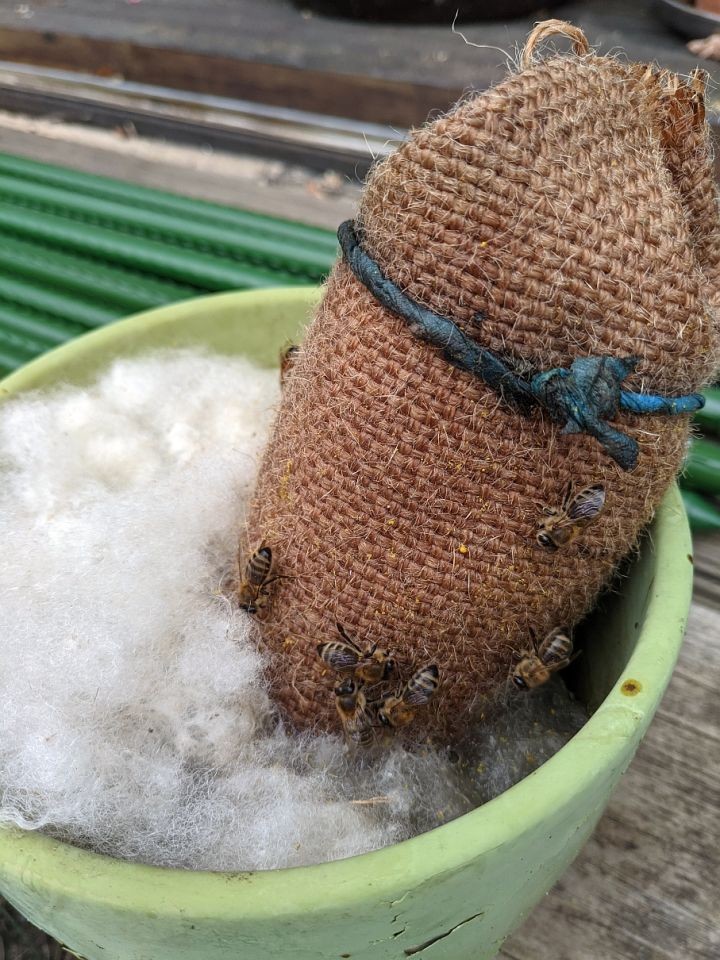
Over the years, I've tried different things, and the current iteration looks like this:

It's a piece of coarse fabric wrapped around a mix of wood shavings and wool. That's set into a pot filled with water, and to prevent accidental drownings next to the fabric roll, I've stuffed in some more wool to keep the surface covered. It took the girls from the neighbourhood a few days to get it, but now they seem to appreciate their new bar! 

2
MäRZ
06
0

Textile Events!

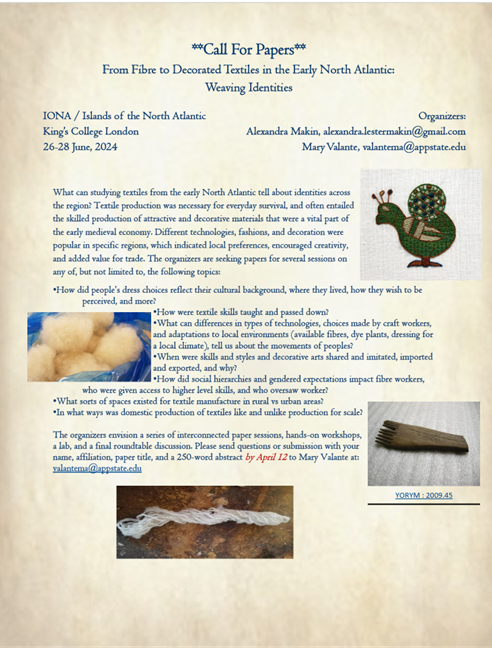
It looks like it's the time of year for announcements of textile events again! First of all, one for a conference in the UK in June: 

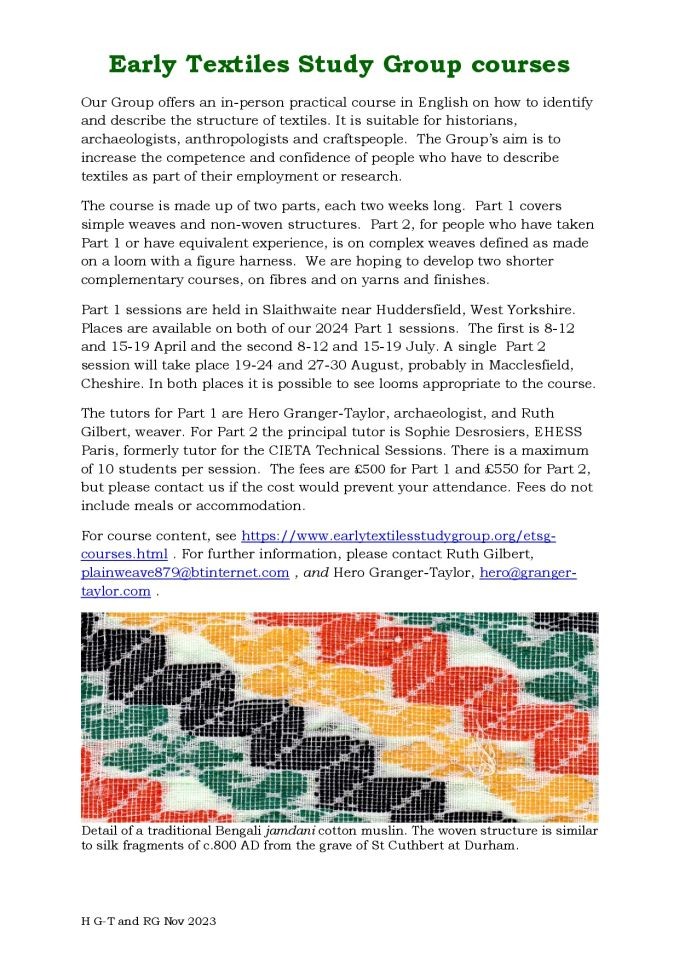
And then, also in the UK, the Early Textiles Study Group offers a practical course. Here's the description, and if you are interested, go to  https://www.earlytextilesstudygroup.org/etsg-courses.html for more!

0
MäRZ
05
0

Hah. Prepped.

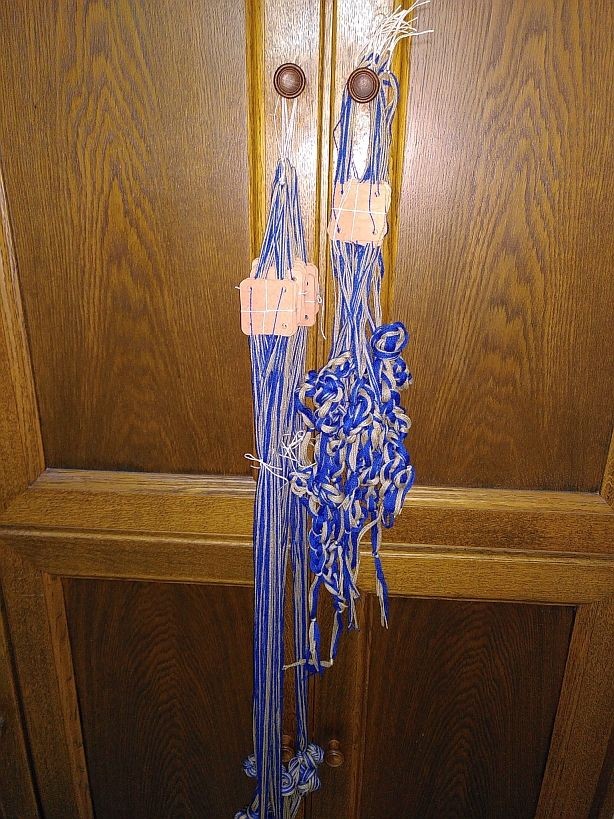
Today was Warping Day. Well, Warping Afternoon - fortunately, the relatively small warps of limited length that we use in the weaving workshop are quite quick to make. So now I have this, waiting to be packed up: 

On the left there's a few "oh no bad things happened" warps, prepared in case something bad happens and we need a quick new one. On the right... that's a stack of edge tablets, waiting to be installed at some point. 

Edge tablets - usually all threads in one colour, and two or more of those monochrome tablets per edge - are an absolute fixture in historical bands. They make for neat edges, and if you weave patterns with my system, they are one way to tell which tablets turn in which direction. 

However... adding edge tablets also makes warping a little more time-consuming, and it means one more thing to keep track of. That's why I did my workshops without edge tablets in the past. (Remember what I wrote about things evolving? That's one of them.) I've thought about a few different options on how to include them without making things too weird at the beginning, and I think I have found the solution and the hopefully impeccable timing for adding edge tablets: The point where they are actually helpful, and where the basic understanding stuff that does not require extra "empty brainless twisting" has already happened.

Next Monday I will know more. Now there's a tad more preparation to do, but the main stuff has all happened. 

Oh, and due to the Bahn going on strike on Thursday and Friday... I will have to figure out whether I can go by train (probably not) or will have to take the car after all. Sigh.

1
MäRZ
04
0

Workshop Preparations.

I'm already looking forward to the next weekend - a group has booked me for a tablet weaving workshop, so we will spend the weekend twisting tablets and brains, and making straight and diagonal lines, and understanding where to look and why things work just as they work. 

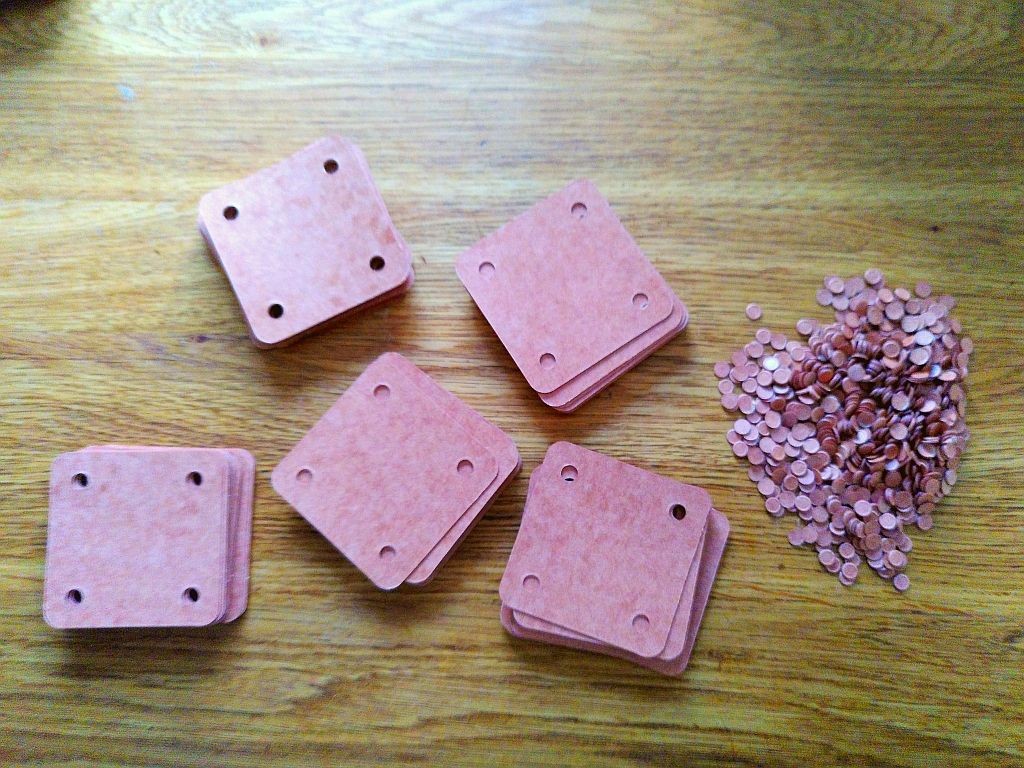
So I'm now preparing for the workshop, which includes prepping the tablets:

The workshop starts with warping tablets, and then we weave our way into understanding how patterns happen, and how to make them look just like you want them to look. It's the system I've developed that can be taken further into weaving 3/1 broken twill without a written pattern (though we won't go that far during this weekend). 

All the tablets we'll need are now ready for warping, with all the punched holes empty and waiting to be threaded. I have a list of some more things to prep, and a few printouts to make, and some warping for the edge tablets.

Like all workshops, my tablet weaving workshop evolves over time - sometimes there's a chance discovery of something that works very well, or there's a "snag spot" where participants seem to struggle regularly, so these things get updated in my master script after a workshop, and are done a little differently next time. I really like to see how these things change and evolve and grow over time. And then there's the additional changes made to adapt the workshop to the group's wishes, so while the workshops are somehow the same, they also feel quite different every time... and part of the fun and joy in giving these is discovering their own specific vibe. (Plus, of course, the joy of seeing those little aha!-moments when something suddenly clicks.)

1
MäRZ
01
0

CIETA terminology list.

Terminology is always an important thing - and especially in textiles, it can be a real nightmare. There's a lot of terms that are used differently in a professional and in a casual/everyday setting, and then there's regional differences, and then there's different uses of the same term in different disciplines, and that's not even starting with the issues that can arise in translations to other languages.

To make things at least a little bit easier, terminology lists and glossaries exist. There's several of them, of course, and they may also differ from each other. One of the probably better-known ones is the list compiled and hosted by the CIETA, the Centre International d'Etude des Textiles Anciens. If you think it might be helpful for you, or if you're just curious, check the lists out here.

0
FEB.
29
0

...and it goes on...

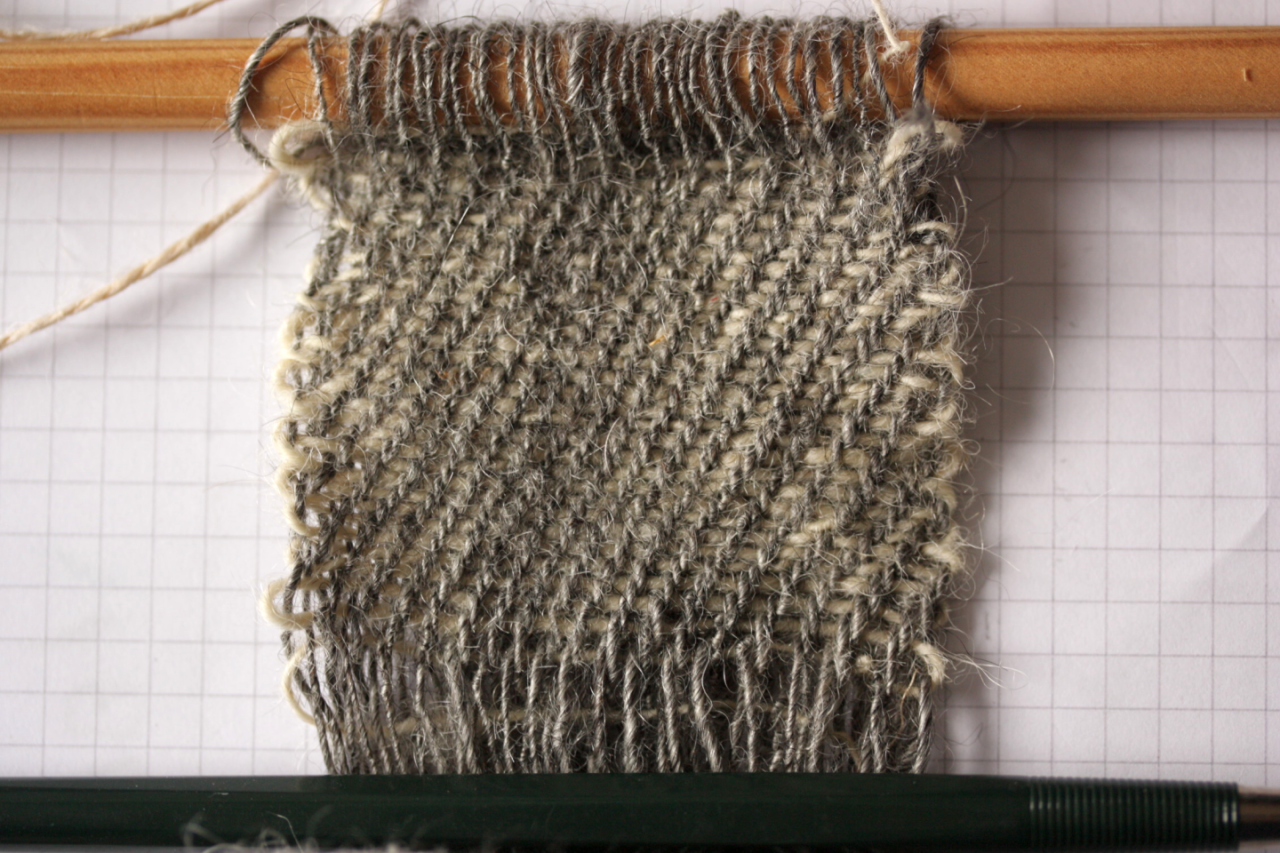
Since I've decided to play it safe(r) and do another test run, here's the result of my not-so-perfect weaving:

Yarn twist in the warp is now definitely closer to the original. Also, my selvedges are quite uneven (sadly, that's pretty normal for me) and there's a bit of a weaving mistake at the start (but on the other side of the fabric, so you can't see it here). 

 I have some warp left, so I can do some fun weaving when I feel like it, and maybe improve a little bit... and otherwise, I'll take another closer look at the sample tomorrow and see how well it matches our goal fabric. And then... spinning can more or less start.

0

By accepting you will be accessing a service provided by a third-party external to https://www.pallia.net/

Kontakt