







Latest Comments

Guest - Aislinn Dyestuff Citizen Science.
09. Oktober 2026
This is a great project. I look forward to the results. Thanks for letting us know.
Guest - Aislinn Time for...
09. Oktober 2026
Looks delicious!
Guest - Katrin Sprang Discussion
18. September 2026
Hi Rachel, I have looked for more photos of you, but that was not very successful. I found a link on...
Guest - Beatrix Sprang Discussion
15. September 2026
That lozenge pattern element is not a photograph, but a scan. So it should be to scale. But I pinned...
Guest - Katrin Sprang Discussion
15. September 2026
I was not referring to Rachel's reconstruction (is the reconstruction you refer to the one photograp...
SEP.
25
0

More exciting stuff.

I have sung its praise before, but it is time to do it again: EThOS - the "Electronic Theses Online Service" offered by the British Library. They basically list all the Theses of Britain, and as many of them as possible are downloadable. For free (you just need to register with them). It's even possible to order them on CD/DVD or as printout, though then they are obviously not free anymore, but will cost a bit to cover for material, time and postage. (If you are a multi-tab opener like me: resist the temptation. Downloads and links don't work properly when opened in a new tab, and the back button is not recommended for use; you'll need to click on "search results" or "order history" to go back to your lists. The site works smoothly that way, though.)

And there's more good free info stuff from Britain - meet the Portable Antiquities Scheme. It's a scheme trying to encourage members of the public from England and Wales who have found archaeological objects to register them in an open database. It's mostly metal objects, and there are very many of them - among it pins, needles, buckles, and spindle whorls. The search function is nice and works quite well, and there are additional filters to narrow down on item groups.
0
AUG.
30
0

Databases.

From time to time, I mention that some things are so much easier to find these days than just a decade ago - thanks to the Internet. And there's more databases and info-portals springing up, such as these ones:

Arachne - meant to help make research easier, this project from Uni Köln mainly focuses on antique stuff. It includes a possibility to browse the Trajan pillar in detail, among much other stuff. The interface seems to be German only, though.

Then there's Europeana, a multi-language portal and searchable database of... stuff, from all over Europe. Searchable, though you might have to look through a lot of entries or miss some, and search terms can be in different languages. I'd say that is a space to watch, though.

And then there's DARIAH, with an even more high and noble aim: to interconnect all arts and humanities resources in Europe. It seems to still be in its building phase, though.

Maybe, one day, it will actually be possible to search all the picture databases in a collection such as my bookmark list? That would be a happy day...
0
AUG.
13
1

I'm back!

I am returned home from a wonderful and lovely time outdoors with friends - time spent paddling in warm, clear waters, swimming, reading, having lovely food (both homecampsite-made and dining out), knitting some socks, looking at the lush greenery, making oodles of bad puns and generally relaxing a lot. It was not only wonderful, but also a much-needed recharge of my batteries.

I spent the first day back going through 300+ emails, and one of those is the reason you get a blogpost today already instead of tomorrow. If you have read German academic books, chances are that you have held one published by de Gruyter in your hands. It's one of those typical academic publishing houses that have a very good reputation, but can be extremely pricey.

De Gruyter has bought up two other academic publishers, namely Akademie Verlag and Oldenbourg Verlag. To celebrate this, they are granting free access to the ebook versions of all the current titles of both publishing houses. The books are in German, but if you read German and need a book from their programmes, this is your opportunity.

Free access is possible until August 31; you find the titles of Akademie Verlag here and those of Oldenbourg here. And if you visit the site, have a laugh at some of the ebook prices they offer - the printed and bound version costs 19.80 €, while the ebook is priced at 198.00 €! (I wonder why... don't they want to sell ebooks too?)

0
JUNI
27
0

I only look into them for the piccies.

I will admit it: I'm one of those who only look into books for the piccies. Well, old books, that is. While I can read Middle High German well enough to get most texts once they are transcribed and can read some very little Middle English (and thank you, Chaucer, for your tweets!), I have yet to read a manuscript in its original state.

Every time I run across a digitised manuscript library on the internet, I do a little happy dance (yay! More accessible manuscripts, and more manuscripts that will be there for posterity even if something dire happens - remember the archives at Cologne?) and then... I do a search.

I look for the search terms "spindle" and "wool" typically, both in English (if there is an English archive version) and in the archive's native language. Sometimes I'm lucky, other times I'm not.

I was not lucky in the St. Laurentius Digital Manuscript Library from Lund - but if you are looking for pics of nice medieval manuscripts, with pretty initials, you will really like this page. There's 64 digitised manuscripts from the 9th/10th century to the 16th century, and they are worth a look if only for the initials. (At least that's what I think.)

While I'm at links to libraries online: Umeå University has rare old books digitised as well, accessible via their "special collections" page. It was very slow for me, but if you are looking for an old print - you might get lucky there.

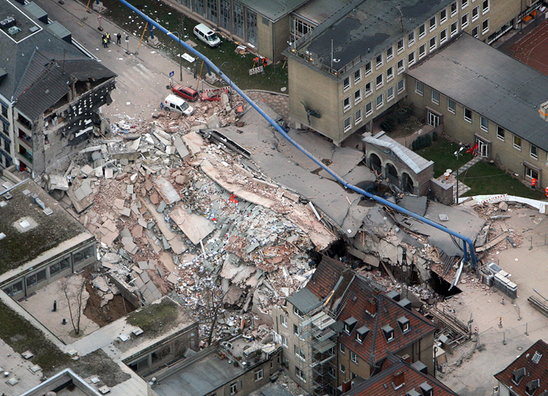
Oh, by the way: There is a lot of work still to be done on the Cologne archive material - the city has an info page about the damages and the work being done here (German only, but there's pics).
0
JUNI
11
1

Nothing to read? Let me help you.

I have found a nice alternative to keeping a gazillion tabs open - it's a "read later" add-on to the browser. So blog-interesting stuff (or "perhaps blogworthy") gets added into that list. Which is nice, and keeps the browser a bit more tidy, but has the downside of also growing into a long list... and that means it's time to throw links at you again.

First of all, archaeoweb.net is a collection page for all kinds of blogs concerned with archaeology/cultural heritage/museums and technology related blog, so it's a good way to get an overview about stuff that is happening in the archie blogosphere. They are collecting new blogs to add into their site as well, so if you have an archaeology-centred blog, it's double worth taking a look.

Speaking of overview: JURN is where you can search for free online e-publications. It says about itself: "A curated academic search-engine, indexing 4,507 free ejournals in the arts & humanities." It's basically running a Google custom search for you, and all the stuff it finds is accessible at no cost.

Via ancientworldonline there's mention of a new, open-access e-journal called "Living Past". While I have not found much about the journal on the page linked, there is a dissertations archive available in that same corner of the 'net, published in original language (most often Italian) and with English summaries.

If you are still reading, chances are that you will be interested in this as well: Working in what now seems to be called the "digital humanities",  sometimes calls for a programme, gadget, or other possibility to collect, process and analyse data. Bamboo DiRT is a collection of digital research tools for the arts, humanities and social sciences, and hosts a large collection of all kinds of... things for use in research.

That's it for today - have fun wasting your time finding exciting new stuff via these links!
0
MAI
27
1

The Internet - source of lovely stuff to read...

Just in case you would like to have even more archaeological on-line stuff to read: The archives of Fennoscandia from its first issue 1984 up to the 2011 issue are available online as .pdf.

Here's the link to the archive.

Enjoy!
0
MAI
15
0

Still catching up.

I'm still catching up on the interesting (or possibly interesting) articles that appeared during the last two weeks or so, and accordingly, here's another list of possibly interesting stuff for you as well. First of all, a German-language one:

HistoFakt is blogging about the Middle Ages in German television, and it's not really pretty.

There's a blog about making historical shoes, with some very nice in-detail documentation and project lessons about shoes with raised heels from about 1500 to 1800: Chopine, Zoccolo, and Other Raised and High Heel Construction (h/t cathyscostumeblog)

And finally, Maney Publishing has a Journal of the Month special again: You can access the last three years of the journal The Historic Environment: Policy and Practice for free (only requires filling out a form that gets you their newsletter). The offer is valid until June 15.
0

By accepting you will be accessing a service provided by a third-party external to https://www.pallia.net/

Kontakt