Latest Comments

Guest - Aislinn Dyestuff Citizen Science.
09. Oktober 2026
This is a great project. I look forward to the results. Thanks for letting us know.
Guest - Aislinn Time for...
09. Oktober 2026
Looks delicious!
Guest - Katrin Sprang Discussion
18. September 2026
Hi Rachel, I have looked for more photos of you, but that was not very successful. I found a link on...
Guest - Beatrix Sprang Discussion
15. September 2026
That lozenge pattern element is not a photograph, but a scan. So it should be to scale. But I pinned...
Guest - Katrin Sprang Discussion
15. September 2026
I was not referring to Rachel's reconstruction (is the reconstruction you refer to the one photograp...
JUNI
13
0

Just Two Links Today...


... but they are both to spectacular things. Number one: A one thousand year old sarcophagus was opened in Mainz - here is the link to a short video report (in German).


Number two is more textile-related stuff: A report about the conservation of embroidered and textile book-bindings at the British Library. These stunning book covers are definitely worth a look!

0
JUNI
11
2

Sustainable Mobility - With Petition Link


While bicycles may be a modern thing, and thus a modern solution to the sustainable transport issues, overuse and sustainability are not a modern thing or concern. This shit has history. Lots of history.


Case in point? Overfishing. This was already done in medieval times, and there were counter-measures taken - this article in The Atlantic is a nice read about the topic.


While ruining our environment may have a long tradition, though, it doesn't mean that we should not strive to do better. (War, after all, is a very human thing too, and has a long tradition. Yet nobody in their right mind would say that war is a good thing. Or at least I hope so.) Unfortunately, making things better, and protecting the environment, often needs some kind of rule, or law, or regulation, or making it really pricey - because, let's face it, we're all only human, and if someone dangles a shiny tempting thing in front of our noses and offers a really good price, it is very hard to resist and not give in and snatch the shiny, whatever it might be. If meat is really cheap, a lot of it will be eaten. If cars are cheap and convenient to use, people will take the car instead of public transport or human-powered transport. If flights are really cheap, a lot of people will fly without a second thought.


And now we've arrived at the real reason for this post: Flights. Full disclosure: I'm not a strict non-flier. I've done plane trips in the past both for job reasons and for fun reasons. I will fly to Dublin for WorldCon this summer, not travel there by train, and when I am going to NESAT next year, chances are rather high that I will fly to Finland instead of taking the train. In both cases, a train trip there would take several days - either because I'd need to do an overnight stop, or because I'd have to factor in at least one additional day after arrival to recover from having little to no sleep on the trip. (This would look very, very different if there were still night trains with sleeper cars, by the way. I'd love to use those instead, they were a wonderful thing!) Spending an extra day or two travelling time will up the total cost of the travel, which - going by train - would already be significantly more expensive than going by plane. So that's a number of things prodding me to choose the plane.


And, obviously, I do. I book those flights with a bad conscience, because yes, I do believe that every flight is one too many. Being an inconsequent human being, I'll also look for the best deals in terms of flight length, start or arrival time, and price. (No use taking a plane instead of a train if I still end up with a sleepless night.) However... if all flights would cost double or triple the amount, making a long train trip with an overnight stay, maybe to enjoy a little city sightseeing on the stopover point would become much more attractive.


And there's actually a way to make flights more reasonably priced. Reasonably, in this case, being higher priced - and thus more in keeping with what flying actually costs us, as living beings on a planet, in terms of social costs and environmental damage. (Aviation emissions have risen 21% in the last three years.) One of the reasons flights are so cheap is the tax exemptions that are granted: There is no VAT charged on airplane tickets, and the kerosene used as a fuel is also exempt from taxes. That is unfair, especially seeing that public transport, including trains, is taxed both for fuels and for tickets.


There now is a European Citizens' Initiative asking to remedy this, with a registered petition at the European Commission. You can read more about the background for the petition here, or you can go straight to the petition, fill in your details, and sign.


It needs one million signatures, and it currently has close to 19.000 - so please go, sign, and spread the word!

0
JUNI
10
0

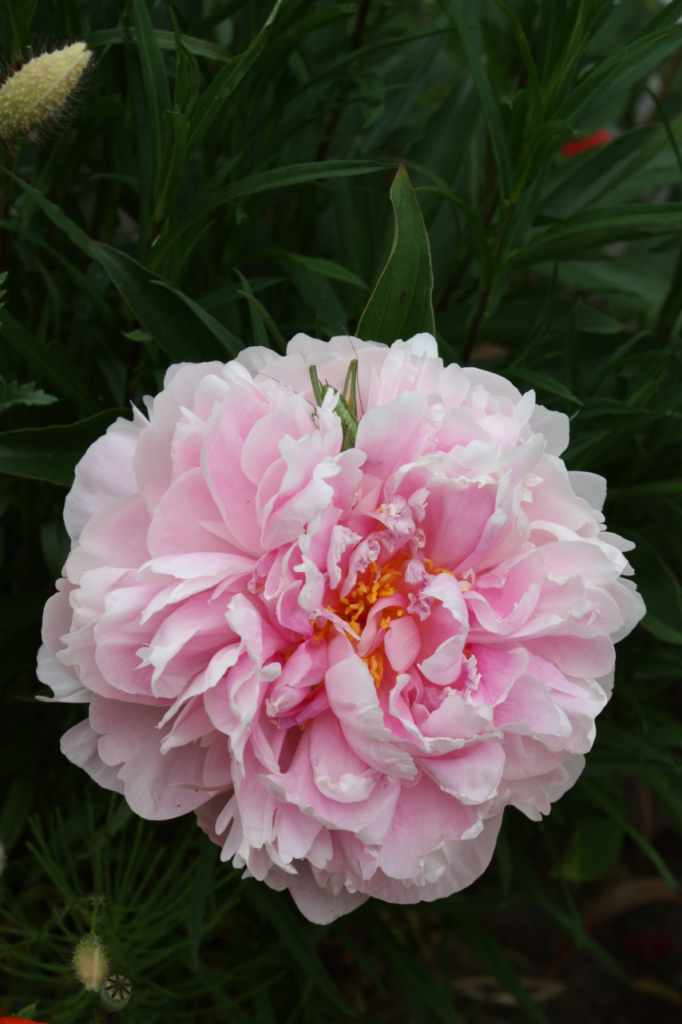
Happy Pentecost!


Blooming right on time...


0
JUNI
05
1

More about bikes (and a genius charity)


I've been writing about bicycles in our Western space yesterday - where the bike is not necessarily the first choice of transport.


Usually, the more urban the area, the more prominent the bike, as it's harder to find a parking space, and more annoying and time-consuming to get through the traffic jam. People who live in rural areas often think of the car first when planning to go somewhere - and as the car is rarely really not a possibility, it's the mode of transport used no matter if the trip in question could also be done on foot or on a bike. Taking the bike instead, though, has a lot of positive effects, as this German article outlines: less nitrogen dioxide and dust emissions, less noise and space consumption, less carbon dioxide emissions (and therefore good for our climate). You've certainly heard about all of these before.


What really surprised me, though, is that there is also a sociopolitical and socio-economic factor in this. There's been a survey by Stefan Gössling from the Uni of Lund, who calculated the costs of a kilometre done by car as opposed to the costs to one by bike - including secondary costs due to climate change, subventions, noise, infrastructure, time of travel, traffic jams, the user's life expectancy and accidents. The result? One kilometre per car costs about 20 cent. One kilometre per bike generates 30 cent. It generates money, folks.


That is... stunning.


What I really wanted to get at when I started writing this post, however, is the immense amount of positive impact that a bicycle has in non-Western countries. For us, using the bike sometimes feels like a step down - it's slower over long distances (even if you drive your car like a gran on tranquilisers, like I do), it's less comfortable as you may have to exert yourself a bit, or as you might get wet when it rains, and it has less transport capabilities than a car (though with some of the modern fancy cars, there's not so much difference anymore). It's also less of a status symbol thing, which surely also plays a role in how we grade our vehicles internally, knowingly or not.


In countries where there is no abundance of cars, though, and mobility is at a premium; where walking is the standard mode of transport, because there's nothing else available? A bicycle will make a world of a difference. And this is where World Bicycle Relief comes in.


World Bicycle Relief is a charity that empowers people by developing a special bike, called the Buffalo Bike, and making it available to those in need of mobility. Such as doctors, nurses, or other healthcare practitioners who need to visit their clients. Girls and young women who can get to school safely and much faster with a bike. Farmers who need a way to transport their produce to a market. The bike is not only robust, sturdy, and easy to repair, it also has a large payload capacity - the carrier in the rear can take up to 100 kg, and it is large enough that it's possible to transport a second person if that is necessary.


Even better, the charity goes for local assembly, it makes sure that there are spare parts available in bike shops, and they also train bike mechanics to make sure the bicycles stay in good working order. So these things not only help the new cyclists, they also create local, sustainable jobs.


Along with MSF, this is definitely one of my favourite charities. If you are looking for a place to do some good with your money, consider donating to them - they are currently running a campaign called "Racing the Sun" to get 5000 bicycles to people in need.

0
JUNI
04
1

I've missed World Bicycle Day!


I'm a day late to blog about this, but I only realised yesterday afternoon: June 3 is World Bicycle Day.


Bicycles are my personal favourite means of transport. I've been cycling to school as a teen (even though my parents could have take me in the car), and I continued to cycle when I moved to study in Bamberg. That's not only because of my green soul - cycling in Bamberg is much smarter than taking the car anyways, as there's no parking spaces and those that are there are usually either full or really expensive, so this was also a very practical solution to the mobility problem. (My car was parked either a quarter hour bus ride away or a quarter hour walk away, as these were the closest free parking opportunities where one could find a space without too big a hassle.)


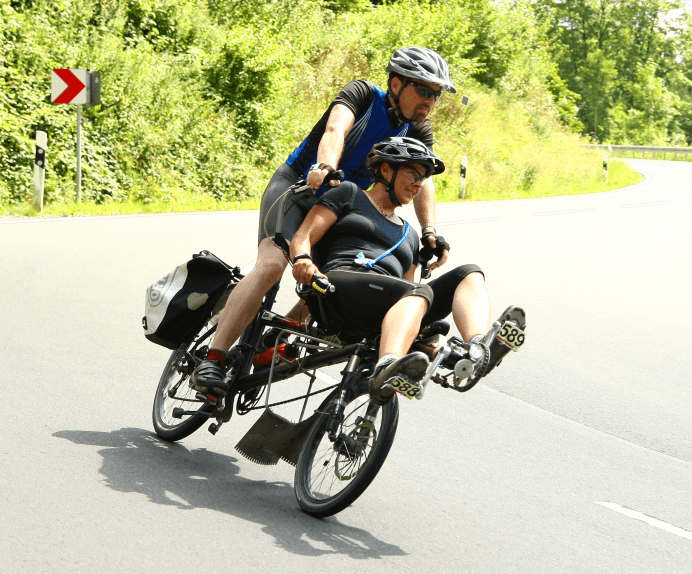
When I hooked up with the most patient husband of them all, we found that he was a cyclist as well, so our transport preferences combined beautifully. Only our riding speeds did not - I was much, much slower. Which is not a big deal within a city, but does cause potential problems when you are going on cycling holidays. So we looked for a tandem with enough luggage capacity for cycling trips including camping gear, and we did stumble across the Pino, a half-recumbent tandem made in a small bike manufacture in Germany. (If you're interested in the bike, there's the Pinoforum, where you can find more information. It even includes a small English part.)


On the tandem at a fun ride - we were doing about 60 km/h at this time, it was one of the nice downhill passages!


So when we have to go somewhere in our day-to-day life, the default means of transportation is the bike. If that's not possible, due to some reason - too far away, too much to transport - we check for public transport possibilities. In some cases, these will combine very well with taking the bike along; there's a special ticket in our area that allows two adults to take two bikes along (in our case, only one is necessary, though). If that won't work, it's the car. Which means we travel a lot by bike, and it's usually just as quick to take bike or public transport and bike as it would be to take the car, or even quicker. For instance, when we go bouldering, it's about 10.5 km one way. With the car, due to how we have to drive, it takes us about 25 minutes. With the bicycle, it takes us... 30 minutes, and we arrive with already warmed up legs - and don't have to look for a parking space for another 5 minutes.


Even in combination with public transport, the bike rules, in the speed department as well as in the cost department. As my car is the company car, I have to do the proper maths for all its costs... and my cost for driving one kilometer is about .34 €. Often, using public transport is cheaper or, at the most, coming to the same cost.


Plus there's the health benefits of using a bicycle... some (more or less) fresh air, and some joint-friendly movement. It's important to have a bike that fits so you can ride easily and comfortably, though, so it might be worth to look for a good bike shop, and take a bike-nerdy friend along to help. I'd also recommend keeping your tyres nicely filled, that makes for a much smoother ride, you have to pedal much harder on flat tyres.


Every kilometre not done with a car, but with a bike instead, counts. We only have one planet, and using a bike helps to make it last a little longer. So - take the bike if you can, not only on World Bicycle Day!

0
MAI
07
2

Garden Stuff.


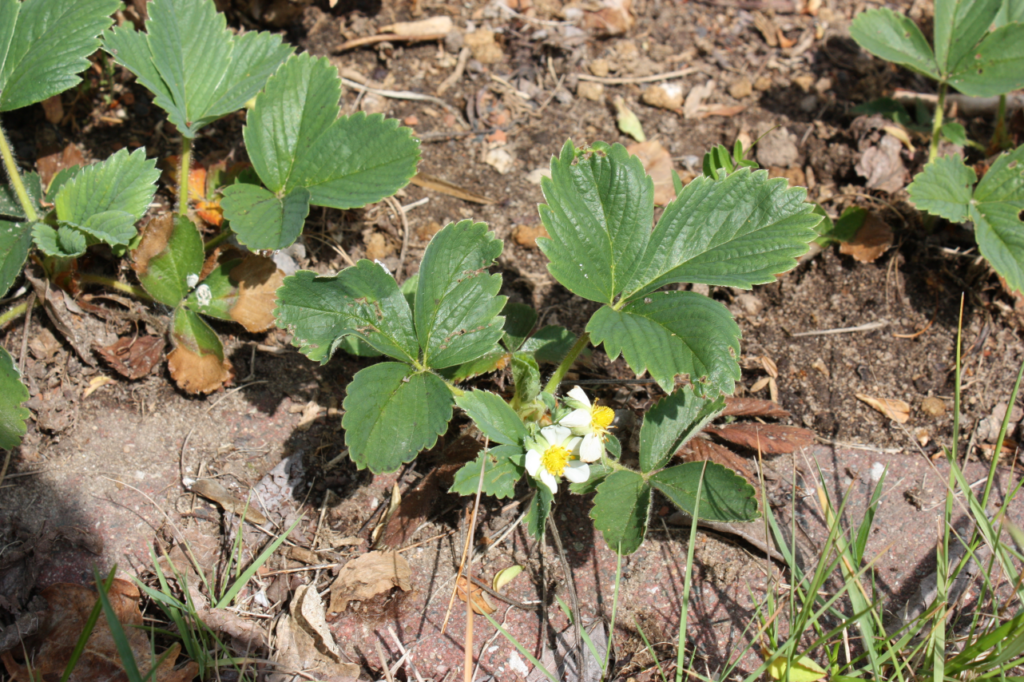
The garden is in proper spring mood now - the peach blossom is through, as is the bloom of the sour cherry. There are the first strawberry blossoms now:


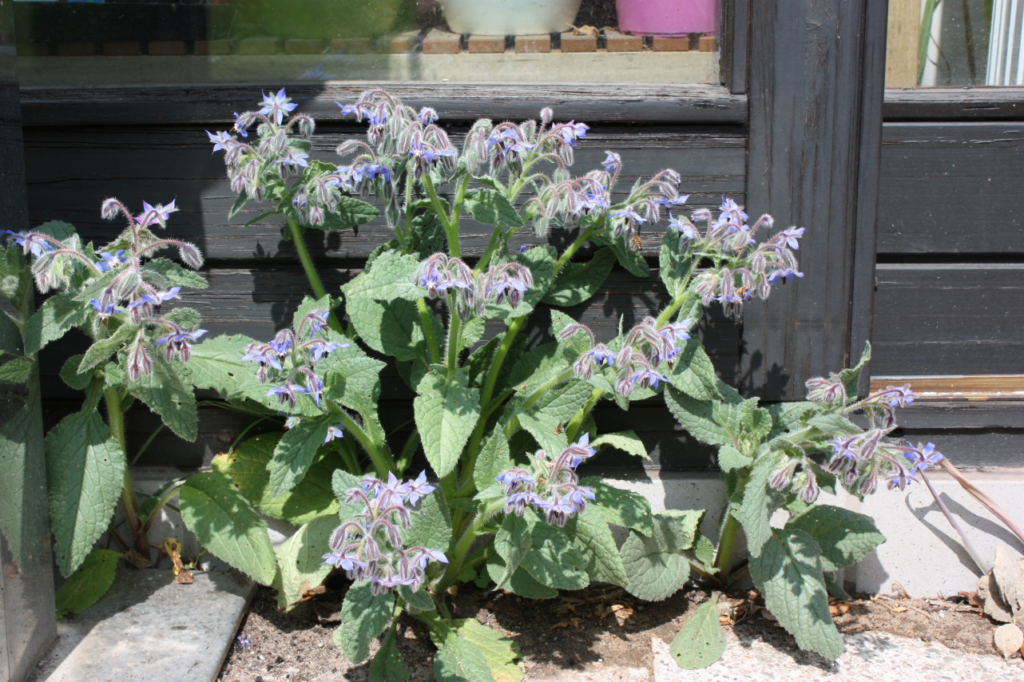
and, much to the delight of bees and bumble-bees, the borage is also in flower already:


Theoretically, these are edible leaves, and they are said to be delicious in combination with cucumbers - but somehow I've never really warmed to them. They are a bit too hairy for my palate. I still enjoy having the plant in the garden, though, as they are blooming nicely and for most of the warm period; the flowers make a nice edible decoration on salads, and the insects love them, too. Plus it comes back year after year, sowing its own seeds, and if it is somewhere that I don't want it, removal is rather easy. So altogether, it actually is one of my favourite plants!

0
APR.
23
0

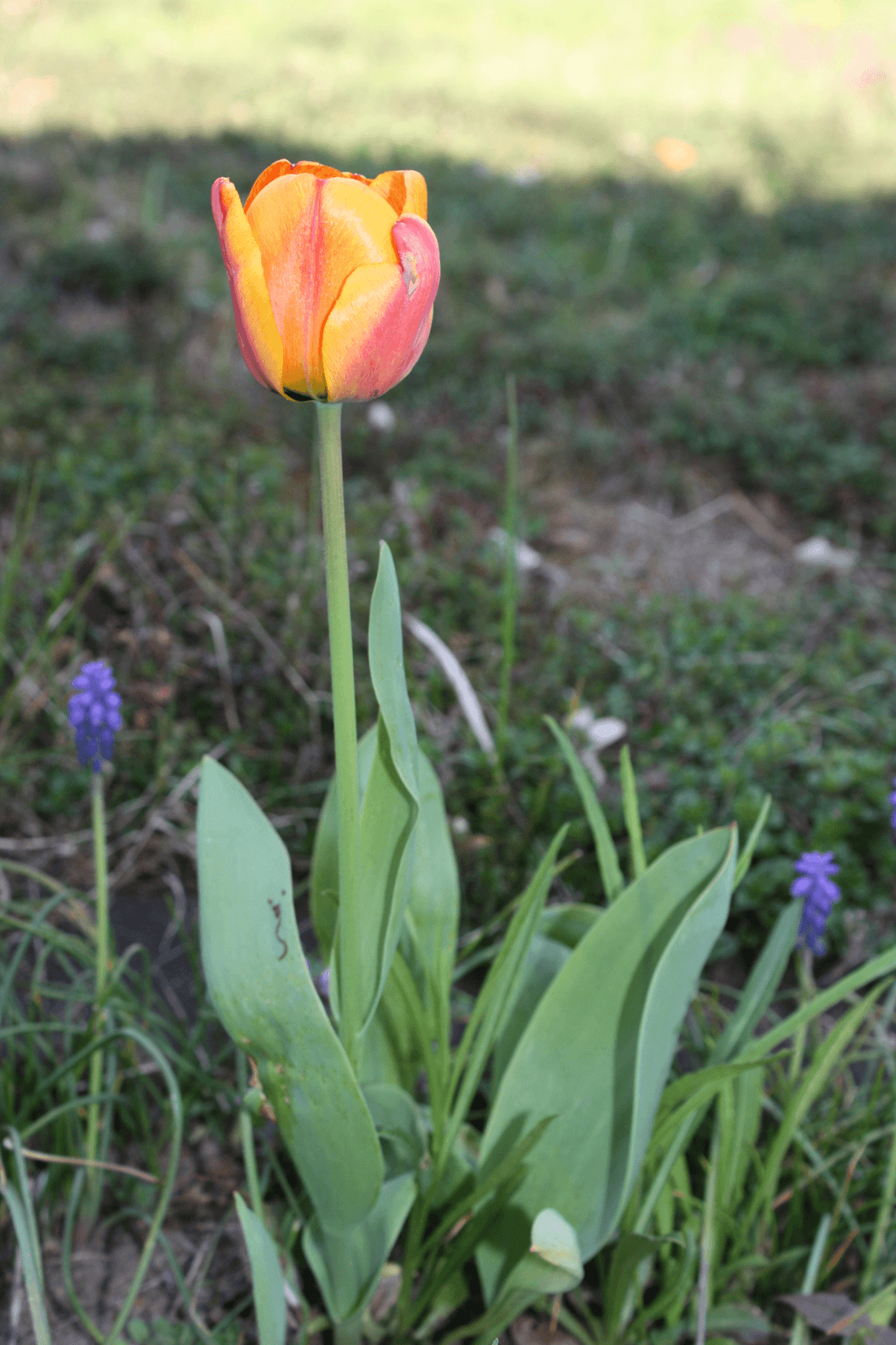
Tulip!


I'm back from spending a few days with family, and of course things to do have stacked up in the time - so here you have a tulip from our garden while I am trying to catch up!


0

By accepting you will be accessing a service provided by a third-party external to https://www.pallia.net/

Kontakt