Latest Comments

Guest - Aislinn Dyestuff Citizen Science.
09. Oktober 2026
This is a great project. I look forward to the results. Thanks for letting us know.
Guest - Aislinn Time for...
09. Oktober 2026
Looks delicious!
Guest - Katrin Sprang Discussion
18. September 2026
Hi Rachel, I have looked for more photos of you, but that was not very successful. I found a link on...
Guest - Beatrix Sprang Discussion
15. September 2026
That lozenge pattern element is not a photograph, but a scan. So it should be to scale. But I pinned...
Guest - Katrin Sprang Discussion
15. September 2026
I was not referring to Rachel's reconstruction (is the reconstruction you refer to the one photograp...
AUG.
30
0

Season's Delights, part three.

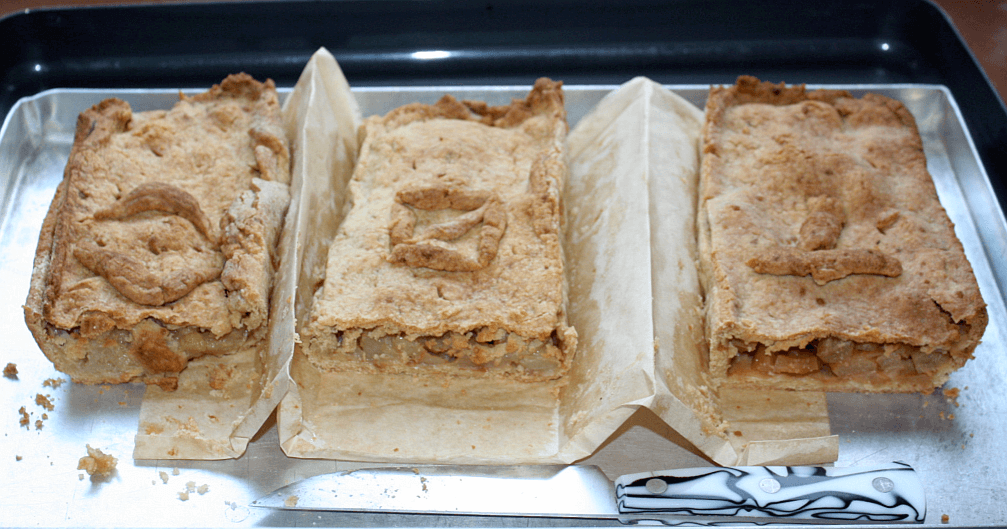
There was... more windfall. So there are more apples. Even better: there are more apples from three different trees, which means tat we got to taste-test and compare their tastes both raw and, due to some fancy baking action, in baked form.


Because there's no such thing as an excuse too bad to have apple pie, right?

The result, by the way, is that  still-warm, they are as distinctly different as they were in their raw state. All have an appeley taste, but one was significantly more acidic, one was rather sweet, and the third had, for my personal taste, the most iconic "I am an apple pie" apple taste, with a nice balance between sweet and acidic, and getting pleasantly mushy during the baking process.

Still to be done: Taste comparison after cooling fully. And then we can decide what to do with the rest of the windfall... more pie? Apple sauce? Apple cake? Who knows...
0
AUG.
29
0

Season's Delights, part two.

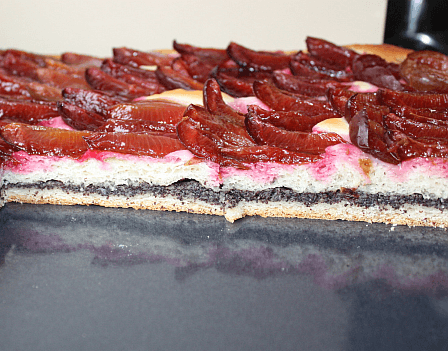
I mentioned Zwetschgen yesterday, right? Well. Zwetschgen. I love them. I also love poppy seeds. And fortunately, those two go together very, very well... so recently, this happened:


Zwetschgenkuchen mit Mohngeheimfach (Plum cake with a secret compartment for poppy seed filling). (Yes, obviously the secret compartment won't stay secret very long, but a cake has to be named in some way, right?)

And here's the recipe:

Yeast Dough:
500 g flour
80 g butter (soft)
pinch of salt
20 g yeast
200 ml milk
70 g sugar
1 egg

Filling:
250 ml milk
145 g honey
35 g sugar
150 g poppy seeds (ground)
30 g semolina
good pinch of ground cardamom

Topping:
about 1.5 kg Zwetschgen

Make yeast dough (add the butter, egg and salt in last, after having kneaded it for a bit) and set in a warm spot to rise. Mix honey, milk, sugar and cardamom and bring to a boil; add semolina, let it bubble up once, then stir in poppy seeds and set aside to cool.
Divide dough into two parts; cover bottom of a deep baking sheet with first half (the rolling pin is your friend), spread filling on top, cover with second half of dough. Set aside to let rise once more.
Pit the Zwetschgen: cut around so the two halves still hang together, remove pit, then cut into each half so the four quarters still hang together (they stack better on the cake if prepared thus). Place on top of the cake, overlapping.

Bake at about 170° C for c. 50 minutes (heat from top and bottom, no fan. I can do no-fan cakes now! Hooray!).

Enjoy. Tastes best when still slightly warm from the oven, and goes very well with vanilla ice cream or whipped cream.
0
AUG.
28
0

Season's Delights.

Late summer is a season for delights - our peaches are ripe now, the first late-summer and autumn apples are also ripening, and of course there are the Zwetschgen, this kind of plum that lends itself to baking and cooking like nothing else does. Few things are better than Zwetschgen on a cake with Streusel... or even without.
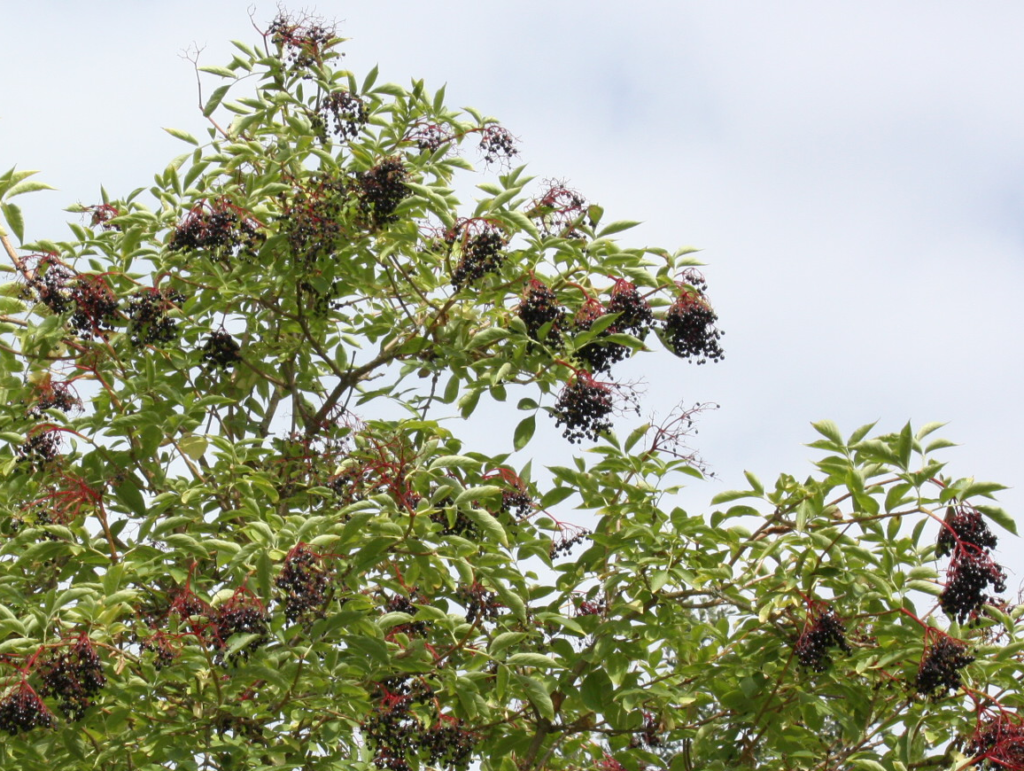
There's another delight of the season, however, and that is elderberries. As fond as I am of elderberry flowers (excellent fritters, lovely syrup, wonderful jelly - though I only make fritters, because I am lazy and our tree doesn't yield so much, flower-wise, without getting a jetpack or some way to turn off gravity), it is totally worth it to not harvest all the flowers, because then... there's elderberries later on in the year.


While one should not eat them raw (they are slightly poisonous when uncooked), they will add colour and wonderful flavour to cooked dishes. So when we happened upon some windfall apples, I took this as a sign to get out the ladder and harvest some elderberries... and a while later, we had dinner.

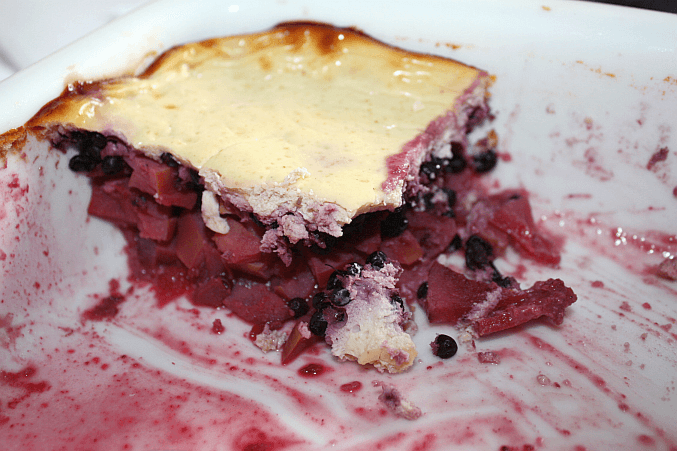
Curd cheese casserole with elderberries and apple, seasoned with a little cinnamon. A seasonal delight indeed!

0
AUG.
23
4

Baking Stuff.

As you can probably tell from the rather late blog, I'm not yet back in the groove. I'm working on it, though - as on what feels like a gazillion of other things. Plus, there's some baking going on, because obviously the new oven has to be tested. Thoroughly.

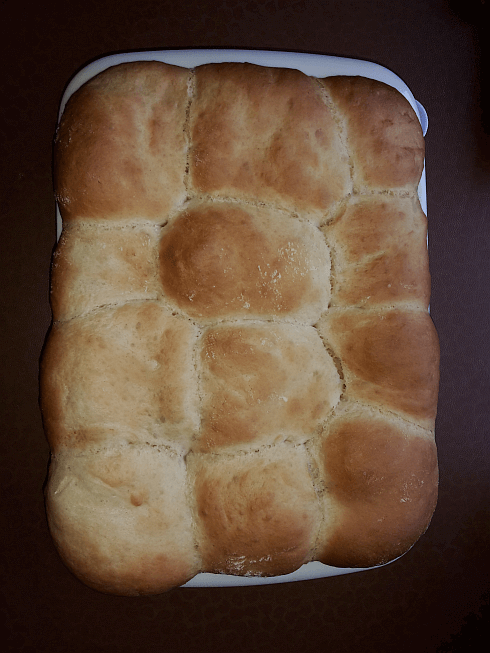
I've made, for the first time in my life, "Ofennudeln" - which is either a dessert or a sweet main dish, consisting of a yeast dough either unfilled and eaten with compote or apple sauce or vanilla custard, or filled with something - such as sweetened Quark and plum jam. These will definitely happen again - I really liked them. (One of the reasons why I had to make a yeast dough: The oven has a shiny programme for quality raising time for the dough.)


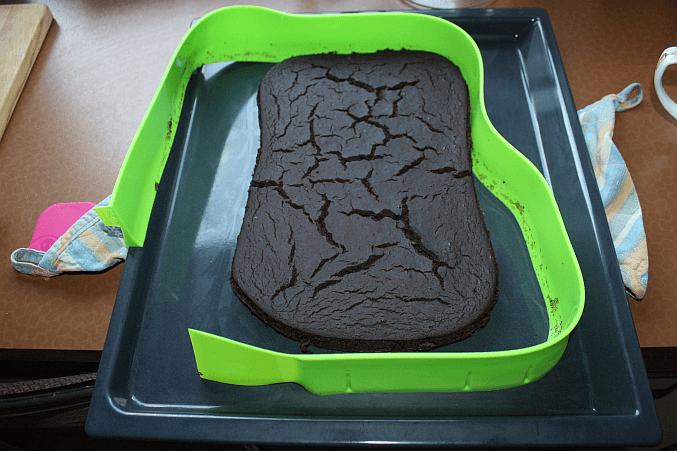
The latest experiment, though, was not so successful. I've been pondering trying out bean brownies for a good long while now, and I finally got around to doing this. The main reason this time was weird beans that stayed dry and unpleasant on the inside even after being boiled for a good long time... so I decided to puree them and turn them into bean brownies. The second reason? A new variation on the topic of baking frame - a silicone band with magnets that latches onto the baking sheet in almost any shape.

Well.


The baking band works very well. The bean dough recipe also results in something edible, though the Most Patient Husband is really not impressed with the stuff, and I would file it under "yes, edible, but not happening again". The texture is neither properly cake-like nor properly brownie-like; I can definitely taste the beans, and it's not very chocolatey. I don't find the texture unpleasant, but it's unexpected and somehow not fitting the idea of brownies.

So that is not going into the stack of recipes that will be made again...
0
AUG.
20
0

Peaches!

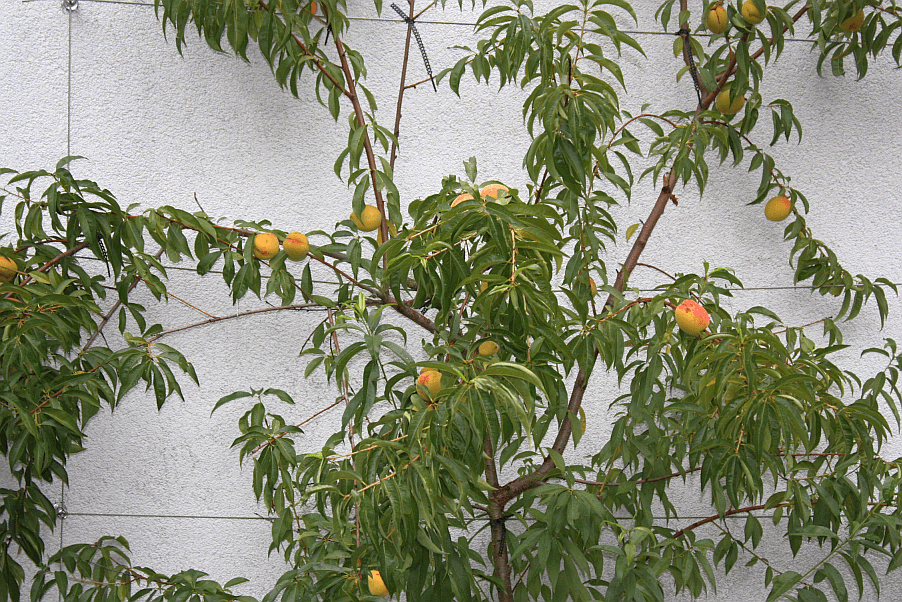
I'm on my way back home from the fair, and while I am on the road, you are getting peaches. Or at least pictures of peaches, hanging on our tree:


Though they look temptingly yellow and red, they are still hard as stones, and will need some more weeks to ripen. Last year's fruits were edible sometime in September, so I'm waiting. And hoping there will not be more people along like the guy who recently stole one of the unripe ones when leaving the premises, triggering a nice little fit of temper!
0
AUG.
15
3

Wax Cloth in the Kitchen

For ages now, I've wanted to try out wax cloth, but somehow, I never got around to making it, or to really use the piece that I had, gifted to me from a friend years ago.

A while ago, though, things conspired to change that. First of all, during the Bernuthsfeld Man project, Jens and I made some wax cloth from linen (plus some tryout pieces from cotton) for the snack we had our Bernie double eat for the little film clip we did. Then, a bit later, another friend brought two bee-goodie cloths (German website) as a gift - these are handmade beeswax cloth pieces intended to replace clingfilm and metal foil. Most importantly for me, they had instructions for their use... and now I'm totally hooked on this alternative to foils, silicone lid thingies (which somehow never really worked for me) and clingfilm.

Basically it's cloth impregnated with beeswax, maybe with some oil or other wax mixed in. The cloth is relatively stiff, but that means you can form it around the rim of plates or bowls, and it will hold its shape when folded around other food as well. After use, you rinse it with some lukewarm water and maybe some dishwashing liquid; let it dry off and voilà, it's ready for its next use. It's a splendid alternative to clingfilm and plastic food bags, and with Earth Overshoot day this year happening on August 1, reducing this use of ressources a little is a good thing, definitely.

I've been using these to cover bowls, wrap food to take with me, and wrap food for storage in the fridge, and I'm not sure how life was before having these. They are really practical - and nice. The current extreme heat might not be the best circumstance to just pop things wrapped with wax cloth into a pocket, but there's always trusty boxes for that. And it will surely get cooler again. The only real issue I do have with them is that they are made from conventional cotton cloth - which means I won't buy any extras and instead make my own when I feel I need more of these.

Since I did not use clingfilm before, they are not reducing plastic usage in my case, but they do beat covering things with plates for sure. Plus it feels pleasingly medieval to wrap food in wax cloth...
0
JULI
03
0

The Search.

If you've been following this blog for a while, you'll know that I like buttercream... though there is one thinkg that still eludes me, and that's a good chocolate buttercream.

Basically, there's a few different types of this stuff. There's French buttercream, which uses egg yolks (whipped up into a froth), sugar, and butter as a base; Italian or Swiss buttercream, which use a kind of meringue fluff made from egg whites and sugar to mix with the butter, and the good old German buttercream, which is a base of custard (with or without egg added) that is beaten into the butter. (Theoretically there is also American buttercream, which is just butter and sugar.) All of them are nice (well, I never tried the American version, since the first thing I do is reduce sugar amounts, and that type won't work anymore that way), all of them are water-in-fat emulsions, which means that there is a point where you cannot add more of the base to the butter, and I suspect all of them are both softened, texture-wise and stabilised, emulsion-wise, by sugar (which would explain why I sometimes have trouble with the amounts of custard per stick of butter given in a recipe where others don't - one day I will try it. Possibly.).

[caption id="attachment_3941" align="alignnone" width="640"]This is what happens if you beat in too much of the watery base - even if you have enough emulsifying agents in there, you start to get pockets of the watery phase. Next step if you beat in even more: This is what happens if you beat in too much of the watery base - even if you have enough emulsifying agents in there, you start to get pockets of the watery phase. Next step if you beat in even more: "curdling". Which means you need to have a bit more butter, whip that nice and soft. Then beat the curdled stuff into the butter, and all will be fine again.


Now, my problem is this. If you make a ganache (a filling of cream and chocolate), it is very nicely chocolatey, but it's also very solid. Combining that with a buttercream filling makes for a weird difference in texture that does not please me. So I thought I might solve the problem by making a chocolate buttercream instead, using a recipe I found for Swiss buttercream... and unfortunately, while it did taste very nice, it was just as hard and solid as the ganache. So not a winner either. (The recipe promised very high fluffyness, by the way, "like biting into a chocolate cloud". Well, no. At least not here.) Now I have gotten around to try the good ol' German style buttercream, which has you make a choc custard and then add that into the butter. The result had a pleasing texture, but a relatively mild taste that was somehow chocolatey but not really in-your-face-here-comes-chocolate-y, which is what I sort of hoped for or expected.

So... the search will go on. Maybe some French buttercream with chocolate in it next? Or a different recipe for the custard, making it more chocolatey? Hm.

If anyone here has a recipe for glorious, not-concrete-solid choc buttercream, by the way, please let me know!
0

By accepting you will be accessing a service provided by a third-party external to https://www.pallia.net/

Kontakt