







Latest Comments

Guest - Aislinn Dyestuff Citizen Science.
09. Oktober 2026
This is a great project. I look forward to the results. Thanks for letting us know.
Guest - Aislinn Time for...
09. Oktober 2026
Looks delicious!
Guest - Katrin Sprang Discussion
18. September 2026
Hi Rachel, I have looked for more photos of you, but that was not very successful. I found a link on...
Guest - Beatrix Sprang Discussion
15. September 2026
That lozenge pattern element is not a photograph, but a scan. So it should be to scale. But I pinned...
Guest - Katrin Sprang Discussion
15. September 2026
I was not referring to Rachel's reconstruction (is the reconstruction you refer to the one photograp...
MAI
12
3

The thing with looms.

There's two things I like to moan and groan about when chatting fabrics - number one: you just can't get the yarns anymore (or the guys to weave these yarns), and number two: there's a lot of modern fabrics that have no proper selvedges anymore.

And that's to do with the looms. Thing is - if you want to sell cheap fabrics, you need to have a loom that is fast, and work with materials that don't have a life of their own. Which means limp yarns, not spun as tightly old-fashioned hand-spun ones, in
a loom that is really, really fast... and these things will not give you proper selvedges.

Back when weaving was done with a shuttle, and where it is still done in this manner, you pass the shuttle through the shed, change sheds and pass the shuttle back. The thread, thus, makes a U-turn around the outermost thread(s) of your fabric. Adding in an extra thread or two to strengthen the selvedge was a well-known and quite commonly used thing, and having good selvedges that run straight and are even are a sign of good quality weaving.

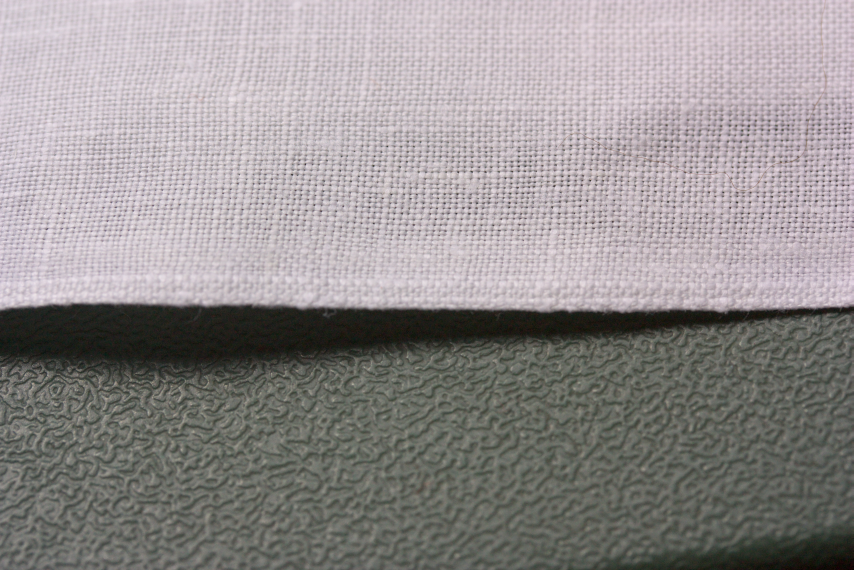
If you want a fabric that meets all the criteria of a historical fabric, you have to have a good old-fashioned selvedge like that. Which also explains why I'm always happy to get something like this:


That is a proper, nice selvedge; a little bit stronger than the rest of the fabric but not too different in weave or density, and there's no plastic strengthening thread added to it. You can join two of these selvedges with overcast stitch just like it was done back in the Middle Ages and be happy.

The next best thing, and a type of selvedge more commonly found in modern fabrics, is looking like this:
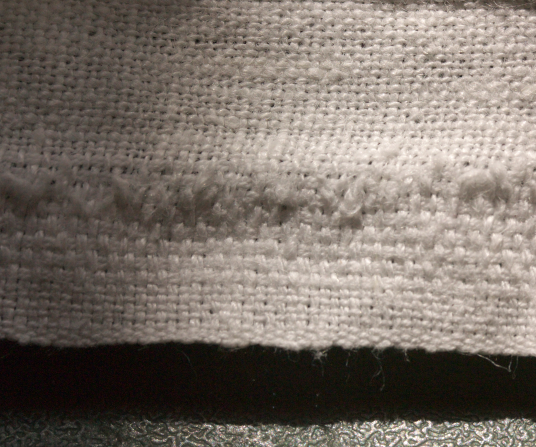

It's still a proper selvedge, though not as nice and sturdy, and quite wide if you don't want to have the change in weave type show on the surface. There's also often a messy-looking area between the weave proper and the selvedge, also nicely showing in this specimen here. I wouldn't join two of these with overcast stitch if the join will be visible later.

Now let's go a bit more modern, yes? Proper selvedges require shuttle looms. These old-fashioned shuttle looms are slow, and modern industry likes its stuff to be faster - time is money and so on. So there's another type of fabric edge which really can't be termed "selvedge" any more... this one.
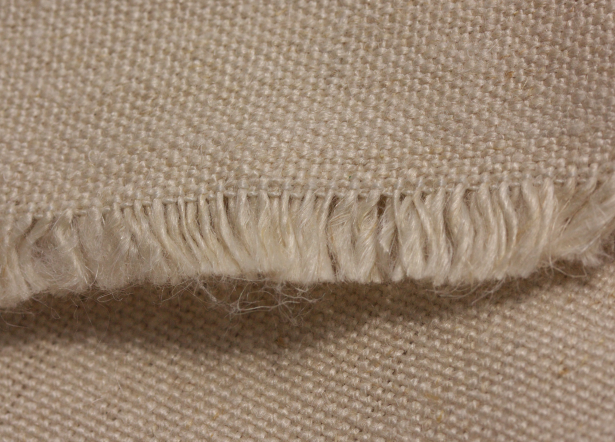

These are done with help of jets or projectiles, requiring cut threads as the weft. These weft threads, if fine enough, can be even carried by an air jet or a water jet. The result? A very, very fast loom (these are the fastest type today) but no selvedge whatsoever. The edges are, basically, cut edges with a little fringe and maybe some stabiliser thread along the edge. If you wanted to use the selvedge for extra strength somewhere... you're out of luck with this fabric type. If you wanted it to show somewhere... same thing applies. If you were planning to cut down on your sewing and hemming time with use of the selvedge, you just got a nasty surprise. You will have to treat every edge of this fabric like a cut edge, because that is what it is.

And then there's another little nasty surprise if you are looking for pure wool fabric in narrow widths. One of the two edges is a perfectly fine, normal selvedge, usually not reinforced by a double thread or anything.
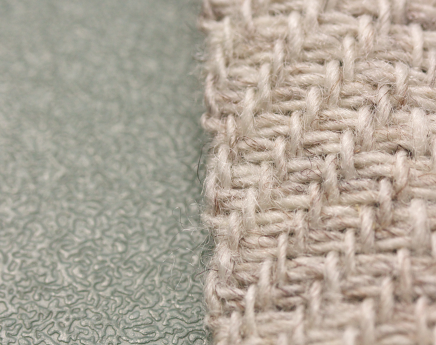

The other edge, however... is not a proper selvedge. In fact, it's more like one of the cut-thread edges, only with a fold in the thread instead of the cut. The edge is held together by a fine, tiny crochet chain, usually done with a very fine thread made from man-made fibre.

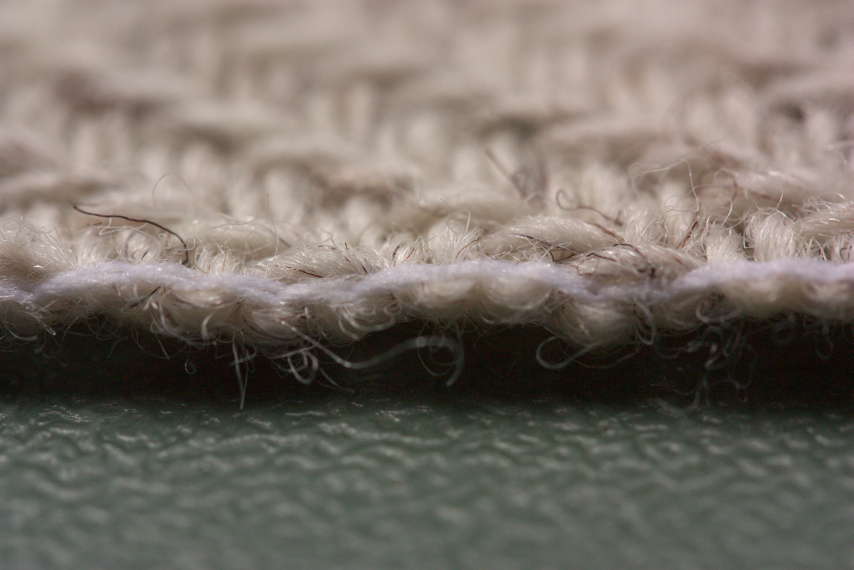
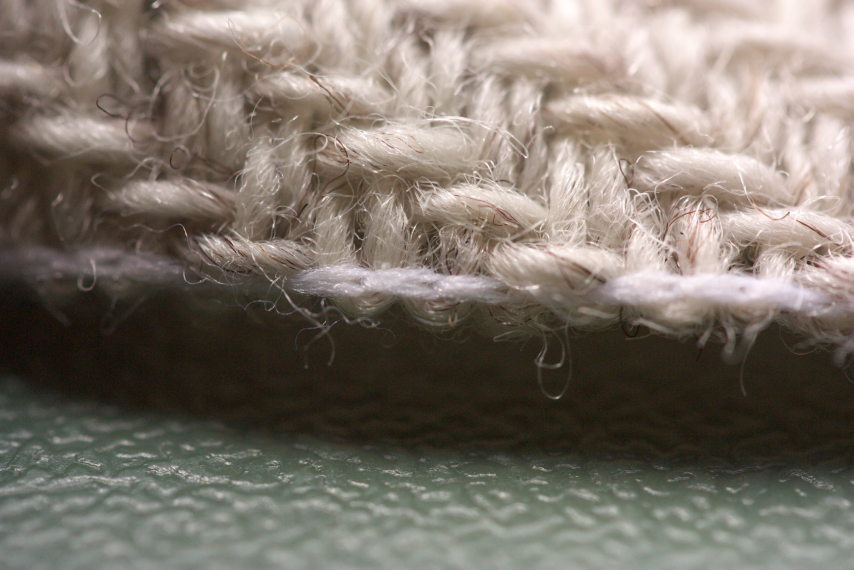

It's not very obvious, and won't be visible or noticeable to most people, but it's not acceptable in case you want to have an as-authentic-as-possible equipment. If you remove the chain, you also remove the structural integrity of that edge.
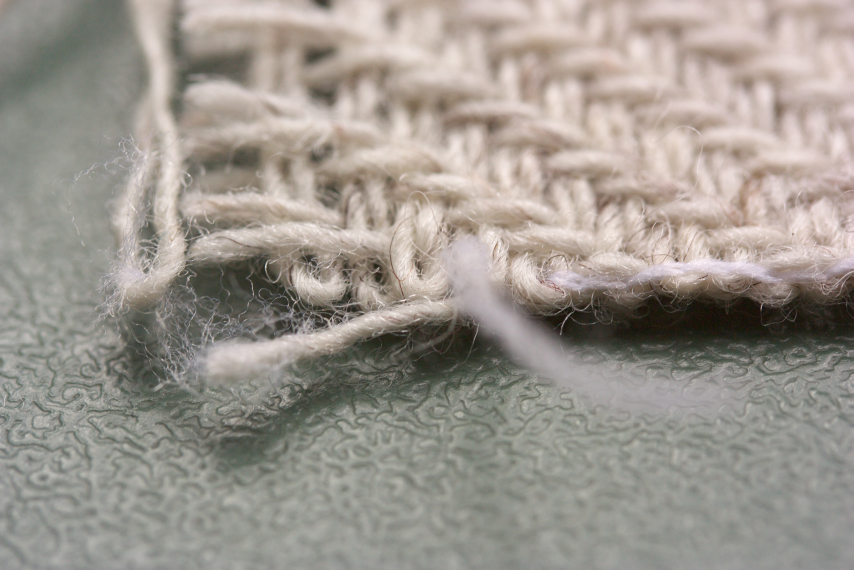

If you want to have a pure wool band without that chain, though, you can take a sufficient length of the weft thread, a needle with a blunt tip and a large enough eye, remove the crochet chain and thread the extra thread through each of the edge loops. It might be advisable to remove the outermost warp thread for that, and to stock up on enough chocolate and motivation-enhancing drinks before.

Fun. Right? Thank goodness there are still some old-fashioned shuttle looms running!
0
APR.
09
2

Printed cloth, medieval.

When I'm not bursting with my own ideas to blog about, I usually take a look at the blogs I follow - only that they seem to be in spring quiet (spring tiredness?), too!

There's one very interesting post about printing designs on cloth in the 14th century, though. The text is German, but you can look at the pictures (there are plenty) over here.

Otherwise, not much new hereabouts - spring is going on, work is still piled high, stuff is happening albeit not fast enough. I think I might add a second cool superpower to my wishlist - writing really good papers in an incredibly short time, and possibly several of them parallel. (The first one on my list, in case you want to know, is being able to read, understand and speak every language there is.)

Any more suggestions for really cool and useful superpowers, while I'm making that list?
0
APR.
07
0

Monday!

Monday! Spring! My nose itches! There are links for you!

First of all, Doug's Blogging Archaeology Carnival has ended, and here is the final post.

Secondly, the Canadian Conservation Institute has Notes and Publications downloadable on their server. The Notes are all free (some of them are a bit older, but should still prove helpful), and the Technical Bulletins are available as a free pdf version once they are 5 years or older.

Thirdly and finally, in case you are looking for something small to knit for an unusual recipient, there's always penguin sweaters.
0
MäRZ
24
0

Uh, Monday? Already?

Seems like the much-needed weekend is over, since my calendar and everything else with a date on tells me it's Monday. Oh well. I shall get to work then, right?

While I finish the last seam on the lady's surcot (getting it into a state where I can mark out hems and neck opening) and cut the middle gores for the tunic (getting this into a similar state, plus some sewing and neatening), you could check out this post about books of remarkable women.

Or you could go over here and read about Eastern Uncrossed knitting and yarn tension.

Me, now, I will go fix myself a coffee... because coffee always helps. Well, almost always, anyways.
0
MäRZ
19
2

Knitty stuff.

The new knitty is out, and while most of the patterns are not what I would utterly want to knit, there's a lure to a blog called Knitting Nuances that sounds really interesting. (In a similar yet different way to TechKnitting, in case you don't know that one yet.) Unluckily for me, I have a purple tunic calling, very loudly, to me from the living room table... which is where I shall speed directly to get some work done.

One day, though, when I have some time again and all the urgent stuff has been dealt with, I will really need to knit a "show-all-the-different-stitches" swatch. You know... increases, decreases, twists, slips, that stuff. I have a pattern swatch with different stitch, hem and seam types for sewing work, and that has been a very helpful explanation and teaching tool, as well as a nice reference. Soon. Soon. (Well. Soon-ish.)
0
MäRZ
17
1

Oh really? Well. If you say so.

During our last crafty evening, there was some need for craft knowledge input - the kind that you'd expect to find in the Encyclopaedia of Needlework. So we turned to that book, the necessary input was more or less gained, and the book stayed on the table for a while.

And a bit later, the most patient husband of them all picked it up and looked into the section on knitting. He read me the very beginning of it... the section starts out telling you that there is nothing more to be developed or invented in knitting, as it's all been done already and we know everything.

(That's the German version - the English just states that it "would be difficult to invent new stitches or patterns", not impossible. Unless "difficult" in the 1880s meant "impossible" in the same way that "selten" in middle high german epics meant "never", though technically it's only "rarely".)

Seeing that my current creative outlet is the invention of such a thing, this was hilarious. And now, having found that the English text is less sure of the impossibility to invent new stitches, I do wonder in which language Ms de Dillmont originally wrote her book.

Also, if you are a sock knitter, check out the different heels and toes she describes for all your sock-knitting needs. There's forms that I have not seen yet - she does not give the shortrow heel, though, or the sweet tomato heel. (But, as you well know, there's nothing new in knitting. No no.)

For the moment, though, I will not turn to socks (especially not cuff-down ones, I prefer the no-maths toe-up approach) but stay with my hat and shawl...
0
MäRZ
10
0

Spring is coming! Lace knitting time!

We've had the nicest weather during the weekend, perfect for sitting in the sun and drinking coffee and knitting. Also perfect, and the right time of the year, for pulling out all the seed packets and getting started on sowing - there shall be tomatoes again this summer, and mini-cucumbers, and chili plants, and also some pumpkins and zucchini.

I've also been hit by a creative bug during the weekend - it all started with the comment of a friend that knitted lace has a tendency to be quite feminine in look. Well. Well... I have worked a bit on the most un-feminine lace I have yet managed to see. It's not quite finished its development, but I'm close, oh so close. (I'm itching to show you pics, but I think I should keep it mum for a little while longer...)

The pattern is begging to be incorporated into a hat pattern that will probably end up slightly weird, due to topological reasons. I hope to have it done and finished in time for LonCon - it would fit in nicely there, and probably delight a few geeky knitters no end.

So hopefully I will be searching for a few adventurous test knitters soon... for now, though, I shall go back to finishing my computer work before the morning runs out.
0

By accepting you will be accessing a service provided by a third-party external to https://www.pallia.net/

Kontakt