Latest Comments

Guest - Aislinn Dyestuff Citizen Science.
09. Oktober 2026
This is a great project. I look forward to the results. Thanks for letting us know.
Guest - Aislinn Time for...
09. Oktober 2026
Looks delicious!
Guest - Katrin Sprang Discussion
18. September 2026
Hi Rachel, I have looked for more photos of you, but that was not very successful. I found a link on...
Guest - Beatrix Sprang Discussion
15. September 2026
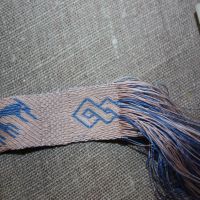
That lozenge pattern element is not a photograph, but a scan. So it should be to scale. But I pinned...
Guest - Katrin Sprang Discussion
15. September 2026
I was not referring to Rachel's reconstruction (is the reconstruction you refer to the one photograp...
AUG.
31
1

Linkapalooza the Umpteenth.

It's time again to clear out some of the tabs that have accumulated. (Especially since I am trying to clear them all, eventually, as I'm going to switch over to another browser. Firefox is just not what it used to be; I've had nasty issues with typing lags and other long load-times and lags, and it's getting on my nerves. So currently being tested: Opera. Any browser advice is taken gladly.)

There's been a new study on alcohol consumption, and it looks like there are no health benefits that outweigh the potential downsides after all. I really liked the note of caution at the end of the text, though - where a Professor for the Public Understanding of Risk (I wasn't aware this subject even existed!) very rightly states that there is also no safe level of living, but nobody would recommend abstention. After all, getting a fix in some way or other is a very human (and a very ancient) thing...

Speaking of ancient, if you like bananas, you might be interested in this history of the domesticated banana on Sapiens.

Let's stay with the topic of domestication - honey bees are endangered, among other things, by the varroa mite. Torben Schiffer wrote an interesting article (German and English) about this problem, stating that quite a bit of it is home-made and due to the methods of modern bee-keeping.

An article at Quartz makes a case for puns as the most elevated display of wit. Much to my delight, as I'm a total sucker for puns - the more groan-worthy, the better.

And to round things off, something from Australia in an article in German: Researchers have found out that cotton can be recycled (or upcycled) into a replacement for human cartilage.

 
0
AUG.
30
0

Season's Delights, part three.

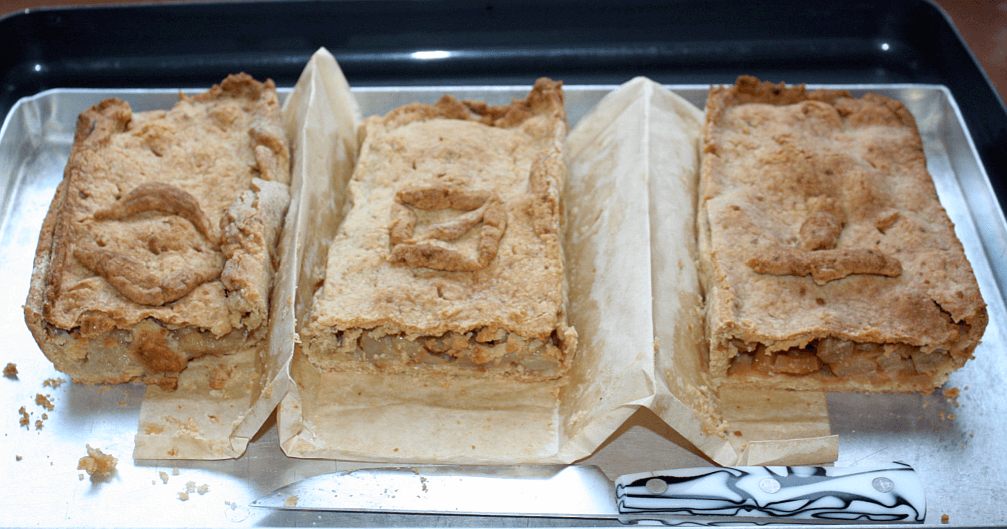
There was... more windfall. So there are more apples. Even better: there are more apples from three different trees, which means tat we got to taste-test and compare their tastes both raw and, due to some fancy baking action, in baked form.


Because there's no such thing as an excuse too bad to have apple pie, right?

The result, by the way, is that  still-warm, they are as distinctly different as they were in their raw state. All have an appeley taste, but one was significantly more acidic, one was rather sweet, and the third had, for my personal taste, the most iconic "I am an apple pie" apple taste, with a nice balance between sweet and acidic, and getting pleasantly mushy during the baking process.

Still to be done: Taste comparison after cooling fully. And then we can decide what to do with the rest of the windfall... more pie? Apple sauce? Apple cake? Who knows...
0
AUG.
29
0

Season's Delights, part two.

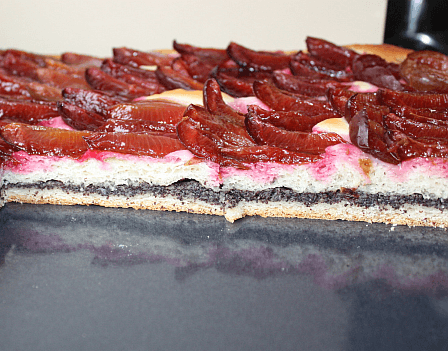
I mentioned Zwetschgen yesterday, right? Well. Zwetschgen. I love them. I also love poppy seeds. And fortunately, those two go together very, very well... so recently, this happened:


Zwetschgenkuchen mit Mohngeheimfach (Plum cake with a secret compartment for poppy seed filling). (Yes, obviously the secret compartment won't stay secret very long, but a cake has to be named in some way, right?)

And here's the recipe:

Yeast Dough:
500 g flour
80 g butter (soft)
pinch of salt
20 g yeast
200 ml milk
70 g sugar
1 egg

Filling:
250 ml milk
145 g honey
35 g sugar
150 g poppy seeds (ground)
30 g semolina
good pinch of ground cardamom

Topping:
about 1.5 kg Zwetschgen

Make yeast dough (add the butter, egg and salt in last, after having kneaded it for a bit) and set in a warm spot to rise. Mix honey, milk, sugar and cardamom and bring to a boil; add semolina, let it bubble up once, then stir in poppy seeds and set aside to cool.
Divide dough into two parts; cover bottom of a deep baking sheet with first half (the rolling pin is your friend), spread filling on top, cover with second half of dough. Set aside to let rise once more.
Pit the Zwetschgen: cut around so the two halves still hang together, remove pit, then cut into each half so the four quarters still hang together (they stack better on the cake if prepared thus). Place on top of the cake, overlapping.

Bake at about 170° C for c. 50 minutes (heat from top and bottom, no fan. I can do no-fan cakes now! Hooray!).

Enjoy. Tastes best when still slightly warm from the oven, and goes very well with vanilla ice cream or whipped cream.
0
AUG.
28
0

Season's Delights.

Late summer is a season for delights - our peaches are ripe now, the first late-summer and autumn apples are also ripening, and of course there are the Zwetschgen, this kind of plum that lends itself to baking and cooking like nothing else does. Few things are better than Zwetschgen on a cake with Streusel... or even without.
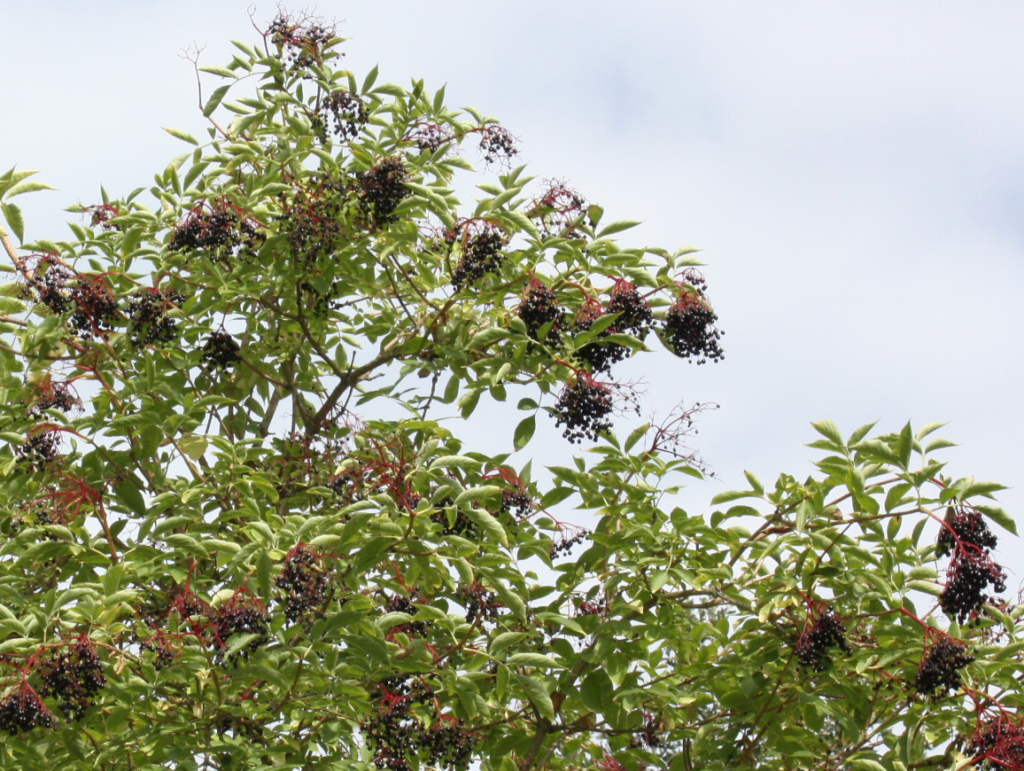
There's another delight of the season, however, and that is elderberries. As fond as I am of elderberry flowers (excellent fritters, lovely syrup, wonderful jelly - though I only make fritters, because I am lazy and our tree doesn't yield so much, flower-wise, without getting a jetpack or some way to turn off gravity), it is totally worth it to not harvest all the flowers, because then... there's elderberries later on in the year.


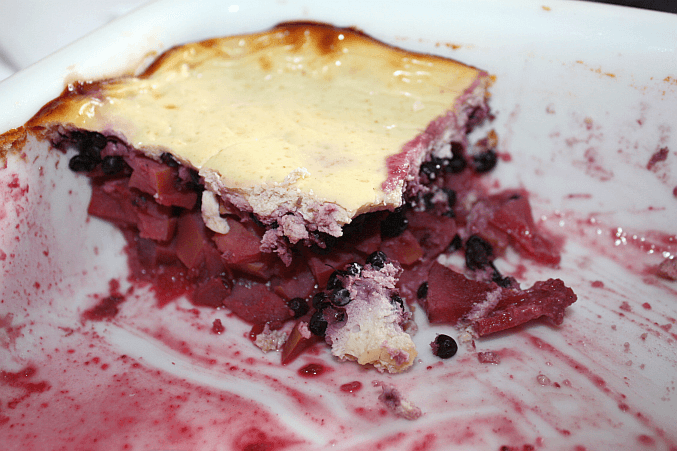
While one should not eat them raw (they are slightly poisonous when uncooked), they will add colour and wonderful flavour to cooked dishes. So when we happened upon some windfall apples, I took this as a sign to get out the ladder and harvest some elderberries... and a while later, we had dinner.

Curd cheese casserole with elderberries and apple, seasoned with a little cinnamon. A seasonal delight indeed!

0
AUG.
27
0

A Story and a Podcast.

If you're looking for something to read, fellow textile person Sarah Goslee (who runs Phiala's String Page) has a story online at Fireside Magazine, called "By Stone, by Sea, by Flower, by Thorn".

Also, if you speak German and are looking for some fodder for thought, go and give a try to WDR5's "Das philosophische Radio". It's also available as podcast, I totally love it for its variety of topics, and the moderator Jürgen Wiebicke does a job that is beyond brilliant!
0
AUG.
24
0

Whorl Weight Choices

"What whorl weight should I choose?" is one of the questions I get very frequently - and as with so many questions, there is no single clear answer.

In my experience, whorl weight and spindle weight are a very personal thing. I've made good experiences with whorl weights of about 25-35 g for beginning spinners, and that is also what I pack into my starter kits. There are, however, always a few people who feel better spinning with a lighter or a heavier whorl.

According to my experience over the years, and also to the results of the Spinning Experiment back in 2009, the only thing that the weight of the whorl will definitely mean for spinning is what I call a "running quality control". If your spindle weighs 40 g, you can be sure that the thread will, at any point, be able to sustain a 40 g load or tension (provided you spin suspended). For somebody who spins for a weaver, as most spinners, historically, will have done, this is a crucial thing. If the thread breaks while spinning, it's not something you rejoice over, but it's also no big deal. You pick up the spindle, fluff up the end of your thread, re-connect it to the fibre supply, and on you go. A thread breaking on the loom is an entirely different story and much less fun, plus much more work to fix, so the last thing a weaver wants are unreliable, breakage-prone threads. Hence a running quality control would be a very good thing. That does not mean a yarn spun on a lighter spindle may not be able to hold the required weight, but you don't have this running quality control built into the process.

The rest of the spindle weight is, within a rather large range, doing nothing to influence spinning in regard to thread thickness. This mostly happens in the head of the spinners, who have, in many cases, heard "light spindles for thin thread" so often it becomes a self-fulfilling prophecy. A lot of beginning spinners are also afraid the spindle will drop if the thread is thin. My advice is that you should pick a spindle weight (and a whorl shape) for something that feels good to you and that twirls nicely in your fingers. Here, biomechanics come into play. If the spindle is too heavy, or too light, it will not be as easy to flick into a quick rotation as one that is in your personal good weight range. It's a little like throwing a ball - if you want to hurl it a long distance, and the ball is very light, it will be awkward and hard to throw. If the ball is too heavy, it's also hard to throw for a long way; but inbetween, there is a range of weights that you will be able to throw far (and not hurting your shoulder in the process).

Personally, I tend to use heavy spindles, even for the relatively thin threads that I usually spin. As my spindle stick fills with yarn, there comes a point when I feel the spindle doesn't turn as nicely as at the beginning, and at this point I will exchange the whorl for a lighter, smaller one. For me, that results in maximum efficiency when spinning (and also in maximum pleasure).

So depending on what kind of yarn people want to spin, their biomechanics, what they are used to, their spinning style, preferred fibres and probably some other squishy factors, there is no firm rule or guideline to tell which spindle weight and whorl shape they will find best. The good thing about medieval spindles, though: You can stick on about anything that has a hole in it. So if you are unsure, get a spindle stick and try out random stuff as whorls - wooden toy wheels, glass beads large or small, stone beads, stone donuts, clay whorls, clay beads, things in different densities and shapes. Stick on a small apple if you feel like it. Or a potato (not for historically correct medieval spinning, though!). Then once you have an idea of what works for you, you can get exactly the whorl you want.

Or whorls. Spindle sticks and their knobbly companions, after all, are herd animals...
0
AUG.
23
4

Baking Stuff.

As you can probably tell from the rather late blog, I'm not yet back in the groove. I'm working on it, though - as on what feels like a gazillion of other things. Plus, there's some baking going on, because obviously the new oven has to be tested. Thoroughly.

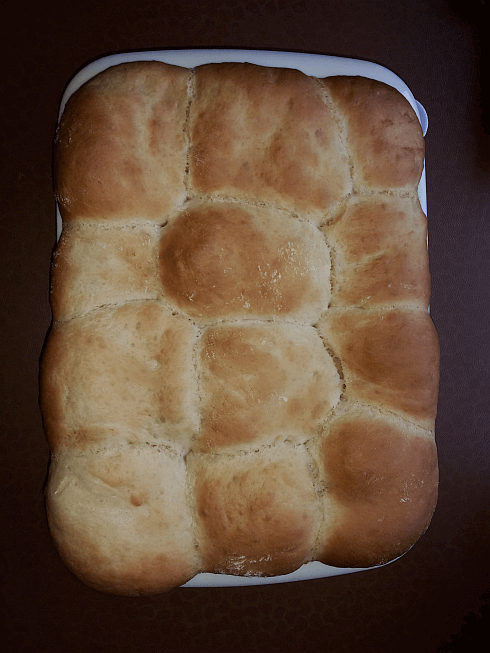
I've made, for the first time in my life, "Ofennudeln" - which is either a dessert or a sweet main dish, consisting of a yeast dough either unfilled and eaten with compote or apple sauce or vanilla custard, or filled with something - such as sweetened Quark and plum jam. These will definitely happen again - I really liked them. (One of the reasons why I had to make a yeast dough: The oven has a shiny programme for quality raising time for the dough.)


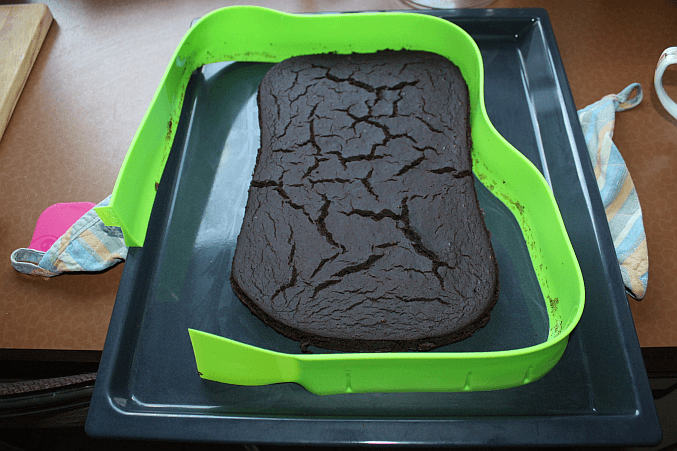
The latest experiment, though, was not so successful. I've been pondering trying out bean brownies for a good long while now, and I finally got around to doing this. The main reason this time was weird beans that stayed dry and unpleasant on the inside even after being boiled for a good long time... so I decided to puree them and turn them into bean brownies. The second reason? A new variation on the topic of baking frame - a silicone band with magnets that latches onto the baking sheet in almost any shape.

Well.


The baking band works very well. The bean dough recipe also results in something edible, though the Most Patient Husband is really not impressed with the stuff, and I would file it under "yes, edible, but not happening again". The texture is neither properly cake-like nor properly brownie-like; I can definitely taste the beans, and it's not very chocolatey. I don't find the texture unpleasant, but it's unexpected and somehow not fitting the idea of brownies.

So that is not going into the stack of recipes that will be made again...
0

By accepting you will be accessing a service provided by a third-party external to https://www.pallia.net/

Kontakt