Latest Comments

Guest - Aislinn Dyestuff Citizen Science.
09. Oktober 2026
This is a great project. I look forward to the results. Thanks for letting us know.
Guest - Aislinn Time for...
09. Oktober 2026
Looks delicious!
Guest - Katrin Sprang Discussion
18. September 2026
Hi Rachel, I have looked for more photos of you, but that was not very successful. I found a link on...
Guest - Beatrix Sprang Discussion
15. September 2026
That lozenge pattern element is not a photograph, but a scan. So it should be to scale. But I pinned...
Guest - Katrin Sprang Discussion
15. September 2026
I was not referring to Rachel's reconstruction (is the reconstruction you refer to the one photograp...
DEZ.
08
2

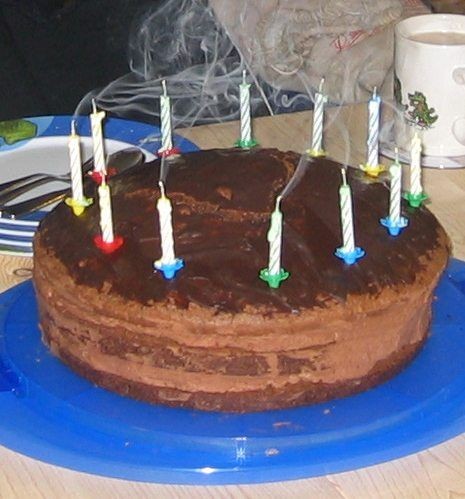
And it's... Blogiversary Day!

Hard to believe, but another year of blogging has gone by. With, admittedly, a few blog breaks - but for a little internet corner where someone keeps writing, holding out for seventeen years is not that bad.

Sometimes it does feel like I've written about everything at least twice, but fortunately, there's new books and new conferences coming out every little while, and there's always cat pictures.

Or... cake pictures.

It's also not so very little is happening in my life as well, but I'm not always getting around to blogging about all the things at longer length. (I'm planning to do a proper look back on the last year, but that does merit its own blog post, I think.)

Anyway - thank you for stopping by, thank you for reading, and for commenting! A blog that's not being read is just a slightly weird monologue, after all... 

0
DEZ.
05
0

The fascination of small everyday things...

By pure chance, I stumbled across a video by Sally Pointer yesterday, and it led me to the wonderful discovery of an 18th century trinket - the bergamot box. Just in case this holds no meaning at all to you: Bergamot is a citrus fruit with a rather thick rind, and in the 18th century, some people (in the region of Grasse, if we are to believe the Musée du Parfum) used the rinds of these bergamot fruits to make little boxes. Basically they are taken off the fruit, turned inside out, shaped, dried, and then "covered with cardboard" which I'd suspect means like a papermaché layer, and finally painted. 

You can find images of one example here, dating to the 18th century. There's probably lots more hidden in some museum databases, but unfortunately "bergamot" is one of the words that are hard to search-engine-search, as you get flooded with ads for perfume and, to a lesser extent, Earl Grey Tea. They look beautiful, and I had not the slightest inkling that this was A Thing in the past. Or even that it was possible!

But now for the fun part: Sally's video. Good thing that it's orange season here now!

1
DEZ.
04
0

...and another Interview...

I made my way to my wardrobe today for a short interview with the ÖRR - providing little snippets of history, in that case answers to school children's questions. That was fun (and I will let you know when it's on the air...).

Otherwise, much of the same going on, plus a visit from a handyman because of some issues with our heating. Interesting issues, due to the building's history (even if it's not that old yet), and hopefully they will be solved soon. 

0
DEZ.
03
0

Weft Carriers.

When you start to dabble into weaving today, one of the standard things that comes up as "important tool" is... a shuttle. And with "shuttle" I mean that iconic piece of wood (or other material, but more rarely) which looks like a little board with two deep indentations at each end. A little like a comic drawing bone, but with less bulk at the ends. I'm pretty sure you know what I mean - it's part of every "learn how to weave" children's loom, after all.

Some are curved a bit, some have a different shape, some are more like netting needles, but - with the exception of the loom shuttles for wider fabric looms or specialised mechanised band-weaving looms - they are everywhere where you are looking for weaving tools.

Unfortunately for those of us who both like this type of shuttle and want to do historical weaving, there's about next to no evidence for this type in medieval artworks. When this form of shuttle is so well known today, it is rather safe to assume that an archaeologist looking at a wood find could identify it correctly. But do we have such finds? Well... nope. With a little nope cherry on top. (At least that's my current knowledge - if you know of any of these "classic" shuttles in the archaeological record, especially the medieval one, please do let me know.)

The thing is, though - as far as I remember reading somewhere, that type of shuttle - the long, narrow board with two indentations at the narrow ends to help hold the weft - is a rather recent (as in 19th century) development. Unfortunately I am still looking to find that source again, but this would explain very easily the lack of this tool-type in the medieval finds.

It's also, if you ask me, rather... impractical in a lot of cases. If it's short, you can easily handle it, but if you want to weave something a little wider, it gets weird - because if you want to have some more weft, you are always getting one full shuttle length worth of weft thread. No more, no less. That might work okay if you have a shuttle about the same length as your weave is wide, but if your shuttle happens to be a good bit longer than your weaving width, it's extra awkward. (Disclaimer: I never liked these shuttle types much, and so I have avoided working with them as much as possible, with the result of being not very practiced in how to handle them, which might make stuff more difficult than necessary.)

And there's so many other ways to carry your weft. You can just have a length of thread that you flick through, and place a new length fairly often. You can do a butterfly (works very well if you have good butterfly-making technique). Or you can use a stick. I am very fond of the general idea of the stick shuttle, as you can unwind as much or as little as you'd like. (I also like to use a reed spool for some instances, especially when I will have the weft dangling from the weave because I have need for both of my hands at other spots, and the reed is lightweigt plus will allow me to cut a notch in it where I can secure my weft. So it, you know, dangles and doesn't fall to the floor. Because that is annoying.)

The Swedish inkle looms, which are made for the rapid home production of bands, are a very nice example where a kind of small stick shuttle is used:

0
DEZ.
02
0

Nothing much happening here...

...there's some writing, some sorting, some preparing in the background for future projects - and I'm trying to get some long-outstanding software updates done.

I also tried to install an advent calender from an abandonware portal (Löwenzahn, which is a German children's TV series that I used to love when I was young) and found out that it is too chatty for my taste (and no, turning off the sound is not the solution as you need to hear what is said in some cases). 

So - nothing much happening. Hopefully, though, the switch to the new software version pretty soon!

0
DEZ.
01
0

Traditional Baking Accessoiries

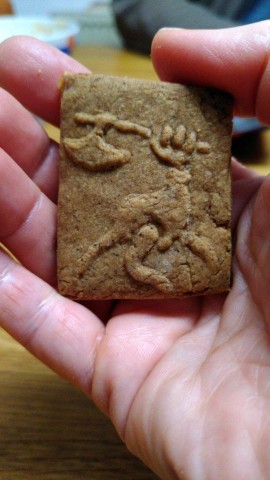
It's baking season again! For a few years now, I have been tweaking a recipe for Spekulatius, and I think I'm getting there now. 

The reason for all this, well... in Germany, one of the traditional seasonal sweets for winter and Christmas are Spekulatius. They are crunchy cookies with some spices, the spice mix resembling that used for gingerbread, but not quite the same. They are sold in packages big or small, but, of course, inevitably including plastics. So the quest to avoid as much single-use plastic in our lives (which obviously includes plastic packaging for foods), the logical step was to bake them at home, no plastics required.

The thing about Spekulatius, though, is that traditionally they are made with forms so they are shaped, and show something. Like, very typical, a man, or a windmill, or a donkey carrying something, or an elephant. Which means they are only half the fun without this.

Very obviously, my next step (after picking a recipe to try) was to take out the box with old dentist drill bits and buy a rolling pin and look for easily draw-able medieval marginalia (knowing both my drawing and my woodworking skill limits) and go for it. 

There were issues with the dough, and with the handling of the pin, and with the depth of the motif "carvings", but after a few years of tweaking (because you can only eat so many test pieces per year), I have something that I would consider fairly satisfying.

In case you are wondering, yes, the motifs go heavy on the axes and less heavy on realism.

This year, however, a friend pointed me to a website of someone making forms for another very traditional German baked good: Springerle. They are, in their original form, very much aniseed flavoured so there's those that love them, those that hate them, and those that eat one or two and have enough for the rest of the year (that would be me, by the way). The way the forms are carved, though... it's really beautiful to watch. And the best thing? You can have a look at it yourself here:

0
NOV.
28
0

TGIFriday!

I am really looking forward to the weekend - to some hanging out with friends, some baking, some bouldering, and not as much time spent in the rather frigid office... which is frigid because there has been a change to our heating system with some repercussions that have only been found out about a few days ago. So while we usually didn't turn off the radiators but there was warm water circulating in the pipes under the floor, this circulation is currently not taking place, with the result of the office being colder than usual. 

So... we would have turned on the heating. Except we found out it doesn't work. It's a good thing we are used to having not so very warm rooms during the winter time, but it is a little too cool to be really comfortable even then. There is betterment in sight, though, as the root cause of the problem is known, and it should be rather easy to do at least a temporary fix.

But, well. Weekend in the warmer rooms. (Especially the kitchen, when there's a bunch of baking going on!)

0

By accepting you will be accessing a service provided by a third-party external to https://www.pallia.net/

Kontakt