Latest Comments

Guest - Aislinn Dyestuff Citizen Science.
09. Oktober 2026
This is a great project. I look forward to the results. Thanks for letting us know.
Guest - Aislinn Time for...
09. Oktober 2026
Looks delicious!
Guest - Katrin Sprang Discussion
18. September 2026
Hi Rachel, I have looked for more photos of you, but that was not very successful. I found a link on...
Guest - Beatrix Sprang Discussion
15. September 2026
That lozenge pattern element is not a photograph, but a scan. So it should be to scale. But I pinned...
Guest - Katrin Sprang Discussion
15. September 2026
I was not referring to Rachel's reconstruction (is the reconstruction you refer to the one photograp...
OKT.
23
1

More rants (not mine this time, though).

If you're interested in old textiles, you might have caught the thing with the Viking tablet-woven band that, according to Annika Larsson, spells "Allah".

The Guardian and Heritage Daily, among other places, covered this "staggering" find. Then up sprang the debate on whether it really was possible that the band has Arabic script on it, and spells "Allah" - one prominent voice against it was Stephennie Mulder, an associate professor for Medieval Islamic Art and Architecture. She did it on Twitter (of all places!), in a brilliant string of tweets you can see here. (Go look at that link for pictures of medieval tablet weaves with stunning patterns!)

Apart from the Square Kufic style being significantly younger than the textile and other script issues that are covered in that tweet string, Carolyn Priest-Dorman also has a few things to say about the pattern. Especially that the square-ish things at the side, shown in the images in the articles, are... not actually in the band itself.

The Guardian's article has since been updated to include the academic debate.

The Atlantic also covers this discussion, as does The Independent.

I'm not sure what brought Mrs Larsson to go forth and invent extra bits for a band just to read something Arabic into it, but I'm not happy about it.

I'm much happier about the fact that there were quick and well-founded counter-arguments for it. It's a beautiful band, it is a stunning piece of work, and it does deserve proper study, but it's not a prop for inventing an alternate history, thankyouverymuch.
0
OKT.
20
2

Workshops! Shenanigans!

I'm off to teach a full weekend's worth of workshops - spinning, tablet weaving, loopbraiding, and sewing techniques, and I'm all excitement.

Especially about the tablet weaving course. It's been so long in the "I would like to do this" stage, followed by a very long planning stage, and then, a while ago, the test run. Then some more smoothing of rough edges and planning and updating the plan and the printouts... and now it's going to get its first run out in the wild. Proof of this? A huge stack of stuff sitting in the car, waiting to be ferried off. This is by far the most material-intensive course that I teach, because I use clamps to set up the warps (mimicking the medieval tablet-weaving stands).

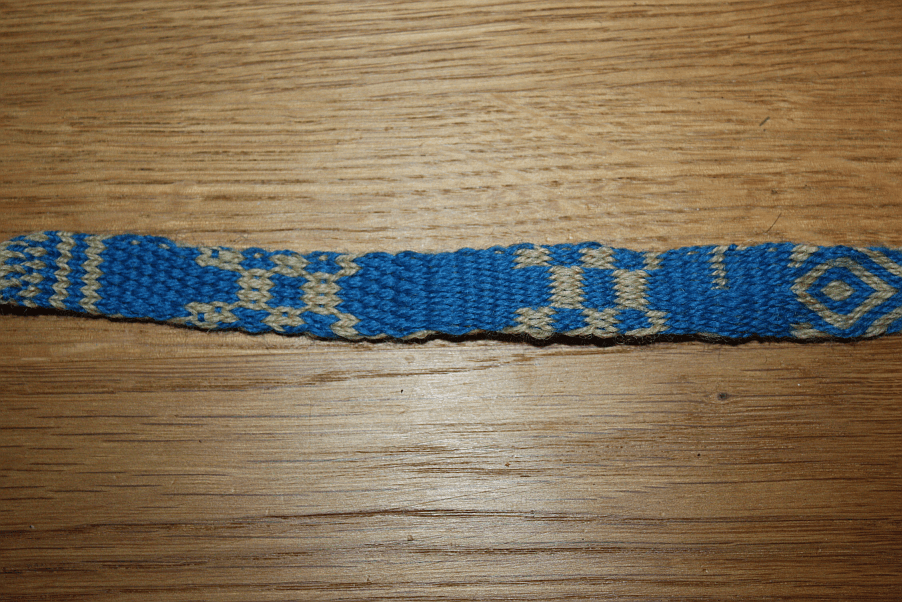
[caption id="attachment_3447" align="alignnone" width="902"]Starting off easy - a few straight lines, a bit of doubleface, getting an understanding of how things work. Starting off easy - a few straight lines, a bit of doubleface, getting an understanding of how things work.


Since I'm currently also doing brain-bending exercises with free patterning, it's an especially nice feeling for me to be teaching a method that will allow the new weavers to do their own on-the-fly patterning, from a deep understanding on how these things work. At least that is my cunning plan - and the system I teach is quite robust in regard to mistakes, too.

Well. Let me put that a bit more into perspective. If you make a mistake, the system allows you to unweave the bad bits, then re-sort the tablets into their two packs as you un-weave the last correct pick that you made, then do the last pick again and work your way forward once more, hopefully correctly. You will not need a drawing or pattern draft to re-align tablets. You will need, however, patience and an adequate assortment of sighs, curses, or motivational beverages of choice, depending on your character. As always, the best thing is not to make the mistake in the first place...

[caption id="attachment_3446" align="alignnone" width="403"]Speaking of the brain-bender, here's the current status. As you can see, I have done my best to try out how to deal with mistakes. Those, by the way, are mostly due to my weaving in the evening at the moment, when I'm already a bit tired... as a robust system should be up to a tired weaver, right? Speaking of the brain-bender, here's the current status. As you can see, I have done my best to try out how to deal with mistakes. Those, by the way, are mostly due to my weaving in the evening at the moment, when I'm already a bit tired... as a robust system should be up to a tired weaver, right?


By the way, there will be a similar-ish workshop on patterning at the European Textile Forum, and due to last-minute cancellations, there are two spaces left once more...
0
OKT.
18
1

Crafter's Bias.

I mentioned the hard and firm rules in the post about tablet weaving a few days ago, and that is just the thing to segue off into some ponderings about what I call "Crafter's Bias".

When you are doing craft stuff for a living, you want to have a suitable, efficient way of working. Usually, you get taught this way when you are learning the craft, and you get to know other ways to do it, other tweaks, maybe other tools when you are meeting other colleagues, or (what used to be a thing much more common than today) when you are travelling as a journeyman.

So while you might have a bit of time to experiment once in a while, and might shift things slightly, work doesn't usually leave you with lots of extra resources to fool around and try different things and methods. You might also not be aware of there being other methods - or at least not think actively about it. This, together with sort of getting set in your ways that you know will work for you and that can be calculated properly, can lead to the feeling that there is one way to do it - your way. Because, obviously, that's how it's done, right?

When you are, say, an archaeologist specialising in crafts, you might also try to reconstruct how things were done back when. This means you look at different tools, different ways to handle one process (including ways from other parts of the globe), probably try out stuff yourself, and generally keep an open mind regarding procedures, tools and methods. Basically, it's the exact opposite mindset to Crafter's Bias.

Fun facts: I have situations where I have Crafter's Bias, and I suddenly find myself go "That is how it's done! No discussion! ... Oh. Wait. Erm... that is one way to do it. There might be several other ones, we can't tell, but that is how I do it, it works for me, and it has so far worked for a lot of other people I have taught it as well." It's even funnier when I see a different method and my first thought is "But but but that is wrong! With a capital W!" until the archaeologist kicks in and tells the crafter to cool down and breathe, there's more than one way.

While it might sound weird and restrictive at first, Crafter's Bias is actually not a bad thing. I see it as a sort of evolutionary development; these also sometimes look weird from a rational perspective, but from the perspective of the species' survival, it all makes sense. Crafter's Bias keeps you from going off on a tangent too much, losing time, money and energy on trying out things that might work or might ruin your current project, so it's actually a sane thing to have if you work crafts for a living. It won't prevent you from accidentally stumbling across a better method, and also not from picking up tips and tricks from colleagues, or from developing your own little tweaks and tricks - but it gives you a solid, firm base that you work from.

Having the One True Method (TM) also makes teaching a lot easier. Students have to get a feeling for tools and materials as they start out, and having One Way shown to them will be easier to handle for most than getting a bouquet of methods from which to choose. It also means that you can teach a craft by rote - without having actually understood how things work, and why, in depth and detail.

Take knitting, for instance. There's a multitude of ways to arrive at a plain stockinette stitch; there's a huge number of increase and decrease possibilities. If you have a thing for motions and methods and structures, that is utterly fascinating and fun to explore. If your main goal is to make somebody a functional knitter, though, you only have to teach them knits, purls, one increase and one decrease. There, you're done, you can knit anything around. If you now standardise the way the stitches are formed by declaring one method the One True Method, it is easy to teach - you only need to show the motion. No need for understanding what happens, and how, and why. That means craft knowledge can be passed on reliably.

Again - this won't prevent people interested into structures, and people with inquisitive minds, to understand how it all works. These might go on to develop other ways, or different increases and decreases, though - depending on how much of a tradition and spread the One True Method has - that might lead to suspicious looks from the others.

 
0
OKT.
18
2

Walking in the Middle Ages.

There's been this video going more or less viral, about how people walked differently in medieval times. It's spread a lot, and it finally arrived at the rock that I live under, and I watched it.

And went Aaaaaaaaaaarrggh.

In case you haven't seen it, it has been posted over at Boingboing. In case you don't really want to watch it, there's a guy dressed in late medieval stuff telling you that medieval folks walked on the balls of their feet, and because we are stupid lazy modern shoe-wearing people, we are not doing that anymore, even though it is much healthier and cooler and whatnot.

Okay. Here's the thing. In list format. With numbers, to hide the fact that it's not very structured rambling...
  1. "People in the Middle Ages walked differently than we do today" - yes, probably. Just like modern people who walk barefoot mostly or all of the time walk slightly differently than shoe-wearers. There are studies about that, like for instance this one: The effects of habitual footwear use: foot shape and function in native barefoot walkers (K. D’Août et al, Footwear Science Vol. 1, No. 2, June 2009, 81–94). The very short version: Habitually barefoot people have the same high-pressure spots on the sole when walking, but pressure peaks are a bit lower, and it's not completely clear how that is achieved. There's another paper looking at sandals, flip-flops, barefoot and shoes here. It's fascinating stuff!
  2. The fact that there are differences between habitual barefoot walkers and shod people, however, does not mean that the completely exaggerated way the guy in the video shows is "natural". There are situations when you put the ball of the foot first, yes - like when you are tip-toeing to be silent, or don't want to touch much of the ground, or if you are running at high speeds. Now if there were a typical very strong difference between placement of the foot ball-first or heel-first in barefoot people and shoe-wearers... don't you think some of the studies about differences in gait would mention this?
  3. Also, "walking heel-first is actually detrimental to your health"? Erm. Humans are plantigrades, just like their colleagues over in the ape section, and a lot of other mammals. We change from the sole to the ball of the foot when running, or dancing, or fighting, yes - but usually, the heel comes first. And guess what? It is actually constructed for this, with a strong heel bone under which there's cushioning stuff.
  4. "When we can be lazy, we are." Well. Yes. Maybe. But why on freaking earth would the medieval people then not have been lazy? Anyone? Grrr. Either lazyness is a basic human trait, then there's no reason at all why medieval people would have been less lazy, or it's not, then there's no reason why people would not still walk that other way today.
  5. Shoes with framed construction and lightweight shoes both influence how you walk; there might be a difference in how much they do this, but the medieval shoe does not count as no footwear. See, for instance, this paper about how even minimalist footwear influences running.
  6. If you've ever tried walking this way, you will quickly realise that it does not feel natural and it also does not feel efficient. Also, I can ball-silly-walk even with a really bad posture no problem. So can the most patient husband of them all.
  7. Medieval artwork that shows people on the balls of the feet shows them in specific situations. Fencers are still on the ball of their foot today, just like dancers. Other people depicted with a nice sexy foot sticking out of their garments? I'd say it is important for this to keep in mind that what the sixpack-belly is for today's sexiness scale, the leg used to be in medieval times. Sexy legs were... sexy. Nobody cared for your belly definition. (Well, nice extra, probably. But legs were the thing.) Which might explain a few of the displayed non-dancing, non-fencing legs in artwork.
As stated before: Aaargh.
0
OKT.
17
0

So many colours.

There are so, so many open questions left around the man found in the Bernuthsfeld bog. Who was he? What was his job, if he had one? He definitely wasn't rich, but how poor was he?

There's also plenty of questions regarding his tunic... one of them being the colour question, as usual when some bog-brown textile is found. There was a dye analysis done, but the results were rather sketchy, with only quercetin found as a definitive dyestuff ingredient.

Well, we have a tunic that is put together from a lot of different pieces of fabric, most if not all of them already in their second, maybe even third or fourth use. Chances are very, very high that there were not only all kinds of fabrics, but also all kinds of colours... which we don't have definitive proof of.

Quercetin is, however, found in many different plants - among them woad (isatis tinctoria) and birch leaf. So for the reconstruction, we decided to leave some of the fabrics undyed (especially those with interesting natural wool colours), and to use birch and indigo (the latter rather sparingly) on others.

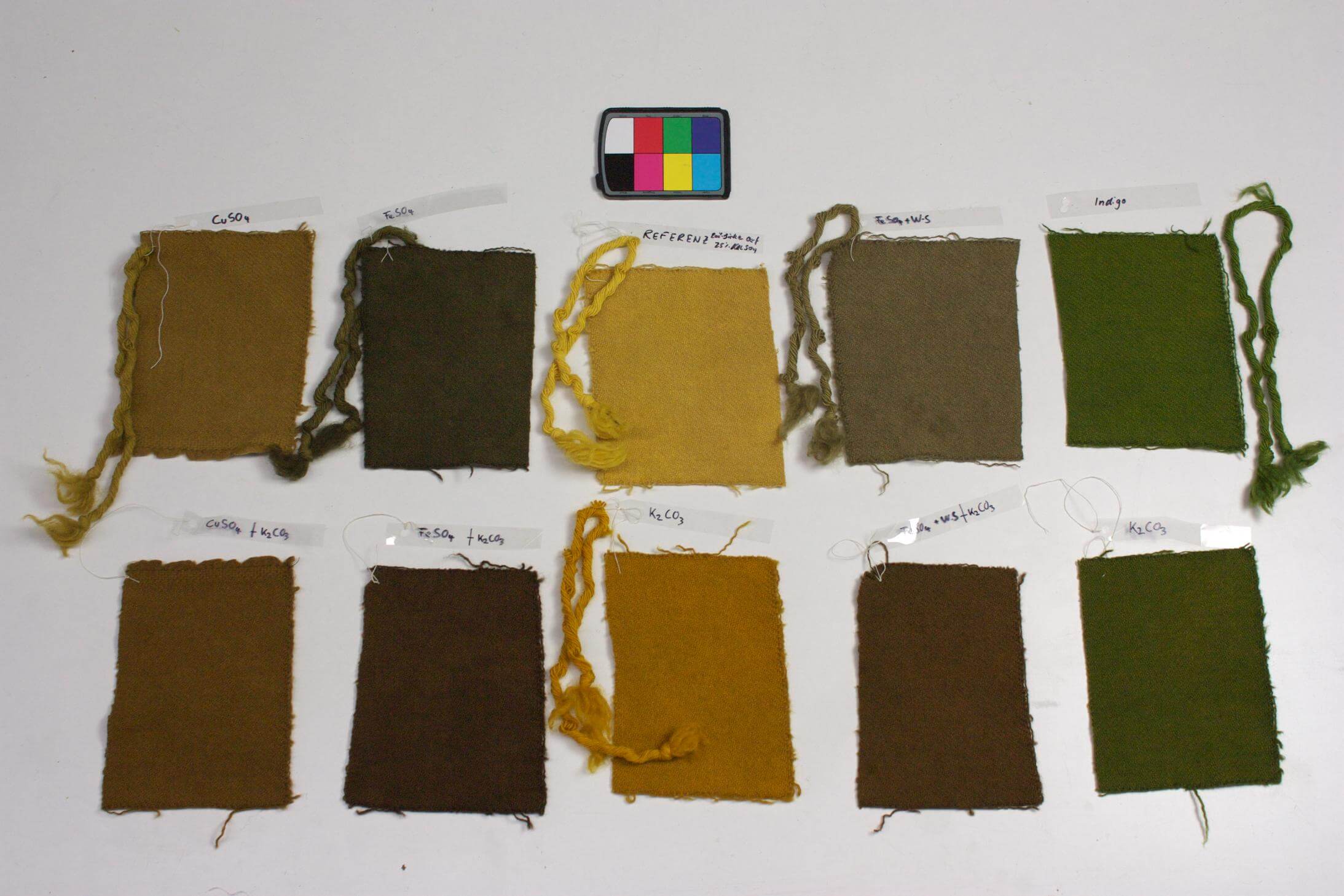
The nice thing about natural dyes is that you can get so many different hues from one plant that it won't be boring at all. So we were, after a lot of discussion and brainstorming and thinking, going for two different hues of blue, one double-dye of green (birch yellow with blue), and several different colours made with birch. For that, we did a nice little test run with pieces of fabric, all mordanted with 25% alum, then dyed in 200% dried birch leaf, then nuanced with iron, copper, iron plus cream of tartar, and potash. One of the yellow bits was dipped into an indigo vat, and then all of the candidates (except the yellow bit that went into the potash right away) were rinsed, split and half of them thrown into the potash brine over night.

The results were rather spectacular:

birch_colours

As usual, it's very hard to give a good impression of the colours on a photograph - natural dyes look very different in reality than on a picture, and they can even change hue depending on the light angle, let alone depending on light colour and quality. So you'll have to believe me that the green achieved by iron sulfate nuancing looks really green (until you hold it next to the indigo-on-yellow green, when it looks like someone dropped it into a mud puddle), that there's beautiful soft browns to be gotten with copper and that nuancing the yellow with potash gets you an orangey colour that is utterly, utterly beautiful.

Also as usual, the actual dye run yielded slightly different results to the test run - but we were both quite happy with the outcome, and the tunic reconstruction will look colourful enough to give an impression of the many colours in medieval times, yet will only have used two dyestuffs that we have hints for in the analysis.

Also also? Dyeing is fun.
0
OKT.
16
2

Brain Benders.

Apart from the work on the Bernuthsfeld tunic, I'm also preparing for my bit of programme for the European Textile Forum, which is drawing closer and closer. In the usual mix of optimism ("I can do that! In time! No problem! At all!"), enthusiasm ("This is such a fascinating topic!") and anti-procrastination planning ("If I hand in a title and abstract for this conference, I will finally make the time to sit down and actually get some more research done on this, just what I wanted to do for so long"), I signed myself up for a presentation and practical session about tablet-weaving.

With, of course, an angle - I'm trying to figure out possible ways in which medieval tablet-weavers might have arrived at their patterns, which are sometimes really, really breathtakingly complicated. There's rules to tablet-weaving, so you can't just place a carton with a drawing behind your warp and tapestry away; you have to plan ahead for the patterns and know when to reverse which direction, and keep track of your main direction of turning when you are doing twill, and so on and so forth.

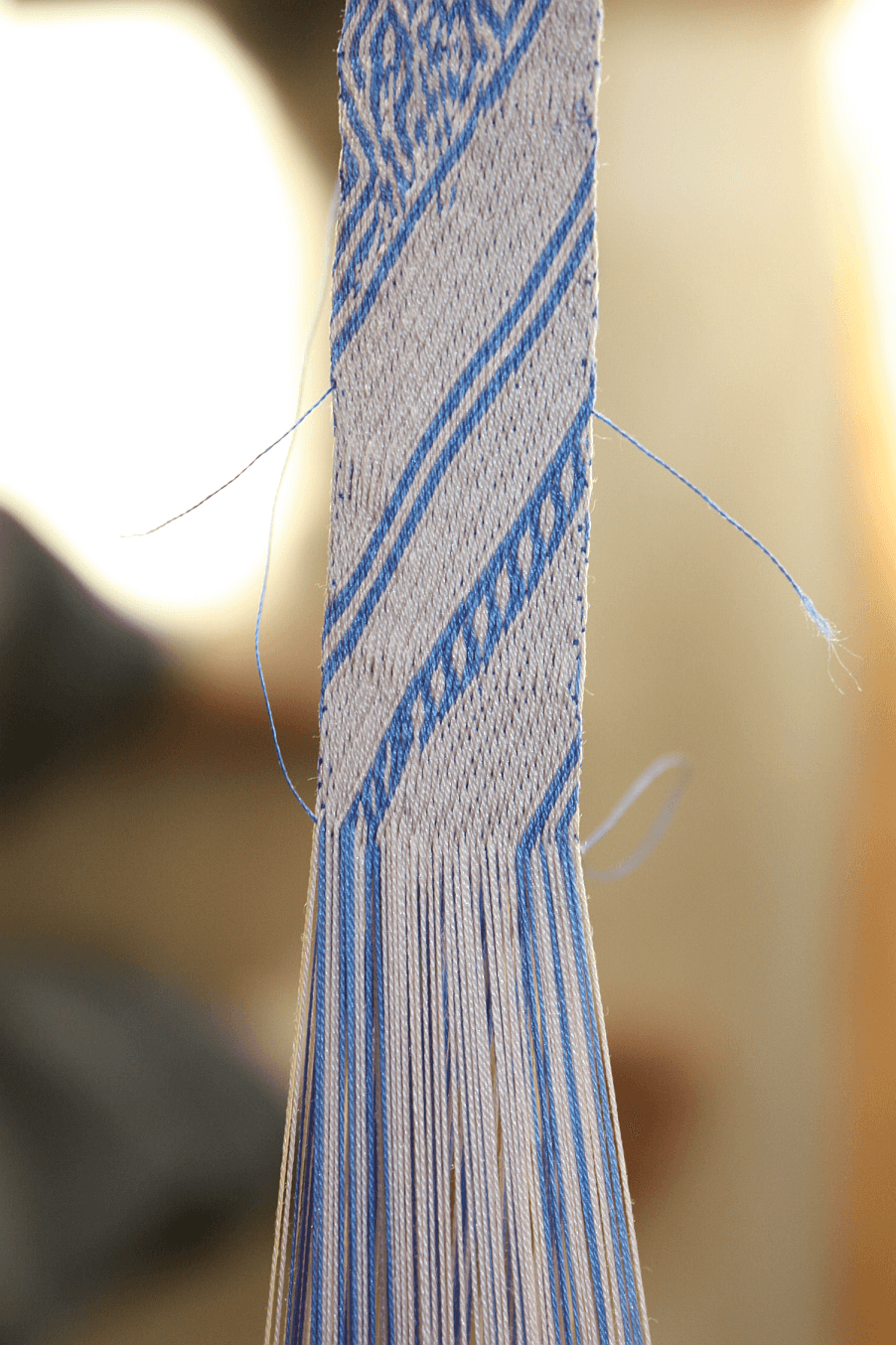
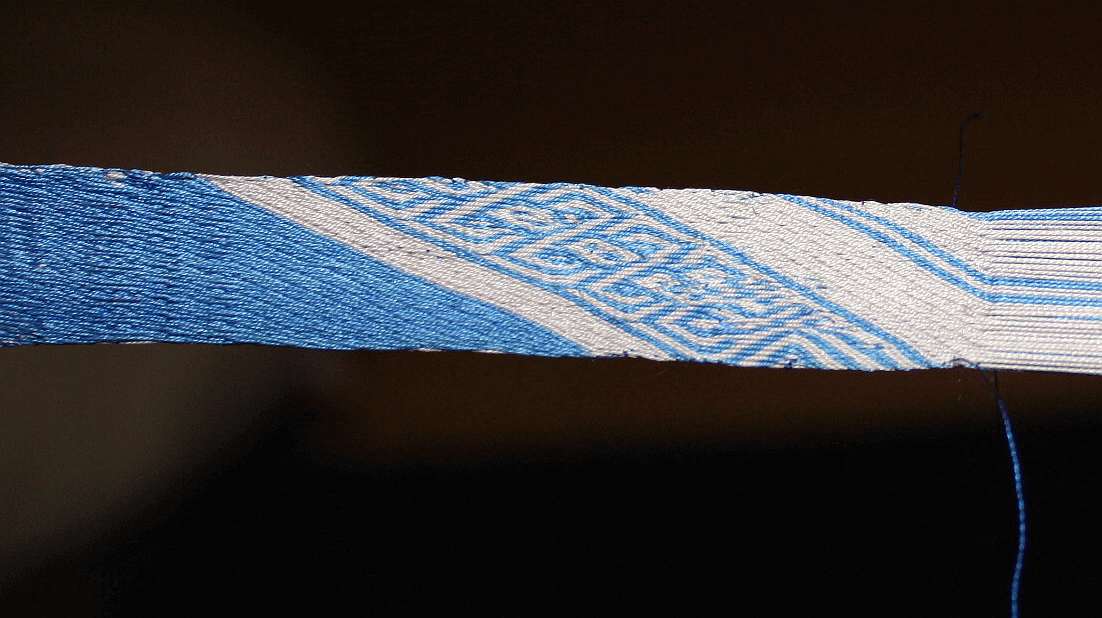
While the basic rules and structures are fairly simple (I usually say that you need to be able to tell light from dark and count to two), keeping track of what has to go where in a complicated pattern can quickly bend your brain into knots. I've tried to figure out a few strategies using a part of the pattern of the Maniple of St. Ulrich, but that, alas, turned out to be a hard start. You can see how the pattern degenerates from my trying to use less of the written pattern draft and more of my own brain:

twilling

until I finally gave up and transitioned again into nice, clean pink background twill. (There's even a fault in the twill lines where I gave up, and a little bit of erring in the twill later on, as you can see from the floats and the blue spots.)

So. Next step was taking a step back and trying to build up things from the base line - in this case, from a single or double blue line on twill background. (It would of course be possible to forego the twill background and just do diagonals, but I think it's clearer to see the pattern afterwards if it is on a solid colour background. So there you go. Also... I like twill in tablet weaving.)

There are certain patterns and rhythms to much of the weaving, and I think that a large part of the trick is to learn those patterns and basic rhythms, and learn when to look where to make sure nothing unplanned is happening. Also: Rules. Hard and firm rules regarding the sequence of the individual steps to be done (turning tablets, inserting wefts, and re-sorting tablets) as well as the base setup (one direction of turning will always result in the stripes running the same way for me, or I will go crazy).

twilling2

And then, more patterns can be built up on that. Next step: lines branching out from lines, and figuring out how to figure out when to reverse directions for pointy bits growing out of nowhere...
0
OKT.
10
3

I'm off doing things... exciting things!

You might remember that a while ago, I posted about having a project for a reproduction of the tunic worn by the man from Bernuthsfeld.

Well, it's time to get the project into the next stage - which means I'm getting to see the original, and will be starting work on the actual tunic-making together with my colleague. So I'll be off doing exciting things to cloth for the next few days, and thus be taking a break from blogging - I will be back on October 16.

Meanwhile, I will leave you here with a picture of the fabrics that were woven for the tunic and a small mantle-like cloth:

[caption id="attachment_3429" align="alignnone" width="1632"]Fabrics woven for the Bernuthsfeld-Project - lots and lots of different ones, many of them just small patches... Fabrics woven for the Bernuthsfeld-Project - lots and lots of different ones, many of them just small patches...


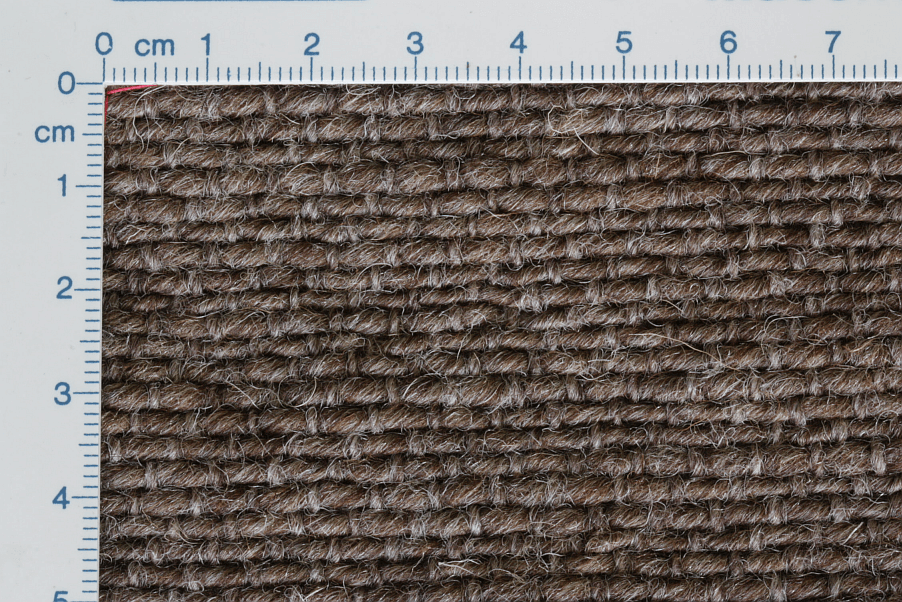
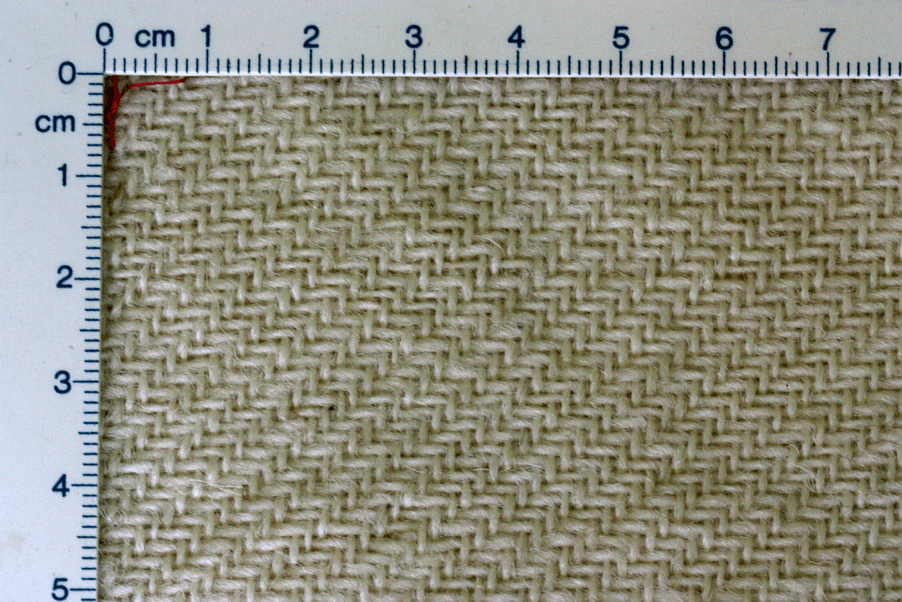
And just because I have them, here are a few more pictures of some bits, close-up:

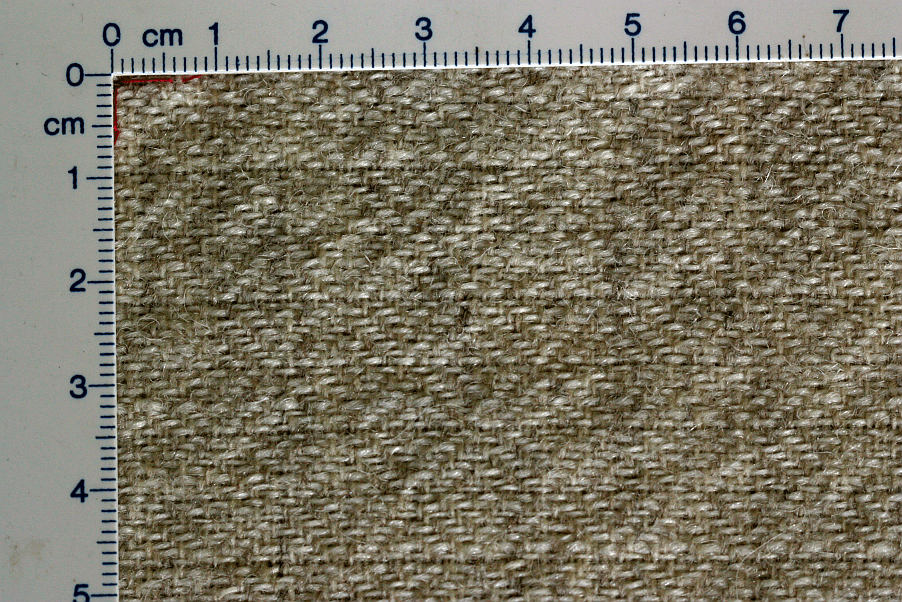
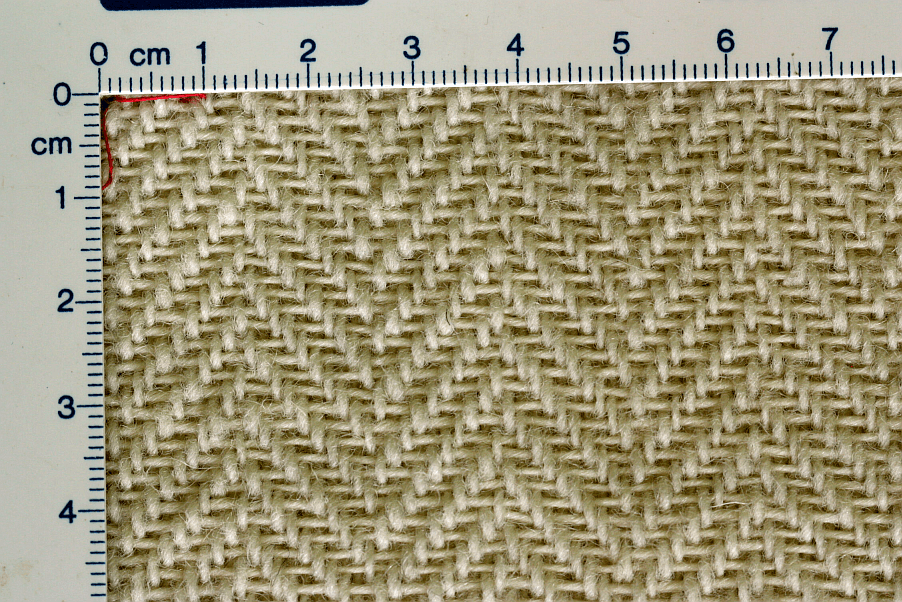
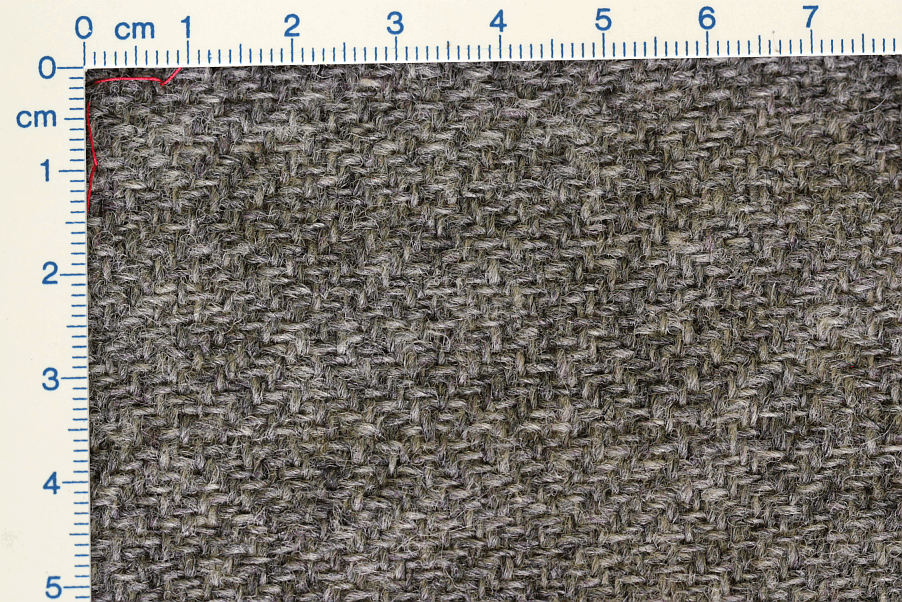
bernie_b
bernie_a bernie_c bernie_d bernie_f
It's going to be so much fun to dye a selection of the fabrics, then cut everything up, roughen them a bit to simulate use-wear, and stitch them together into the tunic!
0

By accepting you will be accessing a service provided by a third-party external to https://www.pallia.net/

Kontakt