
Latest Comments

Guest - Aislinn Dyestuff Citizen Science.
09. Oktober 2026
This is a great project. I look forward to the results. Thanks for letting us know.
Guest - Aislinn Time for...
09. Oktober 2026
Looks delicious!
Guest - Katrin Sprang Discussion
18. September 2026
Hi Rachel, I have looked for more photos of you, but that was not very successful. I found a link on...
Guest - Beatrix Sprang Discussion
15. September 2026
That lozenge pattern element is not a photograph, but a scan. So it should be to scale. But I pinned...
Guest - Katrin Sprang Discussion
15. September 2026
I was not referring to Rachel's reconstruction (is the reconstruction you refer to the one photograp...
NOV.
25
0

Vanillekipferl.

Like every year, I do the seasonal baking some weeks in advance of Xmas - because a) it would be way too much stress to try and get everything done in just a few days, and b) some of the cookies benefit from hanging out in a tin for a while. As in "for a few weeks" while.

One of the kinds that get better by sitting and doing nothing for a few weeks are Vanillekipferl (vanilla horns, more or less literally), which are an utter staple of German Xmas baking. Like most cookies, they are a shortcrust dough, and there's a gazillion recipes around. However, about all of them have one thing in common: They will tend to crumble if you try to form the dough by rolling it into small rolls to shape the typical crescent form. Which is... annoying, to put it mildly.

These days, there are workarounds: Special baking trays with the crescents, or cookie cutters. However, traditionally, these things are shaped by hand.

My method to shape them is a little less conventional, but also traditional - because the shape is what my one granny's Kipferl shape used to be.

Now, my granny (who died several years ago) was a rather, um, complicated character. Cooking and baking was very much her thing, and every year at Christmas, we would get several large tins filled with cookies of many varieties, stacked neatly by sorts. There were at least a dozen different kinds of cookies, and I loved them all - some more, some less. They were also lovingly decorated.

To this day, because the wonders inside these tin boxes made such an impression on me as a child, Xmas cookies are one of the things that makes the festivity for me. This means a large variety of cookies, in abundant quantity (because it seemed like lots and lots and lots to me, and there were lots, really) and of course with a lovely taste.

So when said Granny had a stroke and could not bake anymore. I decided that there had to be cookies, and they had to be similar to hers. However, my gran would not share her recipes - so I had to find my own basic recipes. I also found out very quickly that baking a large number of different varieties, and decorating them, takes a lot of time - so I cut down on said number (having a life and studies, and later a job, to also take care of). I couldn't find recipes for some of the kinds, and some others just didn't fit into the time slot anymore, and some I couldn't remember properly (because they might have been there some years and others in some other years), but the all-time favourites of myself, my mum and my dad stayed in.

Among these were, of course, the Vanillekipferl. Which, when my gran made them, had a very distinct shape - and one I never saw anywhere else.

It took me a while to figure out how to make that shape, but I finally succeeded. So this is how I make them these days:

Ingredients:

50 g almonds (without peel)
50 g hazelnuts
300 g flour
90 g sugar
40 g vanilla sugar (I use the stuff with real vanilla)
pinch of salt
200 g butter
2 egg yolks
powdered sugar to decorate

Make shortcrust dough out of the ingredients, let it sit in the cold for 2 hours (or longer, that doesn't hurt). Form crescents and bake for about 6 minutes at 180° C in a fan oven.

And this is how I shape them:

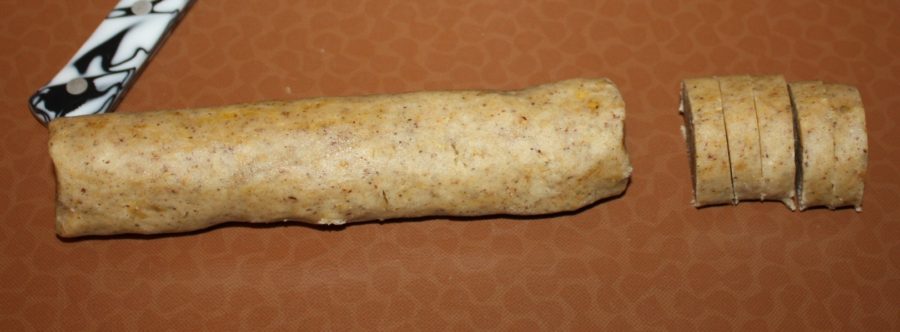
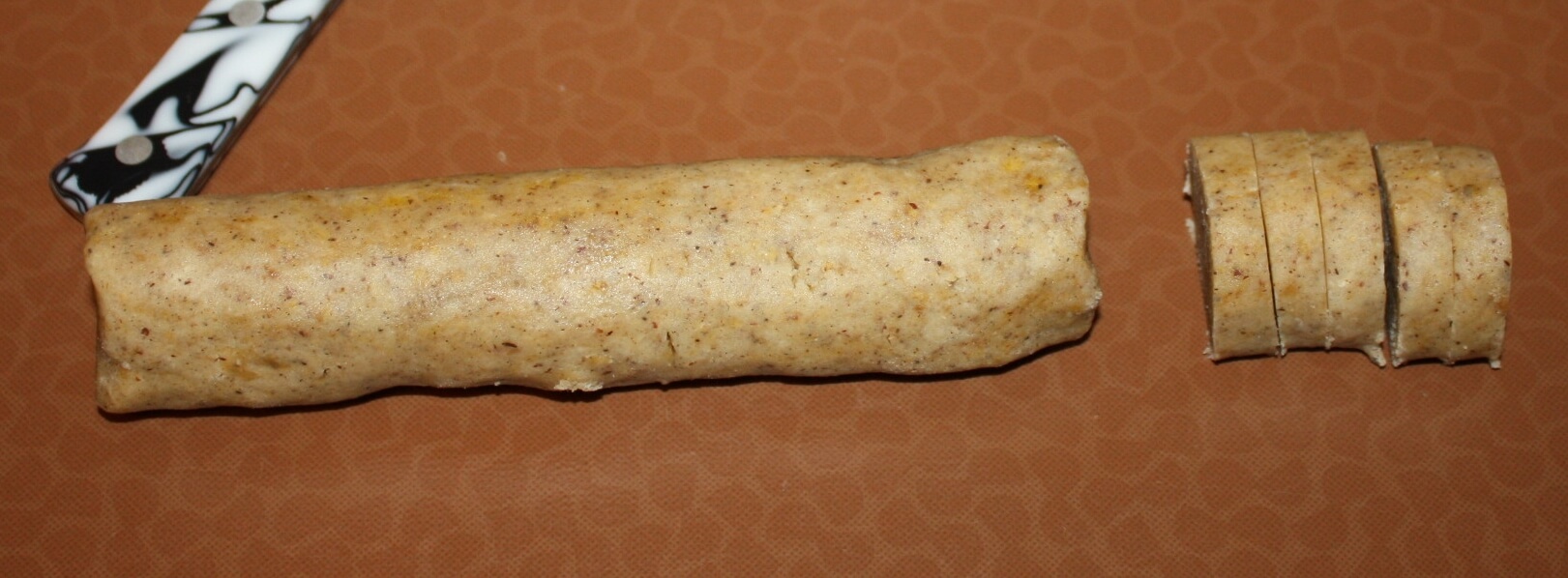
Form dough into rolls of about 3-4 cm diameter (I like my Kipferl small, just like I remember them). Cut rolls into slices of about 6-7 mm thickness.
IMG_1531
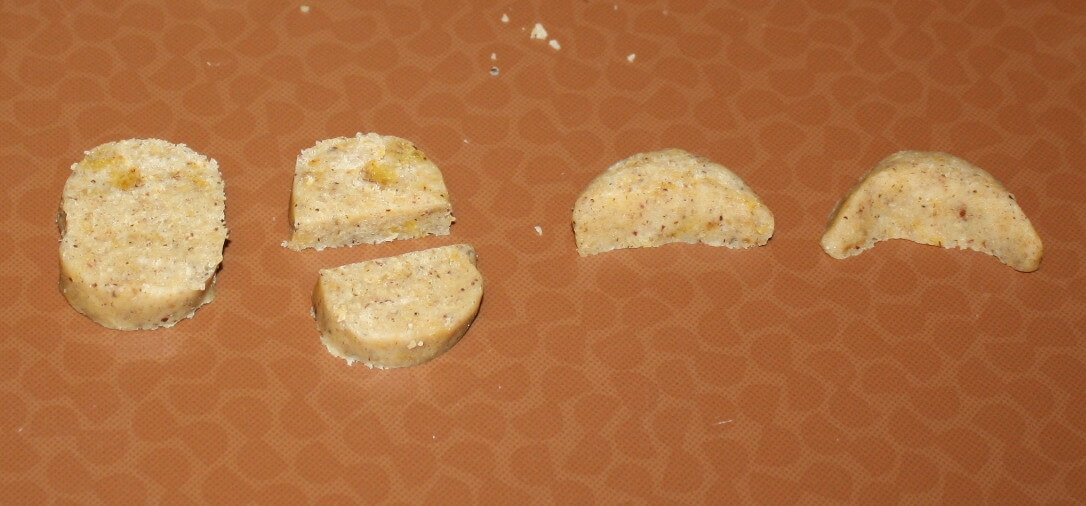
Cut each round in half.

Then, using your fingers, round the upper middle of the half-round shape, and tweak the two corners a little longer. This results into something already vaguely crescent-shaped.
IMG_1532
(The yellowish blotches are from the mascobado sugar I used this year, the black spots are the vanilla and hazelnuts.)

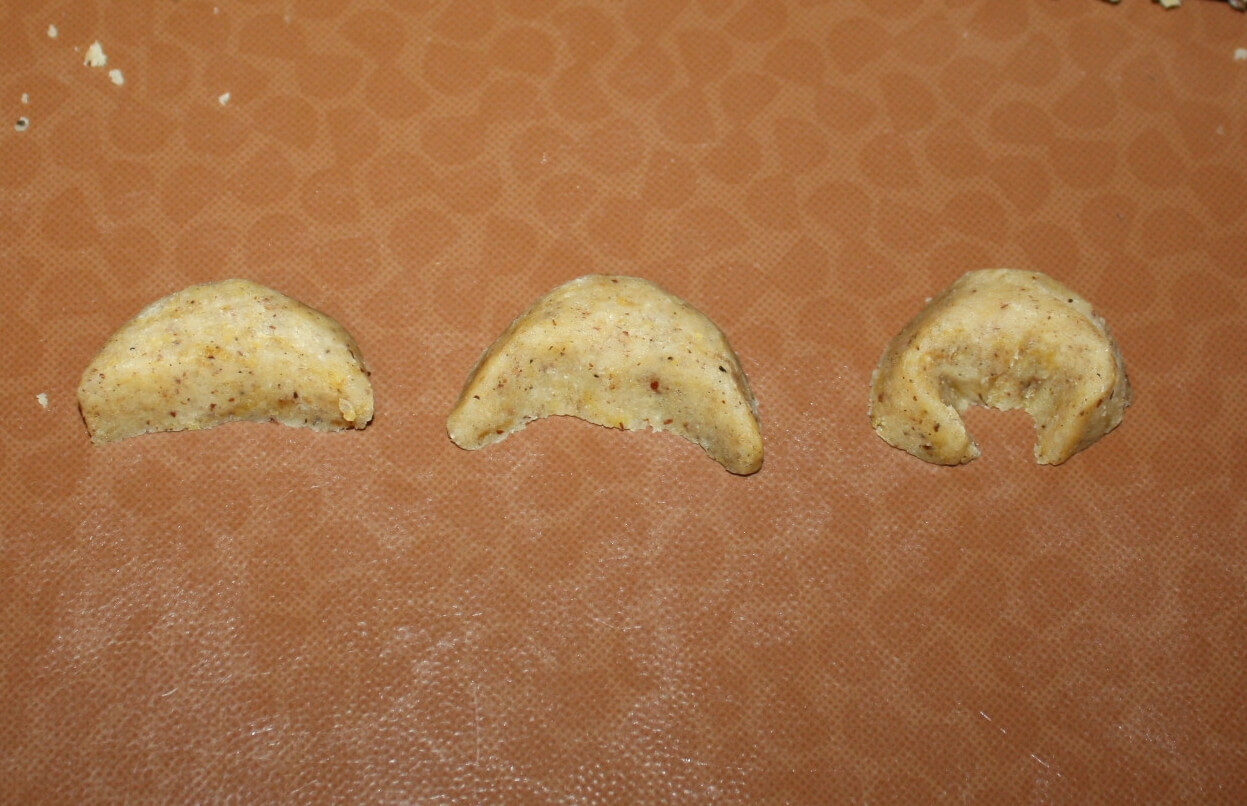
Now pinch the ends of the crescent even more - this will make them thinner and at the same time, the middle will get a little "nose". Like one of those children's book moons that have a nose.

My gran's Kipferl had that, so I was totally happy about them (and still am). If you don't like the nose, you can probably smooth it out... but for me, it is central to the whole shape. (Hah.)

As a last step, press the ends of the crescent inwards to get a compact shape.
IMG_1534
And that's it. You're done shaping.

Once they are baked and have cooled off, dust them with powdered sugar, then store them in a box until ready to be eaten.

This is how mine looked in the end, this year:
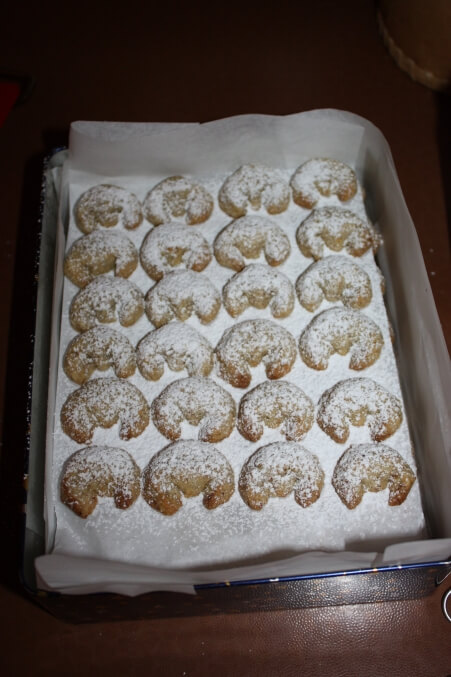
IMG_1536
Happy baking!

The other seasonal recipes that I blogged in the past are:
0
NOV.
24
1

And still more links.

I'm almost through the incredible link backlog - so here's the last drop for now:

If you are looking for a new way to practice your early Mesopotamian writing skills, you might want to bake some cuneiform cookies.

Here's an article about the sequence of adjectives in English - a "crazy grammar rule".

A list of sheep breeds (though there's not much information about many of them, especially not much information about the wool).

Speaking of wool, Hakai Magazine has a nice article about the importance of wool for the vikings.

Jonathan Jarrett has posted a book review about "Debunking History" by Ed Rayner and Ron Stapley.

And that finally clears my list. I hope there was something enjoyable among the links for you!
0
NOV.
23
0

And even more links!

Continuing from yesterday, for your amusement wants and procrastination needs - more links! To things!

The Atlantic has a piece about how the current incentives and structures make science worse, not better - The Inevitable Evolution of Bad Science.

Textilis has a post about Appliqué embroideries on medieval textiles.

If you're looking for a bit more to read, Isabella von Holstein's thesis "A light stable isotope (C, N, H, O) approach to identifying movement of medieval textiles in North West Europe" is available online here.

A Scottish lacemaking company is using modern computer technology to keep their looms running - CAD instead of punch cards.

If all that makes you want a sonic screwdriver, here's a knitting pattern for one. Functionality not guaranteed - unfortunately!
0
NOV.
22
0

Link drop.

Can you guess what has accumulated during the last two weeks? Right. Links. Lots and lots of links about various topics... which means my browser has so many tabs open right now that it even scares me (and I'm nigh-undauntable by lots of open tabs).

So, here you go, in no particular order whatsoever:

A (short) history of pockets in women's clothing.

What archaeologists say about Trump's election. (Text of the post on Archaeologik is in German, but the links point to English pages.)

A 3D-Model of the medieval mikvah in London.

Aarhus Uni Press has Danish Medieval Castles as their free e-book of the month.

The Importance of Being Scared: An article about fairy tales and fear.

And that's it for today - more linky things tomorrow!
0
NOV.
21
0

Settling in, winding down.

I'm settling in again, and starting to take care of all the things that should be dealt with before the year ends - getting the last of the madder roots out of the soil is on the list for right after this blogpost, as the weather is okay at the moment. There's also some sorting and de-cluttering going on, mostly on the computer (it's amazing how backup files can add up and multiply, with several duplicates in some cases).

The cat is happy again, as her bad paw has healed and she is allowed to roam outside again. The Most Patient Husband of Them All and I have celebrated our wedding anniversary this Sunday, with a nice little hike in the sunshine and lovely cake and coffee afterwards. The bills are paid, my sleep deficit is about gone, and it feels really, really good to be home again, and get on top of things again.

Time to take care of all that stuff that has been postponed, and get the stock sorted out and stuff re-ordered. There's some editing work waiting, the Forum results to sift through and get ready to write them up, so it doesn't look like it will be boring anytime soon. It is also the time of the year to start planning for the next one. And, of course, it is the season to start baking Christmas cookies - something I'm really looking forward to!
0
NOV.
18
1

Textile Forum 2016 - Pompeii Dyeing Experiment.

Back in 2012, we already did a dyeing experiment at the Forum, investigating the influence of kettle materials on the colour outcome. Our outcome showed a significant difference between the kettle materials that we tested - which were lead, copper, and iron. The results of this experiment were published in EXARC journal (you can read the article here).

In 2013, I was able to do an add-on to this original experiment, investigating whether the influence was larger in the mordanting or in the dyeing process. Sadly, I omitted the reference (NEVER leave out the reference!!) so there was no way to compare the original experiment and the add-on with each other. (Any comparison would have been limited anyways, as they were two different runs with different batches of birch leaf - but having two references to compare would have given good information about the similarity of the dye batches. Well.)

And ever since 2012 and the original experiment was done, I've been looking for somebody who would like to repeat the experiment... but nobody took the bait.

So this year at the Forum, we did the repetition ourselves. We did the full run this time around, though, combining the original experiment (metal in both the mordant and the dye) with the add-on (metal only in the mordant, or only in the dye). This caused some serious brain-bending and thought-knotting in the preparation as I was trying to make the run as efficient and as sensible as possible while avoiding any contamination between the skeins and any other issues.

There were two reasons for this re-run: One, to see how the three different batches (metal in mordant only, in dye only, in both) compare to each other. Two, to finally have an archaeological experiment repeated (something that, to my knowledge, has never happened before).

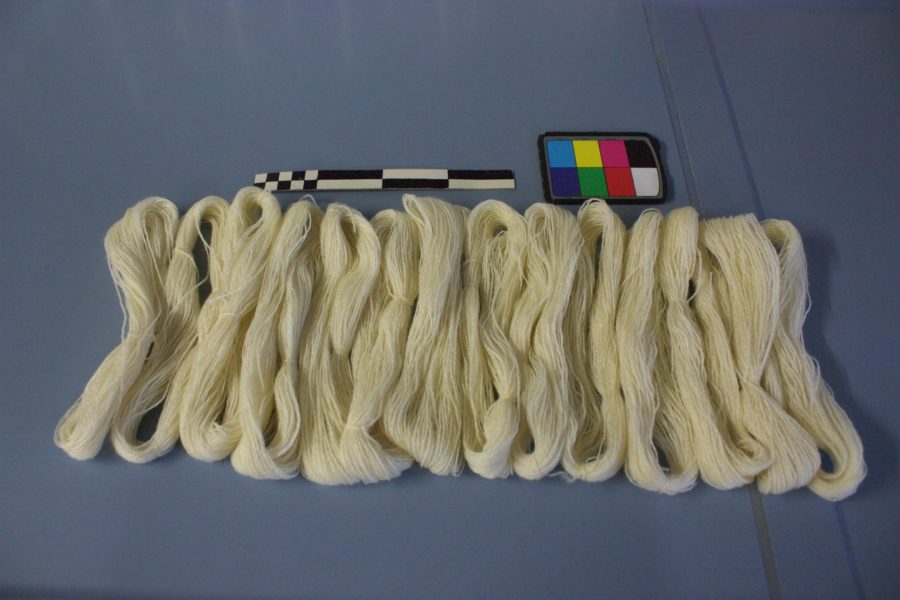
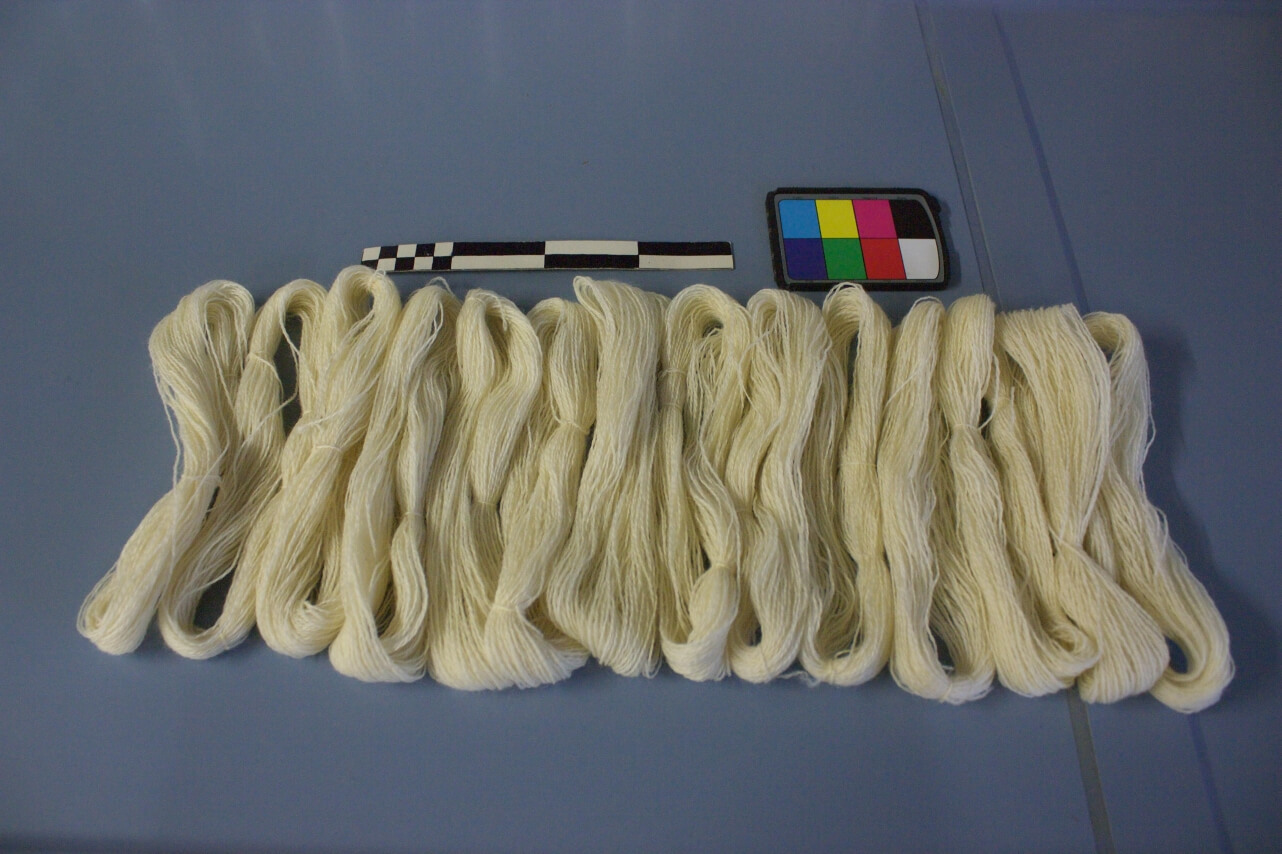
So things happened. Skeins were wound...

IMG_9733
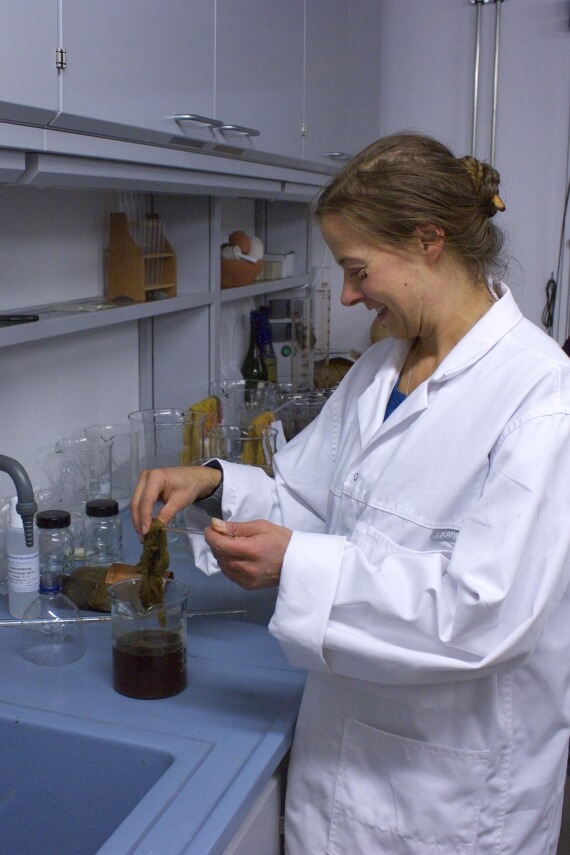
...and mordanted...

IMG_9769
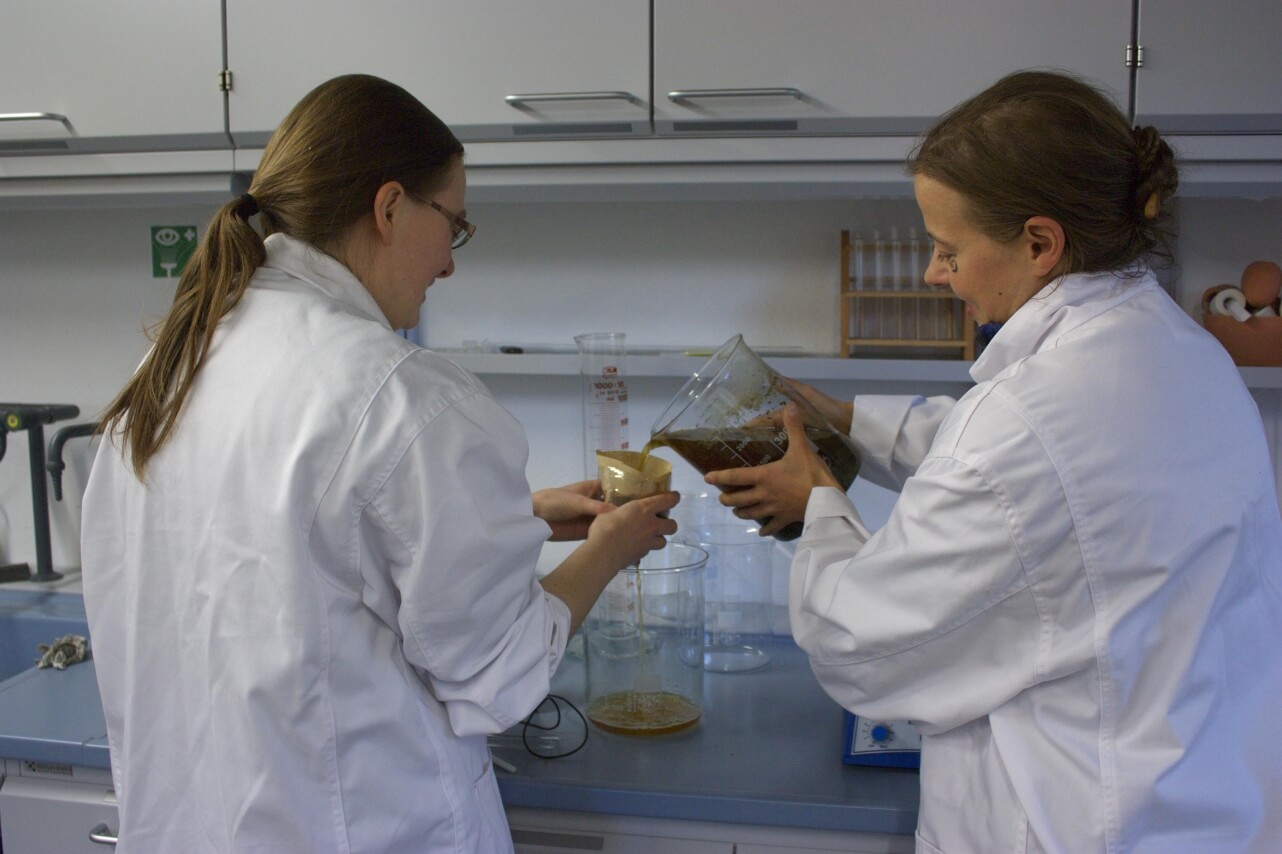
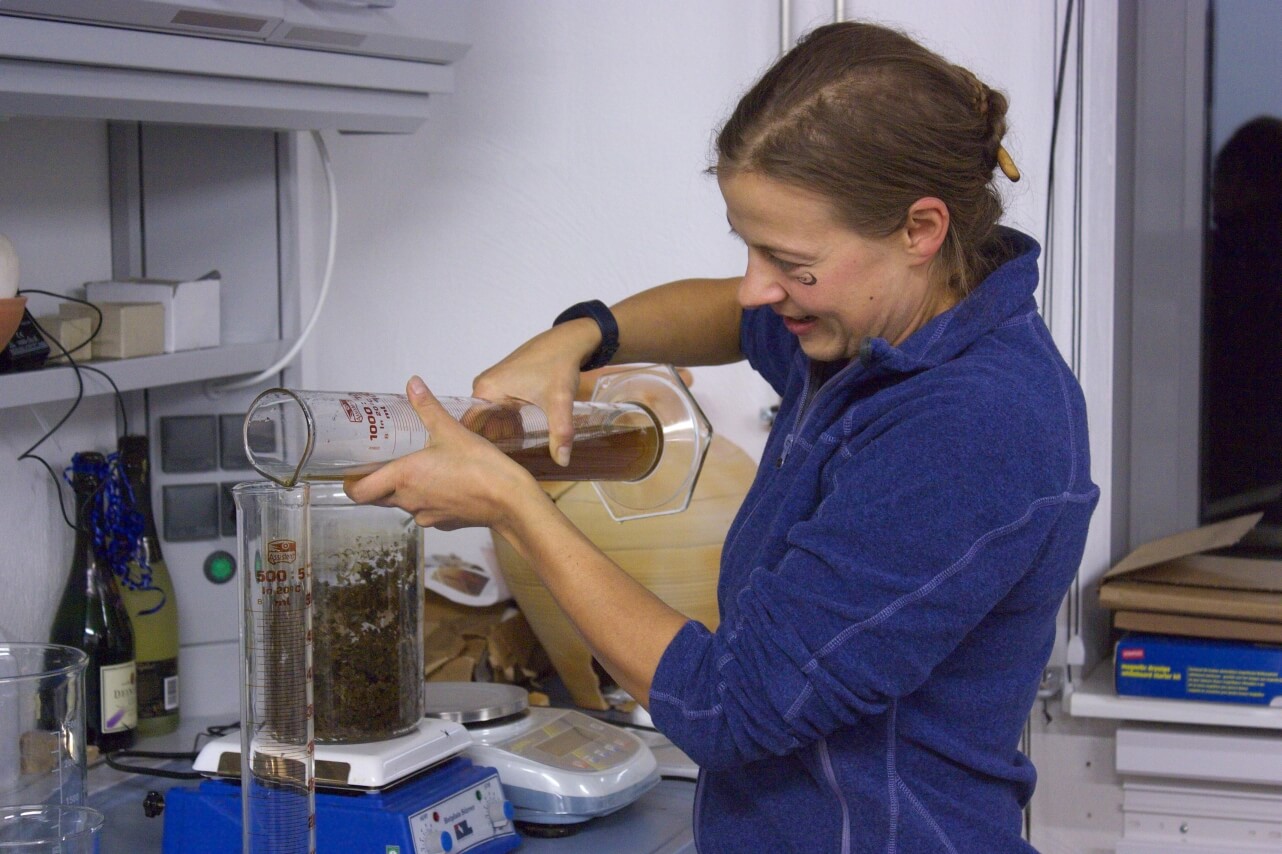
... dye liquid was boiled, and filtered off...

IMG_9926
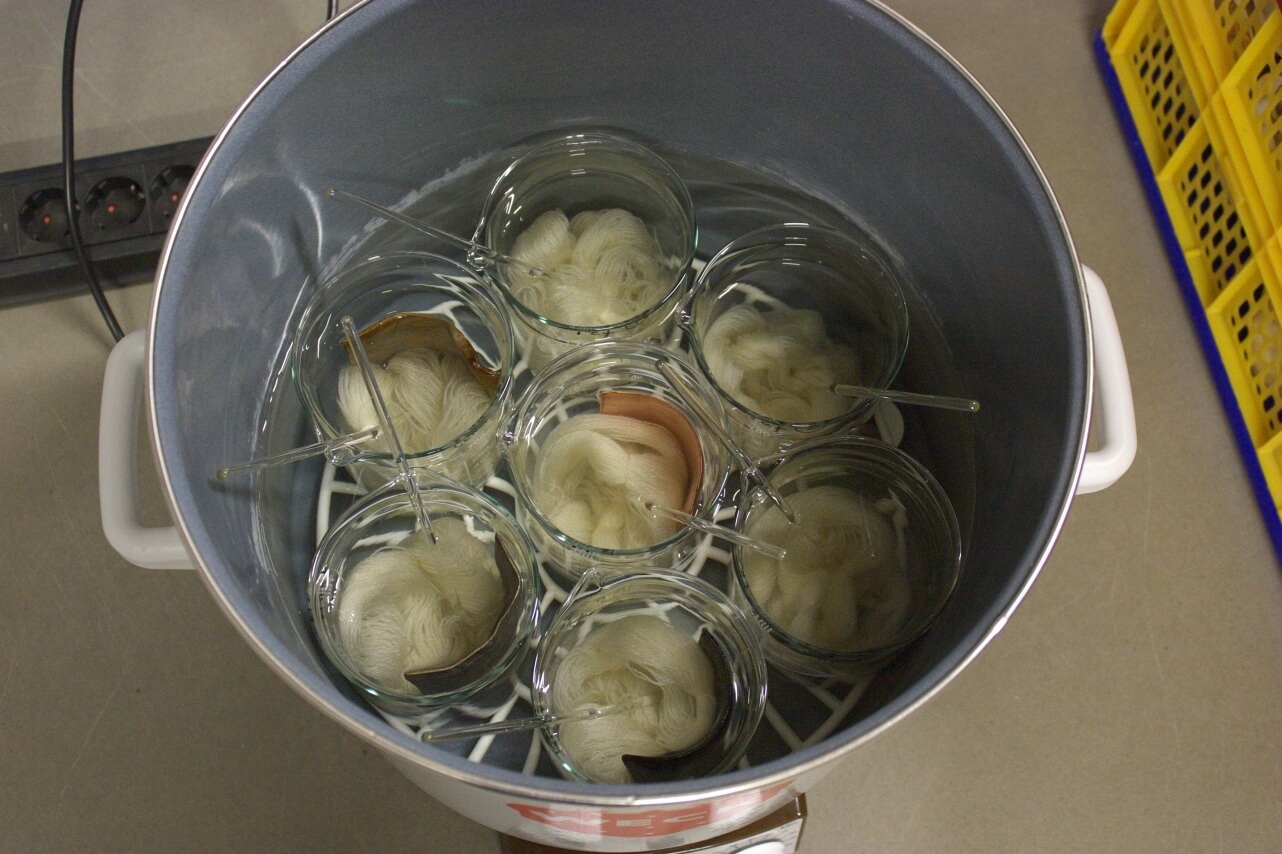
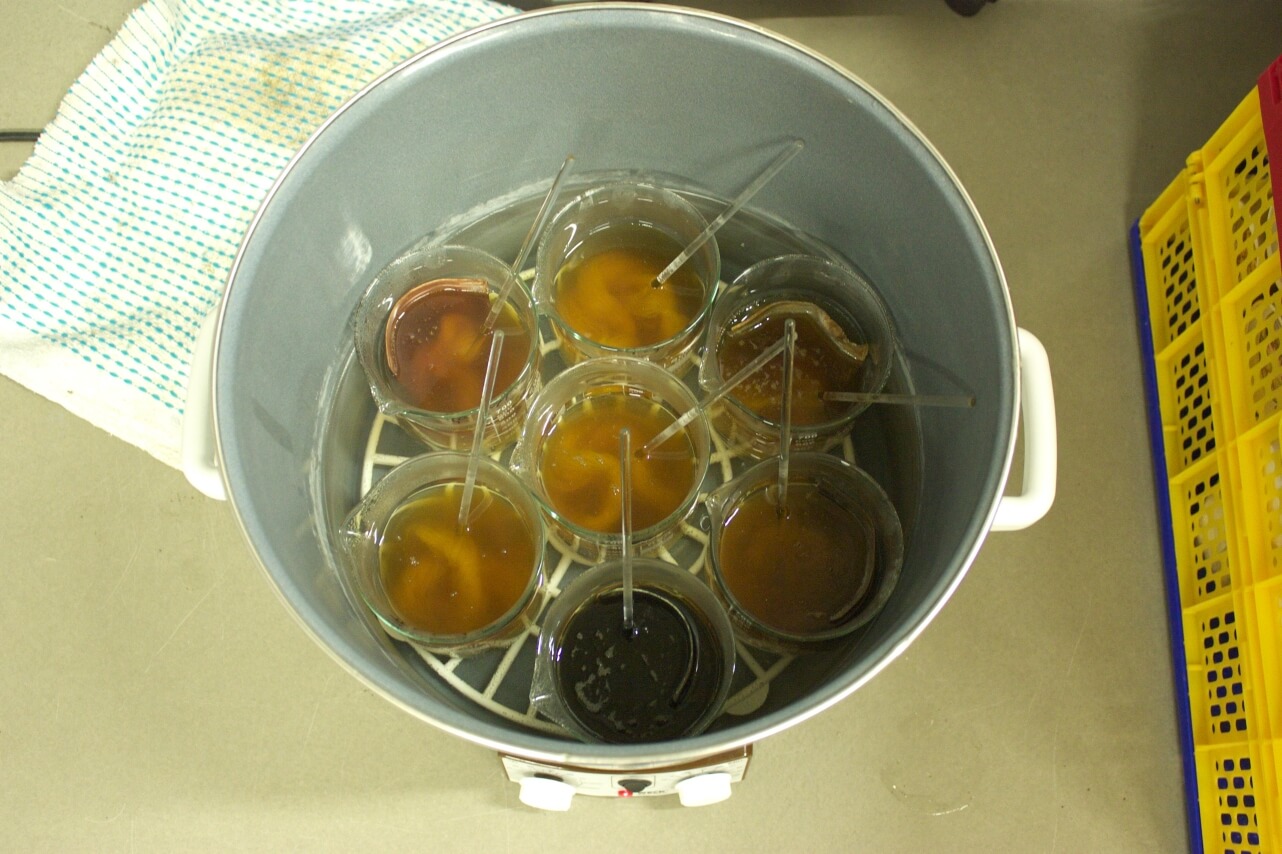
...and split up between fourteen pots.

IMG_0087
Then, skeins were dyed (that was a long night!).

IMG_0108
They were rinsed, and labelled, and dried.

IMG_0700
IMG_0605
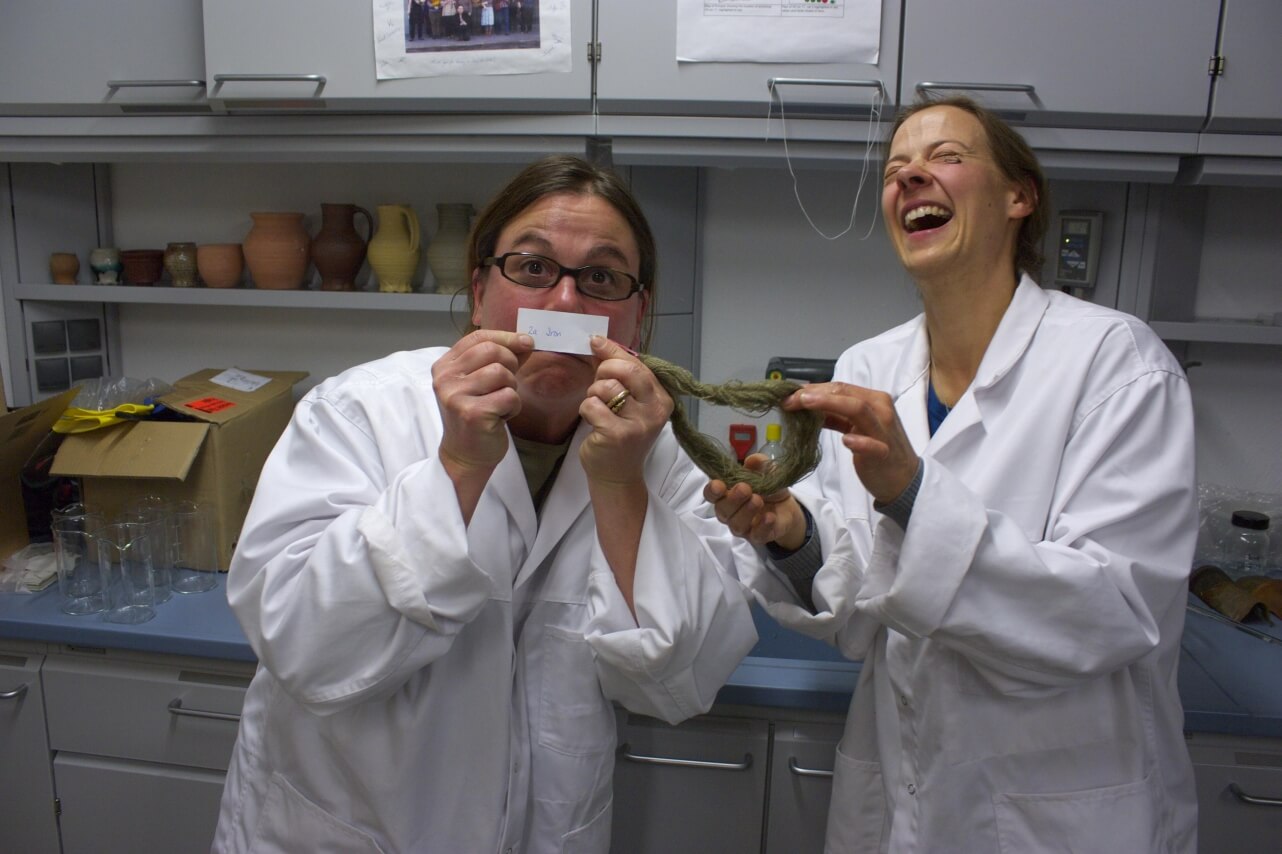
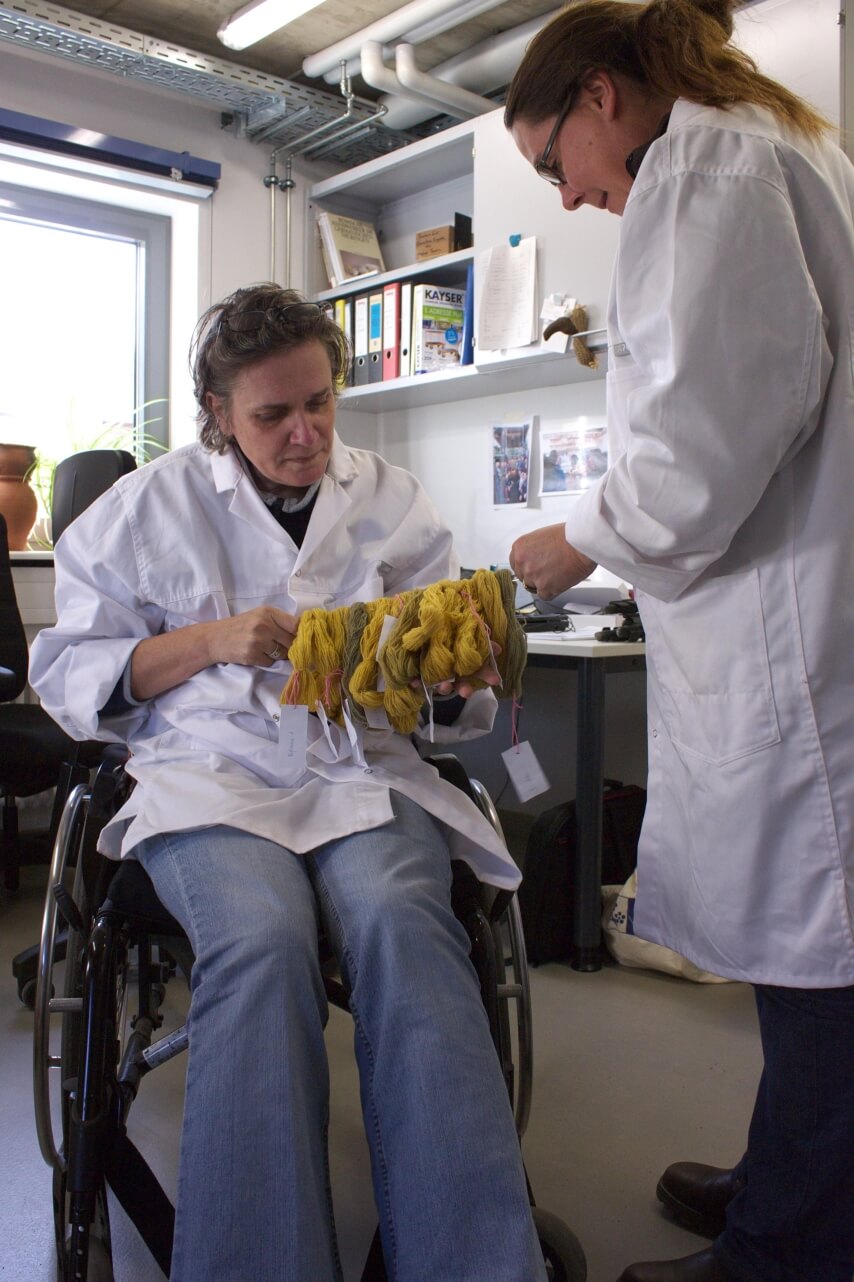
And, of course, they were discussed!

IMG_0816
So, the outcome?

Our experiment was successfull on both counts. One, it does show that there is a more pronounced influence of the kettle wall when dyeing than when mordanting, and that it adds up when the metal is present in both. Two, that it is really important to repeat archaeological experiments, because the natural stuff that is part of almost all of them can result in weird outcomes, or in huge differences.

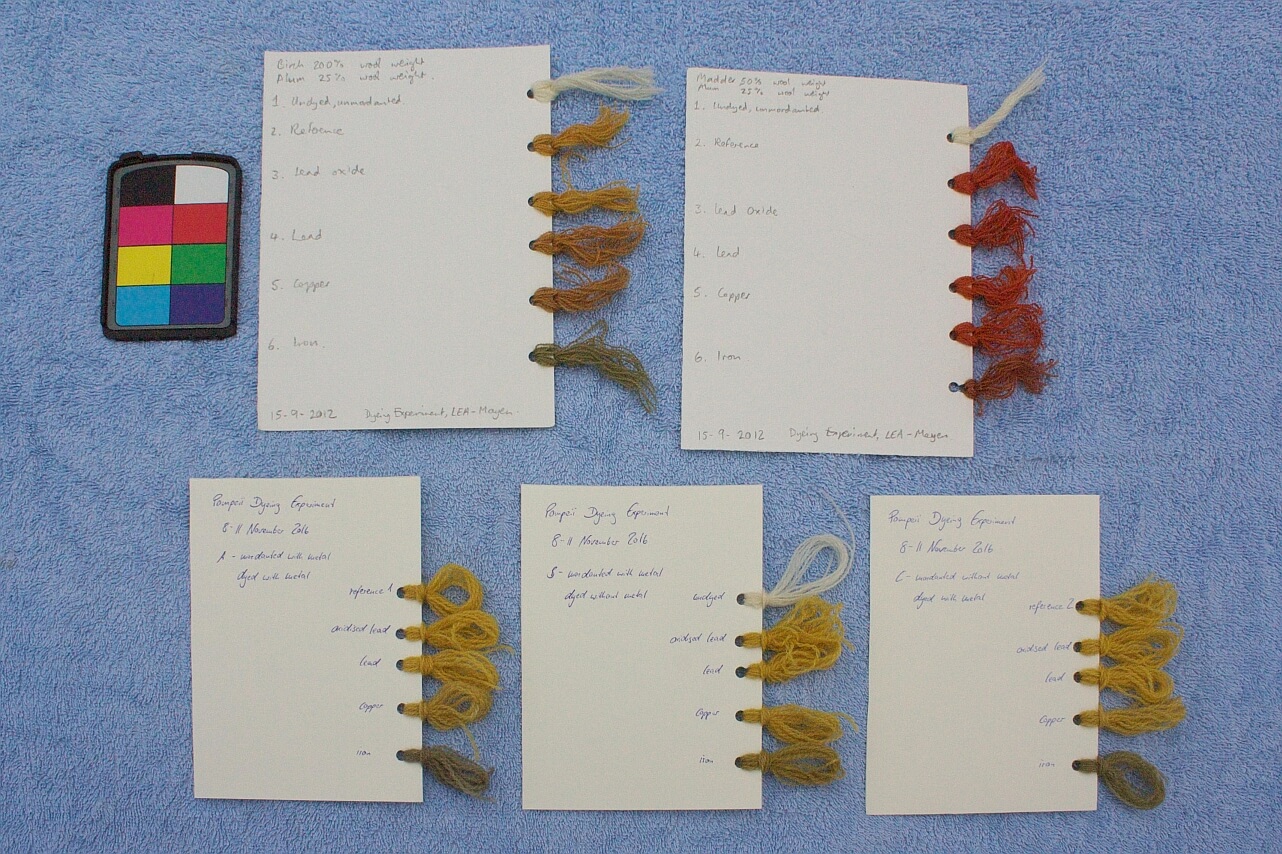
You can see the differences here - top left is the original experiment result in birch (top right was a madder dye run). On the bottom left, metal was present while mordanting and dyeing; bottom middle, metal only when mordanting; bottom right, metal only when dyeing.

IMG_1462
Time well spent, I'd say.
0
NOV.
17
1

Textile Forum 2016 - Dye Penetration Experiment

I'm back home!

It was a wonderful time away - both the Nobilitas-Akademie and the Textile Forum were amazing experiences, and I had a blast at both. I'm equally happy to be home again now, though, and ease myself back into the familiar routines in my familiar surroundings. A full week of intense work (which the Forum always turns out to be) really does make a person tired!

It was well worth getting tired over, though. This year's Forum was very, very heavy on experiments, with two full-fledged ones and two additional runs of tests, all of them involving dyeing. Which means we had a lot of work being done for those experiments, by a good number of people... and I learned again that experiments take an insane amount of time. Every time.

One of the experiments was dubbed "Dye Penetration Experiment", and it is exactly that which we were testing.

Dyeing can be done either in the fibre (in the fleece), in the yarn (in the skein) or in the cloth (in the piece). All three have their advantages and disadvantages, and there is evidence pointing towards all three methods having been used in historical times (though there is not always evidence for all three at a similar time in one region).

This has led to quite a bit of debate on which method was the most common one - and it is very hard to tell without knowing how well a method can be seen on the textile. If there are white spots between threads in a fabric, it must have been piece-dyed. If there are white cores in yarn, it must have been dyed in the skein. But what if the dye can penetrate completely? Then it would be impossible to tell whether the textile was dyed in the fleece, in the skein or in the piece.

Which leads to the question at the core of our experiment: How easily does dye penetrate the fabric?

We had two possible influences on the permeability of the fabric - yarn twist (yarns with higher twist are denser) and fabric density. Which resulted in the setup of having three different yarns hand-spun, to about 0.5 mm thickness and with three different twist angles (c. 20°, c. 30° and c. 45°), and three different fabric densities (12, 10 and 8 ends/cm in the warp).

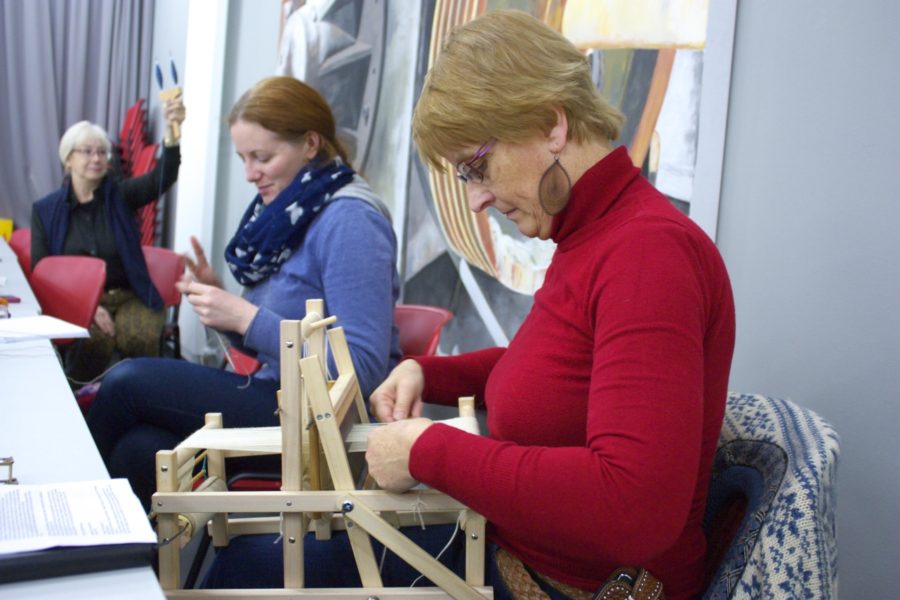
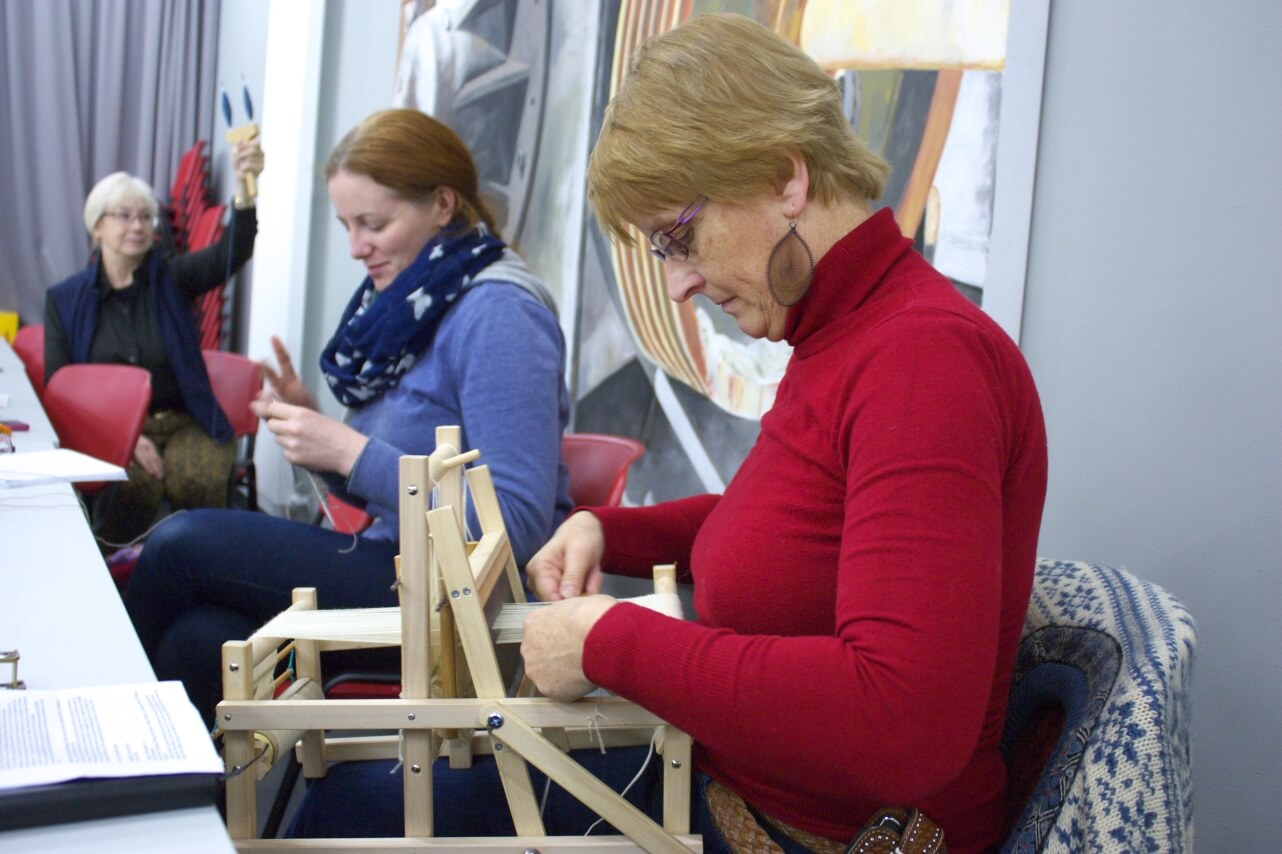
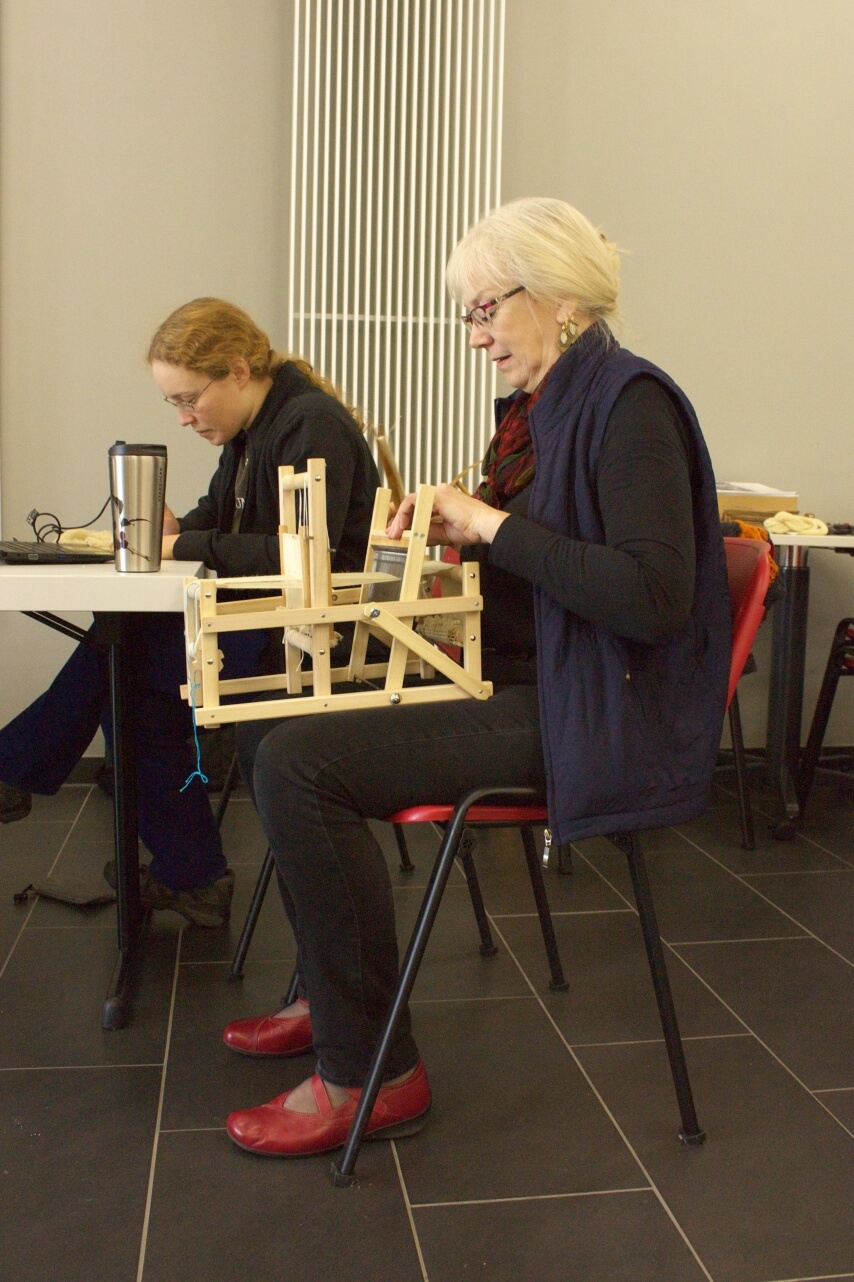
The spinning was finished before the Forum, but there was a lot of weaving being done during it, by Harma Piening and Ruth MacGregor:

IMG_0072 IMG_0783
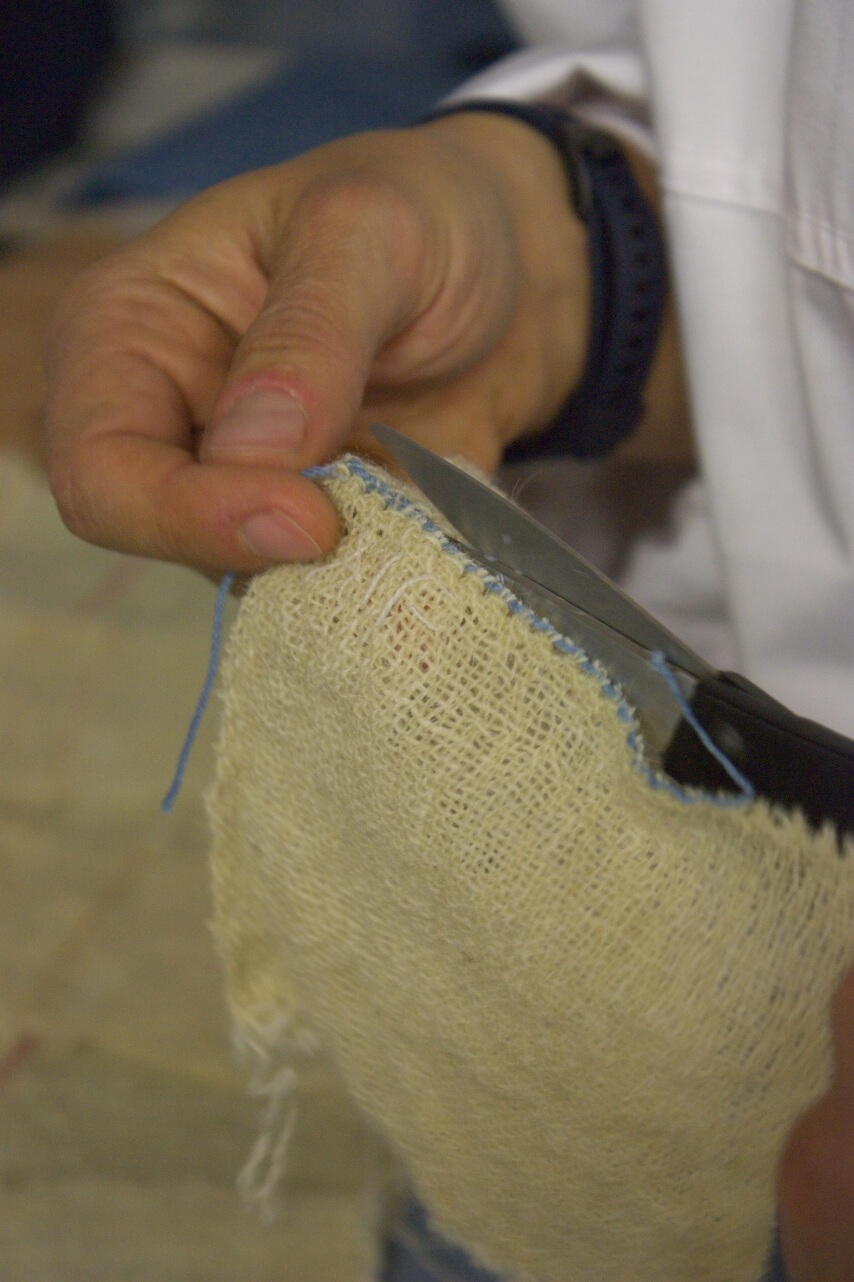
... followed by careful finishing of the fabrics. Then I got to cut them apart:

IMG_1141
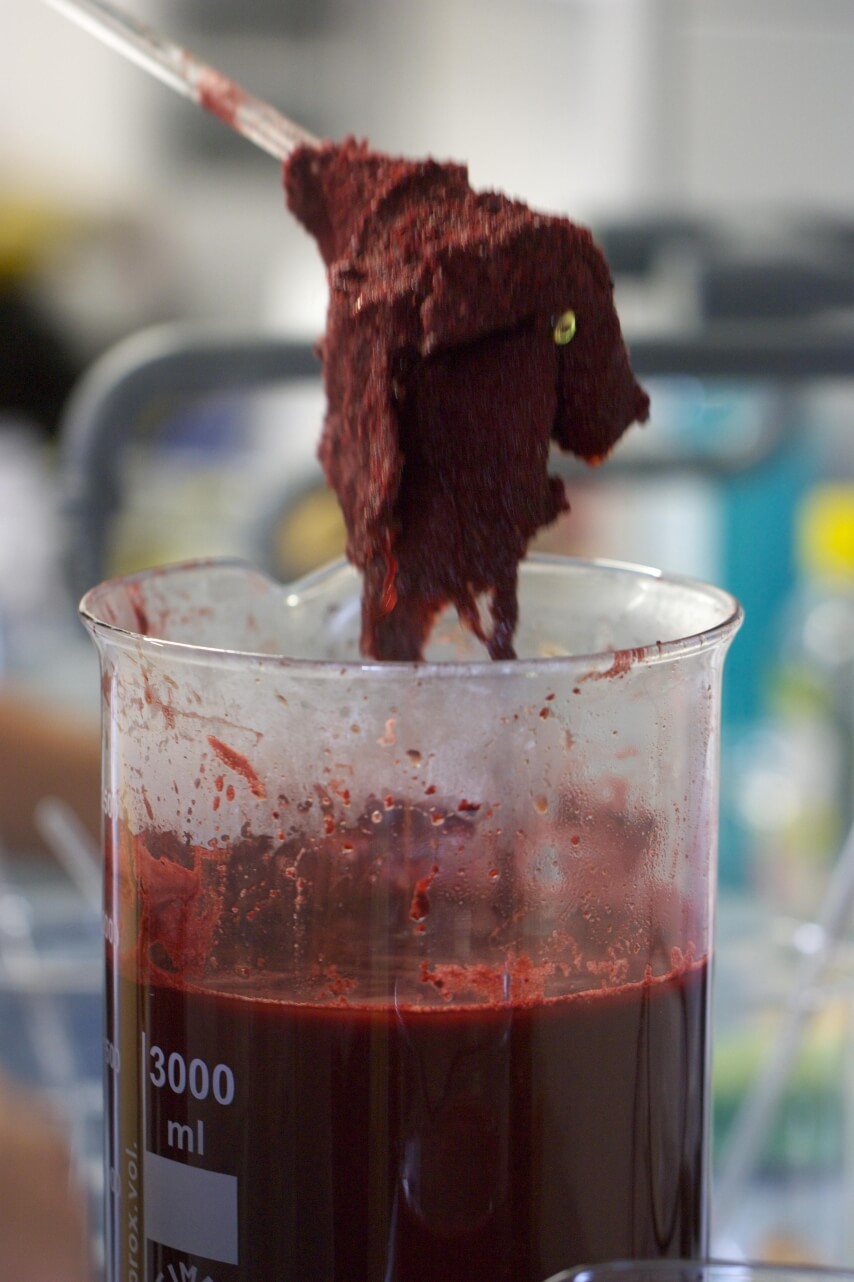
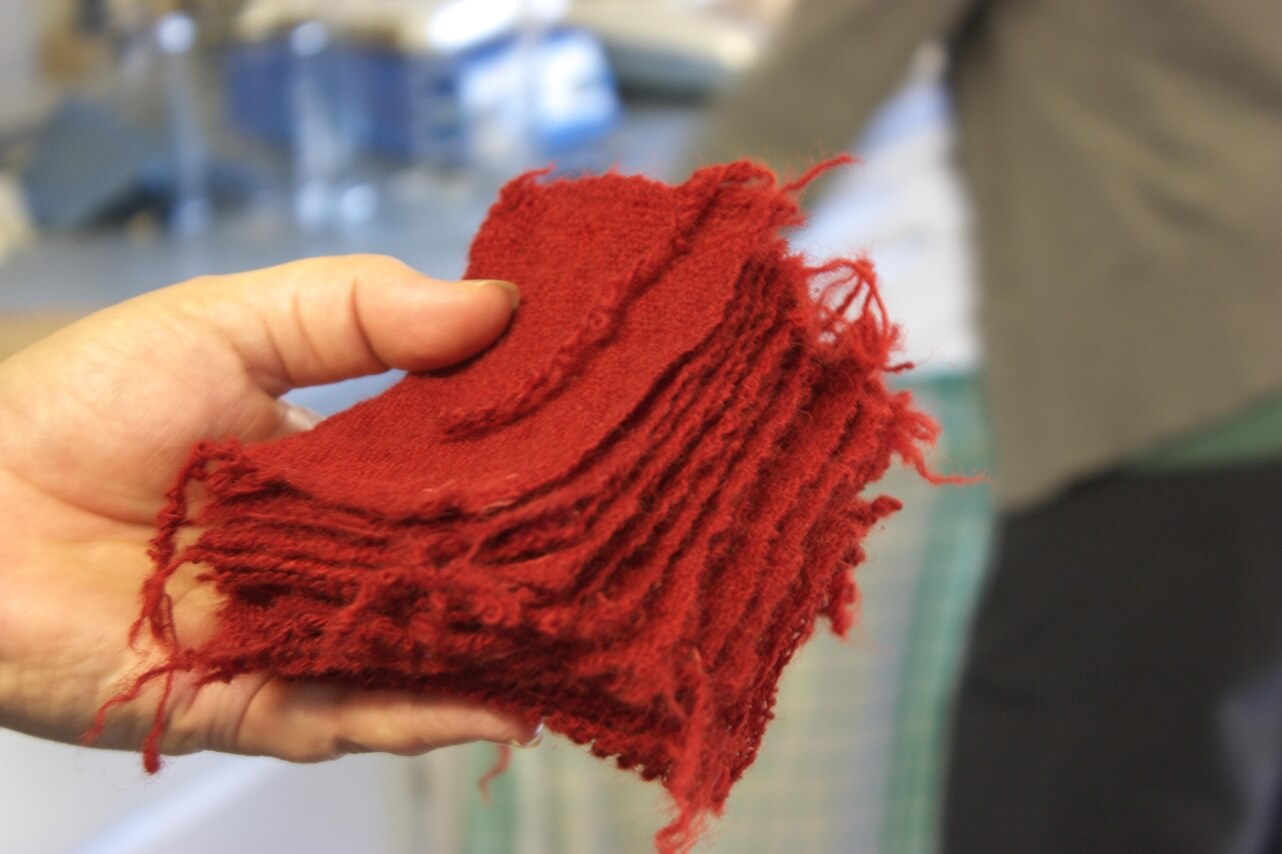
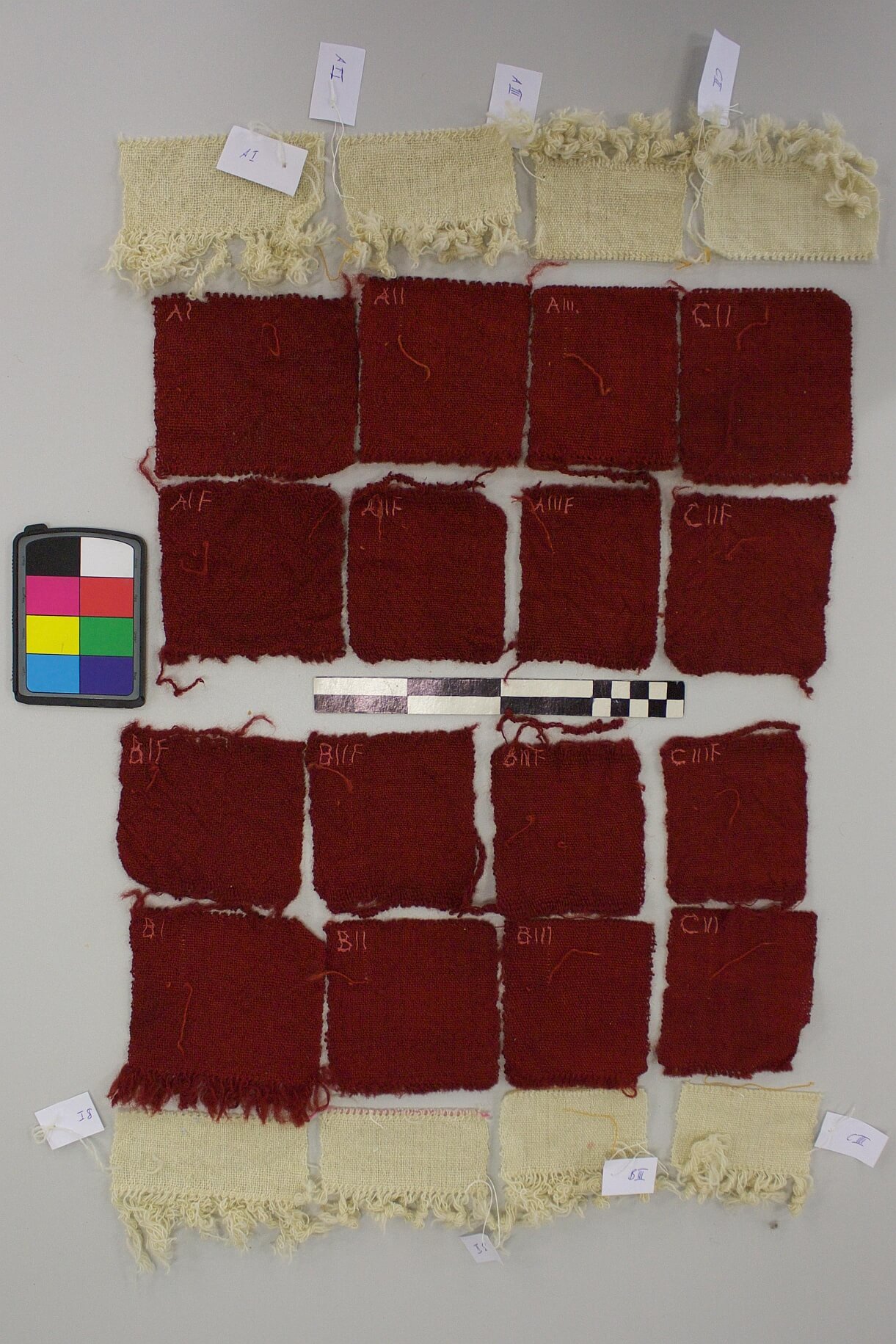
... and then some of them were fulled, and most of them were dyed madder red.

IMG_1310 IMG_1326
This meant that I got a bonus lesson in how to dye with madder from Sabine Ringenberg - and her speciality from many years of working as a professional historical dyer is red. Small wonder the colour turned out quite nicely!

In the end, we had a load of samples to be catalogued and analysed:

IMG_1460
I'll have to take a careful look at the photos, microscope photos and measurements before giving a real conclusion - but I can tell you at this point already that none of the fabrics was completely dyed through, there were white spots between the threads in all of them.

We also found that the twist angle I was aiming for (with regular checks on my spinner's little helper) was not what the yarn ended up having, and that the angle fluctuated a lot over the length of the yarn. It will be interesting to see whether the angles read out differently in the yarn and in the fabric - one of the things on my list to test in the future.

It was definitely a really interesting experiment to do, and I got a good number of surprises (I'd have suspected at least the looser fabric with the soft-spun yarns to dye through, and my spinning to be a lot more regular than what it turned out to be). It is of course not the ultimate answer to the question whether things were dyed in the skein or in the piece - but it does hint that we might expect white spots when dyed in the piece, and that would be a good thing to know. (As all experiments, this has already generated more ideas, such as making tests with yarn skeins with different twists and thicknesses to see about how well it dyes through...)
0

By accepting you will be accessing a service provided by a third-party external to https://www.pallia.net/

Kontakt