Latest Comments

Guest - Aislinn Dyestuff Citizen Science.
09. Oktober 2026
This is a great project. I look forward to the results. Thanks for letting us know.
Guest - Aislinn Time for...
09. Oktober 2026
Looks delicious!
Guest - Katrin Sprang Discussion
18. September 2026
Hi Rachel, I have looked for more photos of you, but that was not very successful. I found a link on...
Guest - Beatrix Sprang Discussion
15. September 2026
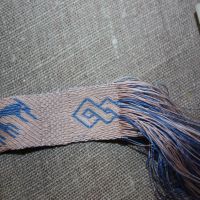
That lozenge pattern element is not a photograph, but a scan. So it should be to scale. But I pinned...
Guest - Katrin Sprang Discussion
15. September 2026
I was not referring to Rachel's reconstruction (is the reconstruction you refer to the one photograp...
SEP.
30
0

Gratuitous Cat Pic.

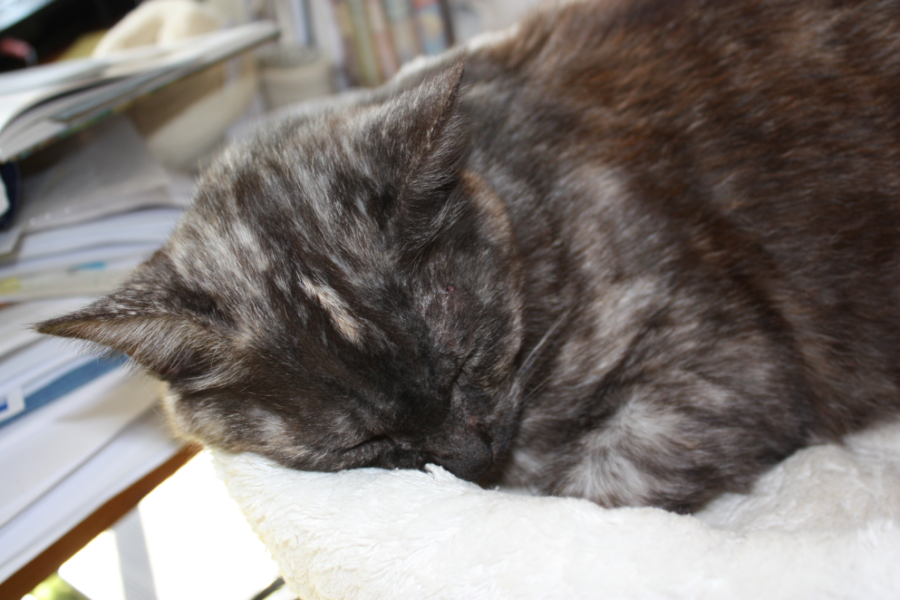
It's Friday, and what better day is there to post a gratuitous cat picture? So here you go:

sleepycat
Madam, snoozing happily, while other folks have to work...
0
SEP.
29
0

Links, to Things in German.

It's been a while since I posted links to German things here, but a few have stacked up, and I find them too interesting to pass them all by. So if you have German (or trust in machine translation), here you go:

Aisling writes about swastika ornaments in Viking tabletweaving. There's quite a few people using this ornament in their garments etcetera, reasoning that it was "just an ornament" in Viking times. Well, let's say that going for this kind of ornament in German Living History/Reenactment is always a slightly peculiar choice. Especially since, as Aisling points out in her blog article, there are actually very, very few of these swastika ornaments actually used in tabletwoven bands.

Niko has posted a tutorial on how to make a medieval belt. With lots of pictures, so it might be interesting even if your German is not good.

A book by the Limburg Brothers (best known for the Tres Belles Heures du Duc de Berry) has turned up in Nijmegen - causing a little sensation. (Pictures here, too.)
0
SEP.
28
0

The weirdest animal ever.

I stumbled across something that must be the weirdest animal ever: the tardigrade. If you never heard of it before, you're probably in good company...

These critters have been around since, like, forever. They are water animals, they can live about everywhere and survive extreme heat and extreme cold; they are tiny (usually half a millimetre long), and they look really weird. Really, really weird - and at the same time somehow cuddly (no wonder that they are also called "water bears").

Aliens. Well, almost.

 
0
SEP.
27
0

Rainbow Wool.

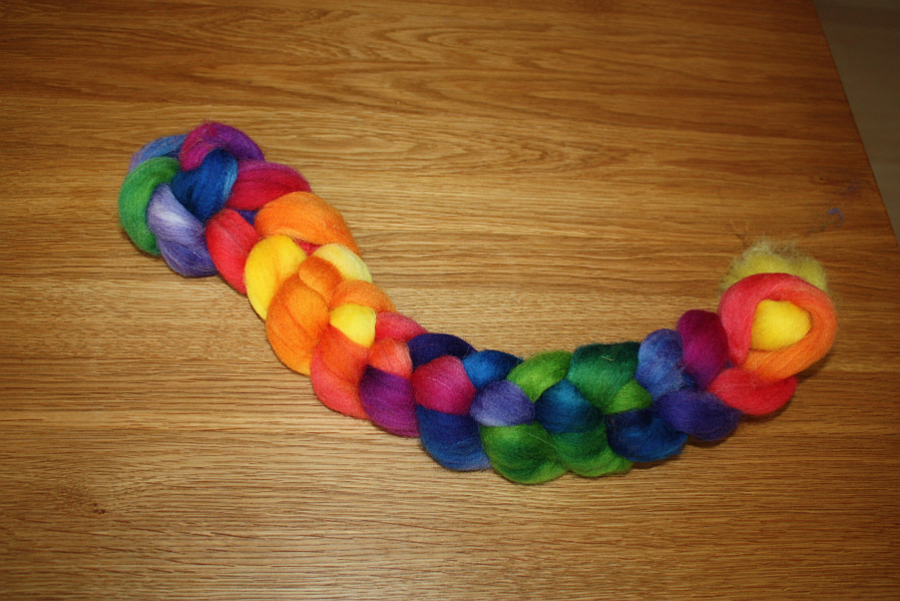
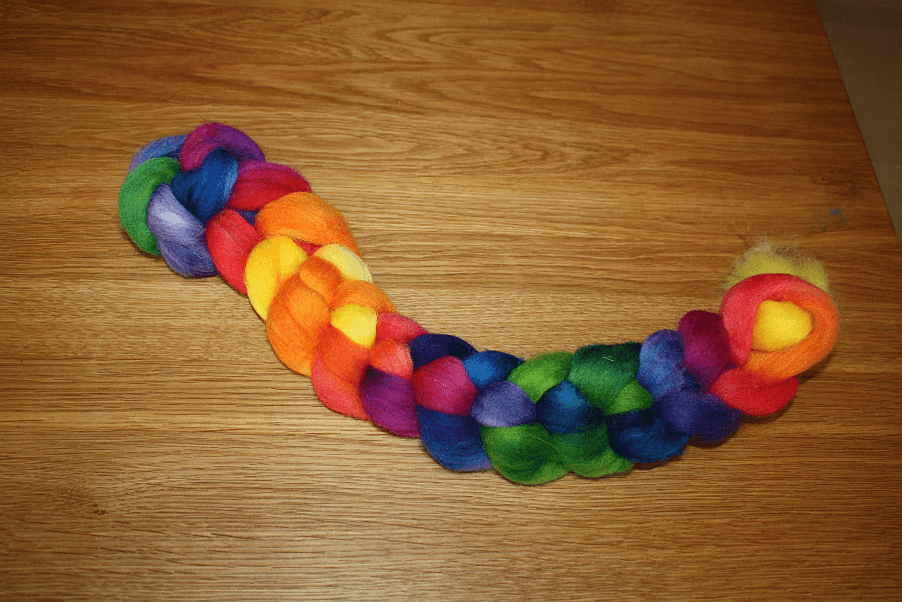
The lovely colourful skein of wool which originally started out as this:

rainbowwool
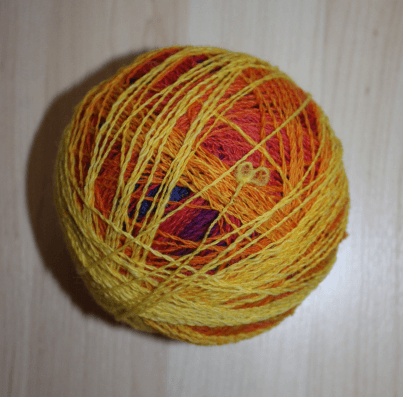
has turned into a ball now:

rainbowwoolball
I'll have a good, long think about what I will do with 745 m of this fine two-ply rainbow. Currently, the thing that sounds most attractive is to take some dark yarn in a similar thickness and eventually knit something wearable in a mosaic pattern.

In case you don't know mosaic knitting - it's a slip-stitch technique where you work with two colours, making incredibly complex-looking patterns that are fairly easy to knit. There's a nice tutorial in a back issue of Knitty to get you started, and if you want more patterns, Barbara Walker has published a whole book called "Mosaic Knitting".
0
SEP.
26
0

Opus Anglicanum Exhibition coming up

Twitter can be really useful sometimes - I learned there that the V&A London will open its new exhibition "Opus Anglicanum, Masterpieces of English Medieval Embroidery"  on 1 October 2016, and the exhibition will run until 5 February 2017.

There's a programme of events related to the exhibition here, and the main page about the special exhibition is here. It looks like a  spectacular line-up of gold embroidery, so if you can manage to get to London during the exhibition, it is surely worth a visit!
0
SEP.
23
1

Really Old Indigo Dyeing.

In Peru, cotton textiles have been found that are the earliest evidence for indigo dyeing to date - about six thousand years old. Both the LA Times and the Smithsonian Magazine have an article about these finds.

It really is an amazing find - firstly because these textiles have survived at all for six thousand years, in a condition good enough to still see the blue colour, even though it's faded, with the naked eye. Secondly, it's not just a few fragments, it's thousands of them. Thousands!

The fragments have been cleaned and partly analysed; you can read an article about the dye analysis here.
0
SEP.
22
2

First Times.

I'm a late convert to knitting - I only learned how to knit when I was 30. Though we were supposed to learn how to knit in school, I only got taught the basics of crochet. In my middle teens, I had asked a great-aunt to teach me, and she dutifully did - she loved knitting, and did a lot of it - but I ran out of steam, and interest, about 30 square centimetres in. (That's about 6 cm length of a 5 cm wide headband, if you want to know.) It was... boring. Drab. Slooow.

When I got into historical textile stuff, my excuse for not doing knitting was that a) a lot of people already know about it and do it, so it's not in danger of becoming forgotten, and b) it's a rather young technique, only coming up into its own in the early modern times, with sparse bits starting in after about the 13th century. So no need for me to get into knitting... at all.

Two things did change my mind: My friend, who gifted me with hand-knit socks (my first pair, that fit totally perfectly, and I fell in love with hand-knit socks at that moment), and one of the colleagues-since-turned-friend at the first Textile Forum, who knit 17th-century long stockings from very fine yarn on homemade wire needles (because you don't get needles that fine anymore). A technique that is used for something as crazy as that? I definitely need to learn it.

So learn I did, while knitting the thing I really wanted to have: Socks. From there, I moved on to more socks - patterned socks, socks knit two-at-a-time on dpns, socks knit two-at-a-time with magic loop (I suffer from a specific variety of second sock syndrome, in which the second sock ends up being two sizes smaller than the first one if I don't knit them simultaneously), hats and lace stuff.

What I never did yet, though, is a sweater. Or pullover. Or (what I like best) a cardigan.

In the end of 2015, I finally had decided that I really want to knit one now, and I picked out a pattern and took my measurements and bought a ton of yarn for it (you remember that "before" photo from a few days ago, right?). I knit a swatch, and washed and petted it, and I was good to go... and then came that book debunking the diet myths. No use in knitting a sweater in a size I won't ever wear again, especially with the incredible speed I knit (read: I do knit moderately quickly, but in the end, it is quite slowly as I tend to put it aside and not work on it for longer stretches of time). I was also not willing to guesstimate any measurements - so the wool went into storage.

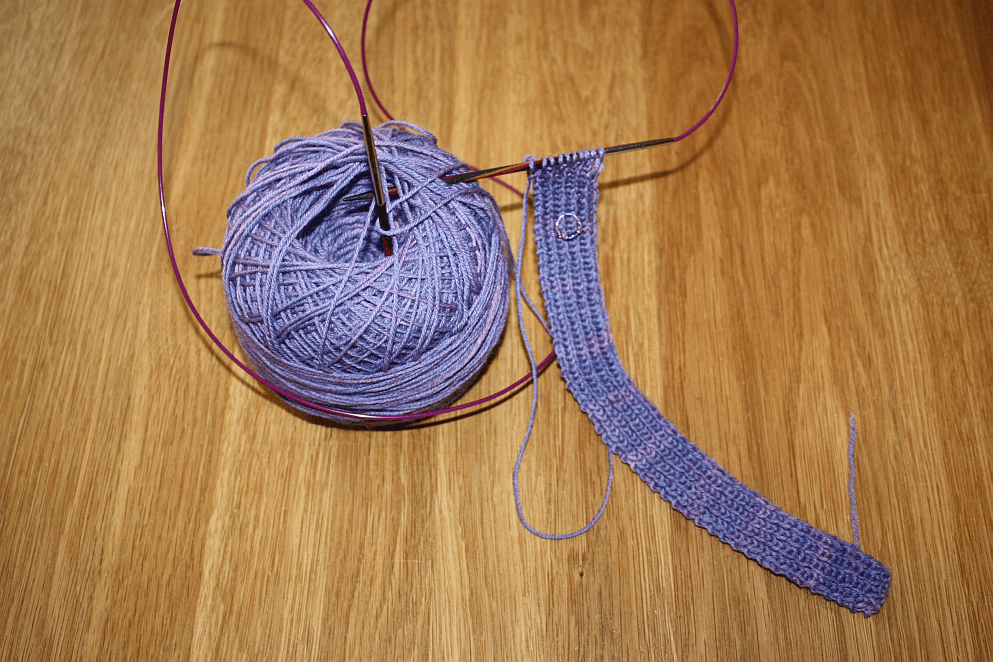
It's still in storage. I got a new pattern, though, and new wool (it's not my fault, these skeins just sort of ended up coming home with me, and yarn that comes home with you while you technically have a yarnbuying embargo in place only doesn't count as new yarn if you have a project in mind for it and cast on sort of immediately, right?) and yesterday... I cast on Vignette.
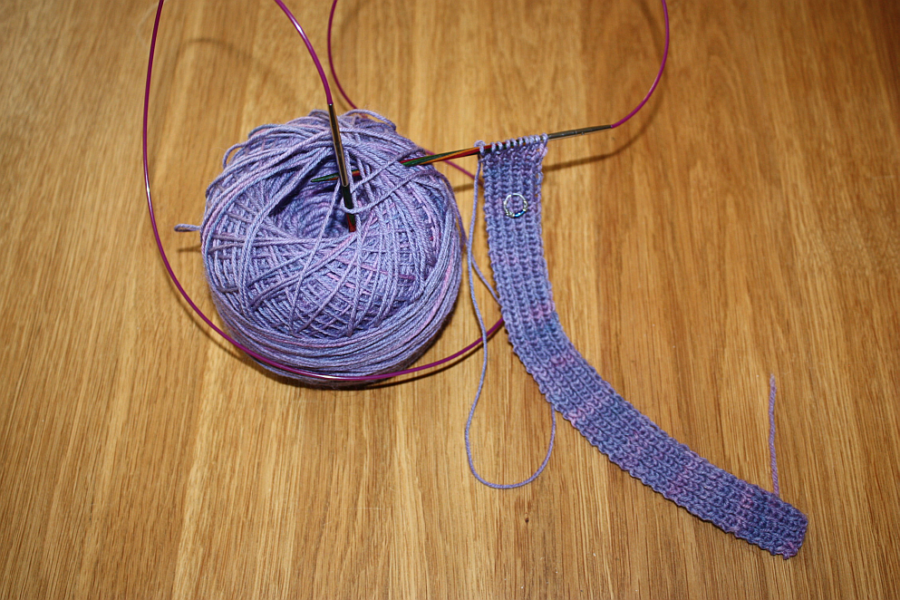
vignette_back_bottom
I'm totally excited. My first upper body garment thing. I really, really hope it will turn out well!
0

By accepting you will be accessing a service provided by a third-party external to https://www.pallia.net/

Kontakt