Latest Comments

Guest - Aislinn Dyestuff Citizen Science.
09. Oktober 2026
This is a great project. I look forward to the results. Thanks for letting us know.
Guest - Aislinn Time for...
09. Oktober 2026
Looks delicious!
Guest - Katrin Sprang Discussion
18. September 2026
Hi Rachel, I have looked for more photos of you, but that was not very successful. I found a link on...
Guest - Beatrix Sprang Discussion
15. September 2026
That lozenge pattern element is not a photograph, but a scan. So it should be to scale. But I pinned...
Guest - Katrin Sprang Discussion
15. September 2026
I was not referring to Rachel's reconstruction (is the reconstruction you refer to the one photograp...
OKT.
18
1

Mmh... maybe a little less wool.

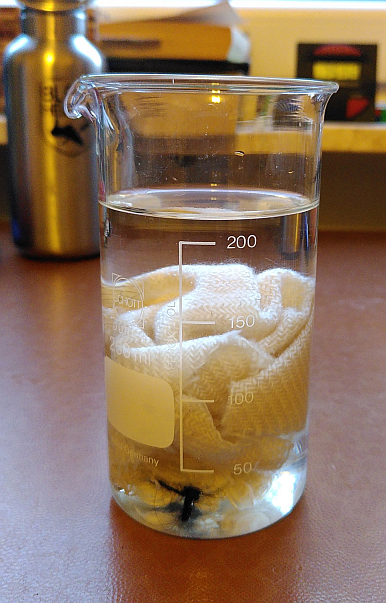
Just in case you were curious on how much wool one can fit into a 250 ml lab glass beaker, it's about 12 g of dry goods in this example, consisting of a small skein of yarn and a piece of fabric about 17 cm square:

tIt fits, but there's not much floating possibility... so it might be a good idea to put in a little less wool. Probably a smaller piece of fabric, and maybe a little more yarn to stay at sort-of-sensible amounts (but yarn will be a bit less, um, stiff?).

It's always fascinating to watch things unfold and questions come up when planning an experiment. There's usually a lot of aspects, and one has to decide on how to handle each one, while knowing that in many cases there's no really good solution that will cover all the possibilities..

0
OKT.
17
0

Planning, planning, planning.

While I'm doing necessary office work (the books have to be kept once in a while, for tax stuff to be sorted out in time), part of my brain is still nibbling on the madder-water-tests. Especially that part which likes to add more and more things to an experiment... because, well, variables and such. And the good old "but but but there's more to find out, can we not?" thing. Aaah.

Current ponderings are related to the dyestuff, not the water. I had decided, in the start, that we'd use one batch of madder, preferably of at least decent quality, and if possible (very much preferred) of very good quality, to do the test runs. Now one of the colleagues asked "which madder are you planning to use", and I started thinking... It's clear that we will test different waters with the same madder - but should we also test different madder harvests/sources with the same water? There's definitely enough local tap water to do that, and I might be able to get two or three other waters in sufficient quantity to do a comparison of two to four different kinds of madder (well, technically one water would do, but maybe different madder qualities react differently to different waters)... so that would be an option. An option that tickles me, to be honest.

And that's not even dipping a toe, or fingertip, into the whole huge, HUGE topic of assists such as bran, fermented bran, beer, and other plant materials that were sometimes added to the madder bath. I've even read about the roots being roasted beforehand. So, so many things that one could try, and try to figure out what they do. In some cases it's pretty clear, at least part of it - adding sour material such as beer or fermented bran will adjust the pH, which is almost always a factor when dyeing. But what pH is the best one for the madder? And how did the dyers of old know how to dose it? (Well, if you just add beer or bran, you can taste it. That would definitely work.) But is the pH the only thing that will be doing stuff? Or would the fermented bran also do some microorganism magic and act on the madder roots while it all soaks before dyeing? Would the (probably dead) yeasts in the beer add something? Or the alcohol have an effect?

So many questions. It would probably be enough for a doctoral thesis (a pH-D-Thesis, hah!) to figure out all, or at least most, of the influences on the madder. 

Here's hoping that nobody will get mad when we tackle this at the Forum... 

0
OKT.
16
2

Collecting Waters...

There's an experiment coming up that I'm really, really excited about - we're going to test the influence of different waters at the Textile Forum. It's a truth universally acknowledged by all dyers that water has quite an influence on the outcome of madder dyeing, and that some are better and others worse for getting a good red colour, but as far as I know, there hasen't been a systematic test of that yet.

Aaaand that's what we're going to change, to my great delight! The plan is to mordant and dye some samples in water from different sources (same water for mordanting and dyeing, since we know from the Pompeii experiment that the influence of the kettle material is present both through mordanting and dyeing, and it adds up, so presumably the bigger difference will be seen when using the same water for both). We'll use the same wool, the same madder (ground madder roots is the plan) in the same amounts, and of course the same amount of alum for mordanting for each of the samples, and heat everything together in a large water bath so it is all as much the same as humanly possible. Reference will be done using de-ionised water so we'll also have a sample where there's really only the madder and the alum interacting with the wool. 

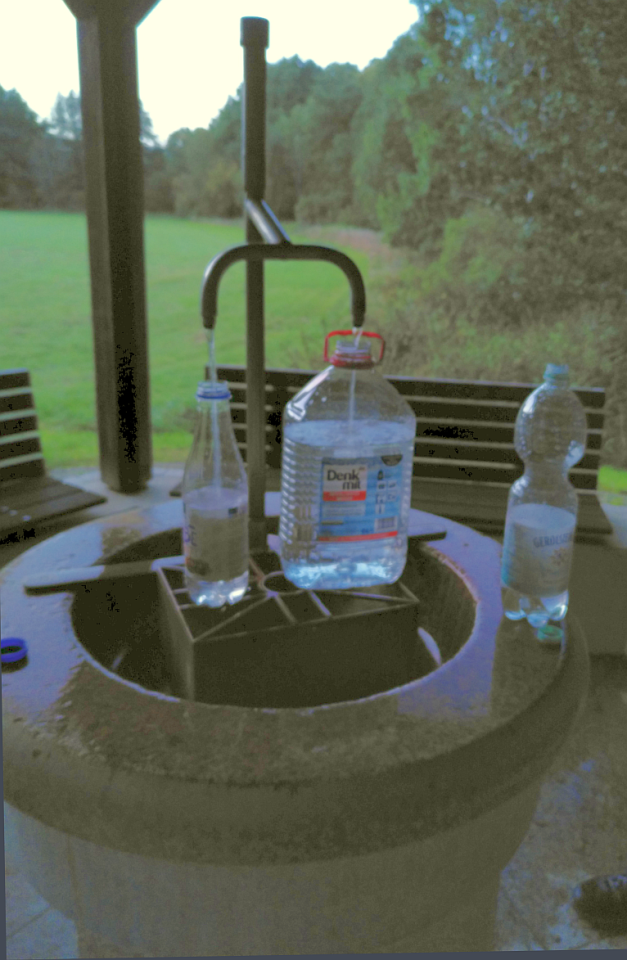
And then we will see what the differences are. I've already been collecting some samples of water, including a bottle of tap water from Sibiu airport (my first deed after getting through the security circus), a bottle of tap water from my home town, and a bottle of a spring close to my home town that has a lot of iron in it.

It has a very strong taste - very slightly sour, with a tiny bit of natural carbonisation, and you can taste the iron in it, and I personally find it utterly delicious and love to drink it. I will keep myself from consuming the sample, though, all in the name of science!  

0
OKT.
13
0

"farbenfroh und glanzvoll"

That's the title of a new exhibition in the Staatsbibliothek Bamberg, starting October 15 with the opening at 11:00 - so if you are interested in colourful papers, that is definitely something to visit!

The exhibition is about "Buntpapier", coloured papers with a variety of motifs until about 1880 - things that are usually not appreciated on their own, only seen as part of book bindings or other papery items. I am definitely planning to go there while the exhibition is running!

Here you can see a glimpse of what awaits you:

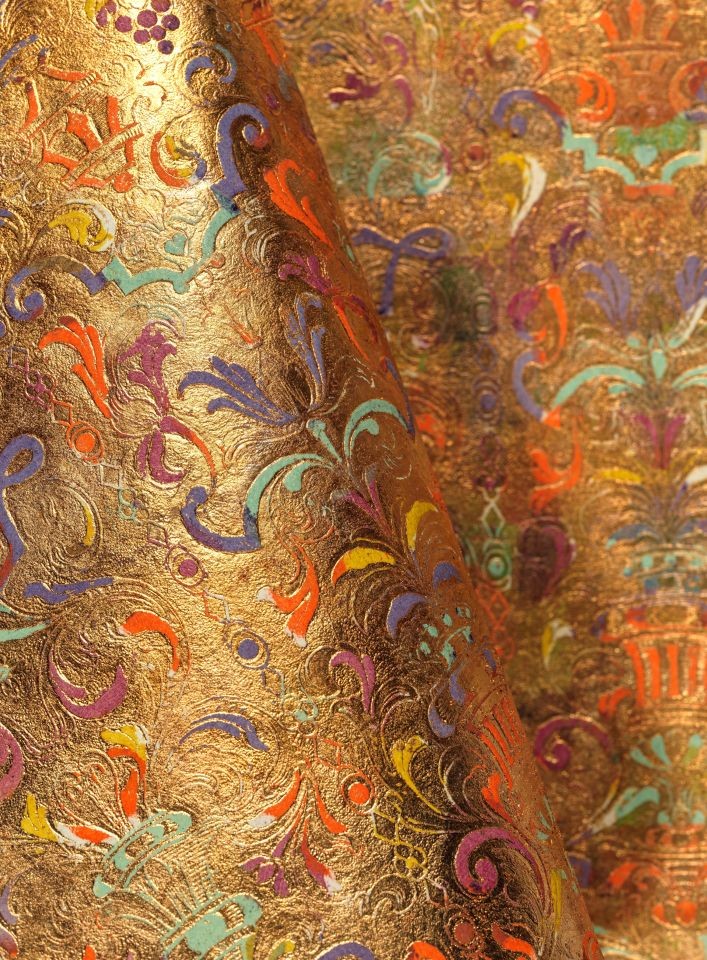
Schabloniertes Brokatpapier mit floralen und architektonischen Elementen, 1. Hälfte 18. Jahrhundert (Ausschnitt) Bildnachweis: © Staatsbibliothek Bamberg, .41 C 17 (Foto: Gerald Raab)

It's paper with floral and architectural elements dating to the first half of the 18th century. Definitely adding some bling! 

If you're interested in the exhibition, here you can find more info (including the extra events going with it). The exhibition itself is free, so if you're in the Bamberg area at some time until January, go check it out!

0
OKT.
12
0

Handwerkstopografie im Mittelalter

I have this tendency to pounce on free articles and dissertations and so on that can be found on the internet, and to just download them if they might in some more-or-less expectable case be, well, relevant. Or interesting. Or because they sound interesting.

Of course I tend to lose track of what I have already downloaded, so when I'm getting ready to enter the titles into my database, I do a duplicate search first... which usually weeds out quite a lot of doubles that I had gotten, forgotten about, and then re-gotten, because, hey, sounds interesting.

And occasionally I actually get to read at least part of what I have downloaded. The latest one is a phd thesis titled "Archäologische Studie zu ausgewählten Aspekten der mittelalterlichen Handwerkstopographie im deutschsprachigen Raum : Bestandsaufnahme der Handwerksbefunde vom 6. - 14. Jahrhundert und vergleichende Analyse" and was handed in 2022 - you can download the whole thing from Uni Tübingen here.

I haven't read all of it so far, but skimmed through the pdf looking for passages about textiles and textile crafts - and what I have seen so far was both helpful and interesting, especially regarding the different amounts of finds pointing towards textile production in different areas and contexts. So if you read German and are interested in crafts and where they might have been found, check this one out!

0
OKT.
11
0

Events coming up!

As promised, here's the list of events coming up:

First of all, there's the "Lange Nacht der Wissenschaften" (long night of science), where I will be doing a demonstration of tablet weaving in the Stadtmuseum Erlangen. That's on October 21, starting at 20:00 h until 22:30 h - come see me there if you are in the area! 

On the next day, it's the last day of the special exhibition about the Stone Age, and I will be there again starting at 11:00 for the whole day, showing very early textile techniques. 

The second week of November there's the European Textile Forum, of course... my yearly week of wonderful textile madness.

And then there is an online workshop for spinning with spindle and distaff, in German, on December 8 (that's a Friday) starting at 18:00. If you are interested in this, you can learn more about it (and book your spot) here on my website.

0
OKT.
10
0

Back (with a delay...)

There I was, telling you I'd be back here on the blog yesterday... and then somehow the day went by, with a lot of things done (catch-up-stuff still left from my trip to the conference) and I completely forgot to blog.

Even though it's on my trusty to-do-and-reminder list... but, ah, that only helps if one looks at it as the workday draws closer to ending. Otherwise... well. Like not looking at the calendar and then promptly forgetting about dates. 

So... what was happening here?

Lots of things. I went off to Romania, for a conference about Eastern European Traditional Textiles... hoping to learn some more about them (as I was rather blank on that topic), and make some new acquaintances to get better network possibilities into the East. Both plans did work out, to my great delight! I had a wonderful time looking at splendidly embroidered shirts, doing a little hemp processing, taking part in a dyeing workshop that included some dyes I'd not had contact with before, and visiting the wonderful museums in Băiţa and Sibiu.

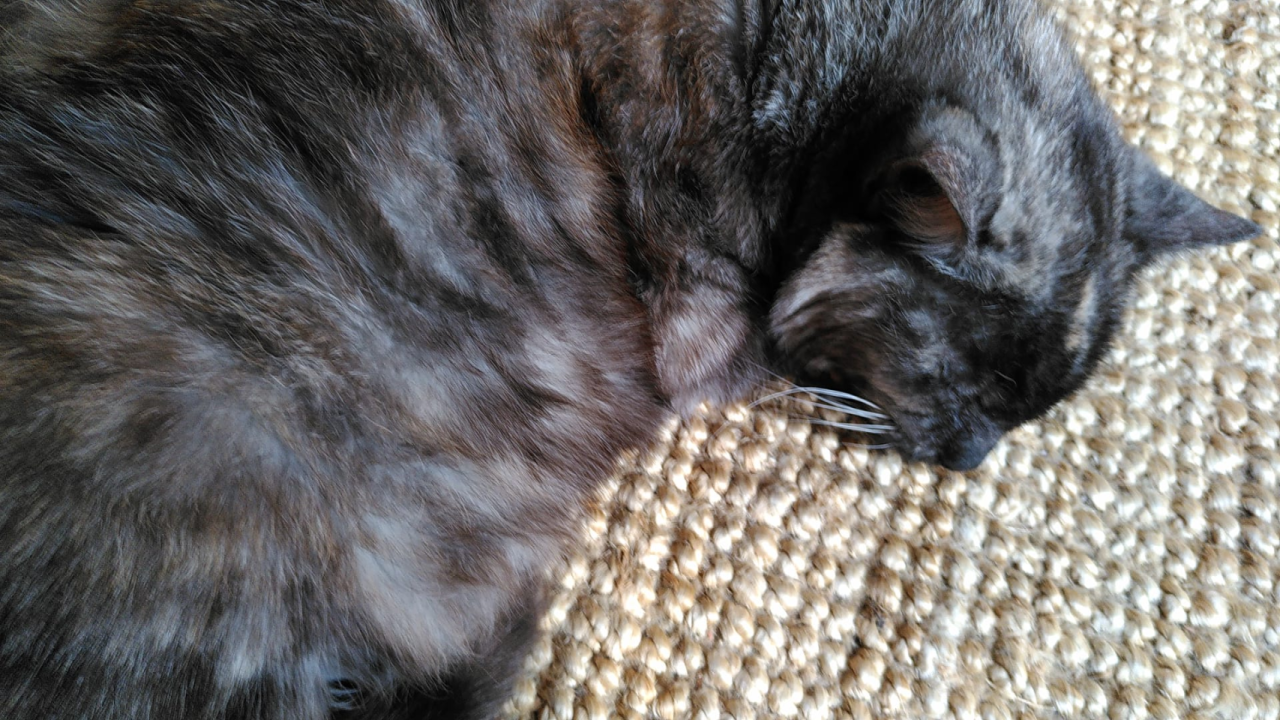
While I was away, the little cat felt a bit under the weather... apparently she managed to catch a cold, which made her appetite about non-existent. She spent a few days just sleeping and eating very little, but she did pull through - and the plus side of her spending a few days only sleeping is that she rested her right back leg enough with that to let it recover from whatever sprain it had. Now we hope the rest of her cold will pass quickly so she can go back to her usual upbeat self.

She's at least fit enough again to conquer her favourite sleeping spots (which all have conquering aids for her now - ramps or steps, for easier access, since the jumping powers of probably-around-18-years-or-older cats are, let's say, limited...)

Meanwhile, planning for the Textile Forum is also happening, there's a demonstration coming up where I will be showing tablet weaving (which has to be prepared), orders have been sent out and more prepared to follow their chums today, and some more planning has been done - which I'll tell about tomorrow. 

0

By accepting you will be accessing a service provided by a third-party external to https://www.pallia.net/

Kontakt