Latest Comments

Guest - Aislinn Dyestuff Citizen Science.
09. Oktober 2026
This is a great project. I look forward to the results. Thanks for letting us know.
Guest - Aislinn Time for...
09. Oktober 2026
Looks delicious!
Guest - Katrin Sprang Discussion
18. September 2026
Hi Rachel, I have looked for more photos of you, but that was not very successful. I found a link on...
Guest - Beatrix Sprang Discussion
15. September 2026
That lozenge pattern element is not a photograph, but a scan. So it should be to scale. But I pinned...
Guest - Katrin Sprang Discussion
15. September 2026
I was not referring to Rachel's reconstruction (is the reconstruction you refer to the one photograp...
MAI
18
0

Prepping things.

There's a nice list lying in front of me (right underneath the cat, who had to conquer my desk again for some cuddles), a box of things already collected and made ready for Sunday, and I spent the last hour in the wintergarden doing some more prep work... including things like this:

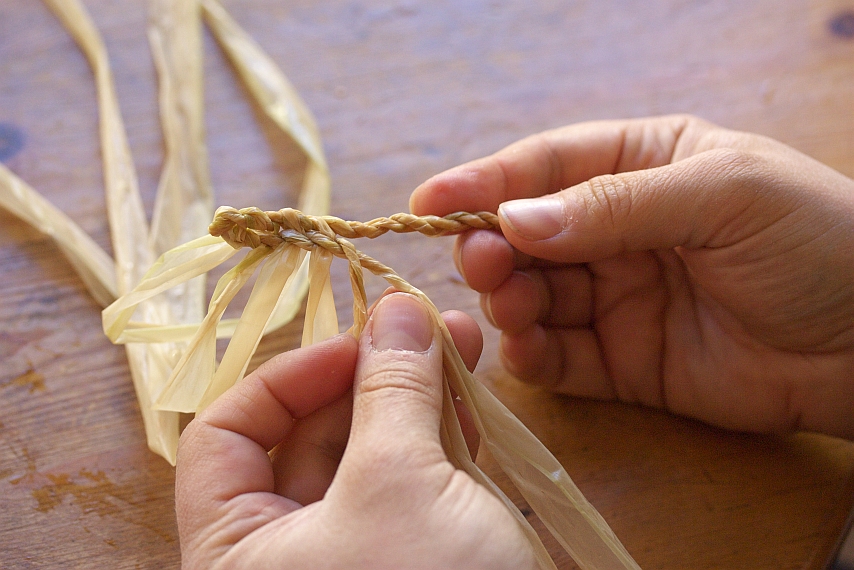
twining
Twining with bast is an incredibly interesting technique, and the oldest textile technique (or proto-textile technique, depending on your definitions) there is. It's really fascinating what you can do with a bit of bast and your fingers alone, and the resulting items are incredibly sturdy and can be mind-bogglingly fine.

All that was, by the way, done in preparation for the demonstration at the Landesmuseum in Darmstadt this Sunday. I'm almost finished, though; just a few last-minute things need to be added to my box of stuff.

Which means I will have no excuse tomorrow not to sit down and finally tackle the taxes...
0
MAI
12
2

An Assortment of Links!

I have a stack of links to throw at you again - but before that, here's proof that our garden knows which month we have:

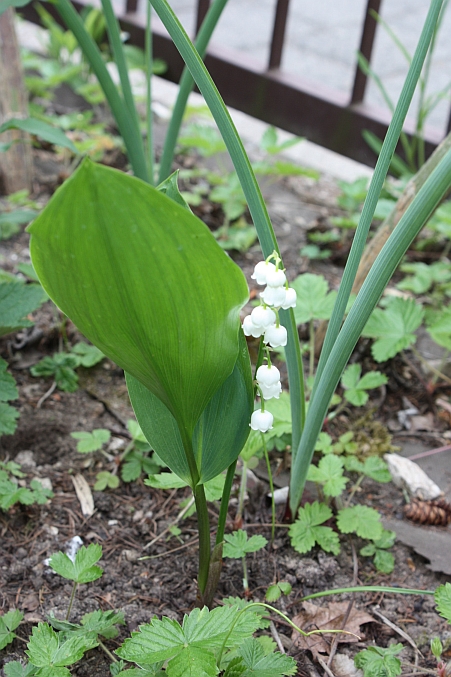
maigloeckchen
These are called Maiglöckchen in German - which literally translates to "May Bells". The German language seems to like flower names with a time of year in them - we not only have "Easter Bells" (daffodils) and "May Bells", but also "Whitsun Roses" (peonies).

Cathy from Loose Threads has something else: a list of tutorials. I haven't looked at any of them yet, but they range from medieval things to Victorian, and you might just find something that amuses you - or might prove helpful.

Erik Kwakkel at the medievalbooks blog has a fascinating post about medieval scripts, including a picture of a scribe's advertisement sheet.

Aisling has a list of tablet-woven bands from the Anglo-Saxon and Viking period found in Great Britain and Ireland.

Rainer Schreg has some thoughts about the Vienna Statement about the threat to cultural heritage in the Near East and North Africa. If you want more about that topic and don't mind a gruesome read, check out Heritage for Peace's newsletter about damage to heritage sites in Syria.

To end with a lighter note: There's a new Jane Austen film, "Love and Friendship", coming to theatres tomorrow. It's a screenplay adaptation of "Lady Susan" (a short epistolary novel). Here's an interview with filmmaker Whit Stillman. If you'd like to pass the time until then with more Austen film adaptations, you might want to check out this list.


0
APR.
19
0

Random bits and bobs.

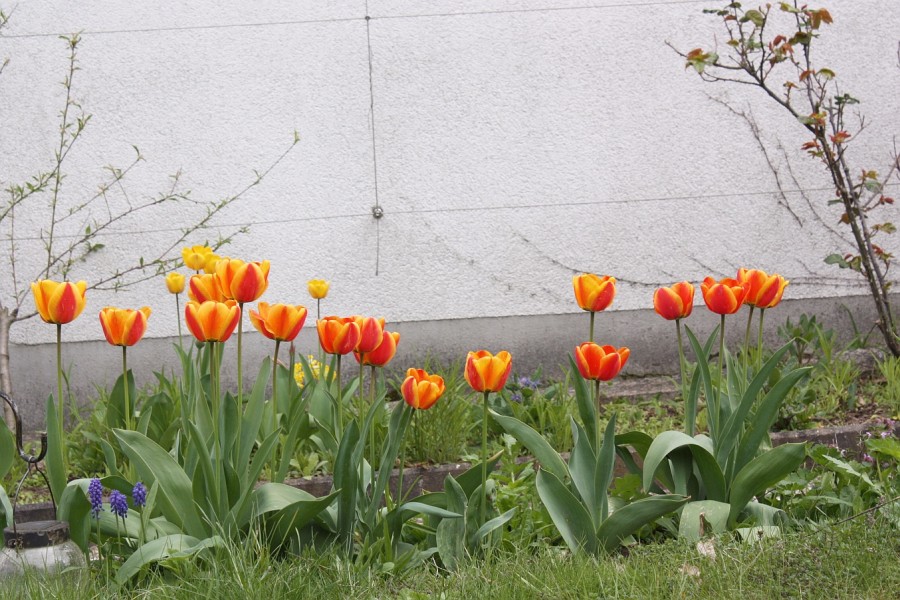
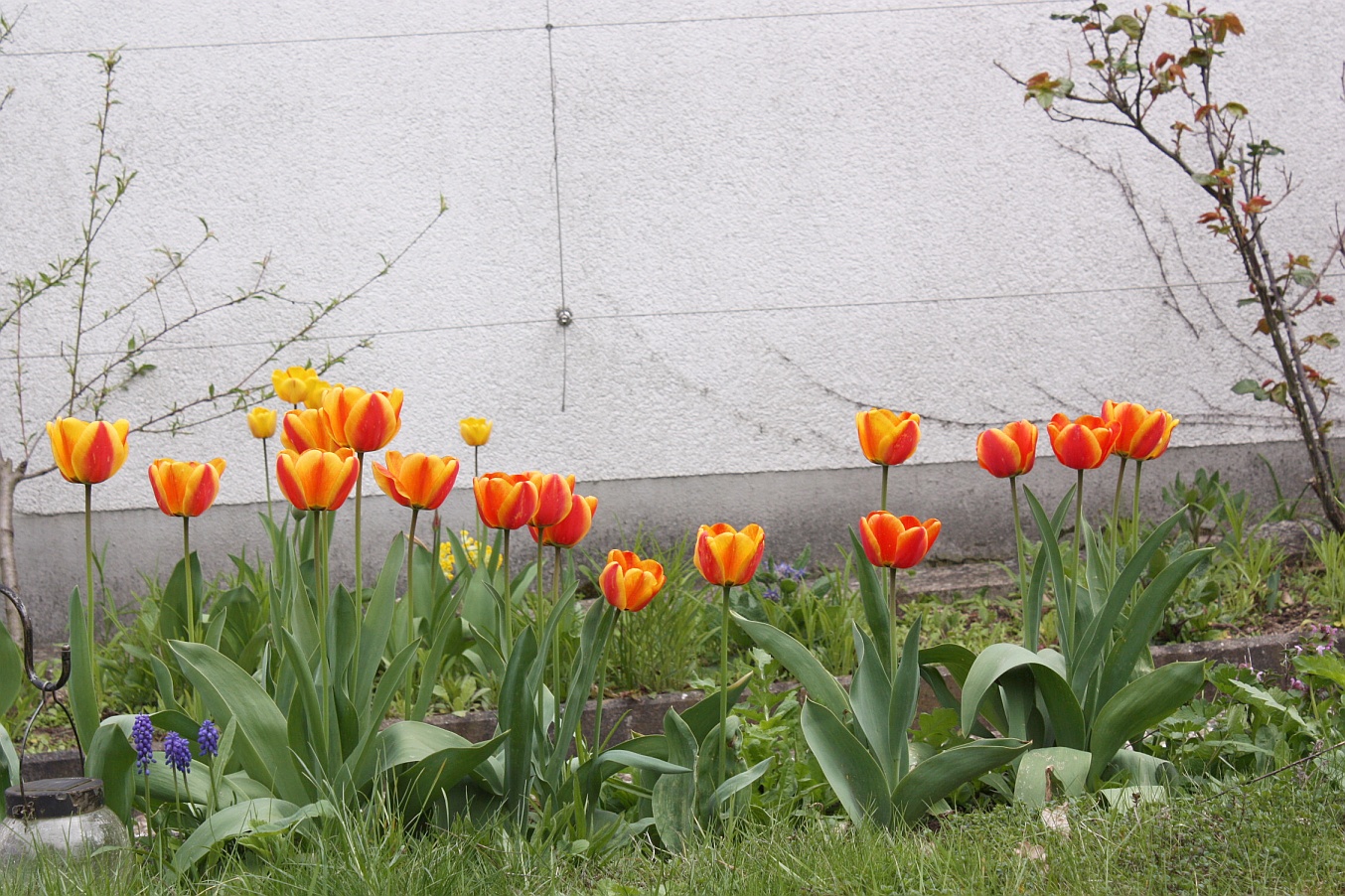
First of all, here's how the red-and-yellow tulips look today:

redtulips
They are lovely, and they seem to be really robust - several years ago, a friend brought us ten red-yellow bulbs, ten black ones and ten white ones. There's one small white tulip left from that planting, the black ones have all disappeared by now, but the red-and-yellow ones are going so strong that I even had enough bulbs for a second cluster somewhere else in the garden last year. (I'm a little sad about the white and black ones. I really liked them!)

In other news, I've been busy working on one project which I cannot disclose yet, plus preparing for both the IRM (drawing closer and closer) and the Internationaler Museumstag, taking place on the third Sunday in May (so this year it's May 22). I'll be in Darmstadt on that day, demonstrating really early textile techniques - think neolithic times. This is a bit earlier than my normal focus time, so I'm extra excited and happy to do something different this time around, and have been doing some preparation work for it. (That will include taking a few photographs for the programme and PR, which is on my to-do-list for tomorrow.) Some more prep work is also planned - I'll have to harvest a few samples of plants that were used for these proto-textiles, but this is a task better done nearer to the actual event. Speaking of which - the programme for the day in the Landesmuseum Darmstadt is not online yet, but I've had a sneak peek, and I can tell you that it is chock full of interesting things!
0
APR.
06
0

New things in the shop, too!

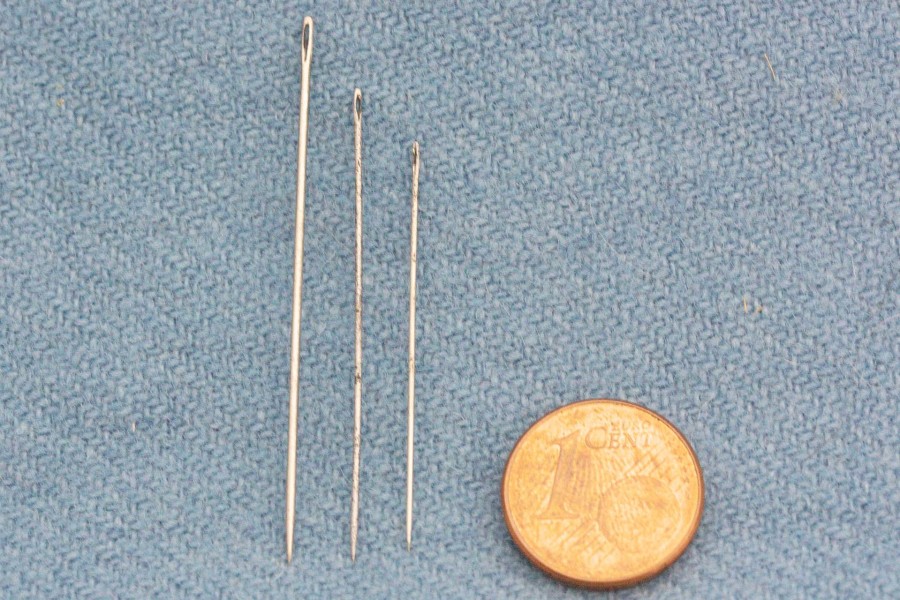
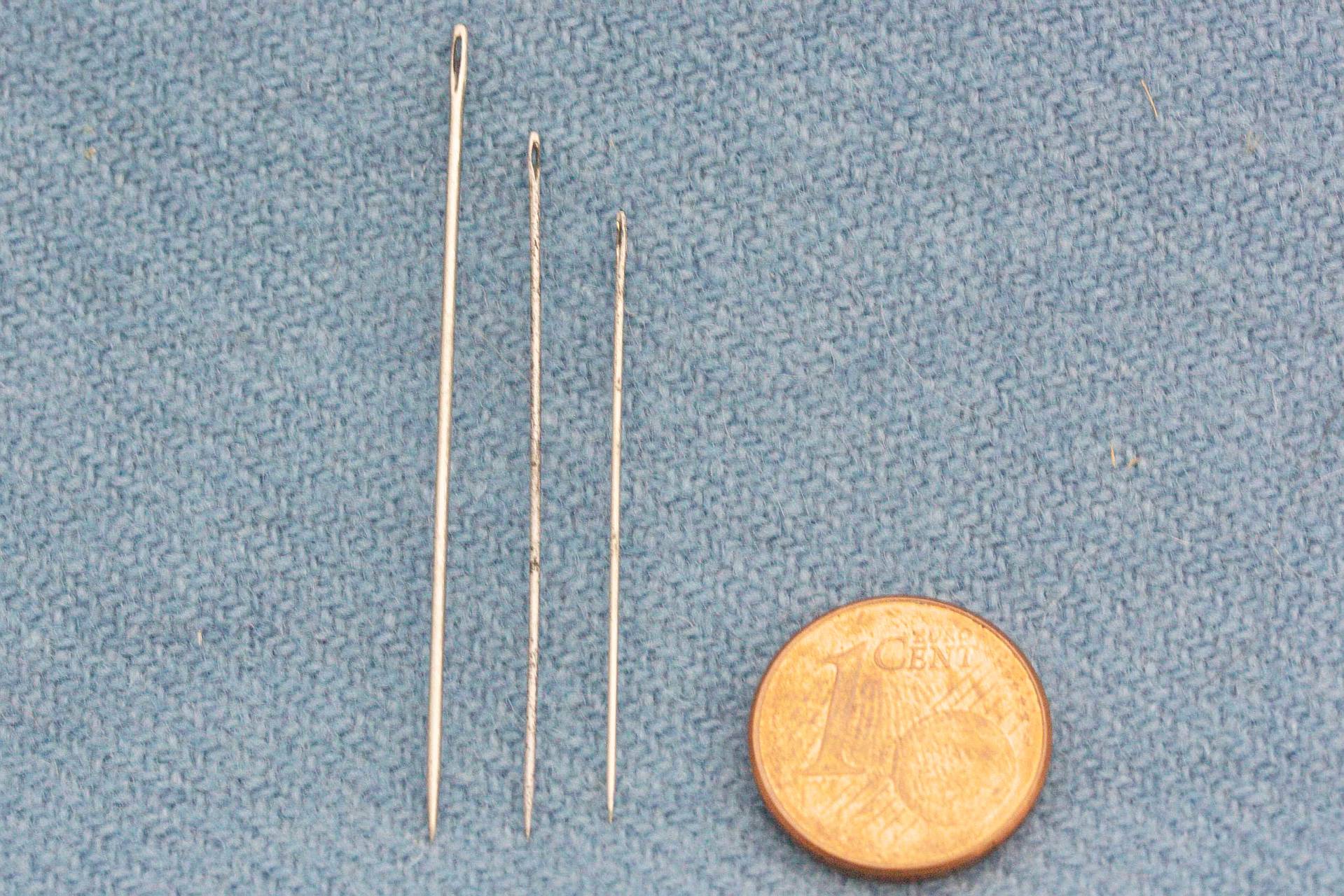
There's not only seedlings sprouting, there's also, finally, something new in the shop again: Handmade iron needles!

eisennadeln1
I was able to buy the remaining stock from someone who made these needles for a while, and they are finally all sorted, polished, and ready to be sold.

Making needles such as these, I've been told, is not easy - there's a lot of breakage when the eye is punched in, for instance.

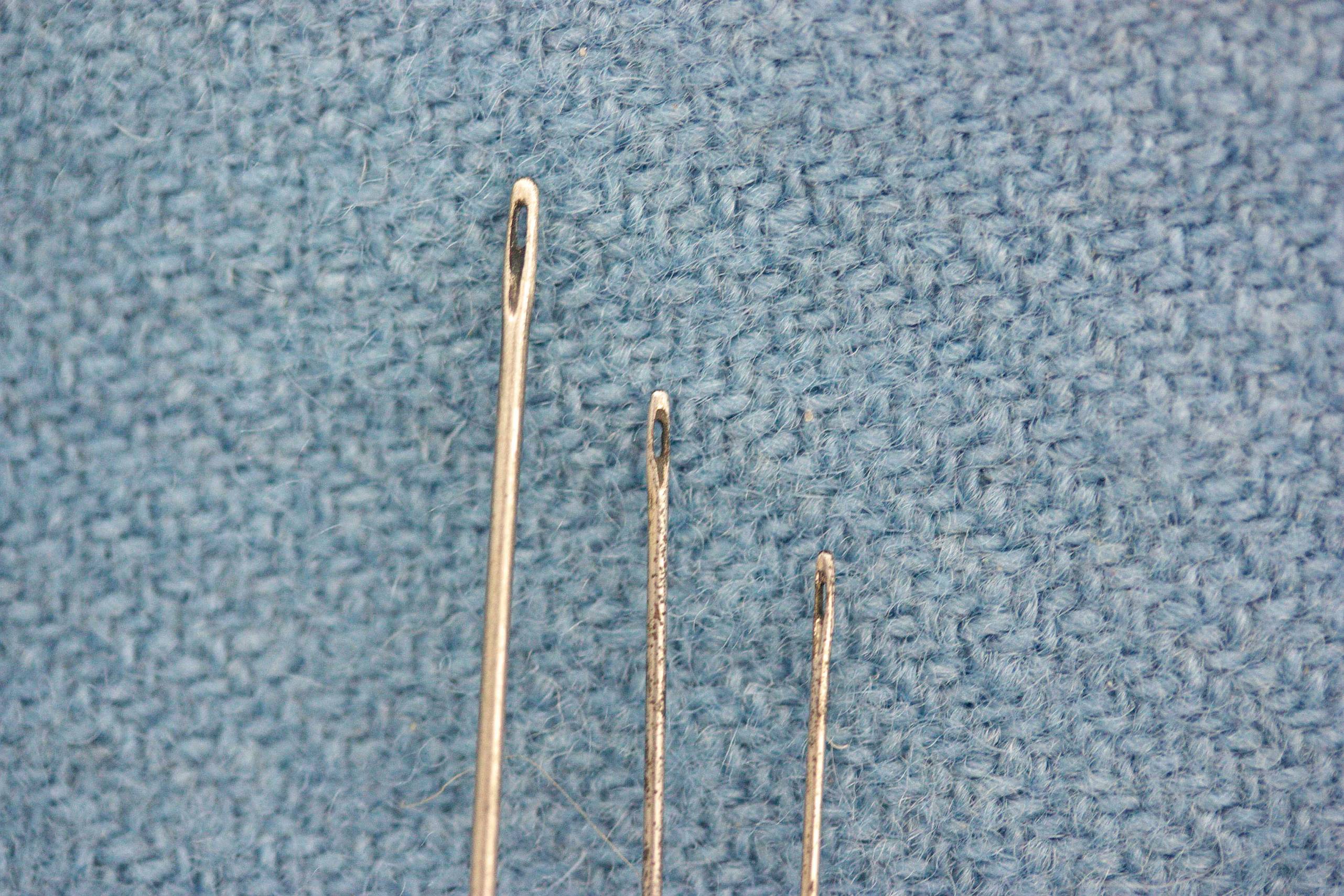
[caption id="attachment_2330" align="alignnone" width="640"]Closeup of the needle eyes. You can still see some of the dark oxidisation residue from the process of making the needles. Closeup of the needle eyes.


That's one of the reasons the needlemaker stopped doing this, so the small stock I have of these needles are all that remain, and probably all there will be. So, like so often when I get my hands on remaining stock, I'm all torn between happiness that I have at least a few of the wonderful items, and sadness that these are the last, and there will be no more of it in the future.

For now, though, there are needles - and I am very happy about that!
0
MäRZ
30
0

Back to All The Stuff.

It's amazing how a few days can lead to a huge heap of emails in the inbox, and some increase of length of the to-do-list - but it was wonderful to have these few days off over Easter and spend time with friends as well as outside for some hiking.

Not only emails have piled up, though - there are also a few interesting links that came in during the last few days!

First of all, and very exciting - you might know that the Incans used textiles to keep records: khipus, which are strings marked with knots. The exact method of how these strings were knotted, and how to decipher them, are yet unknown. There's a little hope that this might change, though. In an excavation about 100 km south of Lima, archaeologists have found several khipus in a storage house, in some cases buried under the produce they were possibly documenting. Research on these khipus and how to decipher them is now going on, and the storage khipus might be helpful in deciphering the non-mathematical content of this very special type of textile records.

Also textile-related, but modern: There's a crowdfunding project for a business going on to bring a twisting machine to the Hebrides, helping knitters turn wool singles (spun for tweed weaving) into plied knitting yarns. If you decide to support this and get a reward, you might consider upping your pledge to account for shipping, as my suspicion is that shipping costs and reward materials will cut considerably in what is left after the campaign.

Now it's nose back to the grindstone, the cat is back on the desk "helping" (take your paw off the touchpad, please, little cat), and purring contentedly. Hm. Maybe she'll do some of the email sorting for me?

 
0
MäRZ
23
0

Have some Wednesday Links.

It's the middle of a week! And a shorter one at that - time for some links!

Jane Austen's novel "Emma" has its 200 year anniversary this year, and there's an exhibition about it at Chawton House Library, Hampshire, UK. The exhibition will run until September 25, 2016, so if you want to see it, there's still plenty of time left to plan a trip. If you like textiles (which you probably do, since you are reading this blog), it gets even better: part of the exhibition features contemporary embroideries, inspired by patterns from Austen's time. This part is called Stitch-Off, and you can read more about it here. If you're curious about the patterns used, you can find them here, and if your fingers are itching, it's still possible to join in on the project.

Totally unrelated, but rather funny: the UK is building a new polar research ship and they have invited the public to suggest names for their vessel - with interesting results. The leading suggestion is Boaty McBoatface. (The Council responsible was smart, though, as they are only inviting suggestions - they'll be free to pick whatever name they like best in the end.)

 
0
MäRZ
22
0

Multi-Lingual Textile Terminology Resource!

Textile terminology, as many of you will probably know, can be a never-ending headache. Especially when you are looking at texts in a foreign language. Consequently, there have been a few attempts at making glossaries or catalogues; sometimes, there is a small multi-language glossary or dictionary in the appendix to a book or article. Burnham's "Warp and Weft" also states the terms for different weaves in several languages.

However, there's a whole book with textile terminology that I had never heard about before: “Nordisk textilteknisk terminologi- Förindustriell vävnadsproduktion”, written by  Elisabeth Strömberg, Agnes Geijer, Margrethe Hald and Martha Hoffman and published in 1967. The title of the book translates to “Nordic textile technical terminology - pre-industrial fabric  production”. The book consists of Swedish term definitions, with synonyms in Danish, Icelandic, Norwegian, Finnish, English, French and German. The edition was revised by Geijer and Hoffmann in 1979. The Icelandic and Finnish terms were compiled by Elsa E. Guðjónsson.

So there's a whole book out there - and it gets even better. Amica and Maria from historicaltextiles.org have brought together KulturNav, a website where museums and other organisations can have shared lists of things hosted; the Textile Museum in Borås, who agreed to manage the dataset from the book, and friendly help from fellow nerds to convert the whole book into a database.

And now it's done - the Terminology is online and available, for free, via KulturNav. You can find the whole back story, and some instructions on how to use the database, on the Historical Textiles blog, including instructions on how to contribute should you find something is missing, or would like to suggest a change.

This is a wonderful thing - and my thanks to everybody involved who made this possible!
0

By accepting you will be accessing a service provided by a third-party external to https://www.pallia.net/

Kontakt