Latest Comments

Guest - Aislinn Dyestuff Citizen Science.
09. Oktober 2026
This is a great project. I look forward to the results. Thanks for letting us know.
Guest - Aislinn Time for...
09. Oktober 2026
Looks delicious!
Guest - Katrin Sprang Discussion
18. September 2026
Hi Rachel, I have looked for more photos of you, but that was not very successful. I found a link on...
Guest - Beatrix Sprang Discussion
15. September 2026
That lozenge pattern element is not a photograph, but a scan. So it should be to scale. But I pinned...
Guest - Katrin Sprang Discussion
15. September 2026
I was not referring to Rachel's reconstruction (is the reconstruction you refer to the one photograp...
MäRZ
09
0

New Book Alert!

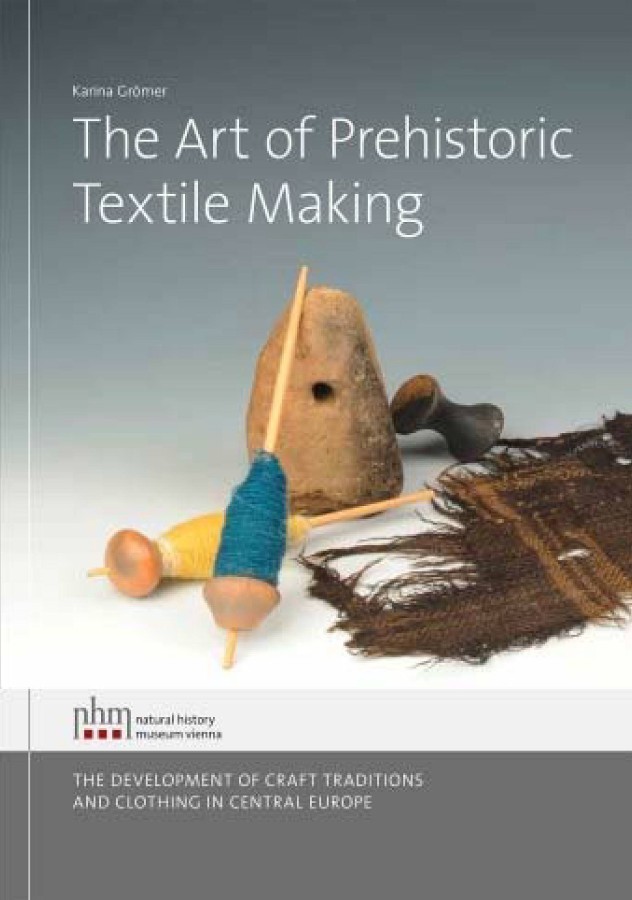
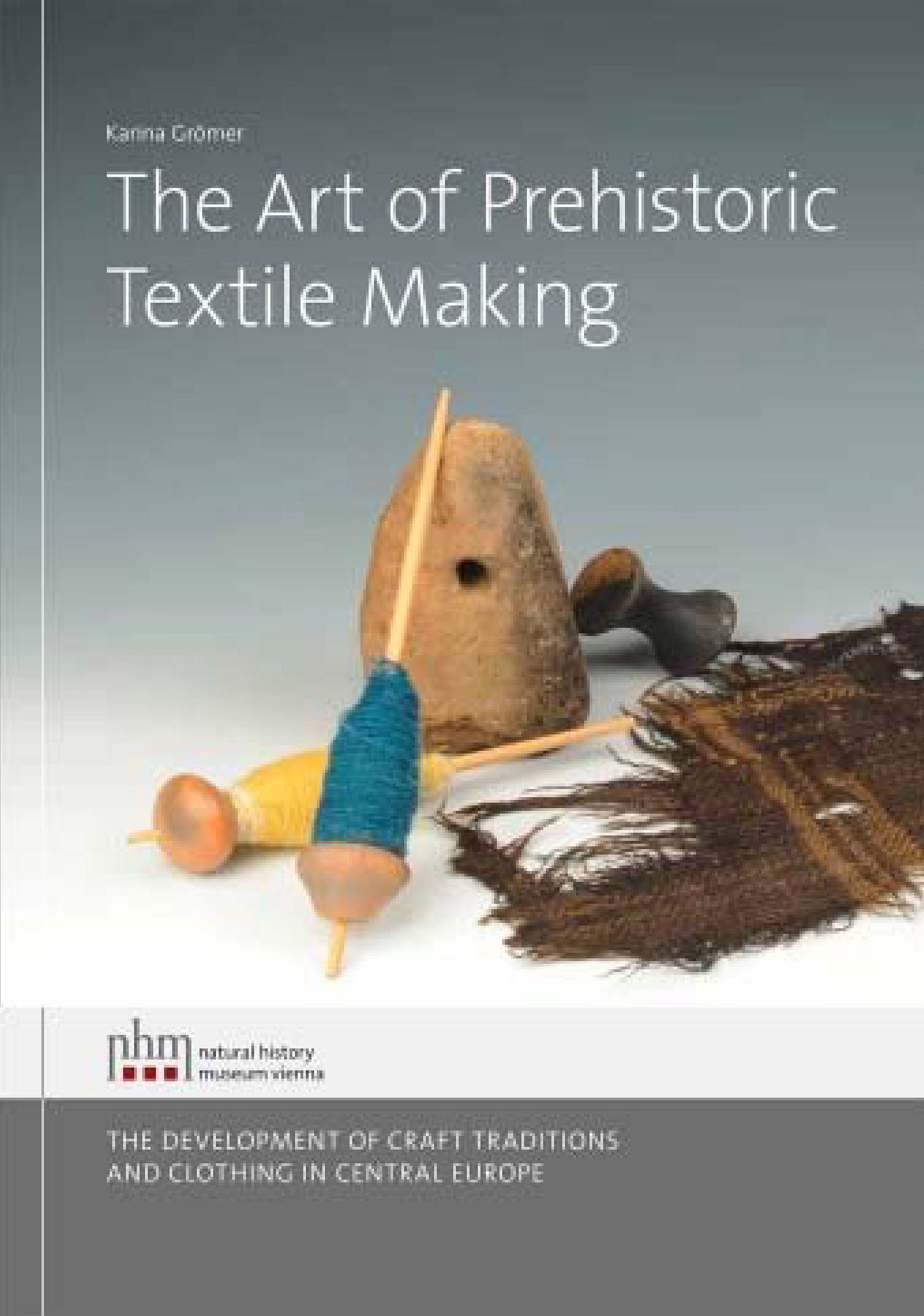
My dear friend and colleague Karina Grömer has done it again - she has a new book out:

Art of Prehistoric Textiles_Groemer
K. Grömer (with contributions by Regina Hofmann-de Keijzer and Helga Rösel-Mautendorfer) 2016: The Art of Prehistoric Textile Making – The development of craft traditions and clothing in Central Europe.

Veröffentlichungen der Prähistorischen Abteilung 5, Verlag des Naturhistorischen Museums Wien, Vienna 2016.

The book is a compendium about the latest research about archaeological textiles in Central Europe (533 pages, more than 240 colour figures). There's a preview of this book, and other work that Karina did, available via academia.edu.

Copies of the book can be ordered via email to verlag@nhm‐wien.ac.at from the Verlag Naturhistorisches Museum Wien, Burgring 7, 1010 Vienna, Austria.
The price for the book is 35€ (including VAT) plus shipping. According to the info on their order form, shipping should be 4.40 € for Austria and Germany, 8.80 € for Europe and 15 € for the rest of the world, with different costs possible for larger orders.

My copy is already on the way here - and I'm looking forward to adding it to my collection!
0
MäRZ
02
6

Spindles, detachable whorls, and why they might fall off.

Yesterday I received an email, asking about spindle whorls slipping off the spindle stick while spinning - and I suddenly realised that this issue is not that uncommon, and that I should maybe write a little info thingie to go with the spindle sticks and whorls. So here you are - it's coming to the blog first, so please feel free to comment and ask further questions!

Medieval-style spindles, as opposed to modern spindles, don't have the whorl attached permanently. Instead, the shape of the two pieces makes it possible to attach the whorl to the tapering stick by just pushing it on. This means easier storage of the spindles plus more flexibility, as you can use one whorl with several sticks, or exchange the whorl for a lighter one to account for more weight of the yarn on a partly-filled spindle stick. You could also use the filled spindle stick directly as a shuttle for weaving on a warp-weighted loom, if you were so inclined.

This method of fitting the whorl onto the spindle stick relies on enough friction between the two parts. To avoid the whorl falling off, there are two things to take into account: Firstly, fitting it securely enough when you place it on the stick, and secondly, making sure that there is no downward pressure onto the whorl while working.

To fit the spindle whorl to the stick, I recommend sliding it up the stick as far as it will go up easily, then give a light twist to the whorl and gently pressing it upwards at the same time. Gentle pressure will suffice, and just a few millimetres of twisting of the spindle against the whorl. It should now sit quite firmly on the shaft. You can test the fit by gently tugging downward on the whorl; it should not budge.

If you have mounted the whorl like this, it should stay there throughout your spinning. If you drop the spindle, the whorl might come off - that is perfectly normal, just put it back into place as before, and carry on.

If the whorl falls off even though you have not dropped the spindle, there are two possible reasons for this.

If you have used the spindle stick a lot with the same whorl over and over, there might be a compressed spot where the whorl grips the wood. This is especially an issue with spindle sticks made from soft wood (such as pine or fir, for example). If that is the issue, you can usually see a ridge where the top of the whorl usually sits. The compressed part of the spindle can't provide enough friction with the whorl anymore, and the whorl cannot slide further upwards over the ridge, so it will not sit securely anymore. Should that ever be a problem, you can revive the stick by placing it in water; the compressed wood fibres will soak up the liquid and swell back into place. Let it dry thoroughly before you use it again.

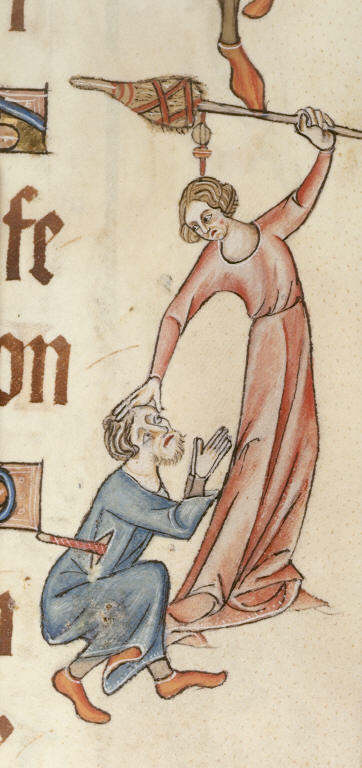
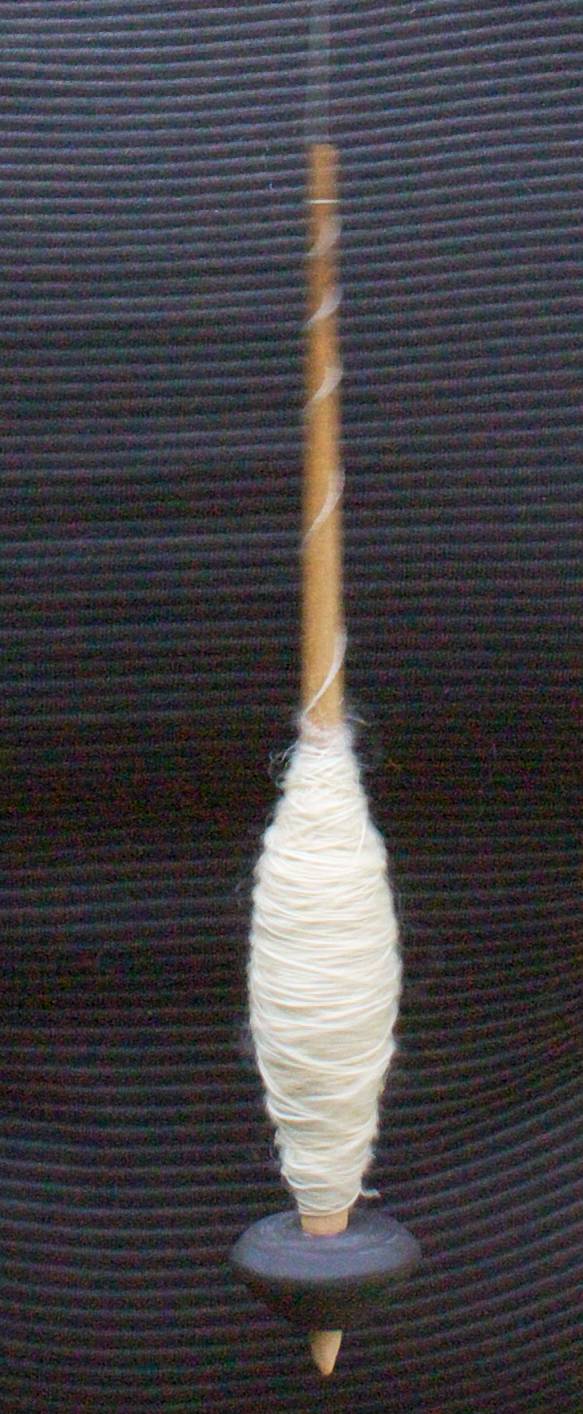
Most times, however, the spindle whorl slips off because the cop of yarn is pressing against it. If you look at medieval images of spindles, you can see that the yarn is in a sort of rugby-ball-shape or spindle-shape, and it is usually quite clearly wound onto the middle of the spindle stick, with a distance to the whorl. (Sometimes there is no whorl discernible at all, especially when the spindle looks like it's quite full already, but the cop is always this rugby-ball-shape or spindle-shape.)

[caption id="attachment_2257" align="alignnone" width="362"]British Library MS Additional 42130, f.60. A woman striking a man with her distaff. Note the very round cop of yarn on the spindle - it is keeping its distance from the whorl. British Library MS Additional 42130, f.60. A woman striking a man with her distaff. Note the very round cop of yarn on the spindle - it is keeping its careful distance from the whorl.


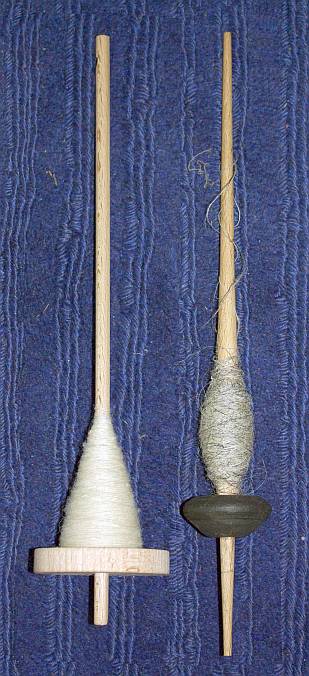
Many modern spinners are used to whorls that are glued onto their spindle, and there's a habit of winding in a sort of cone that rests against the whorl. This cone can put a surprising amount of pressure onto the whorl, so if you wind in this modern way with a medieval spindle, it will definitely press the whorl off the shaft at some point.

[caption id="attachment_2254" align="alignnone" width="309"]Modern-style winding on the left, medieval-style winding on the right. The modern, cone-shaped cop rests against the (permanently fixed) whorl. Modern-style winding on the left, medieval-style winding on the right. The modern, cone-shaped cop rests against the (permanently fixed) whorl.


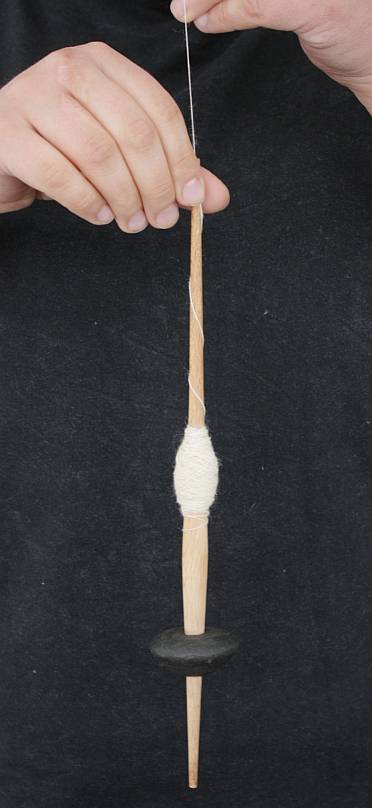
So you need to build a yarn cop that is stable enough not to need support by a whorl. You can achieve this by winding in a criss-cross fashion, instead of winding in a right angle around the spindle shaft with the windings parallel to each other. Start your yarn cop at a good distance to the whorl; this makes sure that you will have enough space to build up a sizeable cop before running into the whorl.

[caption id="attachment_2253" align="alignnone" width="372"]Starting the yarn cop in the middle of the spindle stick leaves lots of space to build it up. Starting the yarn cop in the middle of the spindle stick leaves lots of space to build it up.


You can alternate winding parallel and criss-crossing the yarn over the cop; winding the yarn in these two fashions lets you build a stable and dense cop.

[caption id="attachment_2255" align="alignnone" width="371"] You can see the parallel winding on top of a criss-crossed layer here: At the top of the cop, the criss-cross structure is still visible, but the middle part is wrapped over in parallel.
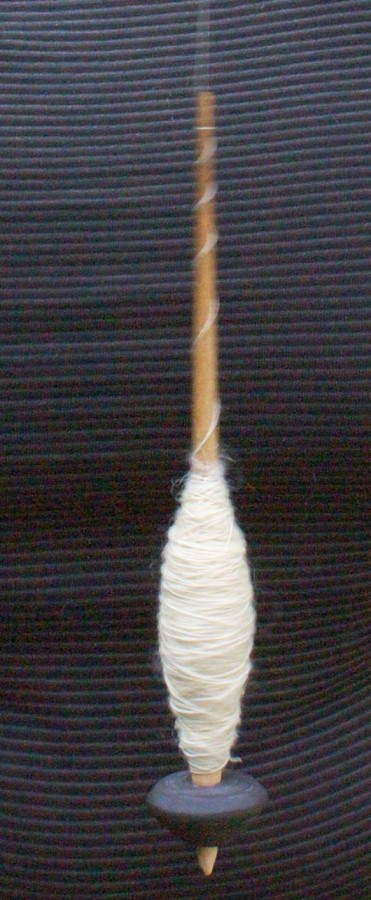

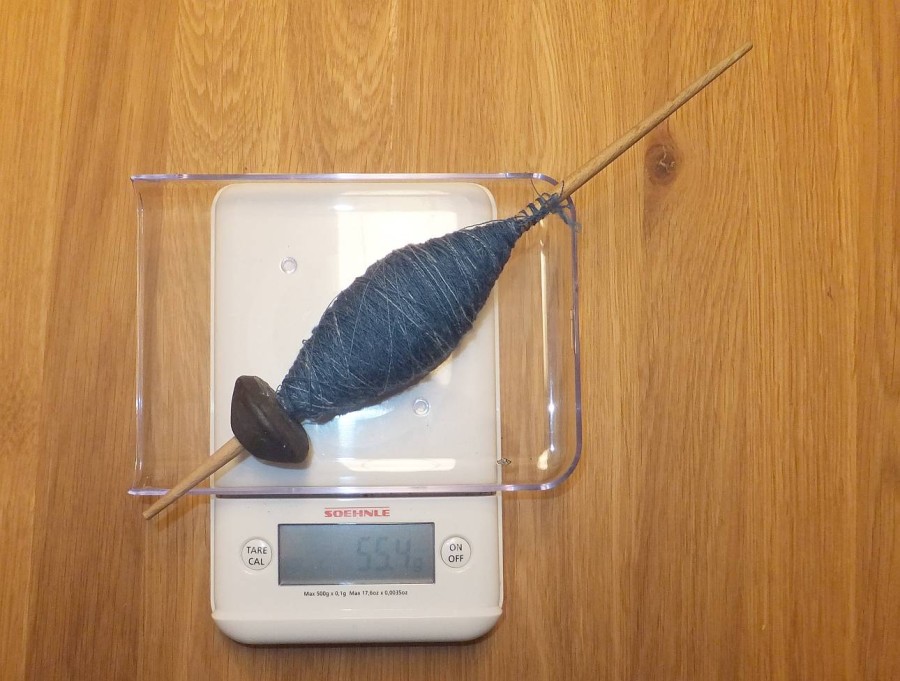
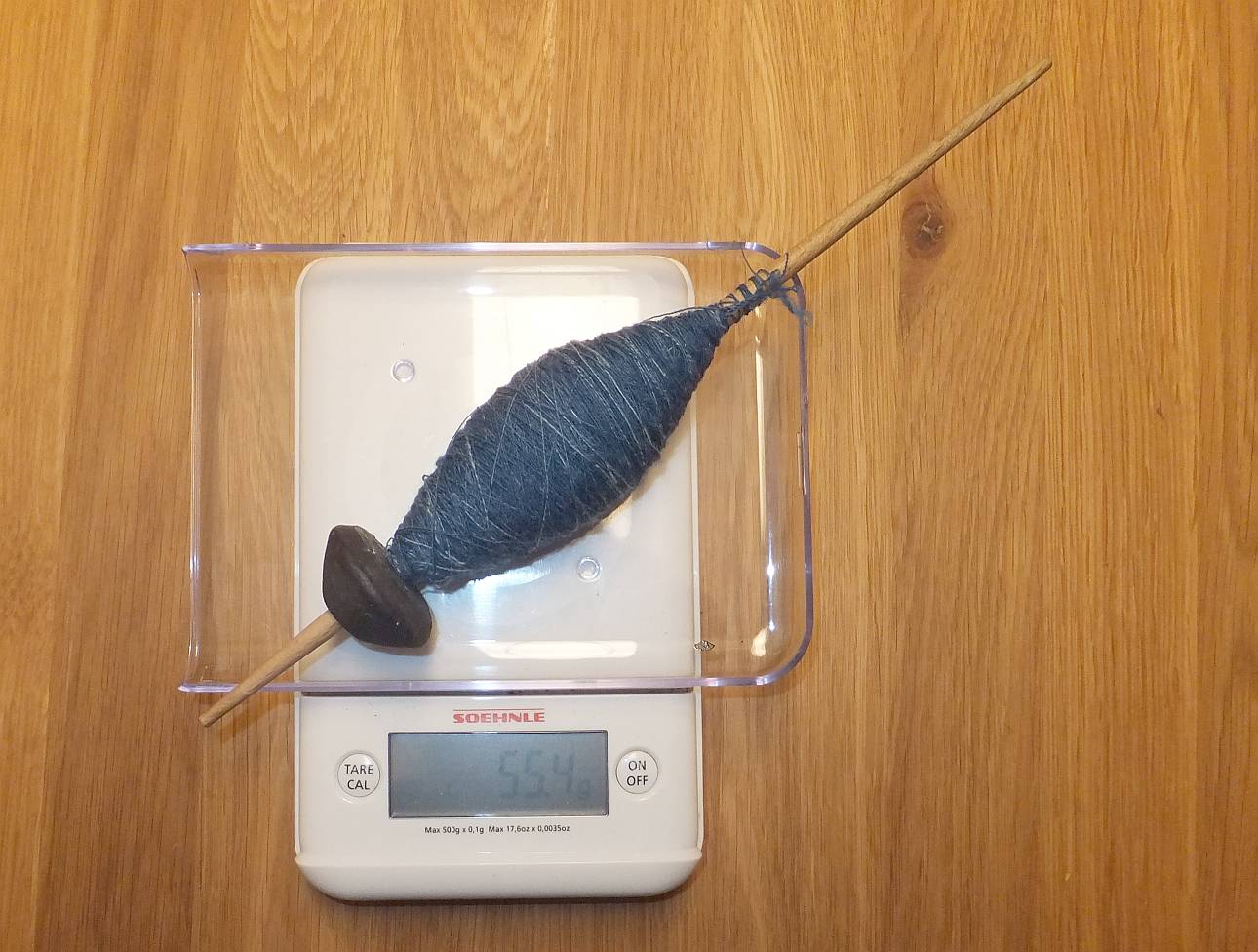
Eventually, your yarn will start to touch the whorl. You can then go on spinning until the yarn pushes the whorl off the spindle; you might be able to fill it even further if you try to wind more towards the top of the cop than towards the bottom.

[caption id="attachment_2256" align="alignnone" width="640"]The yarn cop has grown so much that it now touches the whorl. Empty weight of the spindle was 35.4 g, so there's about 20 g very finely spun yarn on this spindle. The yarn cop has grown so much that it now touches the whorl, though there is still no pressure onto the whorl, and the cop could be built up more towards the top of the spindle. (Empty weight of the spindle was 35.4 g, by the way, so that's 20 g very finely spun yarn.)


In any case, once your whorl comes off, you can either declare the spindle as full, or you can leave the whorl off and continue spinning either with a (typically lighter) whorl that sits further down the spindle shaft, or without any whorl at all.

Happy spinning, and happy winding!
0
FEB.
29
0

Recent Textile Stuff.

Here's some textile-related stuff (finally, as promised) that has popped up during the last few days. Enjoy!

Tracy Hudson has an article up in the EXARC digital journal, looking at spinning experiments and how much they can tell us.

Another exciting thing, right at my doorstep: The Kaisermäntel ("emperor's cloaks) in Bamberg are getting some quality research time, and it already looks like the researchers will find exciting things, such as remains of pre-drawings on the fabric (link goes to a German article). There are six pieces counted as Kaisergewänder, and they are the oldest extant textiles of European rulers, dating back mostly to the 11th century. Only mostly, as the fine gold embroidery was cut out from the original ground cloth and transferred to new silk ground fabrics.

It was assumed until now that the original placement of the embroideries was preserved during that transfer, but current research will look into that. Art historian Dr. Tanja Kohwagner-Nikolai, who is working on these wonderful textiles, is doubting that the original arrangement has been preserved especially regarding the Sternenmantel, which is a cloak with embroideries of constellations. She suspects that the embroideries were purposefully arranged differently, with the intention of supporting a cult around the rulers Heinrich and Kunigunde.

The project will run for the next four years, looking into different questions around the pieces and their history from the 11th to the 15th century, up to their last conservation and restauration in mid-20th century. Research will be interdisciplinary, with material and technological analyses, historical and art historical methods combined.

This is a very exciting project - I do hope they will get a lot of good results from the analyses! If you'd like more information, here is the (German) page of Uni Bamberg about the project. If you are in the area, you can visit the Diözesanmuseum and see the garments for yourself (the museum is open Tue-Sun 10-17 o'clock).

Sarah Bendall has posted the next chapter on her effigy bodies reconstruction: Boning and Binding.

Finally, rather unrelated, but really interesting: Barbie dolls dressed up with hijabs.
0
FEB.
24
0

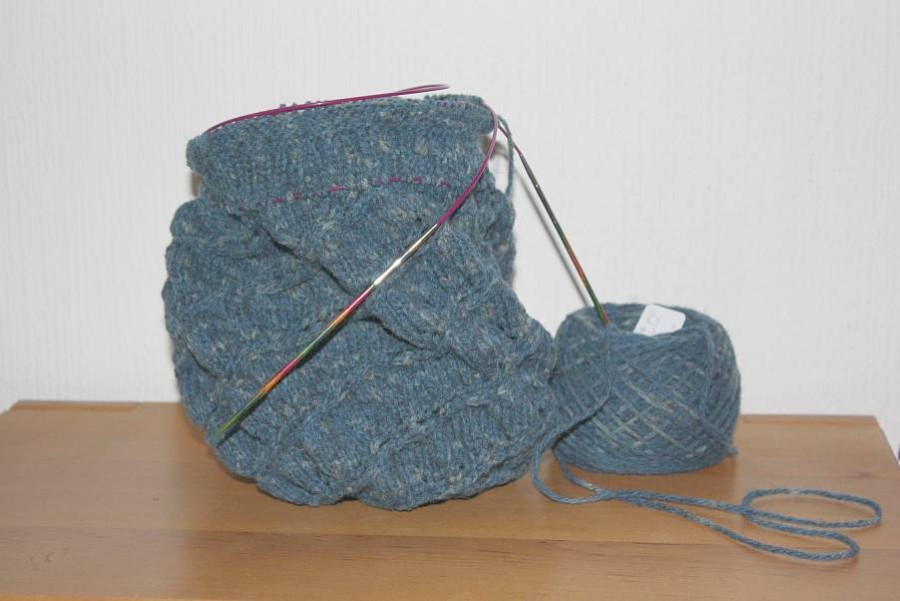
More hat pics!

Remember when I said there would be a hat in my future? The future, it has come, and the hat is finished!

I spent a while knitting up the sides, finally reaching the next interesting part - the brim...

[caption id="attachment_2231" align="alignnone" width="640"]Knitting the double-layered brim... Knitting the double-layered brim...


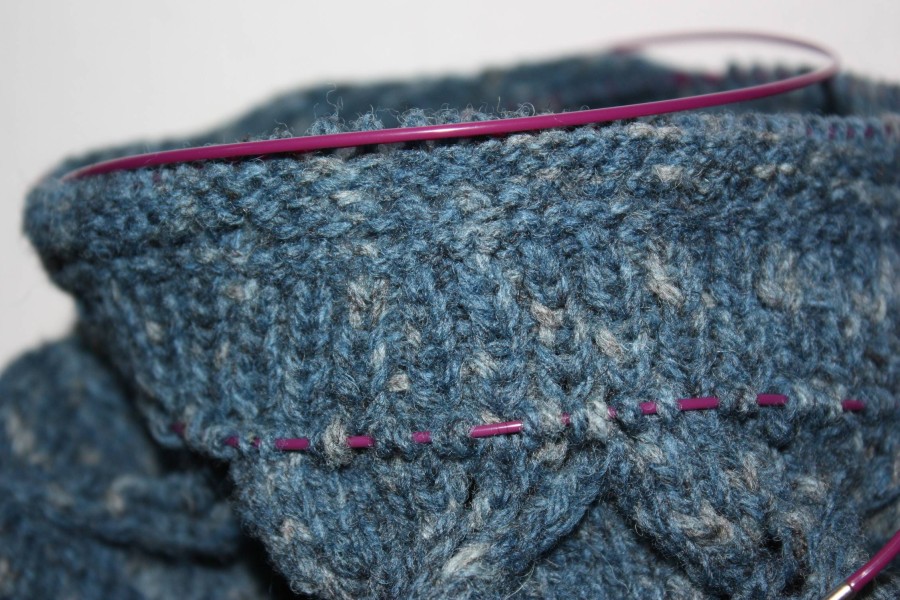
which is folded over and then cast off to make the double layer, using a three-needle bind-off.

[caption id="attachment_2230" align="alignnone" width="640"]Closeup of the brim in progress. The really interesting part is not yet started, though! Closeup of the brim in progress. The really interesting part is not yet started, though!
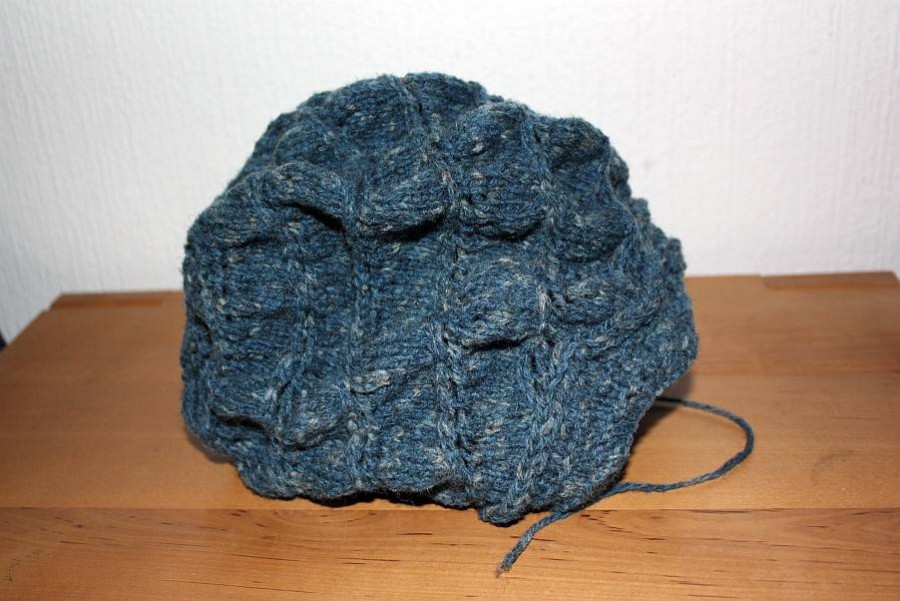

Binding off, for me, is always a little weird. I'm sort of feeling three things at the same time - happiness that the item is finally finished (or almost finished, with the end very much in sight), a little bit of sadness that it's over and I don't get to knit longer or more with the lovely yarn, and annoyance because binding off always takes a good long while (or at least it feels that way to me).Then the hat was finished... and looking very blobby.

[caption id="attachment_2229" align="alignnone" width="640"]It's finally finished! Though still looking very unspectacularly and blob-like. It's finally finished! Though still looking very unspectacularly and blob-like.
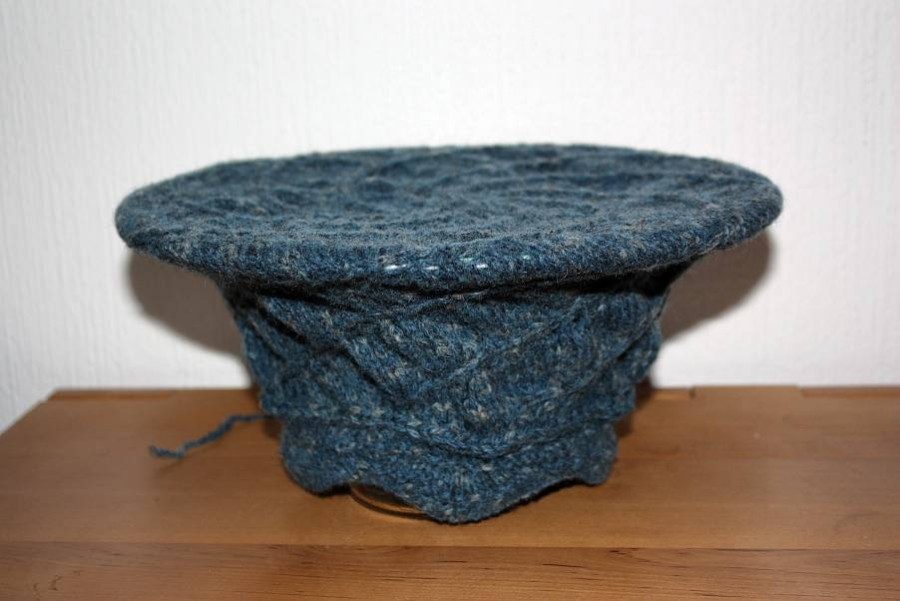

So it went off to take a little bath, and afterwards it became great friends with a dinner plate, and the two got very close and hung out together.

[caption id="attachment_2228" align="alignnone" width="640"]blocking_hat Cute couple, the hat and the plate, right? (The plate is standing on a glass jar, by the way.)
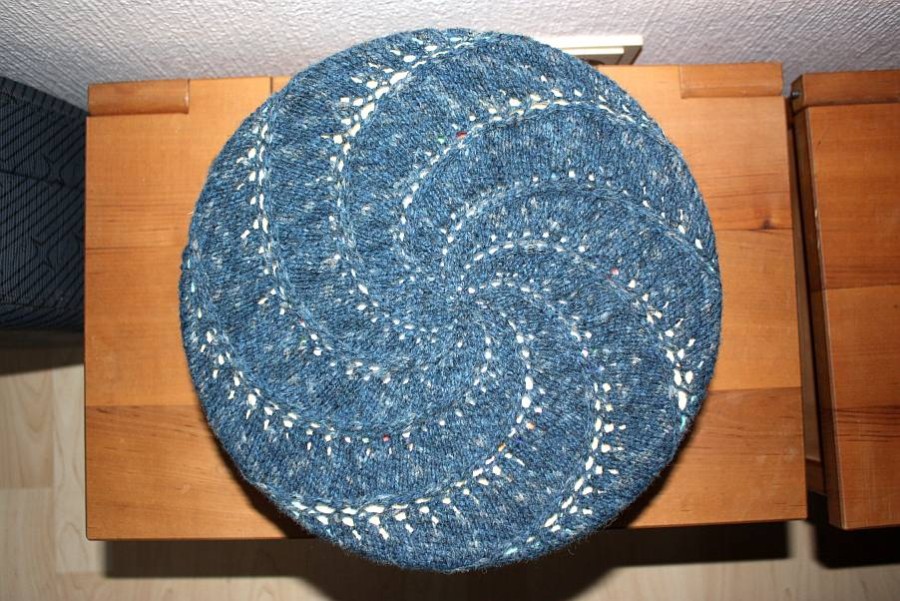

[caption id="attachment_2227" align="alignnone" width="640"]The hat on the plate, seen from the top. I really love these spiral patterns! The hat on the plate, seen from the top. I really love these spiral patterns!

And now it's dry... so yay, new hat! And it is still cold enough outside to wear it!

 
0
FEB.
23
2

Course Planning.

A while ago - last autumn, to be precise - I was asked about a workshop or course on tablet weaving. This has been on my agenda for a while, and I have taught tablet weaving before, but not just the course I really want to teach.

Said course, as I plan it, will be suitable for beginners as well as for people who already know a bit about tablet weaving. It will be teaching solid basics, with a strong emphasis on the underlying mechanics - so after the course, you will have an understanding of what happens when and why. With that understanding, reading and making (writing and designing) your own patterns will be possible. And if you feel so inclined, you will also have the tools necessary to work 3/1 broken twill patterns.

This is, admittedly, a stiff programme. Which means it needs careful developing (what will I introduce when? For the many elements of tablet weaving that are linked together, how can I best structure them?) and also time-management (which includes deciding on whether I will teach how to setup the warp or not, and whether to prepare warps for the participants or not).

There's also the problem of logistics. There's a difference in necessary equipment between teaching a simple introduction and teaching the course I have in mind. I have space, but I will also need either a lot of table space or a lot of (simple, medieval-style) tablet-weaving frames. I also need tablets that are both suitable for the weaving that we'll do (as in large enough) and affordable, plus suitable yarn in at least two colours and enough length.

So all this has been stewing in the background for a good while now, and yesterday I finally solved the yarn-and-tablets problem. Which means two things: a lower price alternative to the parchment tablets will turn up in the shop very soon, and I can finally do a test-run for the weaving course plan that I have!
0
FEB.
16
0

Tell Them Of Us.

I posted a while ago about the exhibition on knitwear used during WWI, but I didn't mention in that short blogpost how the exhibition idea originated. The reason for this knitting project was a film about two young men going off to war. The film is based on a true story of one family.

The film has been all finished now, and it's available through vimeo, where you can either rent or buy it. There's also a trailer (free to watch, of course) that is already featuring quite a few bits and pieces of beautiful knitting.

Speaking of knitting - my own hat knitting has only progressed very little over the weekend. I'm working on the sides of the hat now, and there's still a good bit (about 12 cm or so) to go before I can get started on the brim (which is the most fun part of the whole pattern).

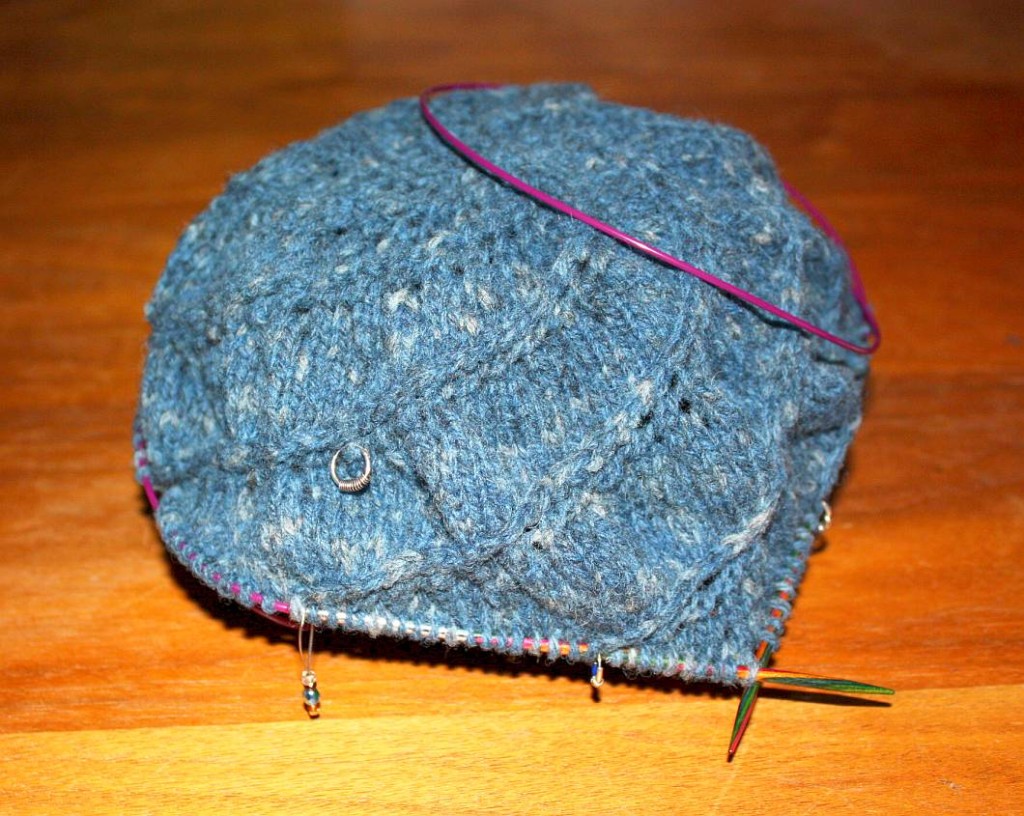
[caption id="attachment_2210" align="alignnone" width="640"]The hat in progress. Sloow progress... as it's often the case for me. The hat in progress. Sloow progress... as it's often the case for me.


The one single earring in the knitting marks the edge of the flat crown and start of the cylindrical part, the other ones are my usual stitch markers. I really like to use earrings (the small hoop type) as stitch markers - they are small, they are pretty, they are available in different designs so you can mark different spots, they can be opened and all that gives me a perfect excuse to buy some from time to time. (I like the look of them. I even had my ears pierced ages ago, but I'm not a wear-earrings-daily type of person, and wearing them occasionally only always led to pain and infection... so I stopped wearing them altogether, and now I'm getting the earring-fix through knitting.)
0
FEB.
10
0

There's a Hat in my Future.

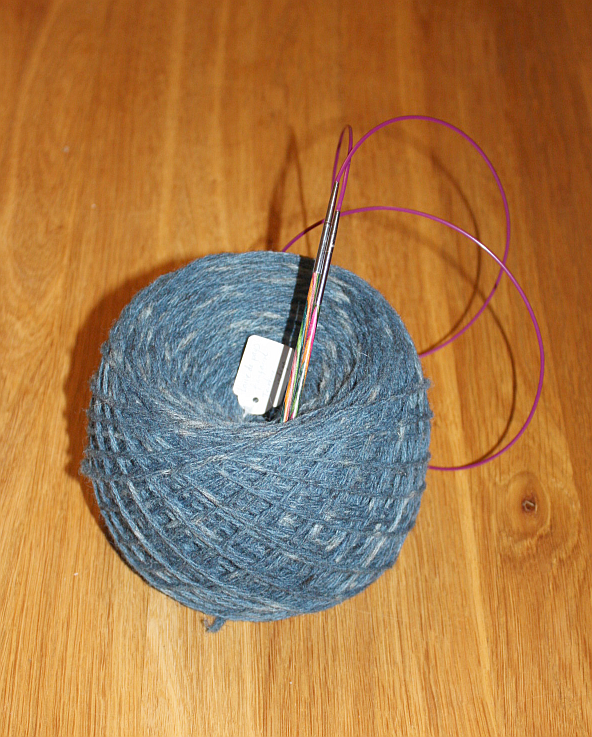
Back at the Textile Forum, one of our participants, Micky, brought some of her wool along to sell - and of course, there was the siren song of indigo-dyed wool luring me in. Being utterly fond of anything blue, one skein went home with me... and then it sat there while I was trying hard to decide what to do with it.

[caption id="attachment_2199" align="alignnone" width="592"]One 266 m skein of gorgeous blue wool with a little variegation... hand-dyed. One 266 m skein of gorgeous blue wool with a little variegation... hand-dyed.


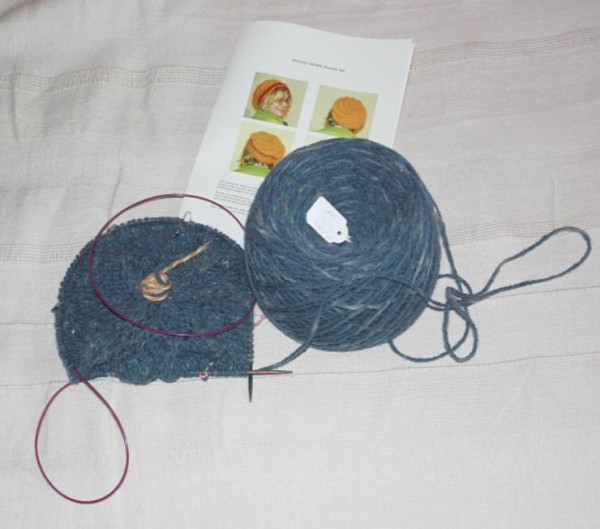
Now I've figured it out. There will be another Spirally Hat in my future - and I'm already almost past the first stage, thanks to a bit of knitting while watching TV in the evenings:

[caption id="attachment_2198" align="alignnone" width="600"] The upper part is almost done - it still has its little starting belly button, though.


Now the big remaining question is: Will I finish the hat before it is too warm outside to wear it?
0

By accepting you will be accessing a service provided by a third-party external to https://www.pallia.net/

Kontakt