Latest Comments

Guest - Aislinn Dyestuff Citizen Science.
09. Oktober 2026
This is a great project. I look forward to the results. Thanks for letting us know.
Guest - Aislinn Time for...
09. Oktober 2026
Looks delicious!
Guest - Katrin Sprang Discussion
18. September 2026
Hi Rachel, I have looked for more photos of you, but that was not very successful. I found a link on...
Guest - Beatrix Sprang Discussion
15. September 2026
That lozenge pattern element is not a photograph, but a scan. So it should be to scale. But I pinned...
Guest - Katrin Sprang Discussion
15. September 2026
I was not referring to Rachel's reconstruction (is the reconstruction you refer to the one photograp...
JUNI
15
5

Loop Stitching.

Sometimes, when chatting about work in historical/medieval/prehistoric times, especially the very time-consuming textile work, somebody says "ah, well, but they did have more time back then". 

Did they, though? 

My usual answer to this comment is that back in history, days also only had 24 hours each. Not all of these hours were light, and there was less artificial lighting available than we're used to today, both in quality and in quantity. Some of the dark hours were, of course, spent sleeping - so let's just say, for simplicity's sake, that after 8 hours of sleep, there's 16 hours of time left to do things.

To do... all kinds of things. Especially those that were directly connected to sustaining yourself in some way, either by farming directly or by doing some other work to earn money to buy the things you'd need, or a mixture of both. Sounds familiar? Because that is, basically, what we're still doing today.

So depending on what your work is and how long it takes, you might have resources left over to spend on luxury goods in the wider sense, or you might not. That, again, is something that remains the same no matter what era we're in. There's people who have more resources and people who have less, and those with more resources can invest them in stuff that serves as status symbol, and those who don't... they have to make choices.

Time-consuming manufacture of things means that you either have the surplus time yourself and can spend it on making something fancy, or you have the money (or bartering means) to buy somebody else's time. If the rest of your social environment knows the worth of the item made, it can serve as a status symbol. (That won't work if you get something very pricey and fancy but nobody can appreciate it, because it's not common knowledge. A very fine hand-knit sweater would take a lot of time, but most people won't realise that when you pass them on the street - something like a fancy designer hand-bag, though, would be more widely recognisable.)

I am a firm believer that "back then", people did not have so much more time than we do have now. They'd also have had distractions, and days when things did not go as planned, and they'd have hung out with friends and family in their leisure time and not worked all the time on something. (Well, not more than modern people do.) That is also what I try to explain when the comment comes up.

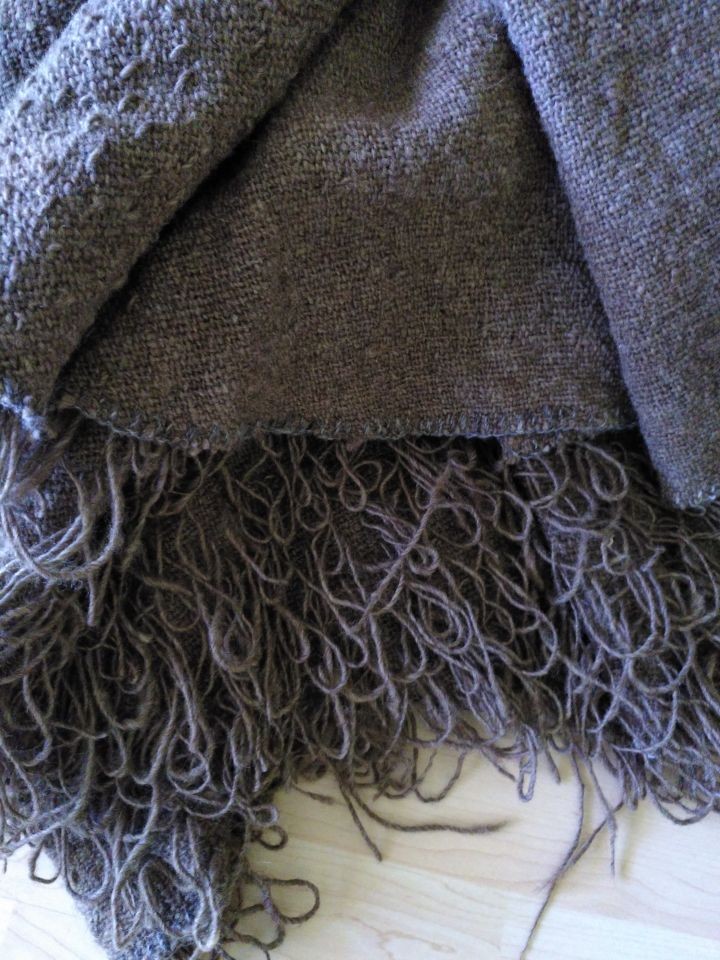
Sometimes, though, I feel like going "oh my goodness, someone had waaaay too much time", too. Like now, when I am doing the stitching for the pile on the reconstruction of the Trindhøj cloak.

That is a lot of stitching. A LOT. 

Don't get me wrong, it's a quite nice task, and each single stitch goes rather quickly, but a lot of quick actions will still take a long time. I also hope that the yarn I spun will be enough, and I won't run out before I finish the loops.

Maybe it helps to work faster? So I'm finished before the yarn realises that it's not enough?  
1
JUNI
07
0

Gender Ponderings on Spinning, Part II.

I've mentioned the Bible as one of the gender-spinning-question related items in the last post (before the long weekend of Pentecost - just in case you wondered about yesterday's blog silence). 

There are a few mentions of spinning in the Bible. Finding them is made relatively easy by the helpful BibleHub site, where you can look for keywords and then get information about them, and related terms as well. 

One of the mentions of "spinning" is in Exodus 25:35, and it goes:

And every skillful woman spun with her hands, and they all brought what they had spun in blue and purple and scarlet yarns and fine twined linen.

Exodus 25:35, English Standard Version

The BibleHub site also lists the different translations, another very helpful feature. 

So. Here it's "woman" in all versions. Another interesting bit, for our intents and purposes, is Proverbs 31:19, which is from a passage about the virtues of a noble woman: 

In her hand she holds the distaff and grasps the spindle with her fingers.

Proverbs 31:19, New International Version

In this part, spinning is closely linked to women, and especially virtuous (as in good) women. The making of yarn, and cloth, and further on in the passage clothing the family, is something mentioned as a positive aspect. 

If that connection was seen as a strong one (which would be sort of standing to reason, given the importance of textiles and textile manufacture), it is not a great jump to using it as a kind of symbol in artworks to signal that a specific woman would be one that is virtuous/good/productive.

Spinning can also be seen as negative, though - it depends on the context. You can read more about the topic in "Equally in God's Image: Women in the Middle Ages". 

However, in both cases it's very much associated with the female gender.

The question remains: How much of the women-only impression that we get from our sources is due to representation bias? Were there men spinning in the Middle Ages, in relevant numbers? How about children - male and female? It would be really, really interesting to know more about this - also because finding out whether there's a strong representation bias in this case might give an insight in possible other representation biases.

0
MAI
30
0

I'm back, and it was wonderful.

I'm back from my gallivanting across the countryside, all the way down to the boot heel of Italy, and it was glorious.

I hadn't realised how much I had missed meeting up with colleagues for a conference and working together until I went to Vienna for a EuroWeb workshop and now to Italy. It was a three-day workshop about embroidery, and two days of travelling there and back each, and almost every minute of it was pure bliss.

Travelling took a while since I was not going to fly if avoidable at all, and it was avoidable by using a night train. As the direct flight connections to Brindisi or Bari were not convincing for her as well, I joined up with a friend in Munich and we travelled together, which just added to the fun. We had a night train from Munich to Rome, and then it's several hours again to get to Lecce and then Muro Leccese, where our workshop took place.

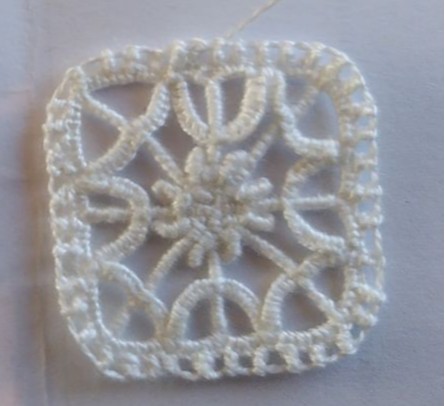
We had wonderful warm and sunny weather, delightfully delicious food, lots of Italian coffee, and incredibly nice people. There was a workshop on filet netting and embroidery, an exploration of Bronze Age embroidery stitches, an introduction to Punto Maglie (which is a kind of needle lace, which is something I'd wanted to do for ages and had never gotten around to), a number of presentations about embroidery-related research projects, many chats and discussions with colleagues, and oh, did I mention the food? I was in food heaven. 

I also worked on my appreciation of coffee without milk, or with very small amounts of milk - as I didn't want to be one of the touristy Germans who order cappuccino after breakfast. (When, on the last day, I discovered there was hot milk with the coffee break supplies, though, I did have a cup of coffee with lots of milk. And then a second one straight away. Due to remaining little bits of sense left in my brain, I didn't have a third one, though...)

Punto Maglie, taught to us by two lovely Italian ladies. In Italian, which added to both the fun and the learning experience. (I found out that I don't speak Italian, but can mostly understand Stitch Italian...)

I also learned a great deal and finally got to meet, in person, a few of the people I had met over Zoom beforehand, plus some new people. 

All things taken together, and the great hospitality of the local conference team (which even organised a little evening sightseeing trip to Otranto for us) added up to utter bliss for several days in a row. Utter, extreme, perfect bliss.

That was, by the way, the first time I've been to Italy. (I've been to South Tyrol before, but as both Italians and people from South Tyrol will tell you, that does not count as Italy. It's basically an extension of Austria where you can speak Italian, if you so wish, but German is spoken and understood about everywhere too.) I couldn't have wished for a better place to fall in love with the country.

My only problem now? My new favourite café is very, very far away from home...

0
MAI
13
0

Off To New Adventures!

Sorry for the blog silence yesterday - I had a very full day, and then I managed to eat something that did not agree with my inner plumbings at all. I'm still recovering, so it's taking it easy for the rest of today (the little cat being a very good model on how to nap inbetween).

Tomorrow I'll be off to a workshop on embroidery, organised by the wonderful people of EuroWeb - Europe Through Textiles.  The week after that has already been scheduled for some time off, as there's a public holiday on Thursday, making it predestined for an extra-long weekend.

So I'll be back on the blog on Monday, May 30. If you're looking for something to watch in that time, you might want to check out the conference recording from EuroWeb - Clothing Identities, here on their Youtube channel.

0
MAI
05
0

Phew, and Phew.

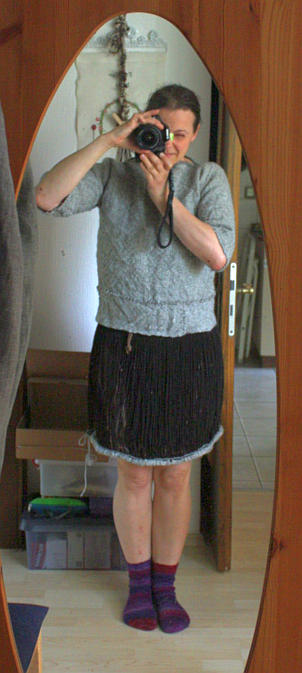
I may or I may not be sitting here dressed in the Bronze Age women's clothing - trying it out (or on) before it goes on its happy journey to its final work place. I may also have taken a quick mirror-selfie before sitting down here to write this blog...

I may also have managed to resurrect the Textile Forum website, and wait for all the mails to go out (there's a restriction on how many mails can be sent in a given time, to avoid spamming and hogging of resources that you have not paid for, so sending out a few hundred mails takes a bit of time). 

  Just in case you're wondering, by the way: I managed to kill the Forum website by clicking the wrong button at the most inopportune moment ppossible to do so. Which removed the database (not good!) and some of the files. Resurrection was mostly a question of finding the correct set of files (that matched the re-uploaded database) and getting them back into their proper place.

Now things are running again, though it still does not look pretty - the site still suffers from template issues, which have been unresolved due to the need of getting a new one anyways, with the switch to Joomla 4. Which is on my schedule to do once the mails are all sent out, and then, hopefully, things will be easier to look at again, and the photos will also come back.

For now, though, the most important, and most urgent, bit was to get the date and time for the next Forum online. Which will be November 7-13, and we'll be in Mayen, Germany, at the Laboratory for Experimental Archaeology again. Our focus topic will be making yarns and threads: "Simple, Special, Spun or Spliced: Yarns, Threads, and Their Making". You can find out more about it on the website of the Forum.


0
MAI
03
1

The Skirt!

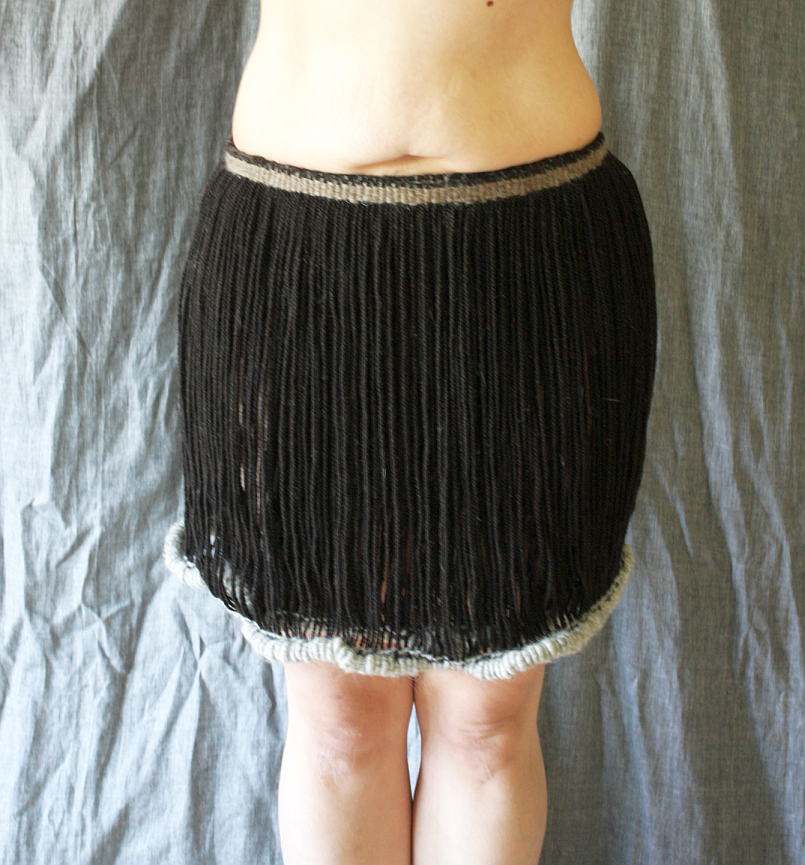
You're due an update on the Egtved skirt, I think - this has been finished a bit ago, but I haven't gotten around to posting a picture of it for you. So, finally, here you go: 

It is a really, really interesting garment. Where the skirt is double-layered (which is most of the way around), it's covering everything rather well. Especially close to the waistband, where the strings are fixed, there's not much see-through effect even when moving, so if worn on the hips (as is usually postulated for this find), the relevant bits of the female anatomy would be covered well and quite securely. When moving, as in lifting the legs, the front is still covered well, but you can see the leg at the sides, where the strings then fall apart - quite similar to a skirt with a high leg slit.

This kind of garment thus does play with the concepts of covered and uncovered, but it's not necessarily very see-through, or very daring. Also - this was a bog find, and there may have been additional linen clothing items worn that did not survive due to soil conditions. 

There's one last knot for me to make, and then hide the ends of that string (it's the one keeping the rings at the bottom together, and I wanted to be able to adjust that just in case it should be necessary), and then it's completely finished. I haven't added up the work hours yet, but it was a lot, even using more modern tools as a shortcut at some places.

Also, even though I tried very hard to match the thread type and thicknesses of the original, I ended up with more cords than the original garment had. Textile reconstructions are bitches!

Making the twisted cords and finishing them off with the rings are definitely the most time-consuming parts in making such a garment. The weaving itself was, in comparison, rather quick once I had established a workflow. A simple tool for measuring off and temporarily holding the wefts/cord threads was all that was needed in addition to the heddles for opening and closing the shed. Oh, and one of my feet to hold the tool and hold one of the loops from the previous shed on a toe. That was making it extra fun to weave.

0
MAI
02
0

Back from Vienna!

I'm back home, and back at work. There's tea, there's the very helpful cat (who has now moved to her cat bed again and stopped putting her paw onto the touchpad at the most inopportune moments), there's things with deadline to take care of. 

But first - let me tell you that Vienna was glorious, and wonderful, and really exhausting. It was so good to meet with colleagues again and discuss things in person, with hands-on materials to try out what cannot just be described, and to mingle and chat and have all the extra networking opportunities that you just cannot get over online get-togethers or online conferences.

The organising team did an utterly splendid job at filling our three days with exciting and stimulating tasks. There was discussion of the papers and articles that we all had read in preparation; there were presentations putting those theoretical aspects into context of our own research and projects; there were clothing reconstructions that we looked at (and tried on) from different aspects, and two excursions to see garments - some secular ones preserved in a crypt underneath St. Michael's church, and some very spectacular old ecclesiastical garments still in use in St. Stephen's Cathedral.

There was also an entirely adequate number of coffee breaks, with coffee and tea and biscuits and chocolate and cake. Plus the continued discussions, and extra discussions, in those breaks. There might also have been some hanging out together in the evening, getting food and some drinks.

On the last morning, I felt like there's not enough coffee in the world anymore to get my brain up to the wakefulness and speed that I'd have liked it to be at. There was enough, though, to get me through the day and thoroughly enjoy it up to the last minute, when all those of us who were dead tired did do the adult and reasonable and sensible thing and went home, or into the hotel room, and to bed.

I spent my last morning in the beautiful city having a relaxed breakfast, buying food for the journey home, and getting a bit of bouldering in (there's a gym very close to the main train station) before sitting on my butt for several hours on the train. Where there was wi-fi, and theoretically the possibility to catch up on work, but - see above - there just wasn't enough coffee in the world anymore.

So let's see if I can catch up today, and actually get all the things on my list done...

0

By accepting you will be accessing a service provided by a third-party external to https://www.pallia.net/

Kontakt