Latest Comments

Guest - Aislinn Dyestuff Citizen Science.
09. Oktober 2026
This is a great project. I look forward to the results. Thanks for letting us know.
Guest - Aislinn Time for...
09. Oktober 2026
Looks delicious!
Guest - Katrin Sprang Discussion
18. September 2026
Hi Rachel, I have looked for more photos of you, but that was not very successful. I found a link on...
Guest - Beatrix Sprang Discussion
15. September 2026
That lozenge pattern element is not a photograph, but a scan. So it should be to scale. But I pinned...
Guest - Katrin Sprang Discussion
15. September 2026
I was not referring to Rachel's reconstruction (is the reconstruction you refer to the one photograp...
MäRZ
18
0

Dyeing Industry in Pompeii - new book out.

A number of years ago, when Sabine and I ran the very first European Textile Forum, one of the papers was about the dyeing industry at Pompeii. Heather, who gave that paper, got together with Sabine the very next day, and some dyeing took place, and the paper and the dyeing and the ensuing discussions resulted not only in a friendship but also in a number of follow-up archaeological experiments looking into the influence of metal kettle materials on the dyeing outcomes. 

The basis for the presentation that Heather gave back then was her PhD thesis about the dyeing industry in Pompeii - and I'm very delighted to say that it has now, finally, been published by Archaeopress. It's called "Investigations into the Dyeing Industry in Pompeii. Experimental Archaeology and Computer Simulation Techniques" and you can get it as an e-publication or the printed version, either directly from the publisher or from the bookseller of your choice.

0
MäRZ
02
0

Relaunch Coming Up.

I think I have all the relevant bits and pieces figured out now, the templates seem to work decently, the shop tests have been successful so far, and that means it's finally time for me to tackle the relaunch of the website.

Since that means moving the blog, too, I will make life a bit easier for me by pausing the blog posts for the rest of this week. I'm planning to have the whole shebang finished on Friday, so you will hopefully get a blog post again on Monday, on a shiny new site with a shiny new layout.

The site, including the shop, will be offline during the migration proper. I'll try to keep that to as short a time as possible, of course, but it will surely take at least half a day or so.

Wish me luck!
0
FEB.
28
1

Everything Is Better With Chocolate.

We're living in a crazy world right now, and I don't know how it is with you, but I'm double as happy about anything nice and good happening these days as usual. Good news are just so, so welcome.

So it is twice as nice that there is chocolate to brighten up my day - and possibly yours, too. How and why? 

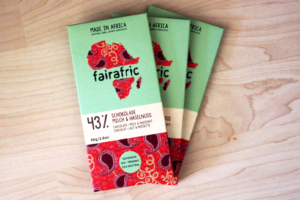
Fairafric is a German-Ghanaan company that produce organic, fair-trade chocolate - directly and from bean to bar in Ghana. Which means that most of the economic value actually stays in Ghana and is not added in some other, much richer country. They are using a lot of solar power and go for sustainable production and sustainable packaging. These are all good things, if you ask me - and the chocolate is, on top, also very tasty.

Since I am a firm believer in the fact that everything is better with chocolate... I'm extremely delighted to be part of a get-to-know-us campaign for them. In the form of having a number of their milk choc with hazelnut bars to pack into the orders from my webshop that I send out.


I hope this will brighten a few more people's days!

0
FEB.
25
0

Open Library from the Internet Archive

I like online resources for research - who doesn't? And occasionally, I stumble across a new one, which is always a nice thing.

My most recent discovery happened because a colleague was searching for a specific article, published as part of a book, that I thought sounded interesting. So I checked my own library database, but of course it was not in there. Then I did a bit of a search on the 'net, and there was a link to the Internet Archive (which you might know through the WayBackMachine, which I can totally recommend if you want to look at websites that once were but are no more today) and, more specifically, to their lending library thing OpenLibrary.org - where you can virtually borrow digital copies of books. Quite a lot of books, actually, including the one in question that my colleague was looking for.

Borrowing works if you have a free log-in for the Internet Archive, and then you can read for one hour in the book in question, with automatic extension as long as nobody else wants to read it. Some things can also be borrowed to your e-reader for a 14-day period.

So in case you're running out of things to read... you might find something there. I hope you have fun!
0
FEB.
24
2

I have bought something pretty.

Sometimes... sometimes it's just so, so nice to buy something pretty. Something that is not strictly necessary... but, well - pretty.

That is exactly what I did yesterday. I bought something for the new website. Something that really was not strictly necessary, not even un-strictly necessary... however, I've long been in love with the idea of it. And what better time to change something design-wise if not a website overhaul?

Otherwise, the changes will not be huge. There will some re-ordering of the main page articles, and some more articles on the main page, mostly information about spinning. The logo stays the same, and I'm also still quite happy with the shade of red I have as accent colour, and the general setup of the shop and shop software. The whole site will stay bilingual, and I'll also keep the three sections main page, blog, and shop.

The blog, however, will migrate to a new blog software, hopefully rendering all the comments more reliably, and allowing me to cross-post to Facebook as well.

But everything will be using a new, shiny, pretty font that I'm utterly and completely in love with. Bye bye, Cabin, you widely available but rather boring thing with your not so pretty @ sign and your not so brilliant kerning in the webfont version, which I had to fix with an extra plugin for the old blog software. Hello, shiny new font that is a semi-serif, because of course I could not decide whether I like a serif or a grotesque better (and they both have their pros and cons), and works well in print and on screen, and is just. so. pretty. At least if you ask me.

Here's a sneak peek of how it will look on the new blog:
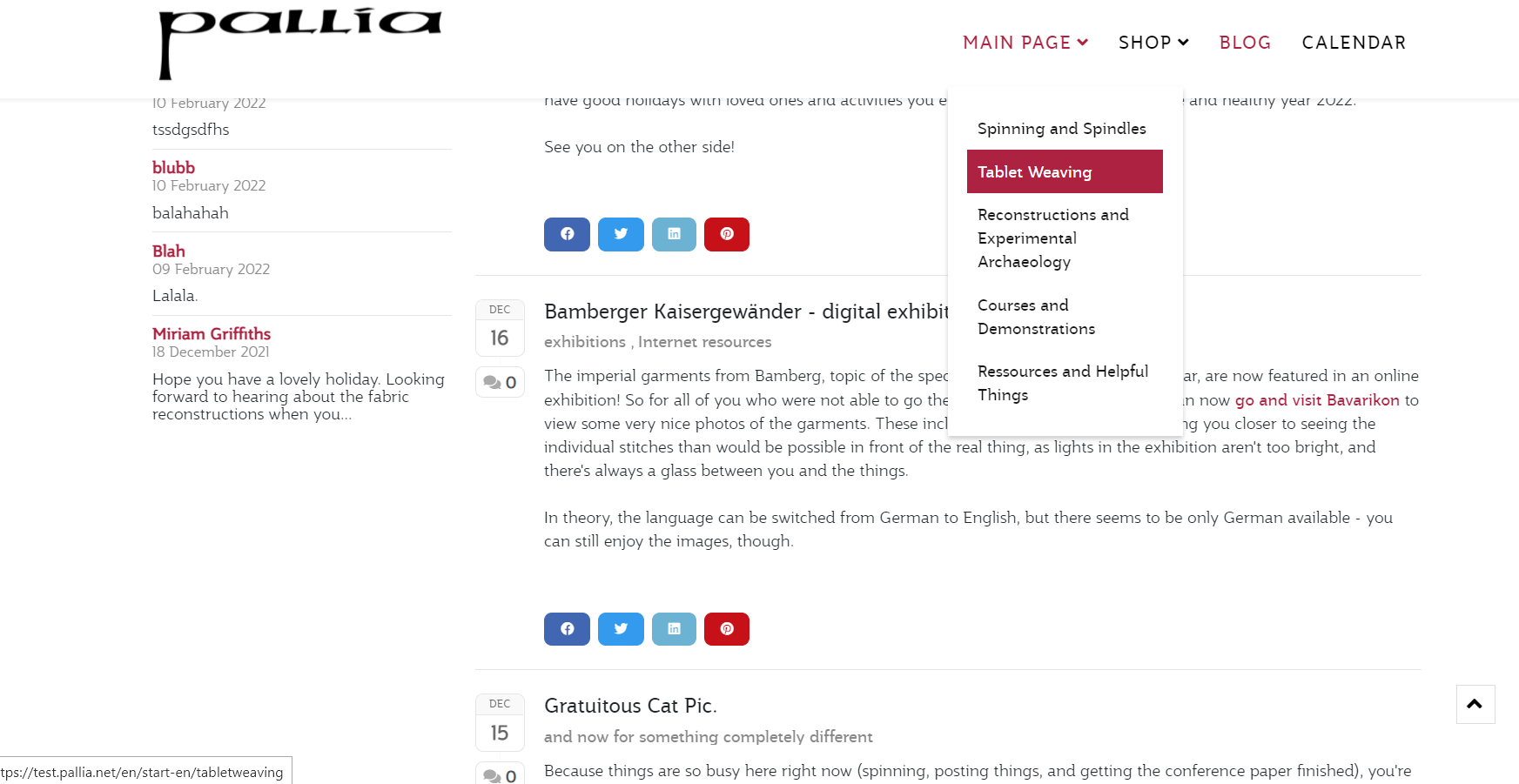


Ah. I know it's a little nerdy, but I'm all delighted now.

I have a few more articles to fix up, a list of things to check and test, and then it will soon be time to take a deep breath, take the old site offline, make a gazillion of backups of everything and start the migration. I'm a bit scared, to be honest - it will mean migrating the blog plus pulling things from two different sites into a new one, in a mix of setting options and values directly in the backend, file copying, and SQL editing. The latter is the scariest bit, because a) I don't know much about SQL (read: next to nothing) and b) this is where most things can go horribly wrong and wreck the whole new clean shiny (and hopefully flawless) installation.
0
FEB.
22
0

Ponderings on Patterns.

From time to time, I get asked if I have a pattern for this or that piece of clothing - to which my usual answer is "No, because there were no patterns in the modern sense used in the Middle Ages". Exceptions may apply for items such as hoods, where it's easy to take the pattern from an archaeological find, and which fits a range of head, neck, and shoulder sizes, and not-really-fitted garments such as high medieval breeches, which are rather huge and don't need a lot of measuring.

For dresses and other fitted items of clothing, though, such as hose? In my opinion, it does not make any sense to offer a pattern in the modern sense for these - because their construction, as it can be reconstructed, did work completely different. To get a result close to what the original garments were, it makes much more sense to follow the procedure that was probably used for the originals than to try and use the industrial, post-19th-century approach to clothes, in graded sizes on paper patterns.

Generally speaking, for the historical construction of garments, you take some key measurements and transfer them to the fabric straight away. It's not even necessary to have a measuring tape for this, you can do it with a piece of string (measuring tapes are a rather late invention as well, at least I was not able to find any evidence for them from earlier than the 17th century). Your building bricks for the garments are geometrical shapes, which means they are easy to cut out of the fabric, and final tweaking takes place straight on the body. In case of the more involved, very tight-fitting garments used in the late Middle Ages, or in case of really expensive fabrics, this cut-then-fit approach can be done first on the lining, and then the lining fabric used as a template for the upper fabric.

The huge advantage of this approach (apart from being much closer to the original method, and thus much better suited to get results that look and fit more like the originals fit their original wearers)? Different body shapes pose a much smaller problem than when you have graded pre-made patterns. Human bodies are quite different from start, and they tend to take on even more different shapes if weight is put on, which is definitely an issue today (it would be interesting how many overweight people there were in the Middle Ages, but that's an entirely different topic and not really relevant for now and here). These very varied ways on where extra fat is stored is one of the reasons why it's much harder to find well-fitting garments for people that are overweight or adipose; some people carry most of the extra weight in the legs, some in the butt, some around the middle, and these differences make for very different shapes, so basic pattern grading will not work properly anymore.

So I'm always a bit to very sceptical when I see "patterns for medieval dresses" somewhere. In my personal experience, a lot of the patterns will not work properly, because - as explained above - the approach is just too different. It's especially, um, "interesting" if the pieces in question have not been published completely yet... as is the case with the Lengberg bra. Apparently this skirted bra has been turned into graded patterns which are now available at a site called Reconstructing History. Apart from the fact that if you use the search engine of your choice to look for reviews of patterns from this place, you'll find a lot of people telling you that they are badly documented, badly graded, and come with not-so-great instructions, I can tell you that the members of the Lengberg research team do not endorse this pattern. It was produced without their co-operation or consent, and they do emphasise that it was made without direct knowledge of the original garments or their patterning.

The Lengberg research team is working on a publication on the garments, and as far as I know, they are also going to make their reconstructions as accessible (and re-tailorable) as possible. I know that patience is hard... but it's probably very well worth it here.
0
FEB.
18
0

Even More New Spindle Sticks!

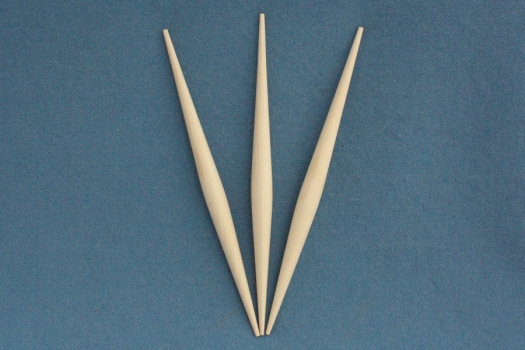
I've not only restocked the pearwood spindle sticks, there's actually a new type in the shop as well: A 20 cm long stick with a thicker belly, modeled after one of the many sticks found in the Mühlberg-Ensemble in Kempten.


They are available in maple and in birch wood. If you've been looking for a stick that is a bit thicker and thus will accommodate whorls with a larger hole, or something shorter than the long sticks but longer than the short ones, this might just be the one for you...
0

By accepting you will be accessing a service provided by a third-party external to https://www.pallia.net/

Kontakt