Latest Comments

Guest - Aislinn Dyestuff Citizen Science.
09. Oktober 2026
This is a great project. I look forward to the results. Thanks for letting us know.
Guest - Aislinn Time for...
09. Oktober 2026
Looks delicious!
Guest - Katrin Sprang Discussion
18. September 2026
Hi Rachel, I have looked for more photos of you, but that was not very successful. I found a link on...
Guest - Beatrix Sprang Discussion
15. September 2026
That lozenge pattern element is not a photograph, but a scan. So it should be to scale. But I pinned...
Guest - Katrin Sprang Discussion
15. September 2026
I was not referring to Rachel's reconstruction (is the reconstruction you refer to the one photograp...
NOV.
29
0

Tales from Forum, Part II

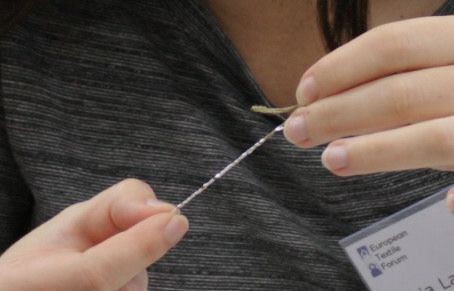
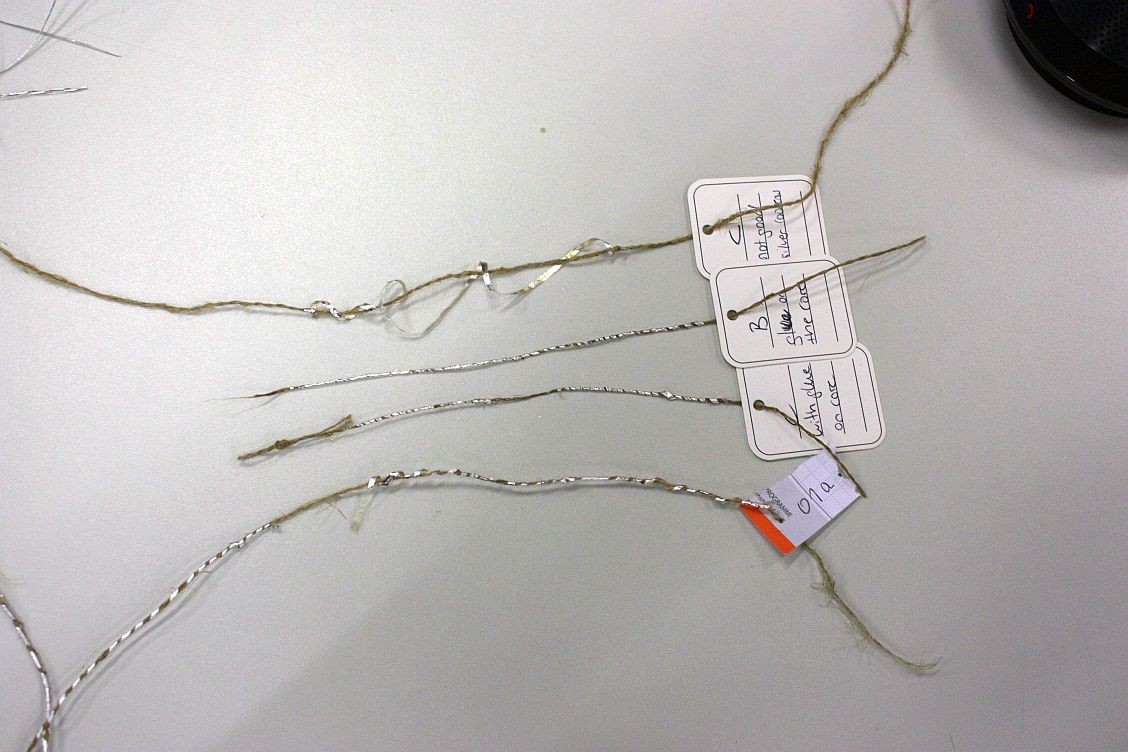
Not all that glitters is gold - sometimes it's just gilt silver, hammered into leaf metal, attached to a thin animal membrane and then wrapped around a thread core.

You might know about medieval gold thread, which was usually a strip of metal (often gilt silver, very rarely pure gold) wrapped around a silk core. Well, that's the "good" version, high-quality and rather pricey. And as always, if there's something posh and fancy and expensive, someone tries to get the same effect but for cheaper.

Enter the membrane threads. These are usually not around a silk core, but around a thread made from vegetable fibres, and the metal strip is replaced by animal membranes or, in other places, by a thin leather strip or by a paper strip. These are metallised with leaf metal, and here again, you can make it cheaper by reducing the amount of gold. How? By using "Zwischgold" - silver hammered out, then covered with a thin layer of gold, and this then hammered into leaf metal. 

Gold leaf is really, really thin, so thin that you cannot touch it with your hands. It will instantly cling to your skin and then dissolve. Medieval gold leaf was thicker than modern gold leaf, but it would still not be handle-able without gilding tools. Gold was expensive - so having the cheaper silver as the main metal and just adding a bit of gold would reduce costs considerably. New research about Zwischgold shows how it looked, and the thicknesses given are about 30 nm of gold in the Zwischgold as opposed to c 140 nm thickness of the regular gold leaf. 

This superthin stuff needs something to cling to, so it is stable enough for further processing. In the cheap gold threads that we were aiming to reproduce, animal membranes were used - to be more precise, a layer of membrane from bovine guts. 

So we had a go at silvering them - using not proper Zwischgold, but leaf silver, since that was a lot cheaper to get and is closer to the medieval original material. Then the membrane has to be cut into strips, and the strips then wound around a core, all of which proved to be do-able, but with a lot of room for improvement.

Both the gilding and the wrapping did require a lot of concentration! It also took us a while to puzzle out a method with which a longer piece of thread could be wrapped without getting too much of a twist buildup. 

A final very important part of making these threads, as we also found out: Time. Once the metal is on the membrane, it needs sufficient time to dry out properly, or it will come right off the membrane and right onto everything else - fingers, faces, tables, you name it! With enough drying time, it is much more stable.

Just like with the purple dye imitation, a good bit of work remains to be done on this, but we're very, very pleased with our preliminary results.
0
OKT.
26
1

Business As Usual: Bookkeeping.

It's time, again, for me to sit down and do the bookkeeping stuff. It's not a thing that I particularly enjoy, but, alas, it has to be done. And that in regular intervals, as I have to hand in the VAT accounting every quarter. (That's actually a good thing, for me, as it means that at least every quarter, I automatically get an overview about how things are going.)

Usually the hacking in of numbers and checking them, and jotting down reference numbers on slips of paper and putting documents into the document folder of the accounting programme goes fairly smoothly, and I'm done relatively quickly. Sometimes though, some little-but-nasty error slips in, and then it's hunting down what happened and where and when and fixing it. I had one this time around, and it took me a while to get where it came from... but now everything lines up again, and looks fairly good, and I've sent off the numbers and paid my dues.

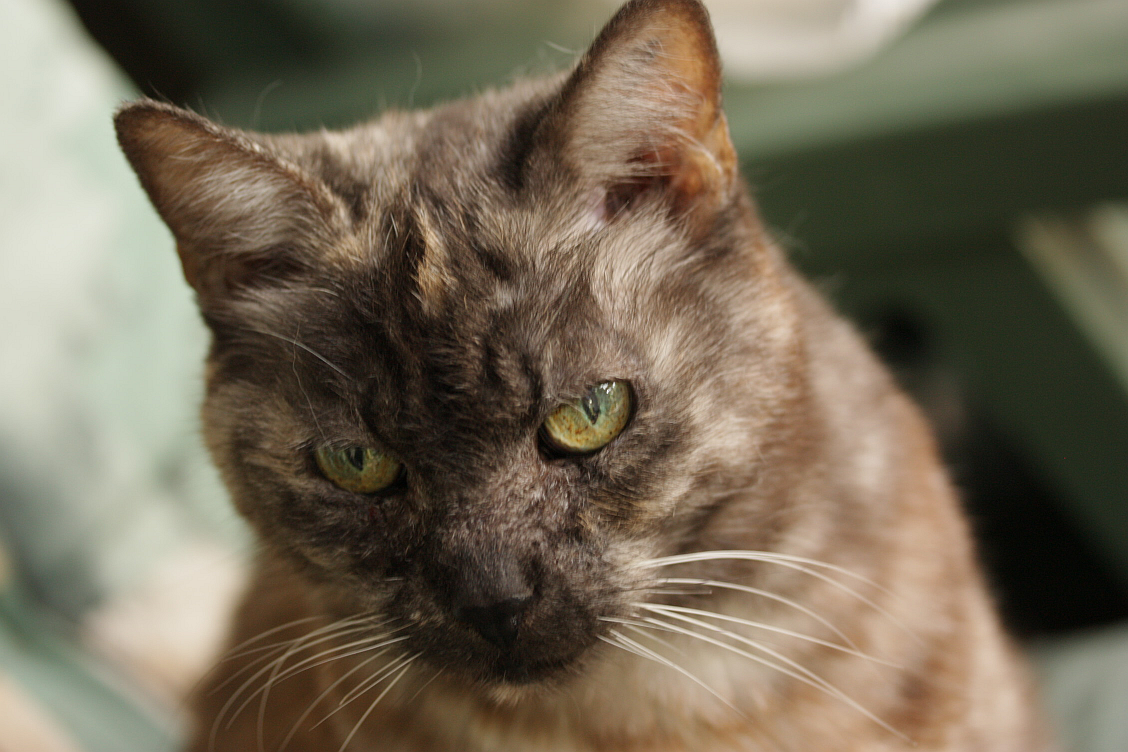
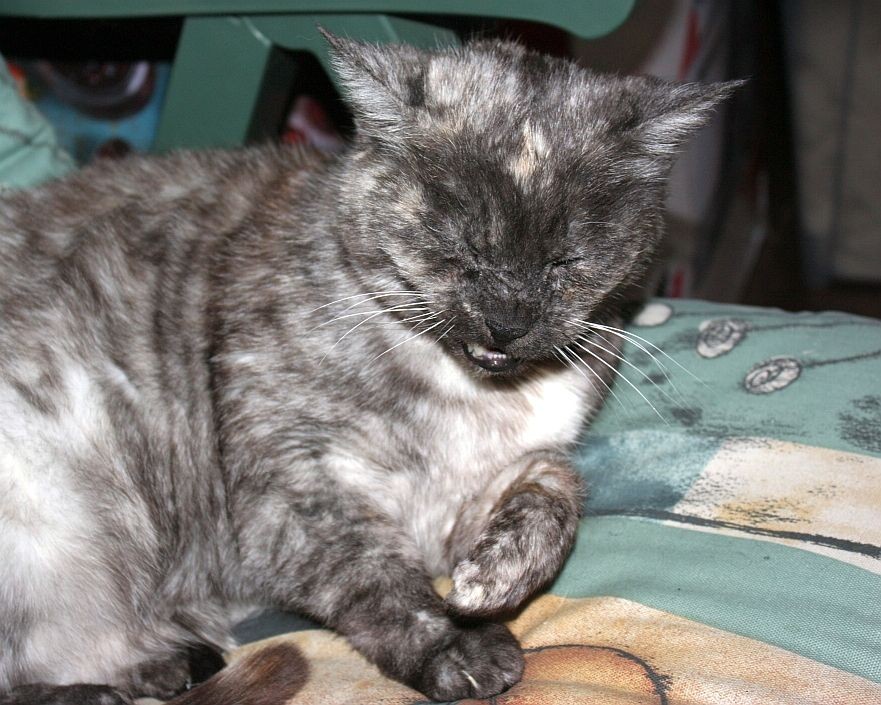
Which means that I can give you a celebratory picture of the little cat with a very silly face:

and then get back to all the rest of work waiting to be done today. 

Thankfully nothing that involves heavy lifting, because I did get the booster shot with the updated vaccine (including the Omicron variants) yesterday, and though I have no other side effects, the area where the jab went does hurt some if I lift the arm overhead, or stretch it out completely.  Side note: The German StiKo, the committee giving the guidelines on who should get vaccinated, still lists only a few groups and people over 60 years of age. Even though there's enough vaccine to get a lot more people immunised. So when I went to get my shot, I had to get an "advisory talk" with a doctor, who had to ask me why I wanted the booster... which you can get even when not on the StiKo list, but only after that advisory talk. Next thing she did was tell me that she personally thought it rather stupid that they'd still not made the list longer, or recommended it to everyone, since the incidence numbers are rising and people still get Long Covid, and there's enough of the vaccine for a lot more people... 

Ah well. Nobody expects the Spanish Inquisition, and nobody understands politics.

0
OKT.
25
0

More on the Cloak.

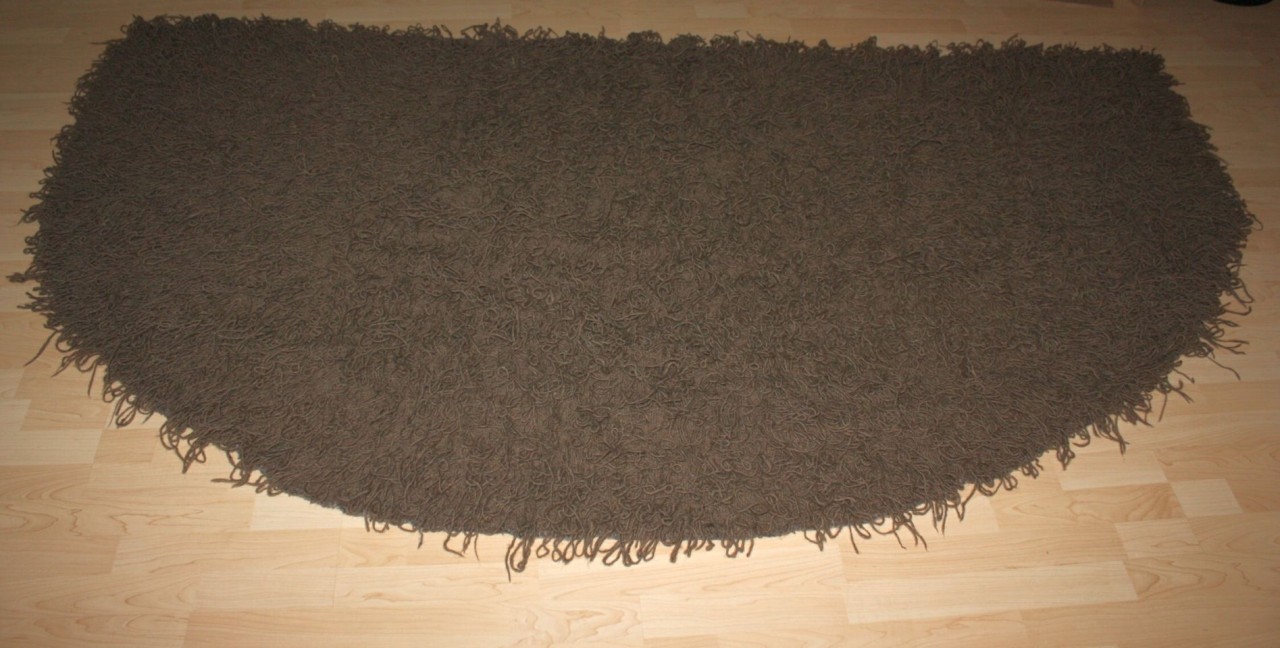
With all the many things going on, I never got around to posting a photo of the Trindhoj cloak after sewing on the many, many, MANY loops of thread.

Did I mention there were a lot of them? There were a lot of them. The cloak is rather large, with about 3 m width along the straight edge, and it is all over covered with these loops. Oops. (Sorry. I still get a little silly when I am reminded of all the loopy stitiching.)

The original cloak shows the remainder of stitched- on threads, spaced apart but not very widely spaced. There's not too much left, and it's not described in detail in Hald's publication, so I mostly went by the image available from the Danish National Museum website and some photos I was sent by a colleague. 

Because there's only bits of the threads next to the stitches left, we don't know if they were loops, or individual threads, and we also don't know how long they were. I wound the thread around my hand when stitching to have a similar length for all of them, and to have the loops long enough to overlap the next row below.

A test piece that I made, with loops cut open and loops left closed, looked quite differently after washing in the two parts. The opened loops had acted like you could expect of single yarns and fluffed up considerably, but also lost a good bit of their twist, so they seem quite vulnerable to wear and tear to me. The loops that had remained closed had mostly plied together, keeping the individual loops stable.

The photo above shows the cloak after finishing the sewing work, but before its final bath. It looks a bit like one of those shaggy carpets that were in fashion a few decades ago... 

It's also, not-really-surprisingly-but-still-surprisingly heavy. Unfortunately I completely forgot that it might be interesting to weigh it before and after stitching all those loops, but I used up almost all of the extra yarn that I had spun, which was a generous amount, and it's quite heavy now. It will settle nicely on shoulders, though, and I can absolutely imagine somebody showing off his (or her, maybe, though this item was found in a male grave) riches.

It is a lot of spinning time and a lot of weaving time that went into this piece, and then a lot of stitching time as well. We know from weft crossings in the original that several weavers worked on this together, and I can well imagine that several spinners worked on the yarn for this (or one spinner for quite a good bit of time).

0
SEP.
29
0

Off To Shenanigans!

It is a truth universally acknowledged, that when things come to happen, they do it in masses.

Ahead of me are three-and-a-half very full weeks, where I'm mostly away from home, doing things - giving workshops, holding presentations, doing museum inventory work, and, to balance out the work, having a few days off with the Most Patient of All Husbands inbetween. (I'm quite sure they will be needed...)

It's wonderful and exhilarating to be off and about and among people once more, though I admit I'm also a little anxious about this. There's still a pandemic happening, even though it is getting easier to ignore it all the time. I have masks, though (really well-fitting for a change, I'm quite amazed) and have just tested negative (something the Spinntreffen organisers were asking for, to self-test before going there), and I hope that I will have a sufficiently effective combination of being sensible and being lucky.

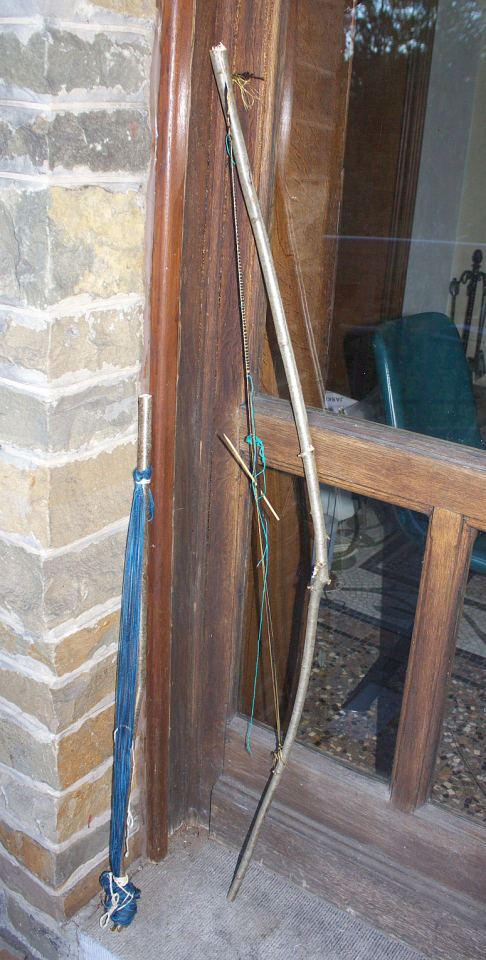
At the moment, I'm in the last bits of prep for the Spinntreffen of the Handspinngilde this weekend, and that means packing the car, printing out lists, and finishing putting together the workshop tools and materials. So once this post is done, I will hop out into the garden and cut some willow and hazel rods to serve as bow looms.

If you're interested in my presentation for the Hansemuseum Lübeck and the FGHO, it will be streamed live on YouTube on October 11, starting at 18:00. There's also still tickets available for those of you who prefer to be right in the room with me in Lübeck.

I will be back on the blog on October 24, when all my away missions are done and I'm back home - and I hope you will have a good time until then!

0
SEP.
28
1

Butterfly Bobbin.

As I'm preparing the weaving workshop for bow loom weaving that I'll be doing on the weekend, one of the points is "preparing your weft yarn". Now, for a small piece like a band, there's several ways to do this, depending on what you want and how much you mind adding in a new bit of weft. You can just take a length of yarn and use that, no winding, no nothing. 

If you want a lot of yarn for use in one go, you can wind a shuttle. The simplest of these is the humble, but glorious, stick shuttle. Any stick in a length and thickness that suits you and your weaving will do, and you wind the yarn around it, and that's it.

Third option, somewhere inbetween: The yarn butterfly. There are several ways to wind yarn into a butterfly, and the simplest one is wrapping some yarn around your fingers and then wrapping the end around the middle of that mini-skein. That, however, tends to come undone. With a tiny little different way of winding, however, you can have a butterfly bobbin that you can pull more yarn from, which does not come undone, and which will serve beautifully in a lot of instances (not only when weaving). 

Nancy explains this very nicely on YouTube:

0
SEP.
26
0

Looking At You.

Here the little cat is, looking at me as I'm taking photographs to update some things in the shop: 

There's not much else to report, apart from all kinds of the prep mentioned before going on - for the Textile Forum, for the Spinntreffen, and for the presentation in Lübeck. There was some preparatory weaving yesterday evening for the band weaving on the bow loom, and there's a stack of distaffs waiting to be finished and prepared. I'm already looking forward to these, especially the weaving one - it's so nice to have in-person teaching opportunities again!

The cat, meanwhile, has settled down on a nice comfy chair and is taking a nap after the hard work of surveillance during my photo shoot.

(And while we're talking about cats - my thumb is fine again, and fully useable. So no lasting effects from having a cat tooth briefly stuck in it.)

0
SEP.
22
0

Cascading Stuff, Keywords, and Controlled Vocabulary.

You probably know this phenomenon - you have to do something to some stuff somewhere, and then you start doing it, and then you realise that it would be smart to do something else to something connected somewhere else first. And then... it might just cascade on from there.

Sometimes, that is all well and good, and it's sensible to start at the roots and do things from there up. Sometimes, though, the cascading can be just too much, and it would have been (or would be) better to do the incomplete thing and have it dealt with, instead of having it spiral out of control, attracting more and more work on its merry way.

The true art is probably to know where to stop, as so often in life.

You can probably guess that I'm not writing this out of the blue, too... the current cascading effect that I have to (potentially) deal with is, of course, connected to the photo database migration. (Which is progressing, hooray!) The old programme had flat, non-hierarchical keywords, and the new programme can do hierarchical ones, which is very nice and very welcome. The keywords themselves, though...

I've been adding keywords whenever it seemed necessary, and I tried to process and tag every image as it came into the database. Of course that did not work completely, and there are plenty of un-tagged images around. For the ones that do have keywords (which is most of them), they are not always consistent. That is, obviously, not helpful. So the plan is to clean up keyword issues as I'm sorting them into the new hierarchical structures.

In some cases, that's easy. Birds are animals, just as the tags "horse", "flamingo", or "dog" will go under animals. It's getting more difficult with objects. Fortunately, there's lists of hierarchies for object description and tagging available, developed by museum people and geared towards different focus areas of interest. The Getty Research Institute, for instance, offers a number of vocabularies. (Look for the "Browse ..." line when you are offered a search mask, that gets you to the full set.) For German cataloguing, there is, for instance, the "Objektbezeichnungsdatei" offered by the Digicult-Verbund. Because choosing what to catalogue, and what not, and how to do it, is not at all trivial, there's also literature about that, such as the "Cataloguing Cultural Objects" guideline, a slim and slender 407 pages small, free to download for everybody interested or in need.

One of my main questions for now is how to handle male and female clothing. For my old database, I had a sort-of-makeshift solution, stating "TunicMale" or "TunicFemale". That was not perfect, but it did work. Now I'm not sure what to do for marking things - do I split my clothing term hierarchy into "male garments" and "female garments"? That means that when searching for something unisex, I'll have to search for two terms. On the other hand, I wouldn't have the problem that when looking for, say, only women wearing hoods that also men come up in the search.

Another option would be to mark unisex garments with an (m) or (f) behind the tag proper, giving me the option of having that as a lower hierarchy tier and having the complete term above this. That's probably the better solution, even though it adds layers to the hierarchical tree - which is also something that should not be done too excessively. Ah well. Difficult decisions, but fortunately not ones that need to be taken right away, I can think about it for a bit longer!


0

By accepting you will be accessing a service provided by a third-party external to https://www.pallia.net/

Kontakt