Latest Comments

Guest - Aislinn Dyestuff Citizen Science.
09. Oktober 2026
This is a great project. I look forward to the results. Thanks for letting us know.
Guest - Aislinn Time for...
09. Oktober 2026
Looks delicious!
Guest - Katrin Sprang Discussion
18. September 2026
Hi Rachel, I have looked for more photos of you, but that was not very successful. I found a link on...
Guest - Beatrix Sprang Discussion
15. September 2026
That lozenge pattern element is not a photograph, but a scan. So it should be to scale. But I pinned...
Guest - Katrin Sprang Discussion
15. September 2026
I was not referring to Rachel's reconstruction (is the reconstruction you refer to the one photograp...
MäRZ
27
0

Events and Scholarships and Things.

If you're looking for a Postgrad Scholarship in Archaeology, Readings is offering some, with a submission deadline of April 15. You can read more about it here.

The Center for Science and Society at Columbia University is holding a workshop, conference and demonstration event called Weaving: Cognition, Technology, Culture from April 5 to April 8. It is open to the public, but registration is required.

Here's an interesting article about replicating scientific studies - which, it turns out, is often not easy at all.

And that's it for today - I'm busy preparing for the course I'll be teaching in Paderborn next week, the cat is busy lying on my desk and purring, and all the while the sun is shining and the awkward business of adjusting to summer time will probably make me a bit addle-brained for the next few days...
 
0
MäRZ
21
0

Glory and Joy of Planning.

There is a new project coming up (I have hinted at it), and today was full of planning for it - it involves hand-woven fabric again, a whole stack of pieces in different weaves and from different yarns and in different densities, so there's quite a lot of figuring out to do.

And that was my job today - making a ginormous list of fabrics, going through a huge stack of documentation from the conservation work done on most of the fabrics and scratching my head and cursing fate for those pieces that were not conserved - and are thus not very well documented... which is utterly unhelpful for making a reconstruction.

Anyway, the list is now almost finished - and I really enjoyed this bit of planning work. It just is nice to see how varied those textiles are, and how much work went into them, and how they were used. It's also nice to have so much good, detailed documentation to work off from! After a whole day sitting at the computer and going through stacks of paper, though, I'm also looking forward to doing things with my hands again: I need to make new distaffs, and that's the plan for tomorrow!
0
MäRZ
17
2

Angles again.

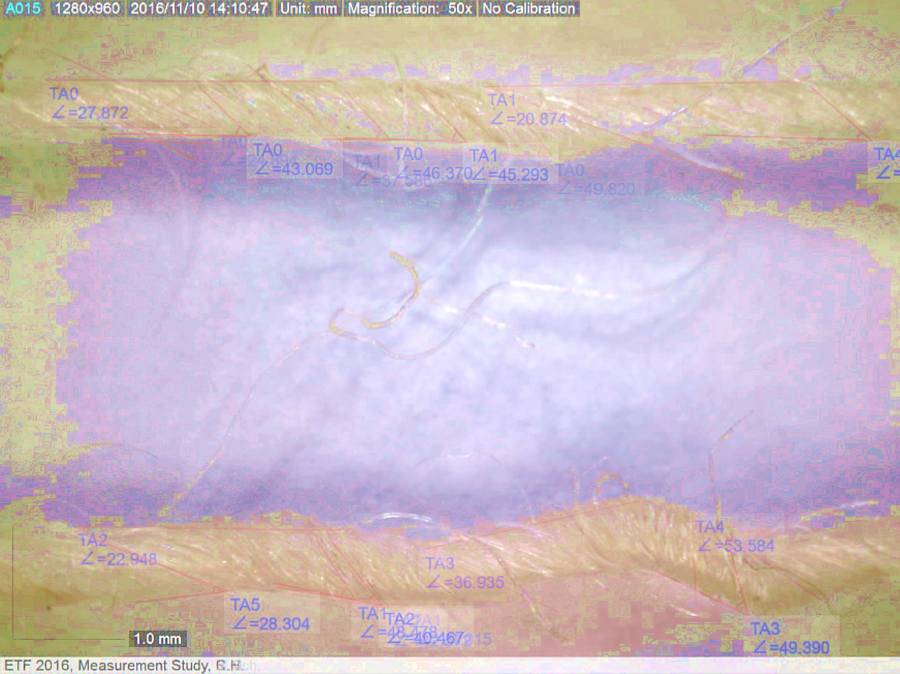
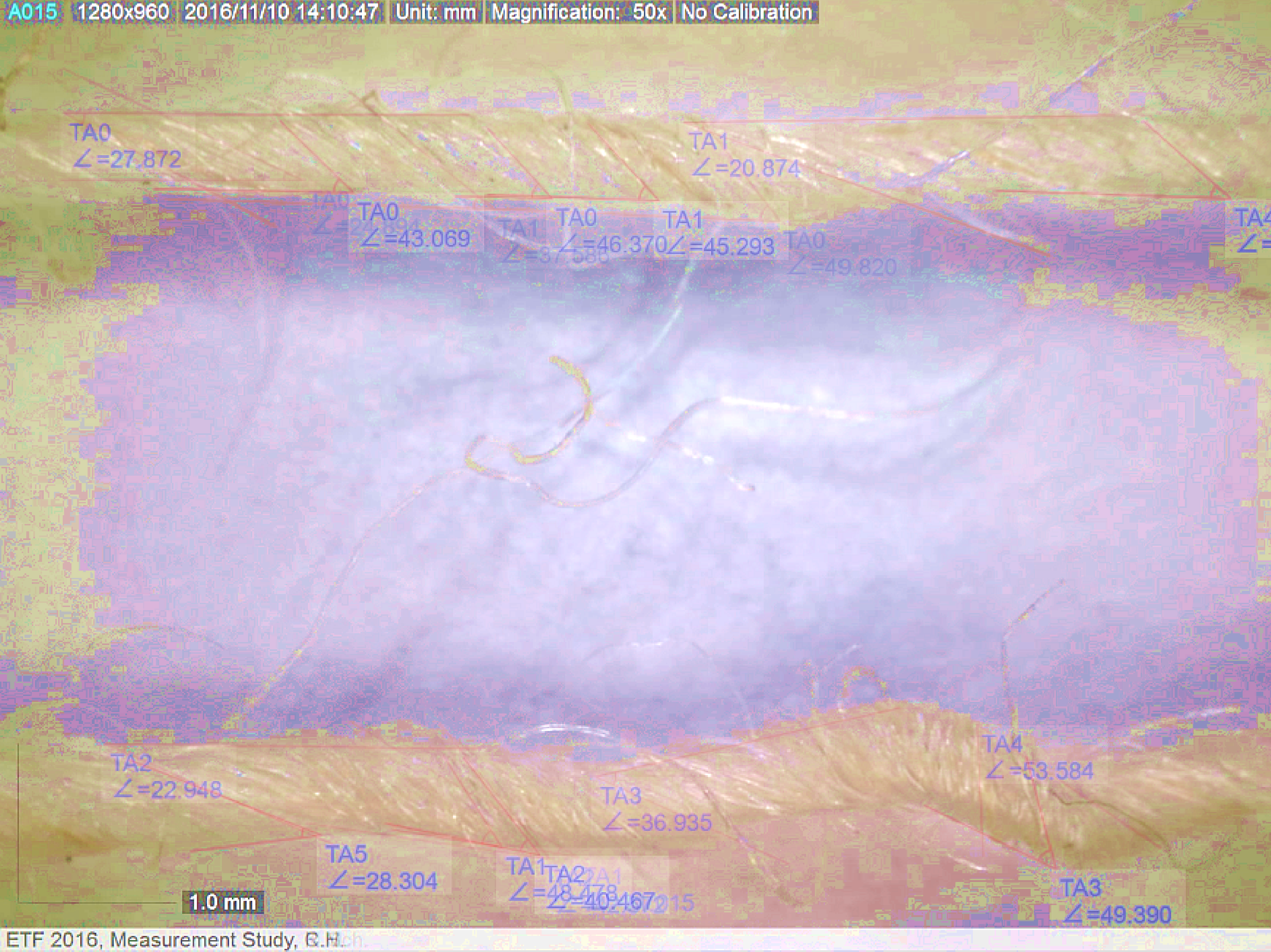
Here's one of the things I played around with regarding spinnning angles - an overlay of several measurements by several people on the same yarn picture.

test_spinnw_ueberlagert2
It's hard to see, but you'll hopefully be able to make out the angles drawn onto the thread. I find it fascinating that about nobody picked the same spot, and that the results are so mixed (which is probably due to my spinning).

I'm also fascinated by another comparison - two threads, one of which was spun quite a bit firmer than the other one. Measuring the angles, though, gave almost the same result for both. Was that a fluke of my measuring? (I'll probably do a few more measurements to find out...)

Anyway - it stays interesting. And it makes me wonder how reliable the spinning angle is... though I'm quite convinced that there is not a better thing to be found for the archaeological or historical textiles. Sigh.
0
MäRZ
08
0

Something Cheerful.

Well. I took a deep breath, and then I did the final calculations for the wonderful weaving project that ended up exploding... so now I have the numbers, and I can tell you: they are not pretty. Not pretty at all.

I'm normally not that far off with my work-time estimates, but there were a lot of unknowns in the project this time, and I did underestimate some of them. So it would have been a non-perfect estimate even without all the explodening - but well, that's how you learn. Or, as a friend of me likes to say: "Lernen durch Schmerzen, Wissen bildet Narbengewebe" (more or less literally: Pain makes you learn, knowledge forms scar tissue).

Which means... the next time around, I'll be smarter, and I'll do calculate things a bit differently. Next time around, we'll also have some more knowledge of how to approach a project like this, and know some more about the vagaries and ficklenesses of handspun yarn.

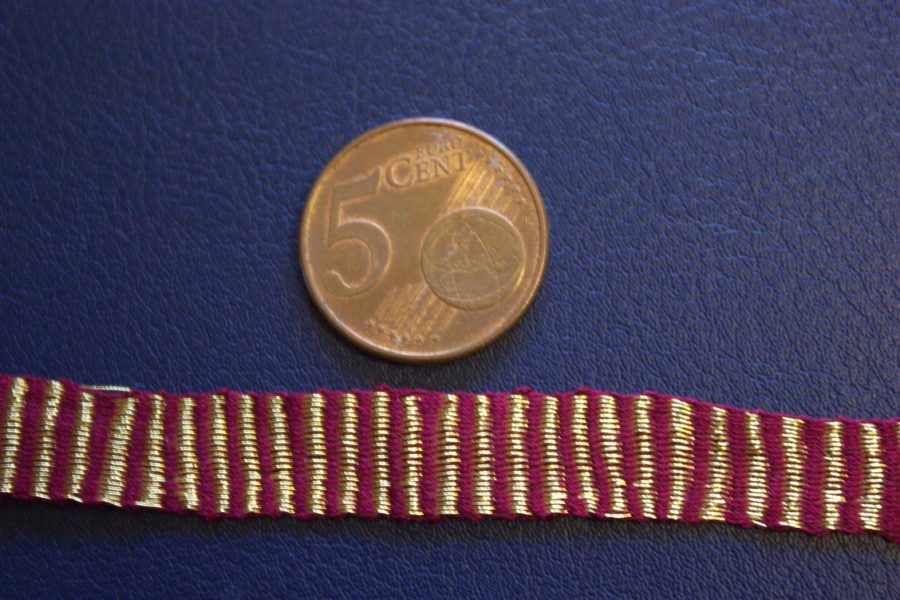
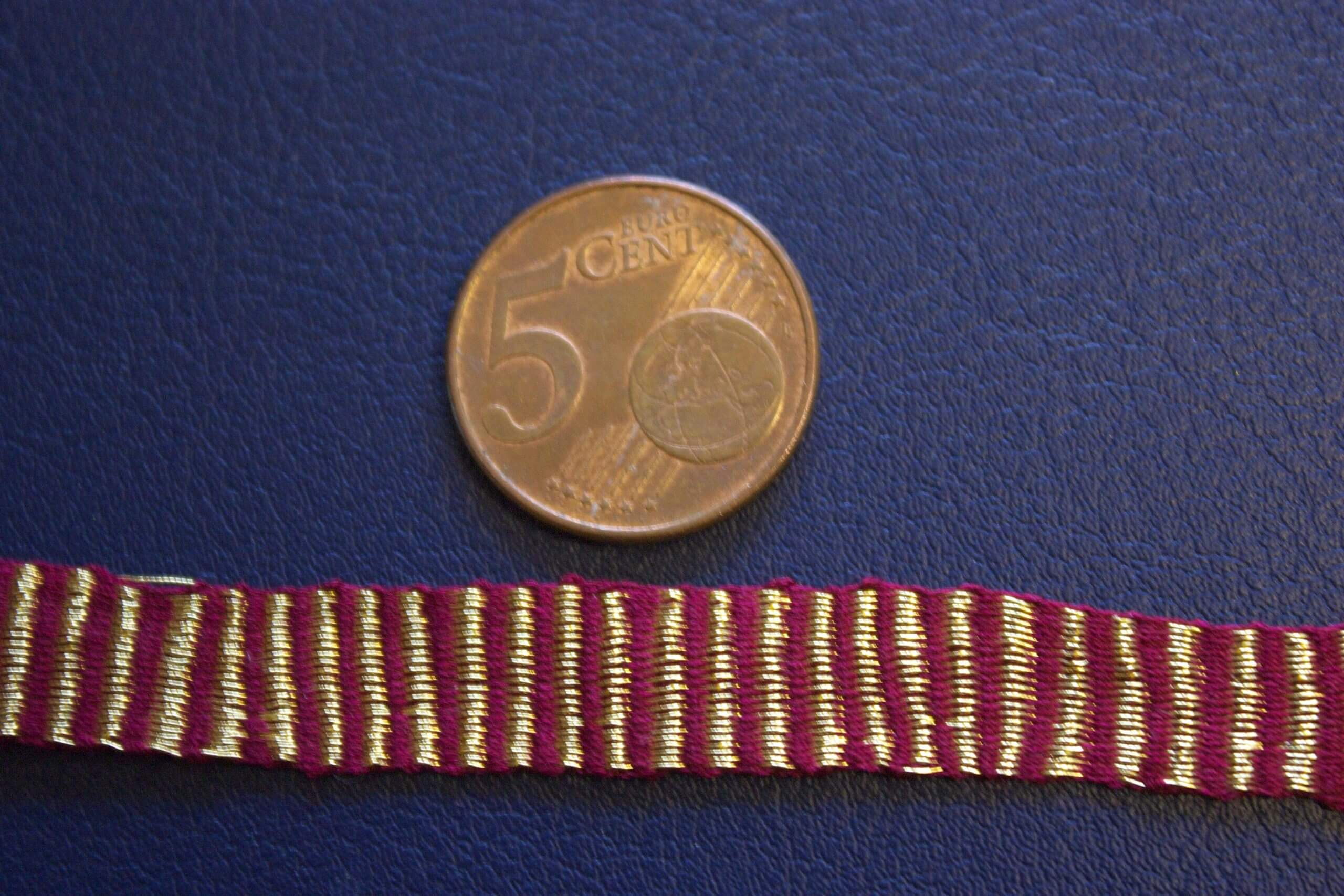
Anyway, I needed something to cheer me up after that, and what could be more cheerful than shiny gold and silk? So I sat down and did a bit of a test weave, and the result is this:

[caption id="attachment_2963" align="alignnone" width="640"]goldband Sorry that picture is not better - that gold stuff is really, really hard to photograph!


The band is about one centimetre wide, made from (chemically dyed) silk (the good old Gütermann two-ply) and gold thread. It looks fantastic, pictures don't do those gold things justice... and it did make this day much, much nicer.
0
MäRZ
06
2

All done and finished.

The work is all done and finished - the last of the fabrics has been cut into and stitched up into a hood. And while I was really happy that everything was done and finished and I could send it off, it was actually hard to pack it up, as the resulting piece was so wonderful that I would have gladly kept it for myself!

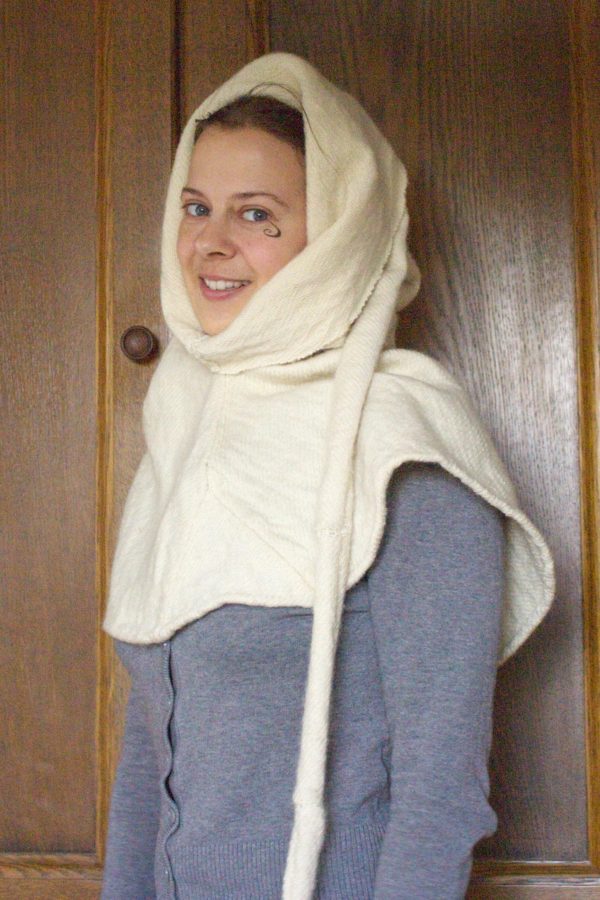
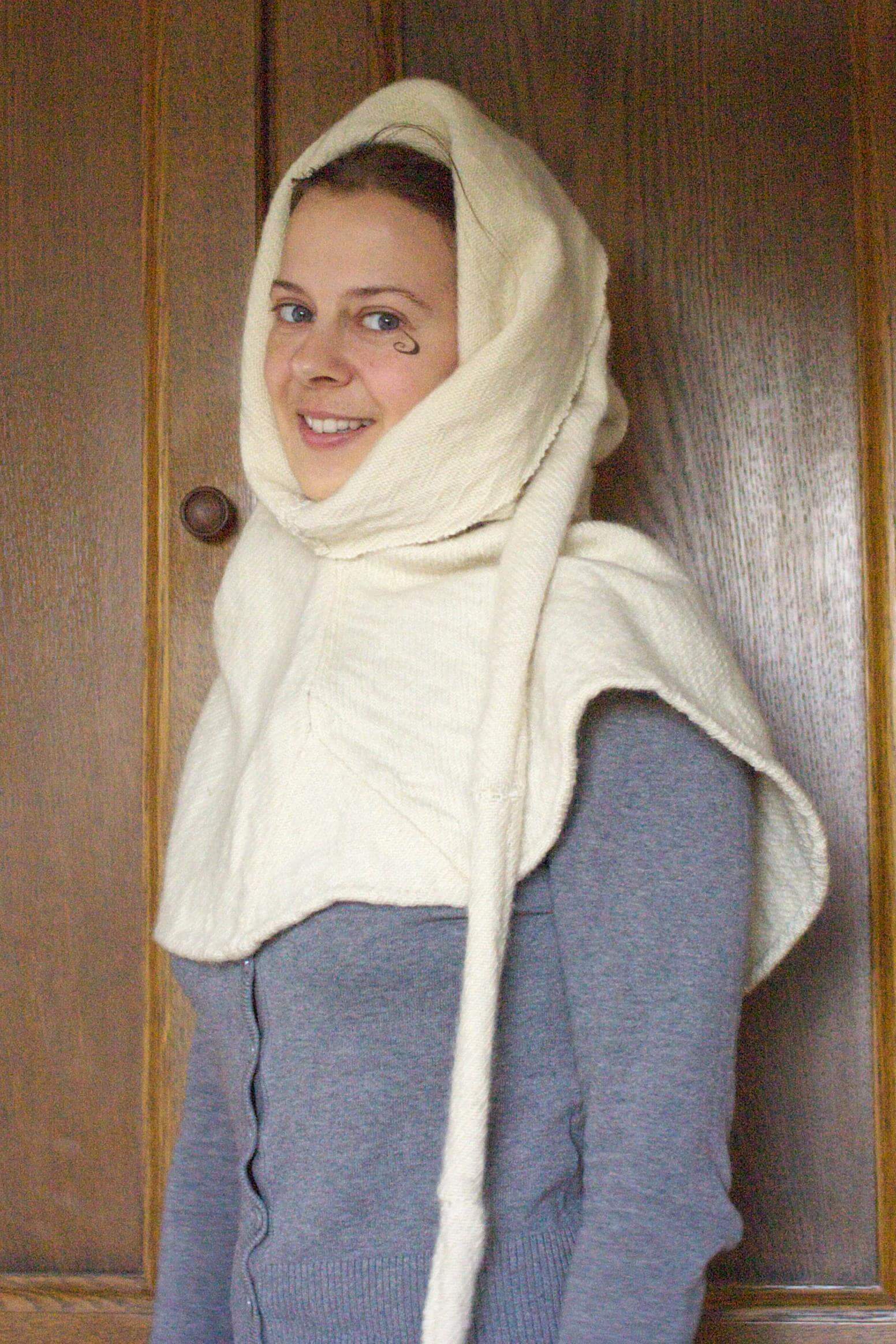
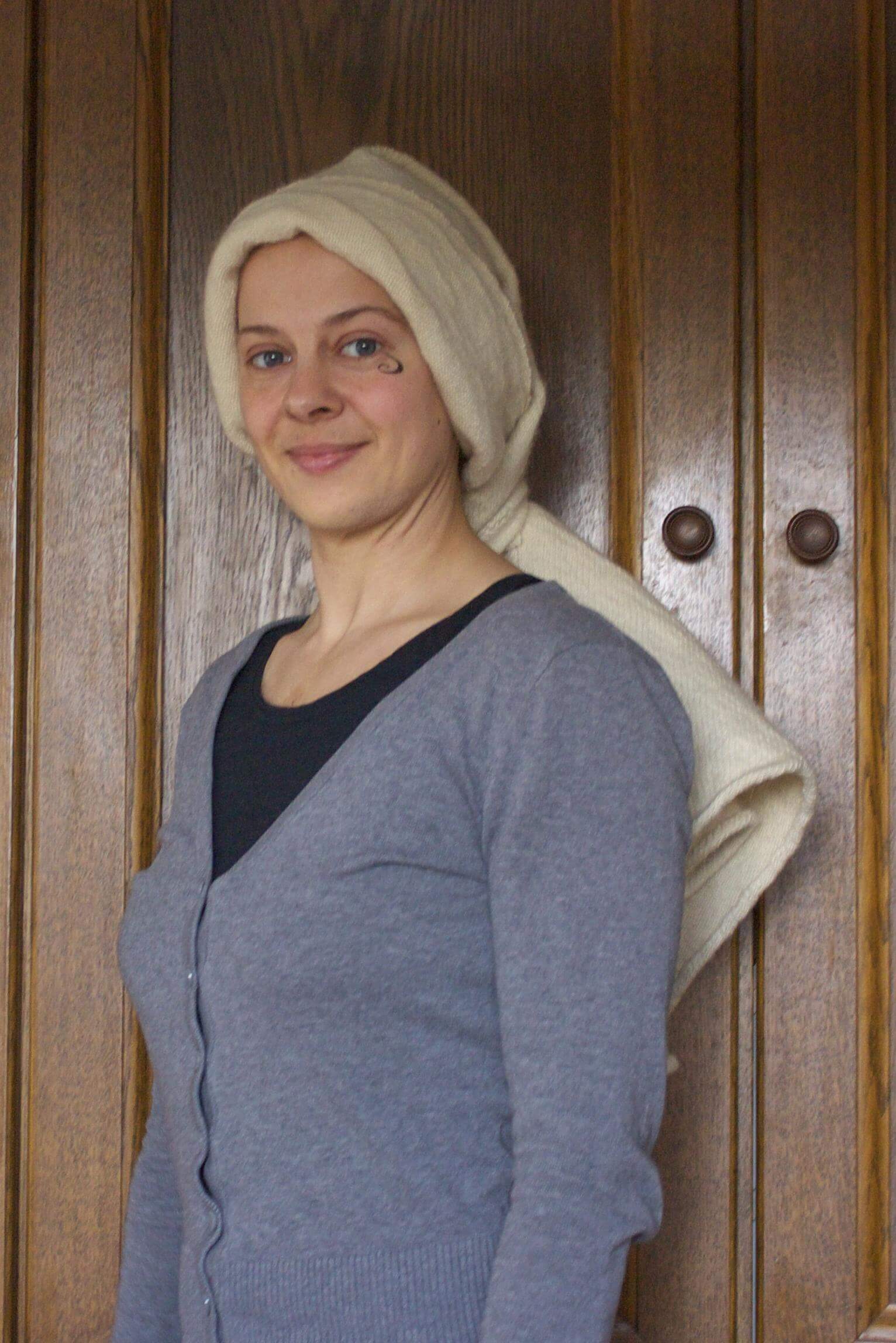
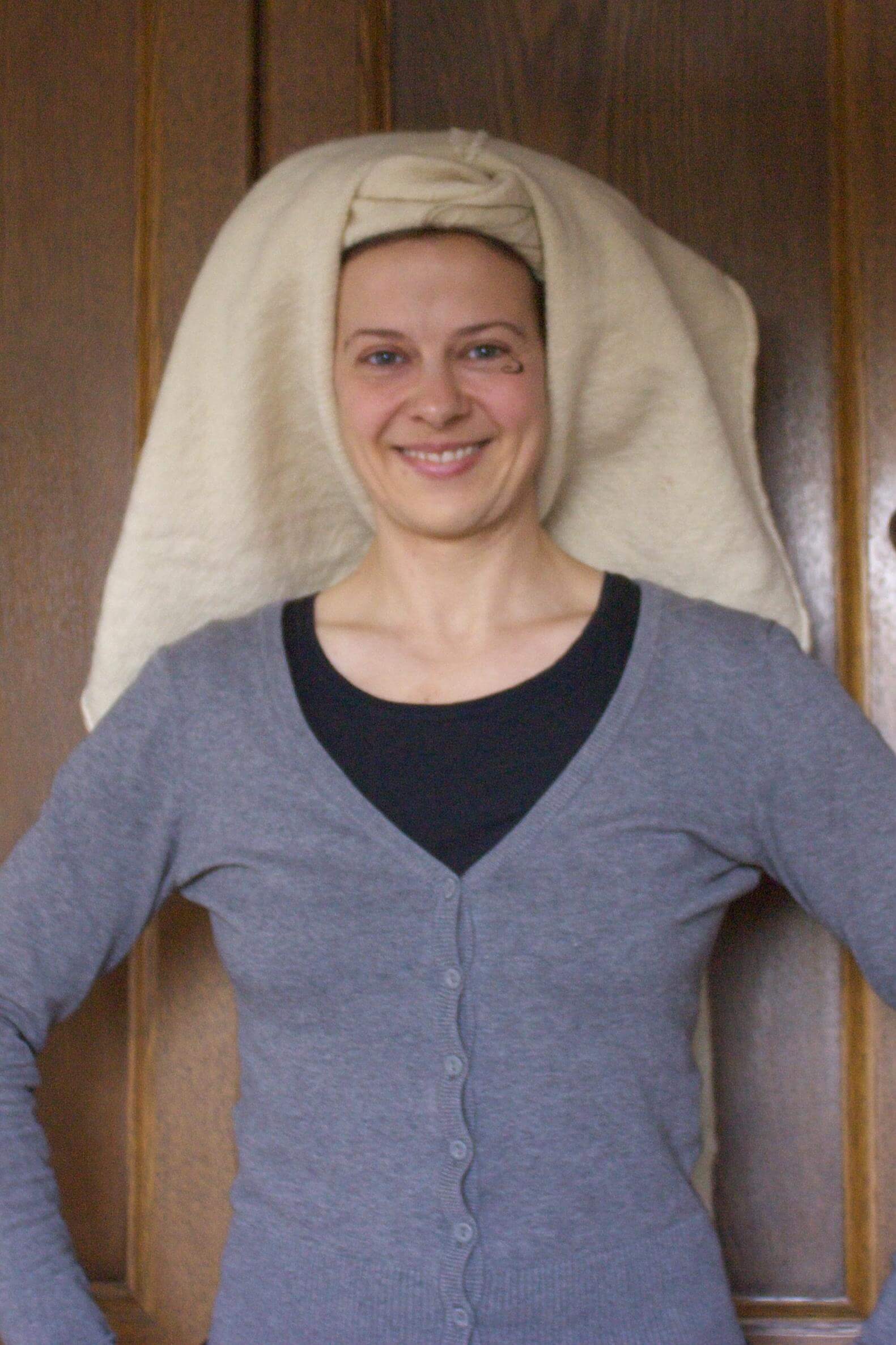
The hood, of course, could not be sent off without first trying it on in a few different styles:

[caption id="attachment_2956" align="alignnone" width="385"]IMG_2071 The usual, boring way to put on a hood. It was surprisingly heavy, but very warm and comfy!


[caption id="attachment_2954" align="alignnone" width="393"]IMG_2076 The "pirate headcloth"-style, one of my favourite ways to wear a hood. Also one of the reasons why a hood has a liripipe - you tie the thing in place with it.


[caption id="attachment_2955" align="alignnone" width="405"]IMG_2072 And yet another of my favourite styles! This is basically the neck opening sitting on the head, with the cape draping over head and shoulders in the back. Warm on the head, cool around the neck, and visually stunning.


If you want to see the hood for yourself, you'll need to go to the Schiffahrtsmuseum in Bremerhaven after March 14, where it will hang out in the new exhibition around the medieval cog.
0
FEB.
22
0

Occasionally, archaeotechnic will kick you in the face.

I've already hinted at it - while the packing cloth has turned out very nicely, and the sailcloth is about as perfectly as I had imagined it, there's a third type of fabric to be done... and that one is acting up. Considerably.

Doing archaeotechnical work (as in "recreating stuff known from archaeological sources") is interesting, and exciting, and lovely, and usually it is great fun. It is even more so if you are doing it as part of your work, and are actually getting paid for it.

However, archaeotechnical work also includes a guarantee that you will occasionally get kicked into your face by your technique and materials. You've not estimated correctly how long something will take, or how difficult it will be. Something behaves unexpectedly and throws all your plans into the garbage bin, leaving you to draw up new ones and do the work again. Leaving you also to lament your monetary gains that are joining the plans at the happy bin-party as your work hours, now unpaid, rack up and up and up. Germans have the term "Lehrgeld" for things like that - the tuition fee you pay, in this case to life.

And yes, all of the times in the past that something like this has happened, I did get to learn a lot from the experience. However, it is still painful. It's not only the feeling that you have made a mistake, or two; it's the tendency for a bad feeling to creep into your soul, making you think that maybe you are not competent at all. Maybe it will never work. Maybe you should never have agreed to do it.

It's especially painful if it is taking a colleague along for the ride, and the self-doubts are not getting fewer with someone else hanging in the same bad spot with you. There's no way out, though, but to try it again and again, keeping at it until you succeed. Hopefully before the deadline has rushed by... and at the moment, I think I can already hear it. (It does not help that February has fewer days than any other month in the year...)

If you're looking for me? I'll be spinning some more. Again.
0
FEB.
13
0

Cool things.

Chickens are nice. They are good-looking, they make funny noises, they lay eggs and they taste lovely. They've also been in close contact with humans for a long, long time, and there's a project looking at that relationship: Cultural & Scientific Perceptions of Human-Chicken Interactions. There's also been a conference on that topic: Chickens and People - Past, Present, and Future. If that sounds interesting, go cluck, erm check that out.

But maybe your love tends to flow somewhere else. Or not at all, though somebody is trying to valentine you - in that case, you might find the necessary inspiration for a reply in the Victorian Valentine Verses to Reject Unwelcome Suitors.

Finally, if you'd like to see what my friend and colleague Margit from Alte Künste is doing, she was interviewed for a podcast last year, and you can watch it here on Youtube.
0

By accepting you will be accessing a service provided by a third-party external to https://www.pallia.net/

Kontakt