Latest Comments

Guest - Aislinn Dyestuff Citizen Science.
09. Oktober 2026
This is a great project. I look forward to the results. Thanks for letting us know.
Guest - Aislinn Time for...
09. Oktober 2026
Looks delicious!
Guest - Katrin Sprang Discussion
18. September 2026
Hi Rachel, I have looked for more photos of you, but that was not very successful. I found a link on...
Guest - Beatrix Sprang Discussion
15. September 2026
That lozenge pattern element is not a photograph, but a scan. So it should be to scale. But I pinned...
Guest - Katrin Sprang Discussion
15. September 2026
I was not referring to Rachel's reconstruction (is the reconstruction you refer to the one photograp...
DEZ.
13
0

Spinning progress.

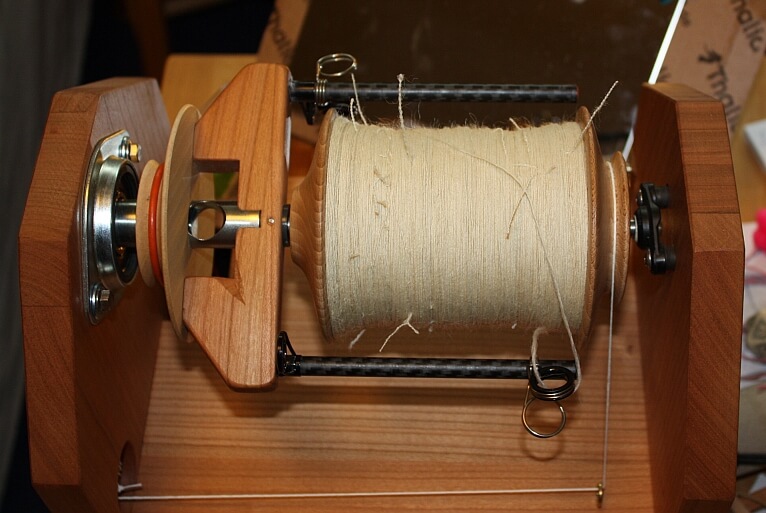
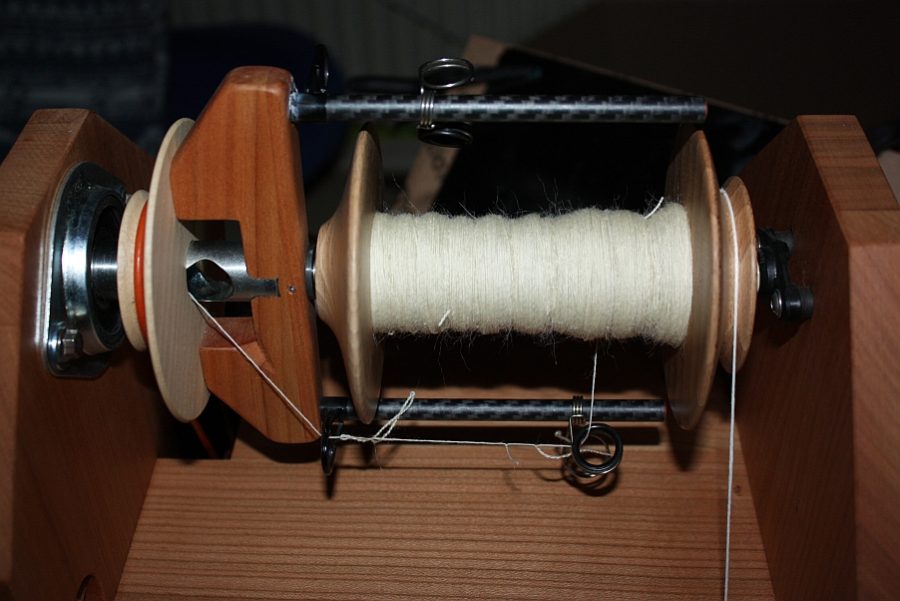
This, my dear readers, is the current status of the spinning spree:

bobbin
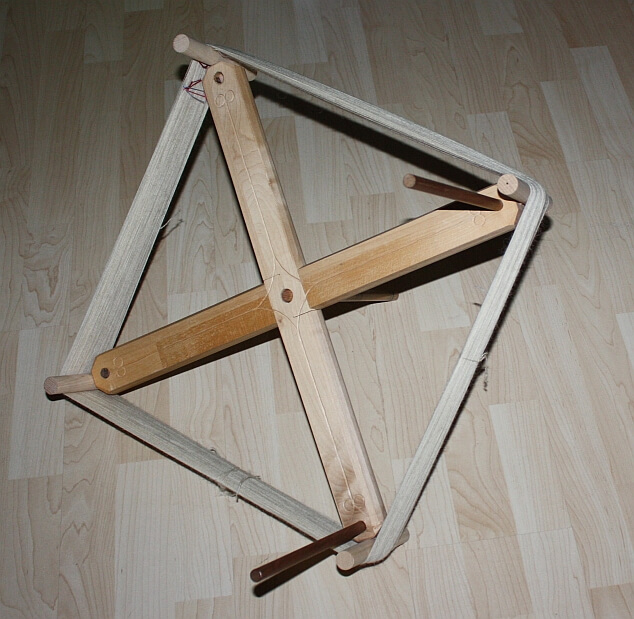
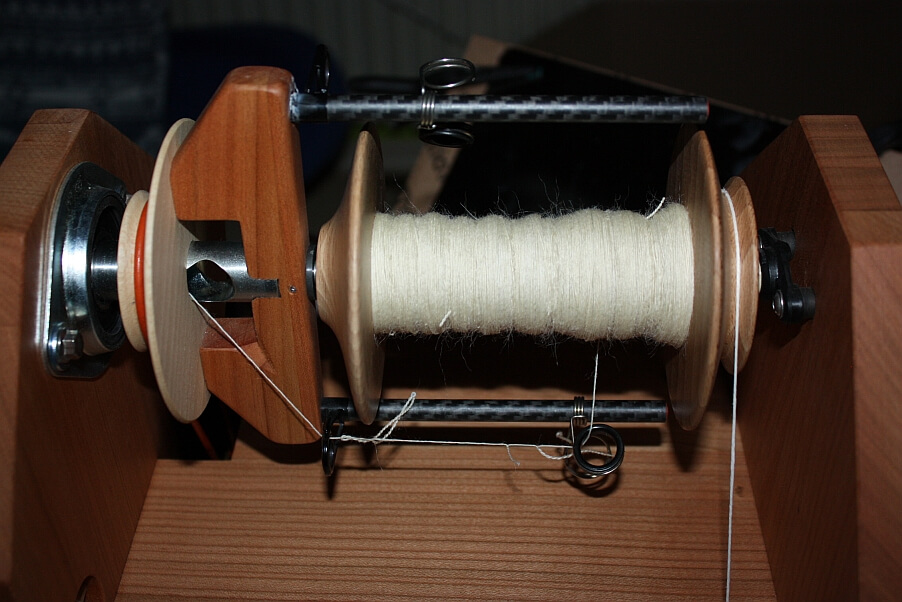
Well, actually, that is not true. That was the status before I spent a good hour and a half getting the yarn onto the skeiner and setting the twist. This is the actual current status of the spinning spree:

haspel
2260 metres of yarn, about 0.5 mm in diameter, with a twist angle of about 45°. That is approximately two thirds of what I need of this yarn.

Tomorrow, I'll take it off and see how much it weighs - and then it will sit and wait for its companions. One more skein (though smaller than this one) for the first warp to be done, and then the same in the other direction... and that will do for the first (and largest) batch of spinning.

Whee.
0
DEZ.
09
0

That bobbin... is still not full.

I've been spinning some more (obviously), but the bobbin is still not full. Which is partly due to the fact that I can't spin for a solid whole day - for one thing, there are some other work tasks to be done. Apart from that, though, and even more important: There's a limit to holding up the concentration necessary to do the yarn properly, so I have to take breaks between spinning sessions, and there's an overall limit to how many sessions I can fit into a day. This is different from day to day, depending on how fit I am and how nicely it goes, but inevitably, at one point, there's just too much variation for my taste coming in, and that means it is time to stop for the day.

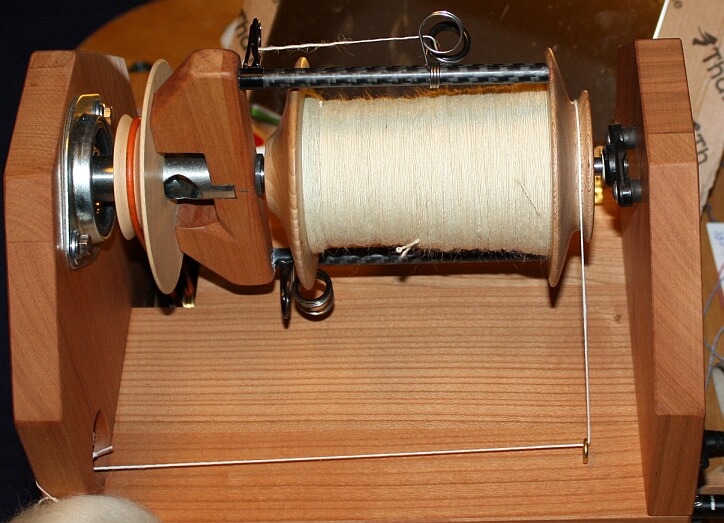
Here's the current status of the bobbin:

eightpointfive
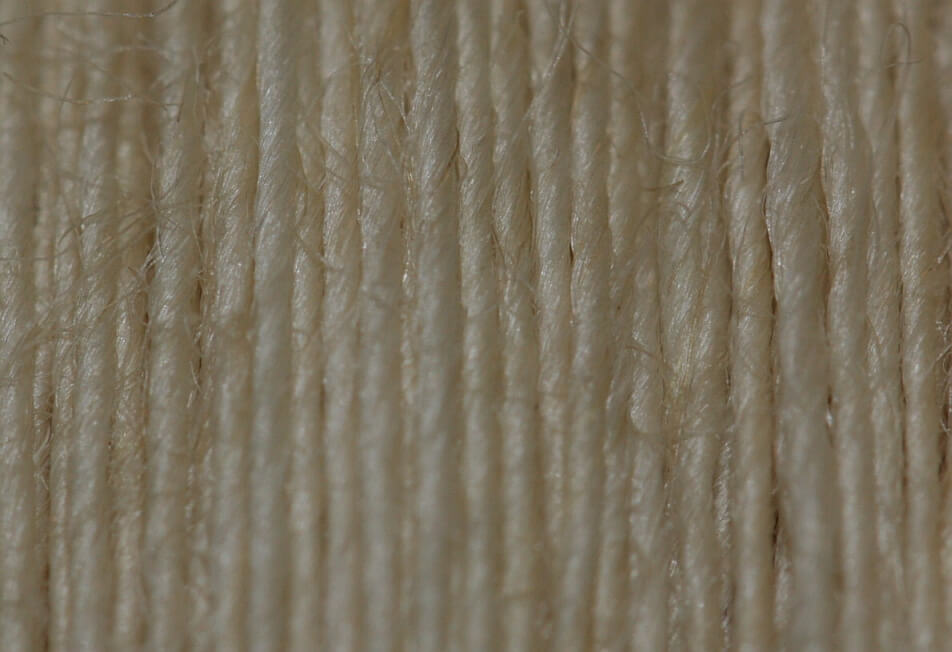
Oh, and here is a closeup picture of the yarn on the bobbin... lying nicely and neatly side-by-side. Though the wool looks really homogenously white in the top, there's an amazing amount of pigmented fibres when you look closely at the yarn:

yarrrn
Speaking of pigmented fibres - I'm done with about a third, probably a little more, of the first batch of yarn (which, incidentally, is also the largest one). Next batch will be the same thickness, but the other twist direction and a little less hard-spun than the current one, and with pigmented fibres. They are already sitting here, having arrived today, and I'm really looking forward to having them run through my fingers. Soon. Soon...
0
DEZ.
07
4

Progress Report...

This, here, is what two and a half hours' worth of spinning looks like on the bobbin:

[caption id="attachment_2795" align="alignnone" width="640"]2point5hrs The thread is about 0.5 mm in diameter and has a twist angle of about 45° - at least that is what I'm aiming for...


Not very impressive, right? However, this means there is a lot of space on the bobbin for yarn - which is good, because it means I can spin a really large batch at once and thus have a very long continuous thread, nice for warping.

I'm already curious to find out how many metres will fit onto that bobbin if I fill it up... and I'm pretty sure I will be able to fill it up, as a good 3 kilometres of this yarn have to be spun.
0
DEZ.
06
2

The Workplace...

Spinning has started - though I'm not too happy with some of the test batch. However, things were learned (I have found the point where there is actually too much twist in the yarn!), my fingers have the feel for what I will be aiming for (which is closest to my standard spinning thickness in this first batch, so it's a nice starting point), and the workplace is now nicely set up for the real thing.

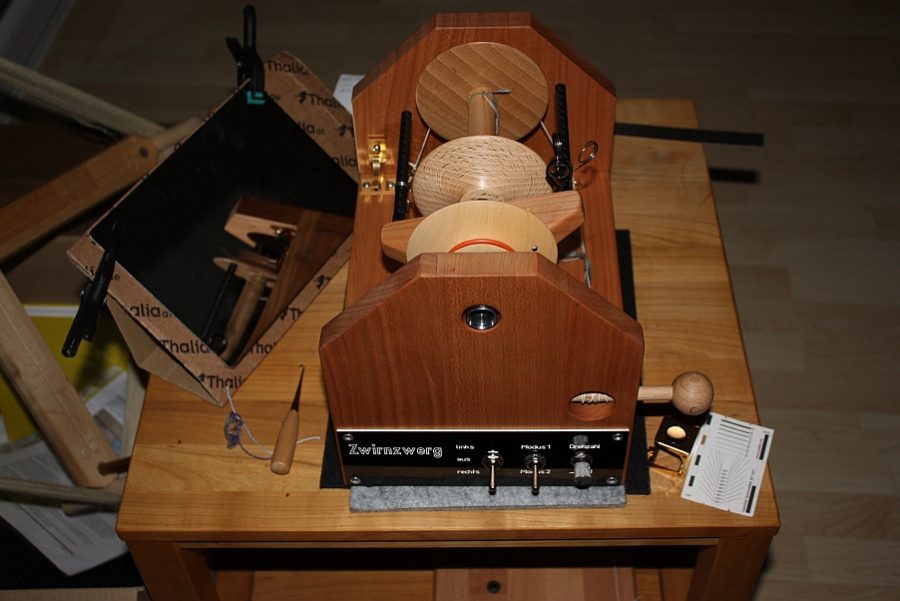
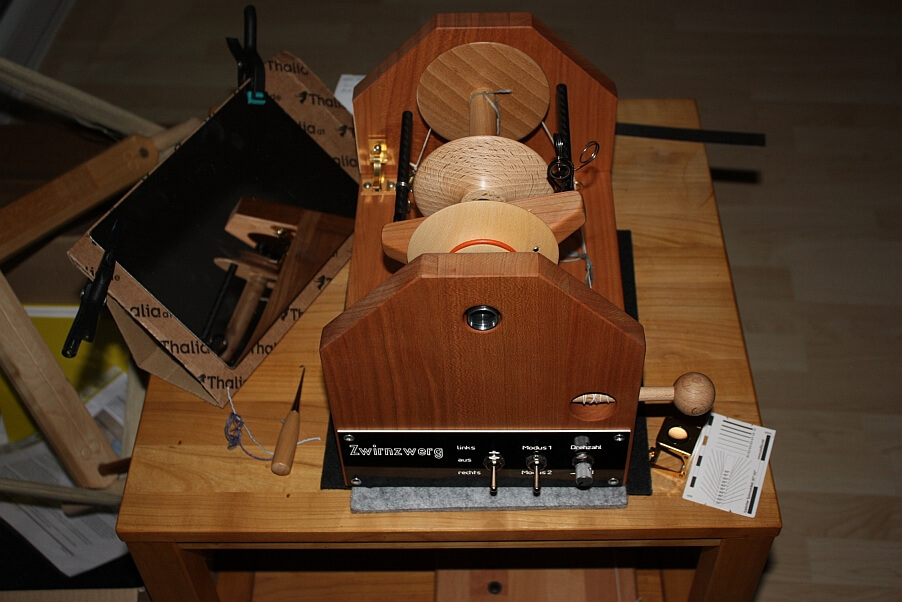
Speaking of the workplace, here it is, ready to get started again (the first bit of wool is already sitting on the skeiner, visible in the background):

IMG_1594
Apart from the obvious bits (such as the spinner itself and the hook for threading the yarn through the orifice), you can see a mirror to the left and some more tools to the right. The mirror is for seeing how the wind-up progresses so I can move the loops on the flyer in time. The tools on the right are for checking the yarn diameter - it's my Spinner's Little Helper Card, and because the yarn is thin and light-coloured, there's also a magnifying tool so I can clearly see the spinning angle.

The spinning can commence!
0
DEZ.
05
1

Spinning!

I'm all excited, as a project for a museum is coming to be realised - and it involves spinning. A lot of spinning.

Handing in a project pitch always means waiting afterwards, and it is by far not sure that the project will actually get done. So you do the research work beforehand, and all the planning, and all the calculations, and then you hand it in... and hope. Sometimes it is accepted quickly, and sometimes it takes a few weeks or months, and sometimes it never comes through, which means it is a gamble each time to invest a lot of energy and resources (time among that, of course) into the planning and pitching - but then, you have to do that, otherwise there's no chance at all of anything getting realised.

Which means that pinch of extra "hooray" when it does, and this is a project that is really exciting for me, as it involves replicating medieval fabrics. Hand-woven, from hand-spun yarn, in three, actually even four different types that are all made from wool but all very, very different in character.

All together, it will be more than ten kilometres of yarn... which is exciting, and a little daunting, and makes me incredibly happy at the moment.

So, obviously, spinning is what I will be doing this afternoon - I'm packing my things together right now, as there is (by convenient chance) a spinning get-together right this afternoon, which I had planned to attend anyway, doing some private for-fun spinning. I'll just be swapping out the "private" now... and give the shiny little e-spinner something to do. Yay!
0
NOV.
03
1

Packing.

Here I am, sitting between a stack of boxes ready to go into the car, surrounded by a few lists to check and check off - preparing for going to the Nobilitas-Akademie and the Textile Forum.

Like every year just before the Forum, I'm all excited and hope that everything will go smoothly; and like every year, I will be taking some time off the blog for the Forum. This year is the year of back-to-back events, as I'll be going from the Akademie straight to the Forum and from there straight to my Granny, who will turn 95 this year (and obviously, this has to be celebrated!) so I won't be back on the blog until November 17...

...when I will hopefully be able to tell you about interesting results from our Forum experiments!
0
NOV.
01
0

Spinning Demonstration on the Great Wheel.

First of all, sorry for the blog silence yesterday - I was away from the computer most of the day, and during the time I did spend physically close to it, we had internet connection issues. These do happen here occasionally, and they are normally no big deal when they do, as they will be over after two or three hours at most... but yesterday, it did mean no access during the time window I had for blogging.

Today is a holiday in Germany, so I had planned to blog yesterday and tell you there'd be no blog post today. Well, plans and how they work out... anyway, this means you are getting this picture today instead of yesterday:
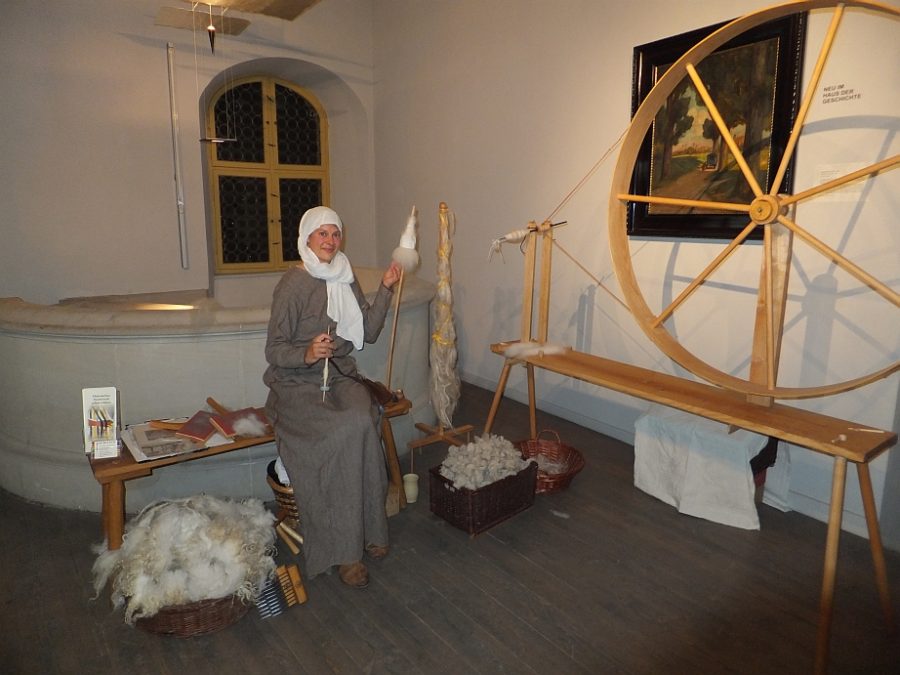
dinkelsbuehl
That was my setup on the Long Night for spinning in Dinkelsbühl. It was a wonderful evening with many, many people stopping by for watching the spinning and asking questions. The picture was taken during one of the rare and short moments when there were no visitors there, right at the end of my presentation.

Time really flew by, and the evening was over before I knew it! I loved all of it, and it gave me the opportunity to demonstrate how much of a difference the fibre and the fibre preparation made when spinning on the Great Wheel. I had rolags made from Eider wool (industrially combed, smooth medium-staple wool that I just rolled together with the cards), from Bergschaf wool (industrially carded, crimpier wool with a shorter staple that I rolled together with the cards similarly to the Eider stuff) and from Rouge de Roussillon wool that I carded up from the washed fleece myself. The differences were astounding, with the smoothest, most even thread coming out of the Eider wool and the clumpiest, least even one out of the Rouge. That was partly due to my bad sorting and carding of the Rouge fleece I brought with me, though, and I am sure that with a bit more getting used to that specific fibre, the thread would also have improved a lot.

Demonstrations like these always yield some thread, but they rarely result in wheel spinning output that I'd find acceptable or even good quality. Talking to people to explain the spinning takes away some concentration from the spinning itself, and while I can happily chat along when making my standard yarn on the spindle and distaff, the wheel does take more concentration for me to get a good thread. Another factor is the quality of the rolags that I work with during those demos.

Even though I explain to people during these demonstrations that textile work takes time, and patience is oh so important, I usually skimp on the preparation of the rolags to speed things up a bit. I also make a rolag or two, then spin them up, then explain something else, then make rolags again - and that results in differences each time, which also has an impact. Finally, the combination of explaining and trying to show off the spinning speeds possible with the wheel means I'm not making the best possible thread out of the fibre I have, and switching frequently between spindle and wheel plus carding and combing means it is hard to find the rhythm and workflow for any of these tasks - because obviously, explaining and demonstrating the individual steps and how they work together is much, much more important on these events than making the best yarn possible.

So in case you are at a crafts demonstration one day and have somebody demo-ing with a lot of explanation, you might get to see slightly sloppier work than they normally do, because the priorities have shifted - from working towards the best result possible with the tools and materials available to giving the best explanation and demonstration for you. And that, I'd say, is one of the best reasons that somebody can have for not working up to the usual standards!
0

By accepting you will be accessing a service provided by a third-party external to https://www.pallia.net/

Kontakt