Latest Comments

Guest - Aislinn Dyestuff Citizen Science.
09. Oktober 2026
This is a great project. I look forward to the results. Thanks for letting us know.
Guest - Aislinn Time for...
09. Oktober 2026
Looks delicious!
Guest - Katrin Sprang Discussion
18. September 2026
Hi Rachel, I have looked for more photos of you, but that was not very successful. I found a link on...
Guest - Beatrix Sprang Discussion
15. September 2026
That lozenge pattern element is not a photograph, but a scan. So it should be to scale. But I pinned...
Guest - Katrin Sprang Discussion
15. September 2026
I was not referring to Rachel's reconstruction (is the reconstruction you refer to the one photograp...
OKT.
28
0

Tomorrow: Even more spinning.

I'll be spinning tomorrow night again - though not for a Forum experiment this time. It's Lange Nacht (long night) in Dinkelsbühl, and the museum Haus der Geschichte is participating.

Which means I will be there, spinning with my handspindle and the Great Wheel, from 19:30 to 22:00 h. The wheel is already in the car together with my spinning bench, there's a box of wool standing ready to be taken along, my spindles are lined up and eager for a spin - so everything is prepared for tomorrow.

And I'm looking forward to some happy spinning time in the utterly beautiful town of Dinkelsbühl!
0
OKT.
25
0

New things in the shop!

Right in the middle of the preparing-for-November madness that is going on here, I have finally, finally managed to take photos of things. New things. For the shop.

Exhibit A:

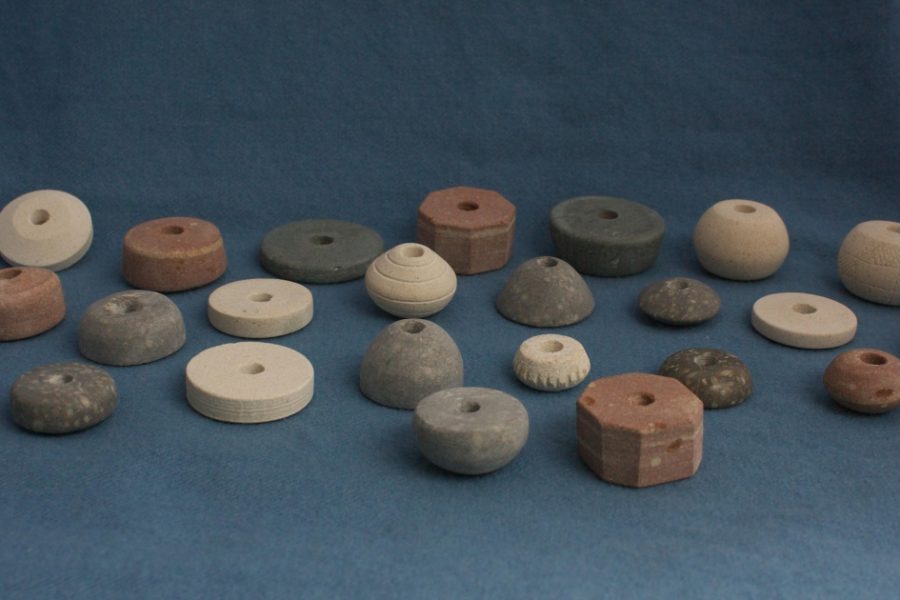
IMG_9657
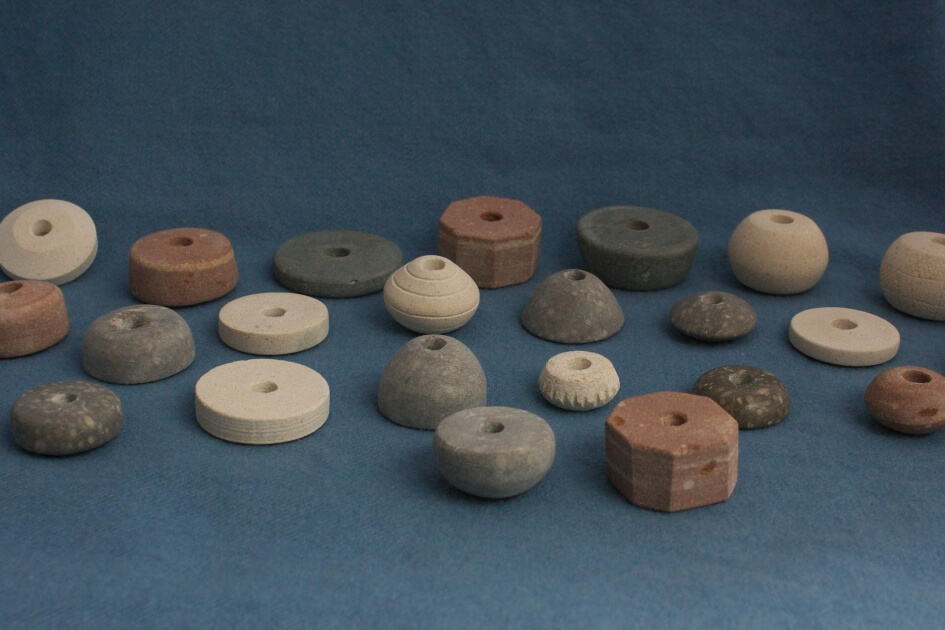
Stone spindle whorls. These have been on my wishlist for oh, so long, and finally things came together: finds to base the whorls on (from Coppergate, York, dating to the 9th to post-12th century), and somebody willing and able to make them. I'm very happy with these, and I hope I won't be the only one!

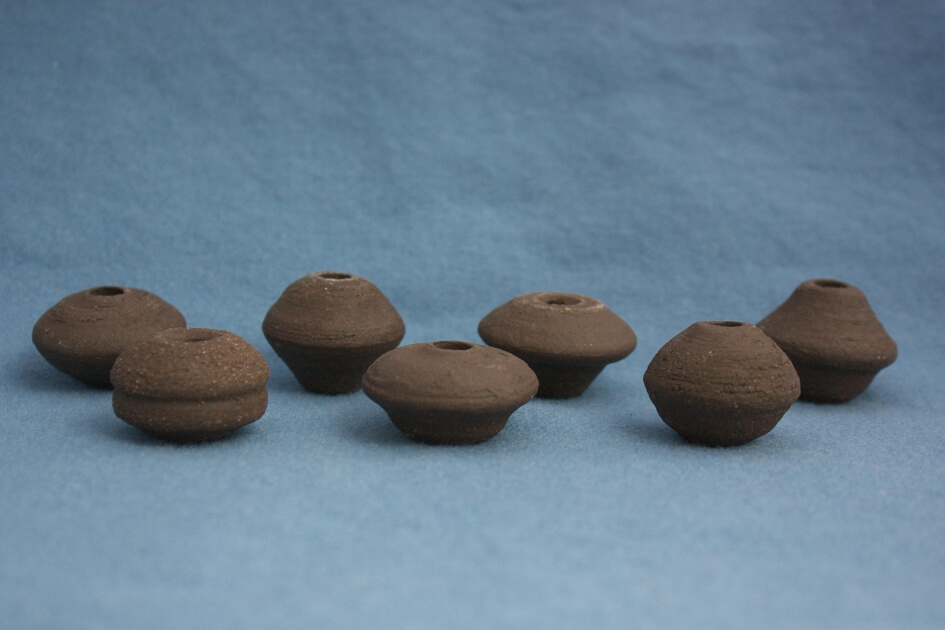
There's even more whorl-y goodness. The lovely potter who makes my wheel-thrown whorls has made another batch, and has made more different forms this time: biconical, roundish, and the conical/discoid form I had before. So, Exhibit B:

IMG_9681
I'm all in love with all the new whorls, and sorely tempted to diminish the stock by sneaking some of them (or, to be fair, a lot of them) into my own personal toolbox...
0
OKT.
24
0

Madder Madness in the Garden.

Some years ago, when we moved into our current home, I planted a little madder plant in the garden. That little madder plant has since grown... and taught me that madder grows like, well, mad.

It's not a really beautiful plant with its long stalks that are prone to fall and lie flat. It doesn't have spectacular blooms (they are small and yellow, and the madder berries are round and black, so nothing eye-catching either). It has no lovely smell, and it's not nice to touch - quite the opposite, in fact.

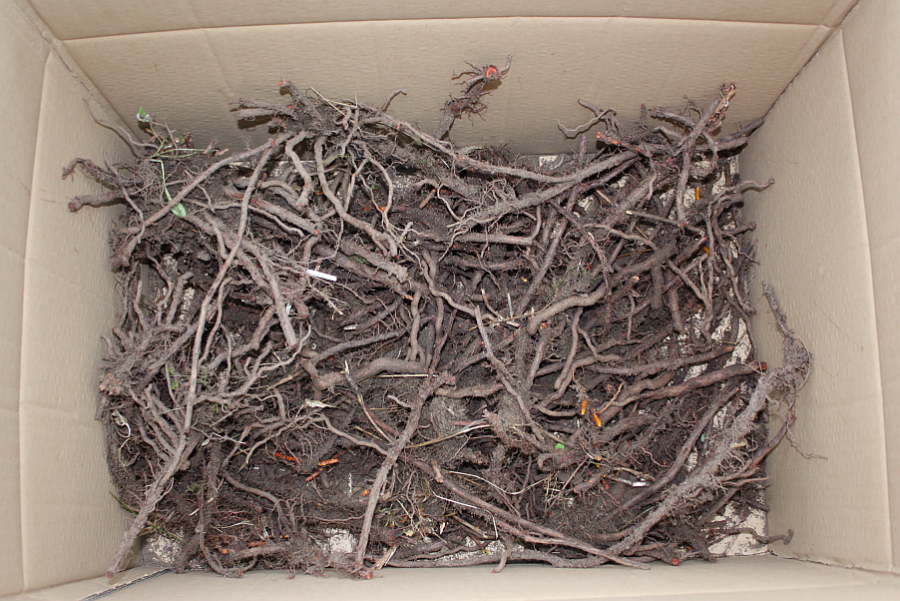
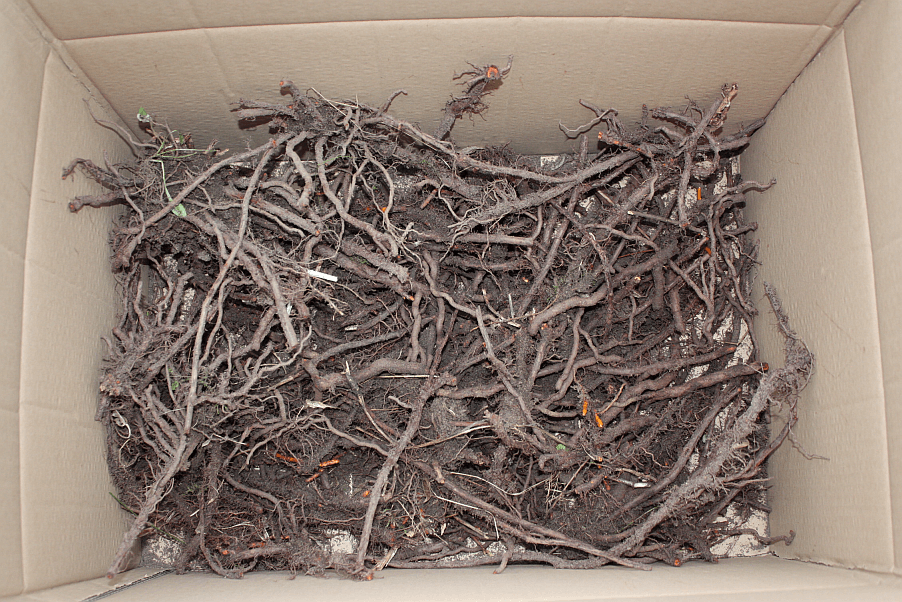
What it does, though, is grow. Grow and take over as much of the garden bed as it can, sending out its roots below ground and suddenly sprouting up. This year, it ate at least two of my tomato plants that I, foolishly, set too close to the madder patch. Thus I decided it's time for the madder to be harvested... and the beautiful sunny weather yesterday was just the right invitation to dig some red roots.

madder1
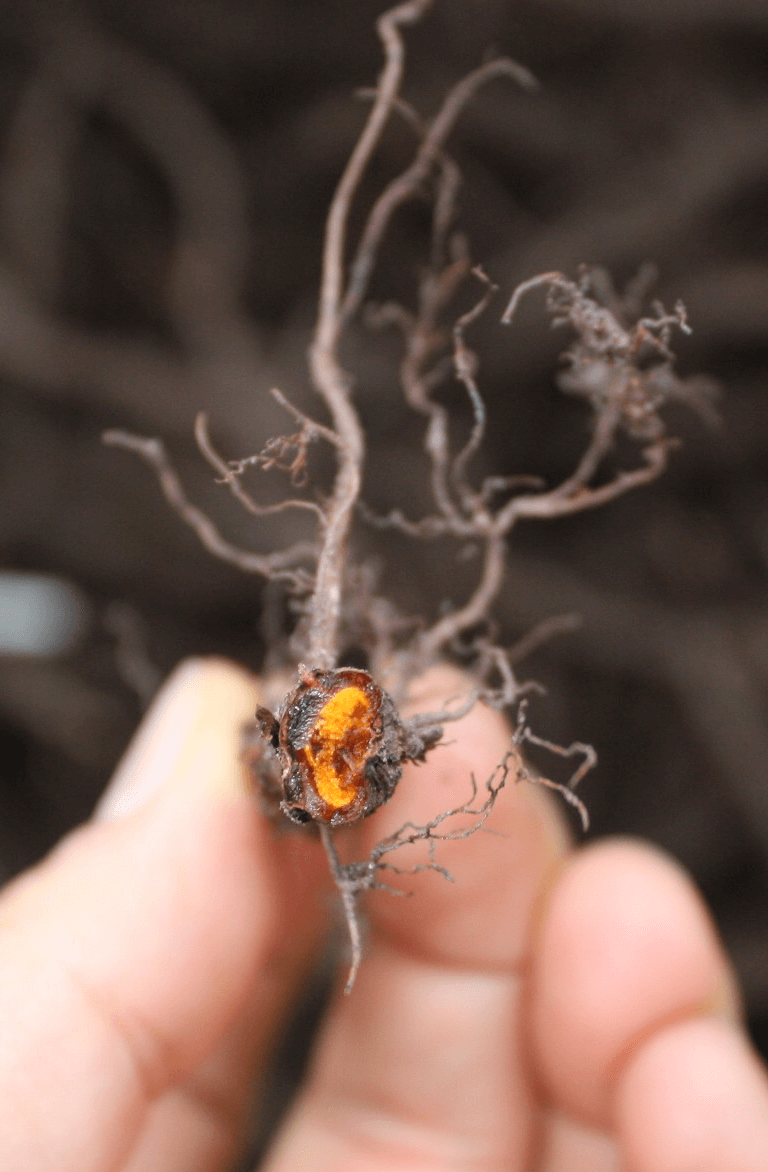
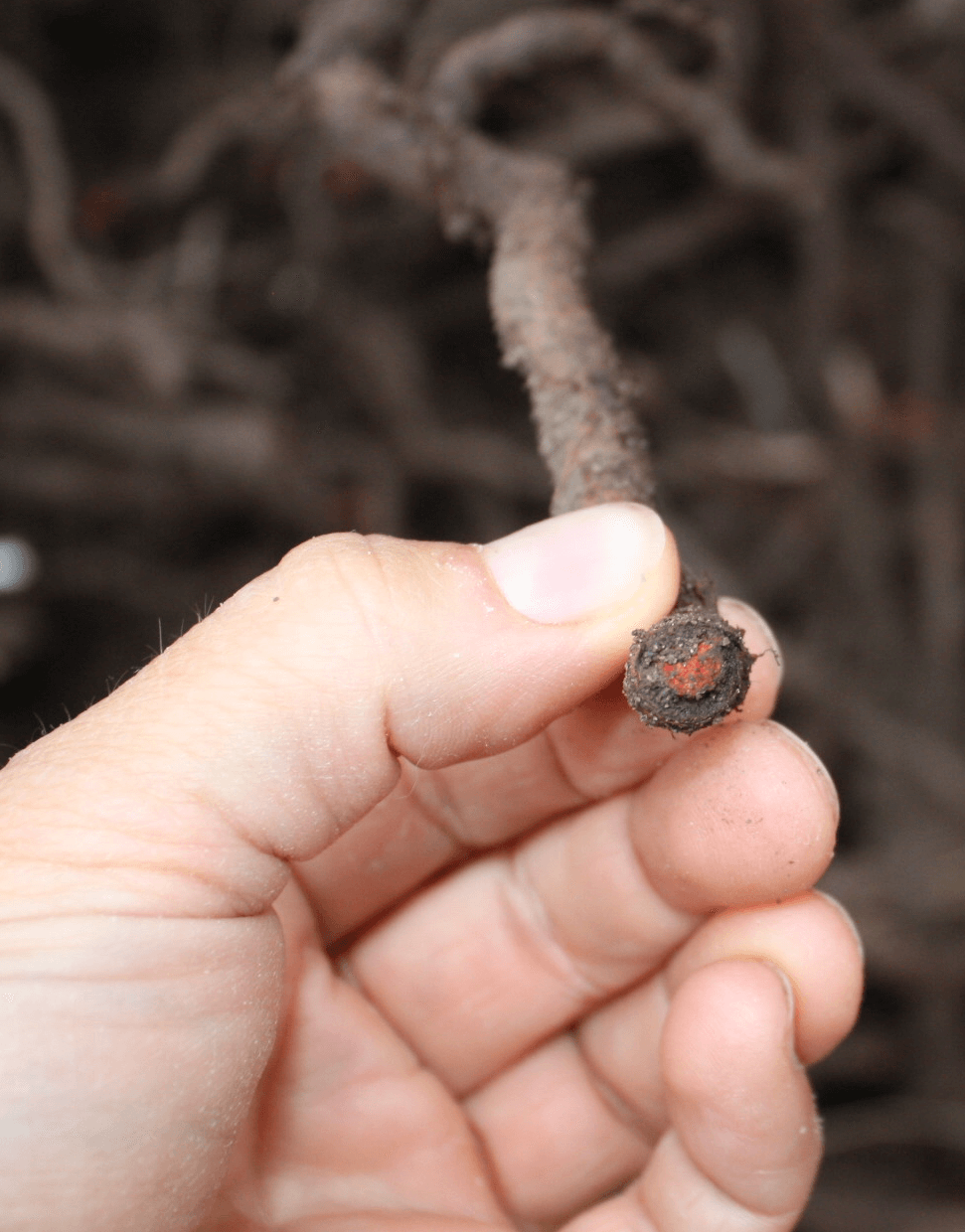
I got about one bucket full of roots, and there is still some left to harvest. The roots are brittle, and have colours ranging from bright orange to a deep red inside, the older the darker. They also have a very interesting, kind of sweet-ish smell to them.

[caption id="attachment_2693" align="alignnone" width="368"]madder3 Madder root with an orange core...


[caption id="attachment_2694" align="alignnone" width="363"]madder2 ...and with a dark red one.


Now they will need to dry, and then they'll be cleaned and shredded into pieces, and then... they will hopefully dye a nice deep red. And my tomatoes will be safe for a few years. Probably.
0
OKT.
17
2

Weaving Preparation: Wool yarn testing.

One of the things in frantic preparation right now are the experiments for the Textile Forum this year. We'll be having a rather experiment-heavy Forum, and all three planned things involve dyeing - one of the experiments will be a repeat of the Pompeii dyeing experiment exploring the influence of kettle metals, one will be a test about linen mordants with protein, and one will be looking at dye penetration in woven fabrics of different densities.

The lattermost requires appropriate yarns, and I will get to spinning tonight - a few hundred metres of yarn need to be done for weaving several samples. The weaving will take place at the Forum, and since the weaver lives in the Netherlands and I live in Germany, she will only see the yarns right before having to use them.

Most modern weavers use machine-spun, plied yarns, at least for the warp, because they are (usually) stronger than singles. Of course a plied yarn is stronger than just one of its singles, and modern yarns are often soft-spun, which means they are not very strong. So modern weavers tend to be a little nervous about using singles in the warp.

Just to make sure that the yarn is suitable for weaving - as in "strong enough" - I was sent instructions for testing, taken from "Inventive Weaving on a Little Loom: Discover the Full Potential of the Rigid-Heddle Loom, for Beginners and Beyond by Syne Mitchell (Storey Publishing 2015)". The two tests are the snap test and the drift test. For the snap test, you take the yarn between your hands so that about 10 cm are slack and then "snap your hands apart sharply"; for the drift test, you apply even, slow tension.

The instructions in the book say that if the yarn survives the snap test and "stretches and then stops" in the drift test, it's suitable as warp yarn. Can you guess my problem?

"Sharply" is not a very quantifyable thing. So if I take my yarn and pull my hands apart sharply, it will break. The same is true if I take a four-ply Regia sock wool yarn. In the drift test, my yarn will stretch and stretch and stretch and eventually snap... so according to these instructions, it would not be suitable for weaving.

I think the problem here is that you'd need to be a weaver and know the amounts of tension or snappiness in your own weaving process to really make these tests helpful. For non-weavers like me? Or for "remote testing" yarns? It needs to be more quantifyable.

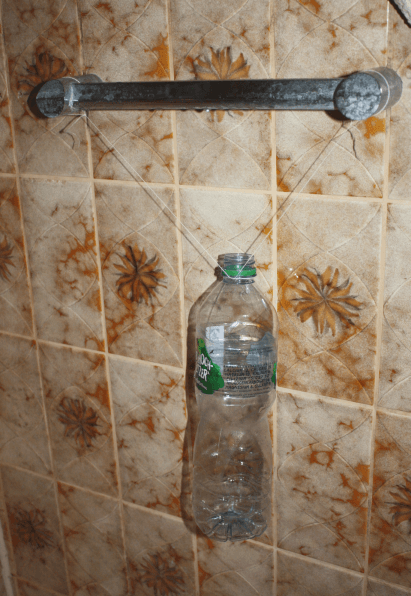
So here's my equivalent to the drift test: Tie an empty plastic water bottle in the middle of a piece of the yarn to be tested, then tie the two ends somewhere so that the bottle hangs in a suitable way to be filled. (Hint: A shower or bathtub, or someplace outside that can take a splash of water would be good places.)

[caption id="attachment_2677" align="alignnone" width="319"]Setup for the drift test. Please do admire the typically Germany-in-the-Seventies tiling in the background. Setup for the drift test. Please do admire the typical "bathroom-in-Germany-in-the-Seventies" tiling in the background. The white spots on the handgrip also tell you that we have really hard water here.


Measure out a certain amount of water, such as one litre, which will be one kilogram. Then, slowly and with as evenly a stream as possible, pour water into your bottle until the yarn snaps. The difference between the amount of water you filled into your pouring container and the amount still left is the weight the yarn could take - in my case, about 880 g.

Now the equivalent to the snap test: Tie a weight to one end of your yarn to be tested, then measure out one metre of yarn plus a bit to hold, starting above the weight. Take the end of the yarn securely in one hand, the weight in the other, hold them side by side high enough, then drop the weight. If the yarn bounces back, it has survived the test. If you are not sure on how much weight is necessary for the thread to pass the weaver's requirements, add more weight until it snaps. (Obviously, the smaller the increments of added weights are, the smaller your squishiness factor will be. My yarn snaps somewhere between about 60 and 100 g of weight.)
0
SEP.
13
2

What I've been up to.

Things I've been up to:

Working on the European Textile Forum programme. (Should be a step further soon, and I'm really looking forward to getting the updated programme online.)

Doing my homework from the last fair - which includes things like re-organising stuff in the transport boxes, correcting the numbers in my inventory list, and similar (usually not very exciting, but necessary) shenanigans.

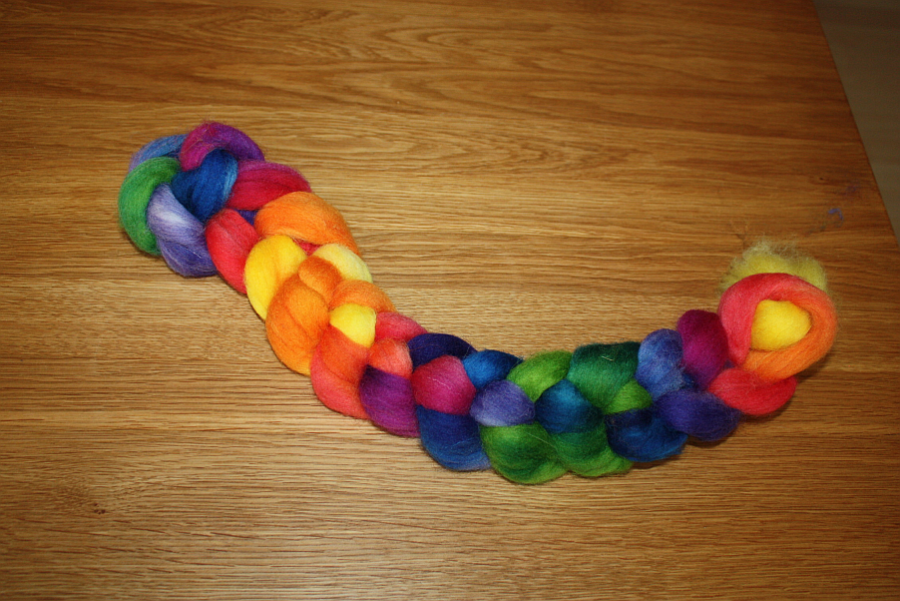
Wrestling with The Gnome. Well, wrestling is too hard a word - it's been going rather smoothly. I used the excuse that I need to get to know my new tool to finally start spinning rainbow-coloured wool I bought ages ago:

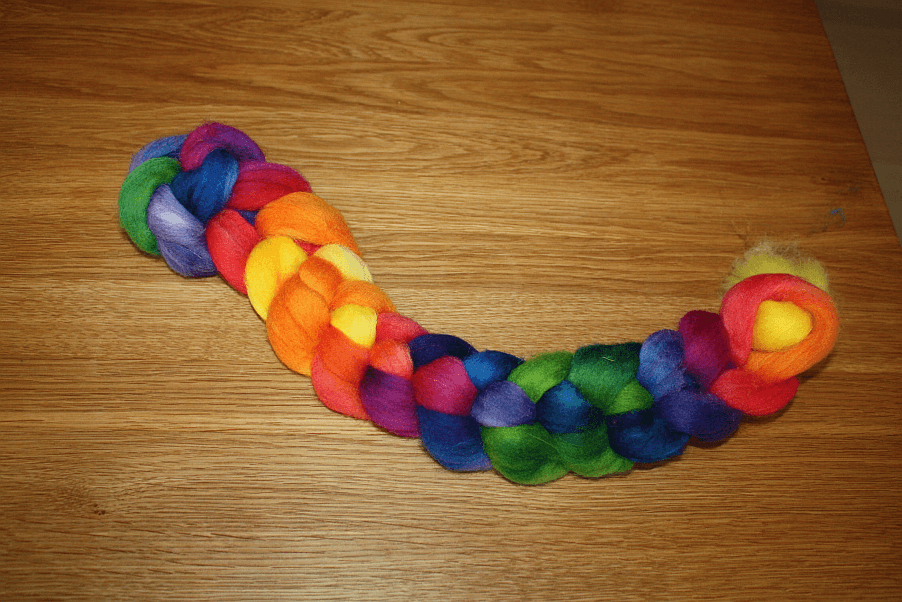
rainbowwool
That is half the wool; the top was symmetrically dyed, so I unraveled it, split it in the middle, and now I'm spinning the two bits individually to hopefully get a wonderful rainbow-coloured two-ply in the end, with long colour runs. I have no idea yet what I will make with it, though. It will be about 150 g of yarn when all is done, so it should be enough for a good-sized shawl - but whether I really need another shawl is another question.

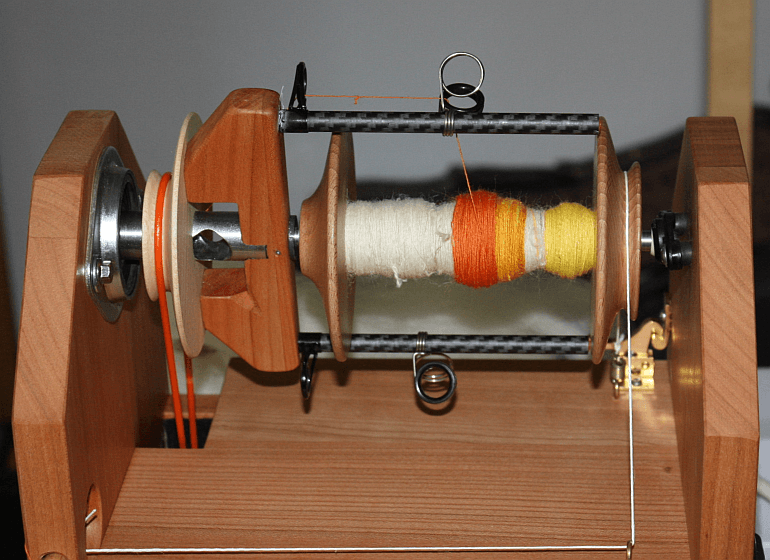
Anyway, it spins up nicely:

gnome1
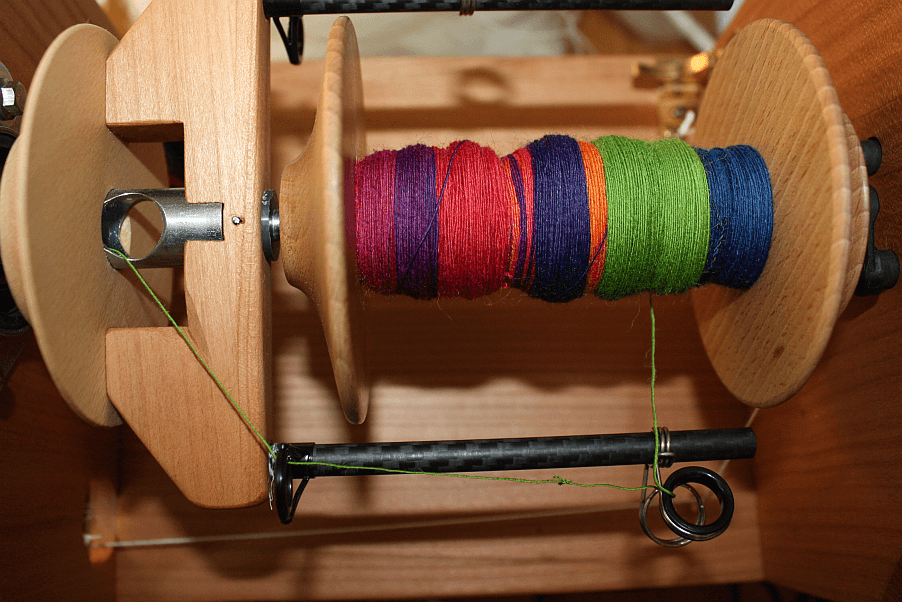
and quickly:

gnome2
I can see a bit more spinning in my future, though - that is about one quarter of the first braid done. Lots more to go!
0
SEP.
12
1

New tool joy!

It is a truth universally acknowledged by every spinner, weaver, knitter or other textile craftsperson that any tools needed for the craft are herd animals.

As of today, I have a new addition to my personal herd of spinning tools. Never mind that over the years I have accumulated more spindle sticks than I can shake a stick at (quite a few of the sticks intended for sale made it into my personal tool stash). Never mind that I already have two wheels (four, if you count the two not-really-functional ones).

The two functional wheels I do own already are good ones... for their purpose. The reconstruction of the medieval Great Wheel is a wonderful wheel that is suitable for serious production of woolen yarns. It may be slightly wonky, due to the fact it needs to be completely taken apart for travel, but that doesn't make it less productive. It will only do for woolen yarn, though, and it takes up a lot of space, and the yarn (as I have not practiced enough) tends to be a bit uneven. The other one is a small one - my first wheel ever, and it is rather... slow. These days, it is mostly used to wind off portions of thread for selling them, so it still earns its keep, even though not through making yarn.

Once in a while, though, I get a request from a museum regarding yarns that will be as close as possible to the historical originals. For many textiles, especially high medieval or earlier ones, that means thin, very high-twist worsted yarns. Spinning these on a spindle is technically no problem, but even if I do spin quite quickly these days, wind-up time always means that spinning takes a long time. The wheels I own are also not suitable for making yarns of this type - it is technically possible, but takes about the same time as spindle spinning does. I tried to re-vamp one wheel (that is one of the not-really-functional ones), but there were serious problems with the friction necessary to drive the very small whorls. So I can offer historical threads, yes, but as it takes very long to spin them, they are very pricey indeed.

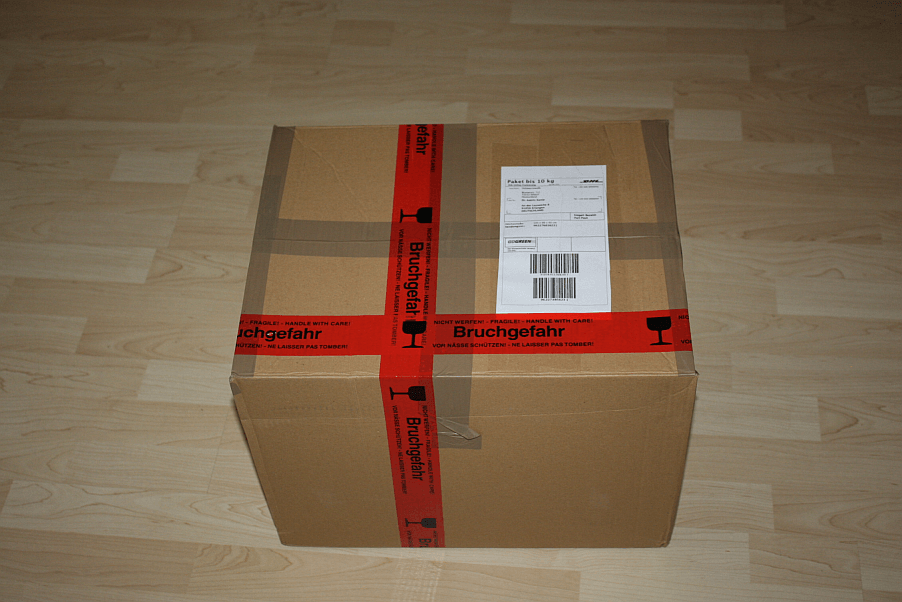
When I was at Wackershofen the weekend before last, though, I finally got the opportunity to try out an e-spinner and see if it could be persuaded to deliver the ratio of twist and yarn intake that I need. Long story short - it did, and today this package arrived here:
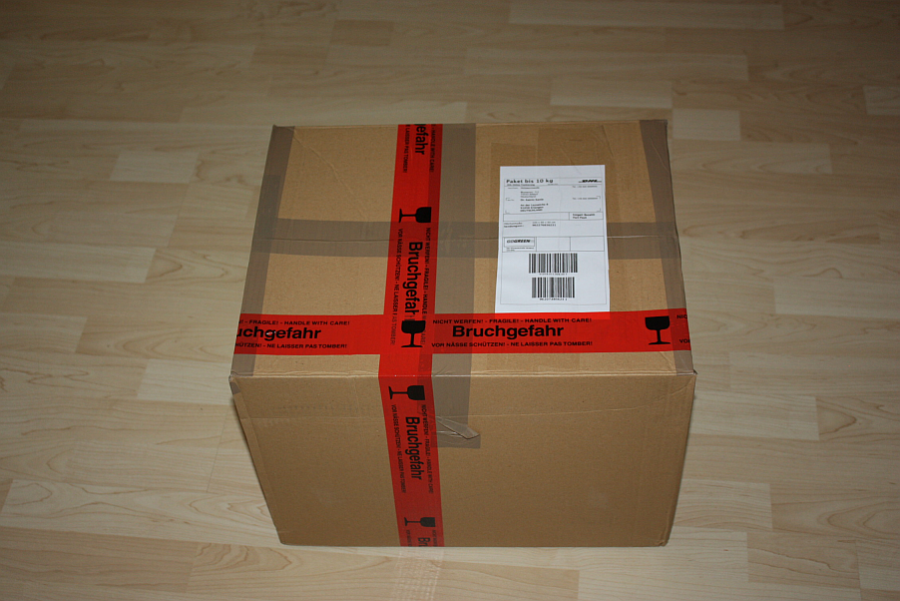
zwerg1
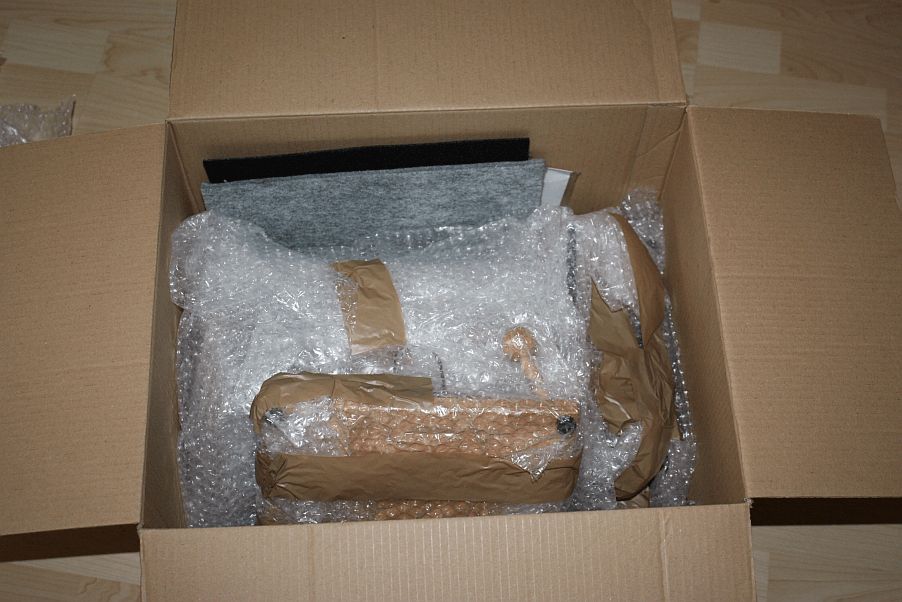
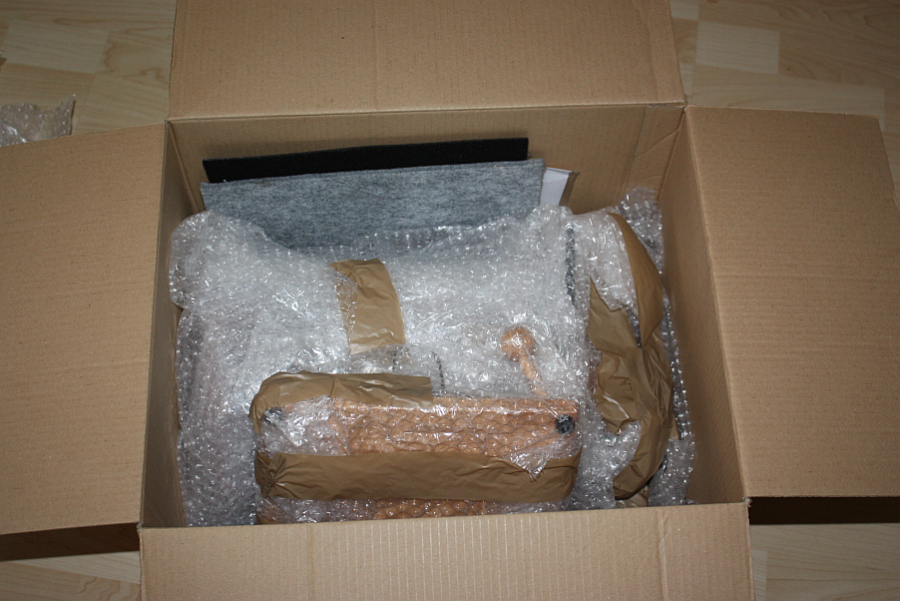
Inside, nested in copious amounts of bubble-wrap, is the Zwirnzwerg (literally: plying gnome):
zwerg2
It doesn't come on its own, though (herd animals, remember?) - it is accompanied by a Lazy Kate and two extra bobbins (for a total of three) and a foot pedal and some spare bits (the brake cord, for instance).

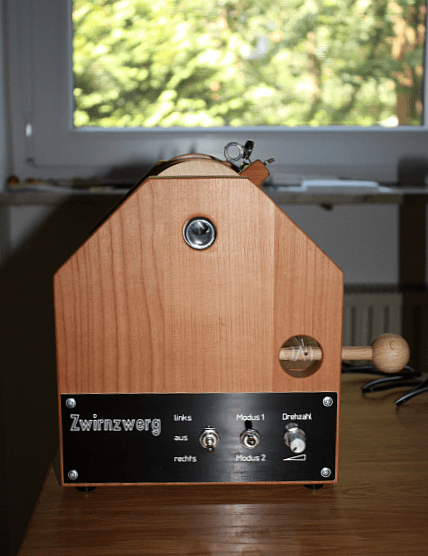
The Zwirnzwerg (and how could I not fall for something called a plying gnome...) is produced in Germany, and is relatively new to the market. With all the accessories, and the maker's willingness to cater to special wishes, it is sold for a very, very fair price. The manufacturer's page is German only, but there are some pics, and google translate does a decent enough job to turn it into semi-readable English. I did ask him when we met at the Ravelry fair, and yes, he does ship internationally.

And here it is, my very own helpful gnome:
zwerg3
We will now have to get to know each other, and I will have to get a feel for spinning the yarns I want with it. Obviously, I had to give it a go straight away. The result?
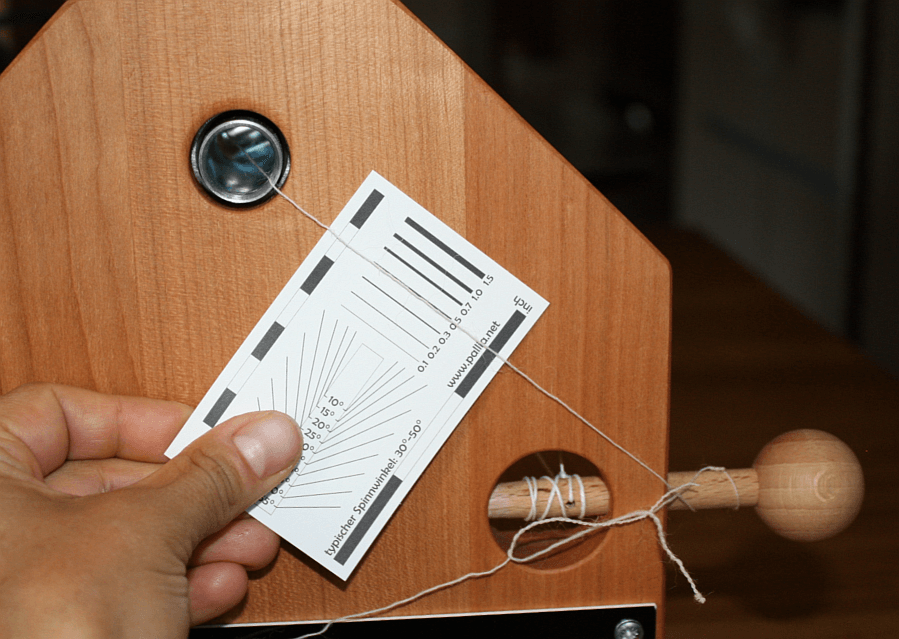
zwerg4
About 0.5 mm in diameter, and with a twist angle of 35-45°.

Or, to stay with the Austen references: I am quite delighted!
0
AUG.
23
0

Enter title here, it says.

I'm not entering a title, though. I'm not. Because today is somehow... weird. I did manage to get a stack of stuff done, most of it in preparation for the next fairs, but I'm still feeling way behind, and would have liked to be much, much faster. Story of my life.

Parts of that stack of stuff done today include:

Updating and printing my spinning instructions. (While the downloadable version is available for free through my shop, you get the printed-out instructions in the spinning kit, so I need to print some more from time to time).

Getting together with Gillian for a chat - we're planning a crossover blog interview in celebration of the Beast's release as paperback, and it was my turn to get interviewed. I'll have the pleasure of pestering Gillian with questions next week, and you will see the results here on the blog.

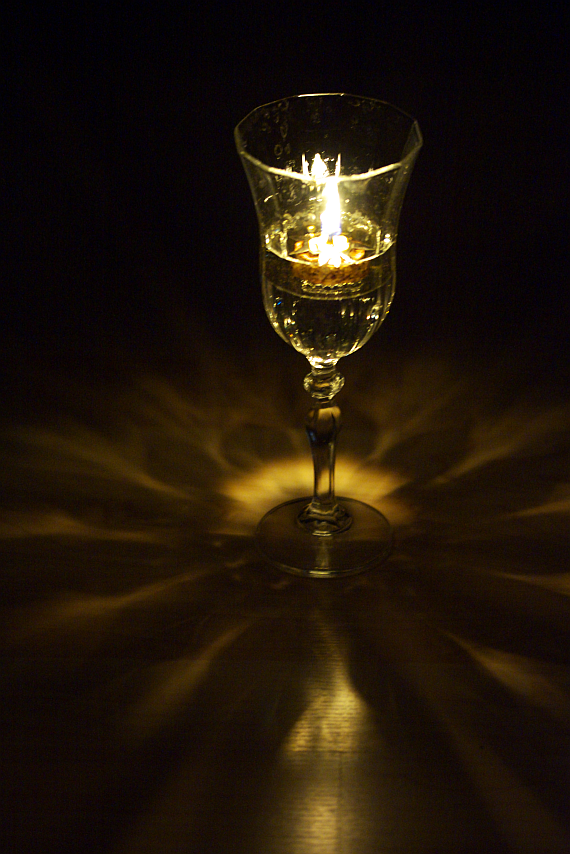
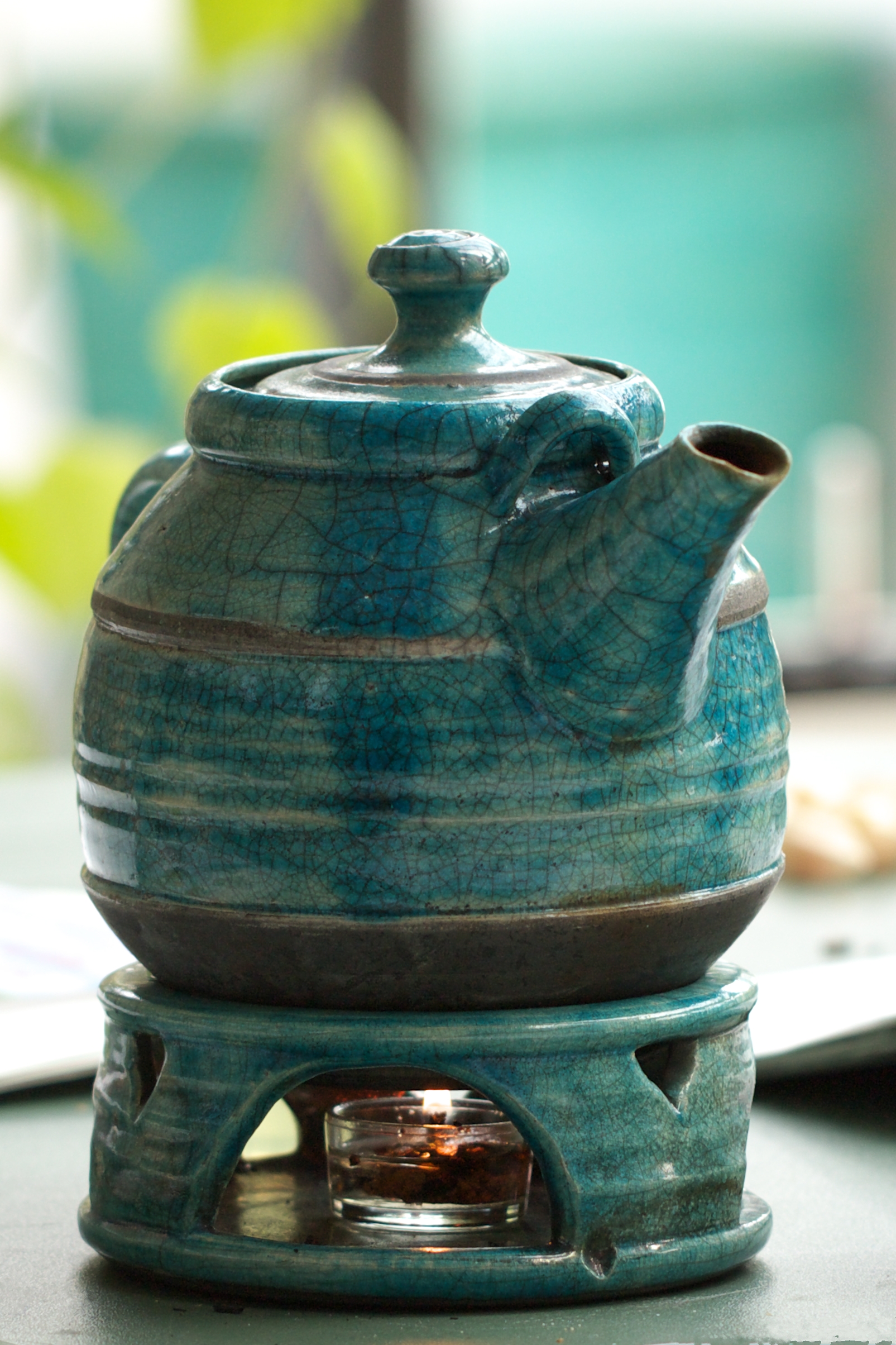
Taking photos of the oil lights in action. I'm still totally in love with these things - they have been produced for ages (the three-bladed swimmer has been made, unchanged, since 1808) and they are just so incredibly nice to use, both for atmospheric lighting and for keeping your tea hot. However, the concept of using these swimmers is rather forgotten today, so people often stand in front of the swimmers at my table, looking puzzled. So I obviously need some explanatory thing to sit around on my stall table at a fair - and this, also obviously, needs photographs.

[caption id="attachment_2574" align="alignleft" width="265"]oellicht_weinglas Atmospheric lighting. With a wineglass, a bit of water and some oil... and the swimmer, of course.


[caption id="attachment_2580" align="alignright" width="265"]glafeystoevchen Keeping tea hot. Because life is better with tea, and tea is better when hot. Obviously, right?


Actually that was the main bits I did today, as these things all tend to eat up more time than you'd guess at first. (Photos, in particular. Never underestimate the amount of time needed to take good photos - especially if they involve tricky lighting conditions. Or gold embroidery.) The rest was eaten up by the usual day-to-day things such as sorting out emails and working on the current paper/presentation projects. And having coffee. Plus tea. Tea was obligatory since I had to take teapot warmer pictures!
0

By accepting you will be accessing a service provided by a third-party external to https://www.pallia.net/

Kontakt