Latest Comments

Guest - Aislinn Dyestuff Citizen Science.
09. Oktober 2026
This is a great project. I look forward to the results. Thanks for letting us know.
Guest - Aislinn Time for...
09. Oktober 2026
Looks delicious!
Guest - Katrin Sprang Discussion
18. September 2026
Hi Rachel, I have looked for more photos of you, but that was not very successful. I found a link on...
Guest - Beatrix Sprang Discussion
15. September 2026
That lozenge pattern element is not a photograph, but a scan. So it should be to scale. But I pinned...
Guest - Katrin Sprang Discussion
15. September 2026
I was not referring to Rachel's reconstruction (is the reconstruction you refer to the one photograp...
MäRZ
15
0

Time-Munching Monsters.

Well, it's not exactly monsters that are munching all the time... but there are a few things afoot right now that do. One of them, due this morning: another update of the webshop, followed by a few necessary tweaks. There's some more coming up, as I will finally get the fix (it's on its way) for an issue-free login possibility with email address instead of the username (that nobody remembers anyway).

There's some other stuff going on behind the scenes - more prep work for events later in the year. Taking care of some insurance stuff for my one-woman company. Organising things to prepare for the Great Tax Filing of 2016 (as every year). Plus, we're having my parents over for a few days at the moment, so some family time tends to creep in - no wonder the time wooshes by faster than I can say "wow, it's afternoon already".

Also? It has snowed again today. Huge big flakes. Just when I thought we're finally going for spring... oh well.
0
MäRZ
10
4

Another New Book Alert!

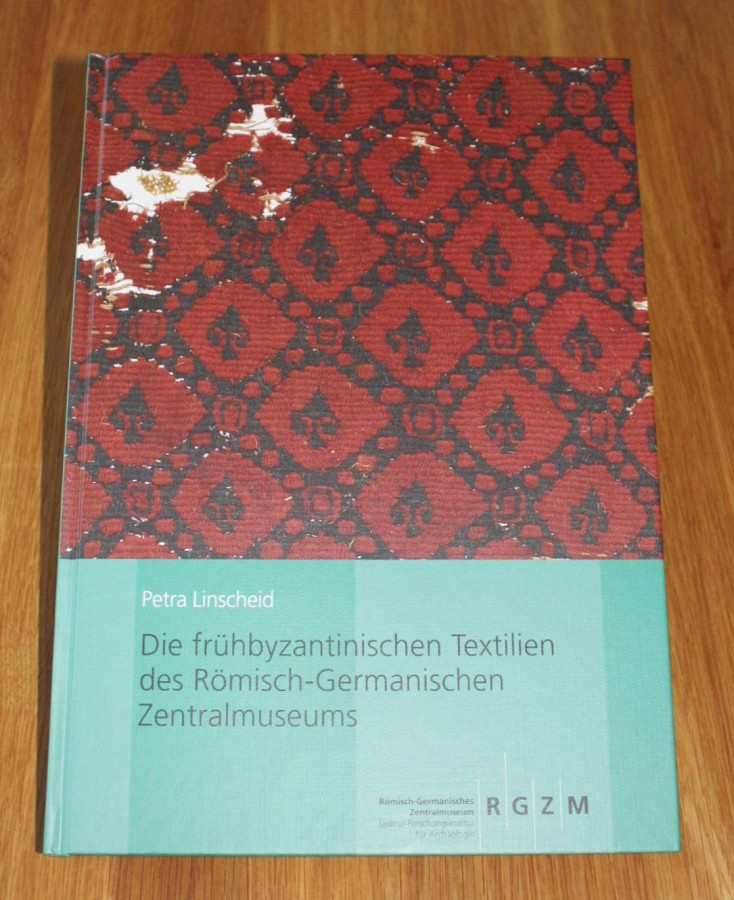
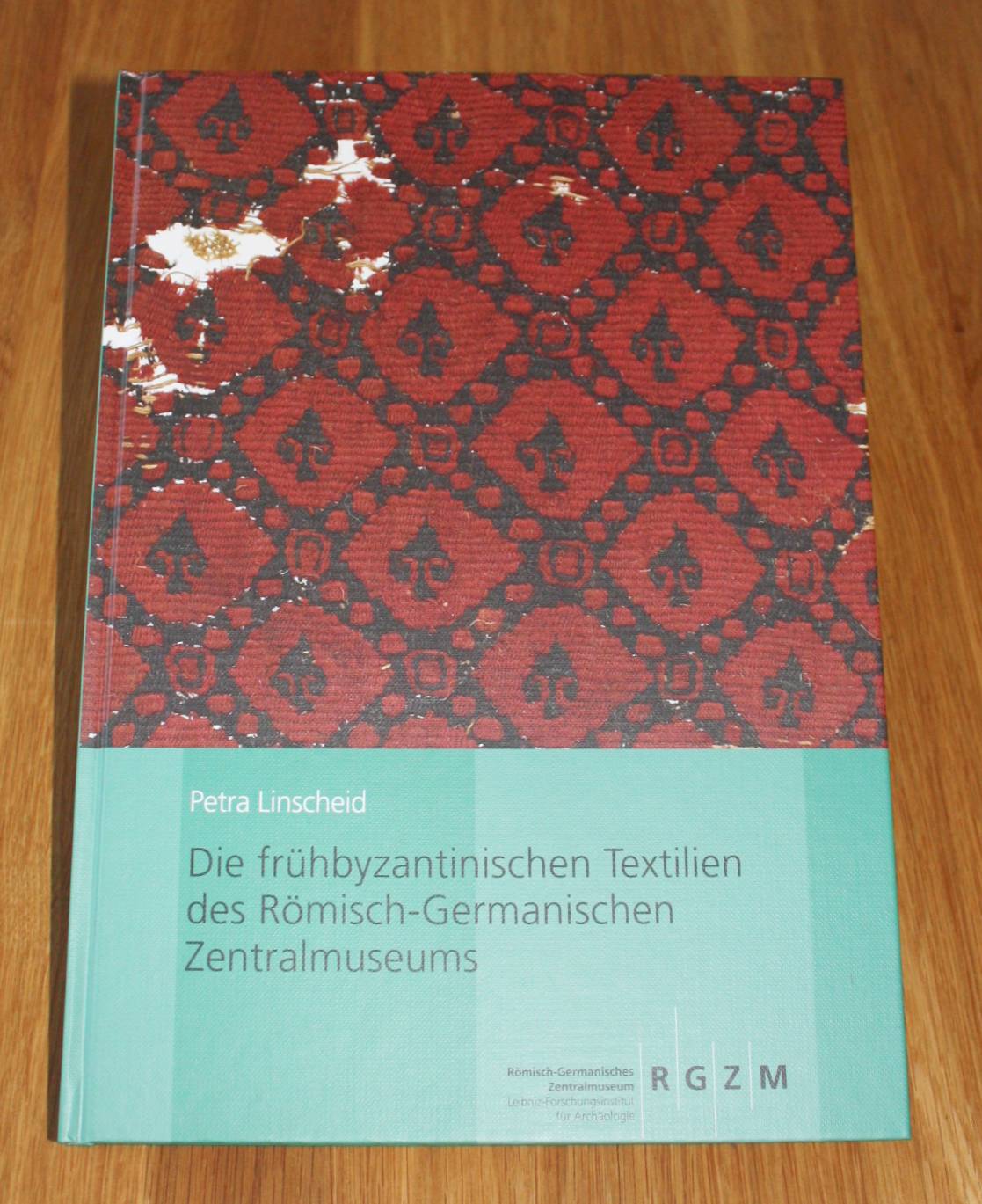
This time, though, it's a German book - but if you can read a little German, or if you are interested in early Byzantine fabrics and textiles, it is definitely worth a look:

[caption id="attachment_2283" align="alignnone" width="468"]petras_buch The book, sitting on my table, waiting to be read. Non-photographable bonus: it has that utterly heavenly new-book smell.


Petra Linscheid has analysed and catalogued all the many Early Byzantine textiles kept in the RGZM, and the results of her work are now published in a catalogue with lots of good photographs, drawings and detailed descriptions. There's an introduction part, covering the provenance and history of the pieces, dating, technical details (including colours) and functions. The main part of the book, however, is the catalogue, where each of the 210 pieces is listed with a detailed description, and the 112 pages of plates with images and detail images for the pieces.

If you are interested in Early Byzantine textiles, you might want to get the book just for the pictures, even if you do not read German at all. (Though technical descriptions in catalogue entries are not hard to translate, so with a dictionary, you should be able to get the basic information on each piece as well.)

You can order the book directly from the publisher, Schnell & Steiner, or of course buy it at the bookstore of your choice. Cost is 55€, and the publisher offers free shipping for the book inside of Germany.

 
0
MäRZ
09
0

New Book Alert!

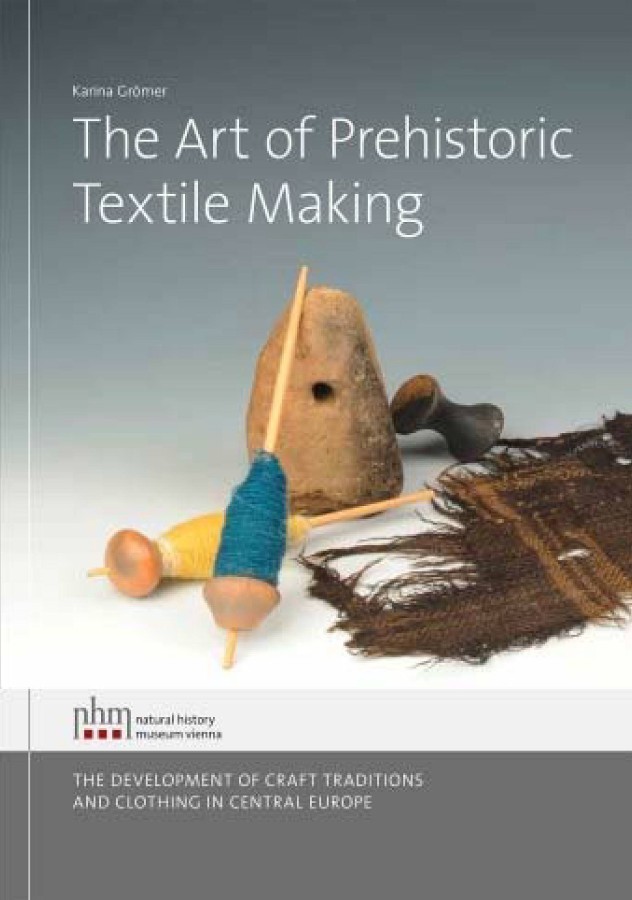
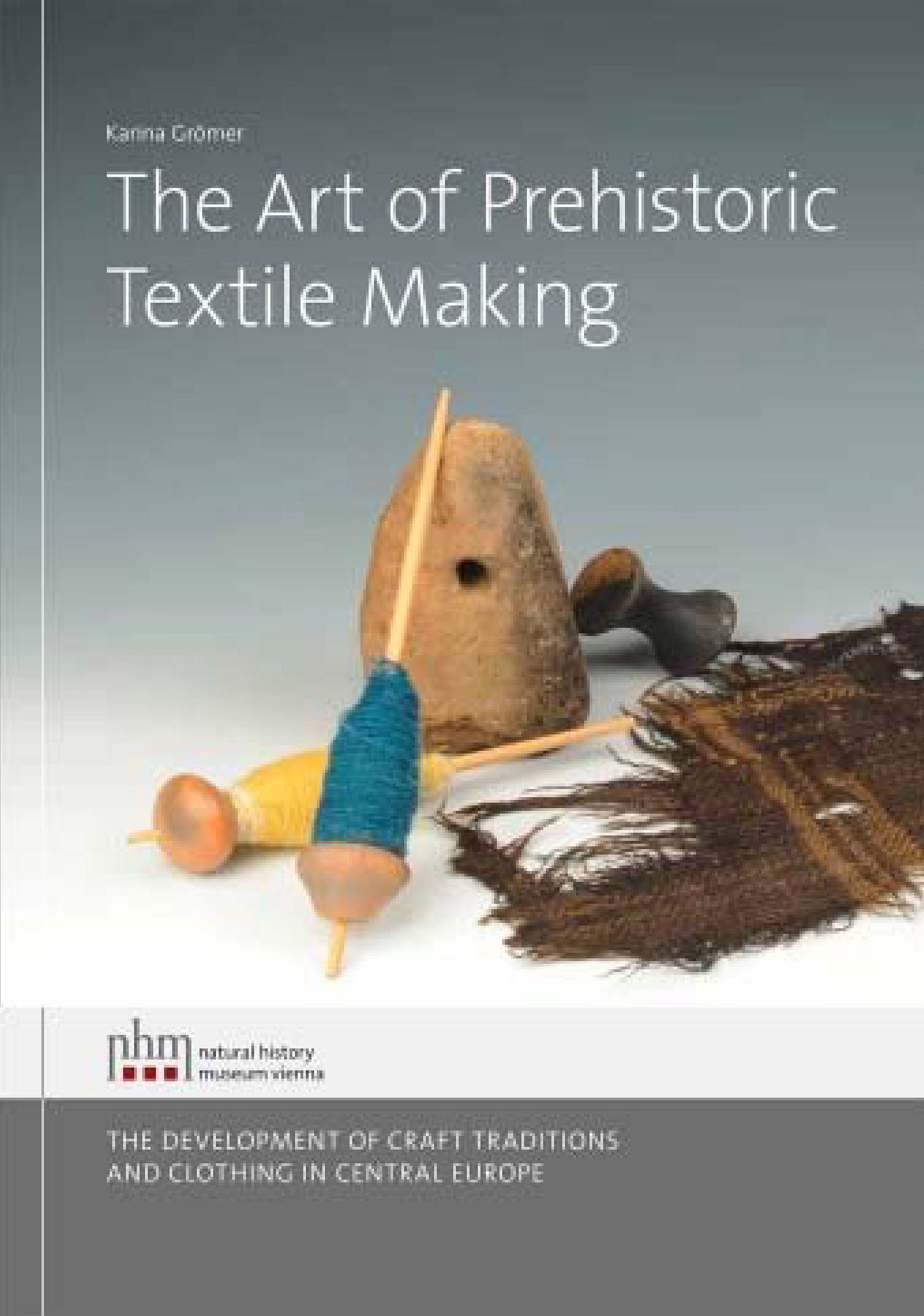
My dear friend and colleague Karina Grömer has done it again - she has a new book out:

Art of Prehistoric Textiles_Groemer
K. Grömer (with contributions by Regina Hofmann-de Keijzer and Helga Rösel-Mautendorfer) 2016: The Art of Prehistoric Textile Making – The development of craft traditions and clothing in Central Europe.

Veröffentlichungen der Prähistorischen Abteilung 5, Verlag des Naturhistorischen Museums Wien, Vienna 2016.

The book is a compendium about the latest research about archaeological textiles in Central Europe (533 pages, more than 240 colour figures). There's a preview of this book, and other work that Karina did, available via academia.edu.

Copies of the book can be ordered via email to verlag@nhm‐wien.ac.at from the Verlag Naturhistorisches Museum Wien, Burgring 7, 1010 Vienna, Austria.
The price for the book is 35€ (including VAT) plus shipping. According to the info on their order form, shipping should be 4.40 € for Austria and Germany, 8.80 € for Europe and 15 € for the rest of the world, with different costs possible for larger orders.

My copy is already on the way here - and I'm looking forward to adding it to my collection!
0
FEB.
25
0

So many issues.

While the sun is shining outside and the flowers are getting ready for spring bloom, other stuff is blooming, too - but not in a nice way, unfortunately.

One of the issues is, again, harassment at conventions. I believe the current wave of discussion was sparked by Mark Oshiro's post about how he was treated when he was Guest of Honor at ConQuesT 46. Jim Hines has a post about the importance of not only having a harassment policy at a con, but also enforcing it, with more links to issues. Rachel Caine, in the wake of this, is declaring to act accordingly in the future, and I wouldn't be surprised if more will join her. We can hope for changes, right?

Another issue, of a less geeky nature, is the nightmare of the EU VAT madness still going on. It is having an impact not only on the tiny firms, though - Ghost (a UK digital platform) will be closing down its business in the UK and reincorporate in Singapore to avoid the VATMESS. Advice and guidance for small businesses has been, and still is, conflicting - it's not gotten any better. As far as I know, the plan to expand this madness to all goods, including physical ones, is still alive (though it has not been pushed through this last January, as was planned previously) even though the problems with the current digital tax have not been solved.

Even more bad news (not an issue, however) - Peter Lustig died yesterday, aged 78 (link to a German page). He was one of my childhood's TV stars, explaining things, researching and tinkering, first in the TV show "Löwenzahn" (dandelion) and later in a show called "Mittendrin" (in the middle/in the thick of things) (though I'd almost outgrown the format by then).

Huh. Sometimes I wonder how bad things can get, for us as a society or as a culture, and for humankind overall, especially looking at how we ruin our environment, and how hard it is to keep one's footprint small. However, ignoring problems or bad things usually tends to make them worse, not better...

I promise more upbeat things on the blog tomorrow...
0
JAN.
22
0

TGIF.

The cat is already sleeping as if it were the weekend, and I wish I could join her - but there are a few more things that need doing today. Somehow, this week was both not very efficient and quite strenuous, which is a sad combination. I got to do some research in Bamberg, though, and going to the library there is always nice - plus it's usually an opportunity to meet up with a friend and go for a nice cup of coffee (which absolutely happened this time, too).

Work-wise, I'm busy working (finishing up, actually) a smallish paper on female headdresses (which is trying to resist being finished up as much as possible). It never ceases to amaze me how many different kinds of headwear we have on pictures, and how different even two veils that look quite alike on first glance can turn out to be! There's turban shapes and veils with folds and veils without folds, there's many white ones and a few ones in colour, short and long ones, there's headwear that covers the neck and chin and there are skimpy barbe-and-fillet headdresses. It really is amazing, and shows again how much variety there was throughout all of history. No uniforms, but lots and lots of personal touches and variations.

So. A bit more effort on the paper... and then: Weekend! Thank Goodness it's Friday!

(Oh, by the way - Aarhus Uni's free e-book of the month is Making and Breaking the Gods by Troels Myrup Kristensen; it's about Christian responses to pagan sculpture, especially in Egypt and the Near East.)
0
DEZ.
22
0

Get rich, or die a poor blogger?

Before I drift off into the blissfulness of the holidays, with nothing to do but hang out with loved ones, have yummy food and too much caffeinated hot beverages and the other usual silliness that accompanies this season, one more non-fluffy blogpost for you - related to gender, and work, and making enough money to live:

Get rich or die vlogging - the sad economics of internet fame tells about the dilemma of those trying to make an income off their youtube videos. (Hint: it's really, really difficult.) Another piece of proof that doing a job you love, and doing it well, does not necessarily mean you'll be able to live on it: Mallory Ortberg from The Toast on Work, Writing, and the Cost of Creative Freedom.

Also related to getting an income: Why Women Don't Apply for Jobs Unless They're 100% Qualified. Harvard Business Review lets you read 5 articles for free - I think this one is really interesting and worth spending one of your five on. The TL;DR? Job descriptions are more like guidelines, and if you think you could do the job well, give it a try. (Another article on HBR, somehow related, is Women Need to Realize Work Isn't School.)

On an unrelated note - I've installed a spambot blocker for the comments, which should not be noticeable at all for you. My test, at least, was successful...
0
DEZ.
18
0

I'm back home, and I have stuff for you.

You're getting a late blogpost today because I had slow internet today, and it even ate a half-written post... but you are getting one, and it is one with free stuff! (Very fitting for the season...)

First of all, as a reminder - free ebook in Aarhus Uni Press this month is Woven into the Earth. Go download it if you haven't done so yet, and tell your friends who are interested in archaeological textiles. This is a wonderful book, and it is definitely good to have.

You already downloaded it? You would like more books? Here you go.

On a completely different, and very much non-archaeological note - there is a free e-book about working with MS Word, "Microsoft Word for Publishing Professionals" by Jack M. Lyon. A few years ago, the author's newsletter "Editorium" helped me a lot when prodding my thesis text into shape, as well as later when I had typesetting to do. If you're working with Word (as so many people in the social/historical/archaeological sciences do), you might want to give it a look.

And now on to the juicy bits.

I had the opportunity to visit Estonia for a few days, and I didn't only meet lovely fellow textile people and fellow archaeologists and got to see exciting finds in several museums and a good number of the Estonian textile finds, I also brought home some books (about, who would have guessed it, Estonian textile finds). Two of them are about the finds from Siksälä, which is a burial site used continuously from the 11th to the 15th century - the Estonian Iron Age and Middle Ages. Siksälä has yielded exceptionally rich finds, including textiles wonderfully decorated with bronze spirals. There's a publication in two parts, a text part and a catalogue part; both are in Estonian*, but anyone can look at the pictures and construction drawings. And if I say anyone, I do mean it - both the first volume and the second volume are available online, free of charge, thanks to the University of Tartu.

Another absolutely amazing Estonian find is the craft box from Lohavere (which should be written with a little ~ sitting on top of the o), which comes from the hillfort of the same name, dated to the 12th and early 13th century. If you know the Mästermyr find and have always dreamt of something similar, but related to textiles? Here it is. The craft box, made from birch bark, contained textile remains, prefabricated and half-finished products, bronze ornaments and tools, some of them neatly stored in smaller boxes or little pouches. It is an absolutely fascinating find and gives so much information about how the spiral decorations were worked... and it, too, is published in a little book, and that, too, is available online free of charge.

These finds absolutely deserve to be better-known - so feel free to spread the word, and of course enjoy the publications of these gorgeous finds!

*Estonian is a language belonging to the Finno-Ugric group, and more or less related to Finnish. A few fun facts: Estonian has fourteen cases. Yes, fourteen - because there are no words to signal direction (like "into" or "from"), and a case is used instead. More fun facts? Estonian has no genders, so there's no problem with being politically correct. Because there were a lot of Germans in Estonia in the Middle Ages (Hanseatic League was a reason for that, for instance) there are quite a few German words still around, which makes not understanding most of the rest even more peculiar. Final fun fact for today: as I'm easily amused, it diverted me no end that the greeting "Tere" sounds much like the southern German colloquial "Dere" (which is very short for "Habe die Ehre", I have the honour). If you're intrigued now, here are a few useful Estonian phrases, and here is a very interesting pdf with facts about Estonian.
0

By accepting you will be accessing a service provided by a third-party external to https://www.pallia.net/

Kontakt