

Latest Comments

Guest - Aislinn Dyestuff Citizen Science.
09. Oktober 2026
This is a great project. I look forward to the results. Thanks for letting us know.
Guest - Aislinn Time for...
09. Oktober 2026
Looks delicious!
Guest - Katrin Sprang Discussion
18. September 2026
Hi Rachel, I have looked for more photos of you, but that was not very successful. I found a link on...
Guest - Beatrix Sprang Discussion
15. September 2026
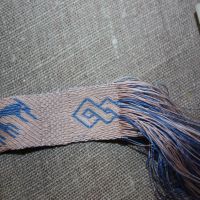
That lozenge pattern element is not a photograph, but a scan. So it should be to scale. But I pinned...
Guest - Katrin Sprang Discussion
15. September 2026
I was not referring to Rachel's reconstruction (is the reconstruction you refer to the one photograp...
MäRZ
11
2

Things Going On.

The Corona Scare has probably reached almost every corner of the world now, and things are definitely starting to get interesting in Germany. Bavaria has cancelled all events with more than 1000 people until April 19, and other federal states are following suit - among them Baden-Württemberg, though I couldn't find any dates on how long this ban will be in effect.

The cancellation of events in Ba-Wü will probably directly affect me, as there are two fairs there, one in mid-April (18th and 19th) and one at the beginning of May (8-10). At the moment, I'm not counting on either of the two actually taking place; the first because it's still just within the "ban time" that Bavaria has called out, and I'd guess that Baden-Württemberg will go for a similar time period, if not for a longer one; the second because though it is a good bit later, it's also a (substantial) bit larger, with more than 10 000 visitors during the three days of the fair, and it might well be that events in that size will still be banned then, depending on how things develop.

There's also a bike fair we were planning to go to, which is on the last weekend in April, in Rheinland-Pfalz. It's (unfortunately, in this case) also a very large one, with about 10 000 visitors, and a rather international one... so while the status for this is still unclear, I won't count on it taking place. Which would be rather sad, just like the wool fairs being called off. I do get that cutting out large gatherings of people, especially if the crowd comes from all kinds of places and will spread back out afterwards, will be helpful in slowing the virus spread.

NESAT is not before mid-May, and not very large - I'm keeping my fingers crossed that nothing dire will happen to put this in danger.

So. Things will develop as they will, and there's nothing to do right now than wait and see (and hope, of course, that the virus spread will peter out quickly). The virus has caused enough madness all around the world already - panic shopping included, which meant that hospitals and doctor's offices ran out of disinfectant and other necessary supplies, and could not get more because of people hoarding the stuff. That, obviously, is not a good thing at all. Especially since for most people, going a bit easy on the hugging and keeping up a good basic hygiene (washing hands, first and foremost) would be more than sufficient to keep risk down in normal life. We still know relatively little about the virus, including the real mortality rate, and panicking will definitely not help anybody.

Has the Corona Scare arrived in your area yet? Or are people still relatively relaxed?
0
MäRZ
10
0

Winding a Shuttle.

Shuttles are a handy thing... I've found, however, that a lot of people only use about a third of a shuttle's capacity. (And now I feel like one of those Scientology guys telling people they only use about 10 percent of their brain capacity...)

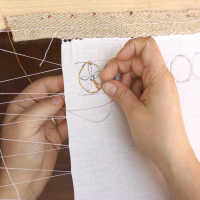
Anyways, I made a short and not-very-beautiful, but hopefully clear-and-helpful-enough video on how you can get more yarn onto your shuttle:


Basically you wind the yarn around the middle of the shuttle until there is a good bit on there; the yarn shouldn't be completely filling the incut bits, but usually there's a point where the yarn is piling up a lot in the middle, but there's still space in the openings. That is when you switch to winding your yarn figure-eight-wise around the side edges of the shuttle, first one, then the other. Stop when the shuttle openings are all full, or when you feel that you have enough yarn on there now.

I can't remember who showed this trick to me, and when, but I've done it ever since, and it is so useful! It's also the main reason why I strongly prefer shuttles in the simple,  symmetrical form like the one in the video; some shuttles these days have the opening at the side corners instead of in the middle of their short sides, and I always feel that winding them is a real chore, plus the figure-of-eight winding around the sides will not work.

What will also not work (or work very well) if you do this is pressing your weft in with the shuttle. I know that quite a few people use their shuttle (usually a wooden one, in that case, and sometimes with an edge especially made for this) to beat in; I've never done that, as it has always felt weird to me somehow. Also I beat in at a stage where I don't insert the weft right away afterwards in most cases, so using the shuttle or using some other implement makes no difference to me - and since I discovered how well the Dublin weaving knife works, I'm not using anything else anymore anyways. (The shuttle in the video, by the way, is one of my parchment shuttles - now with a larger opening so it can hold more yarn.)

 
0
MäRZ
09
0

Albecunde!

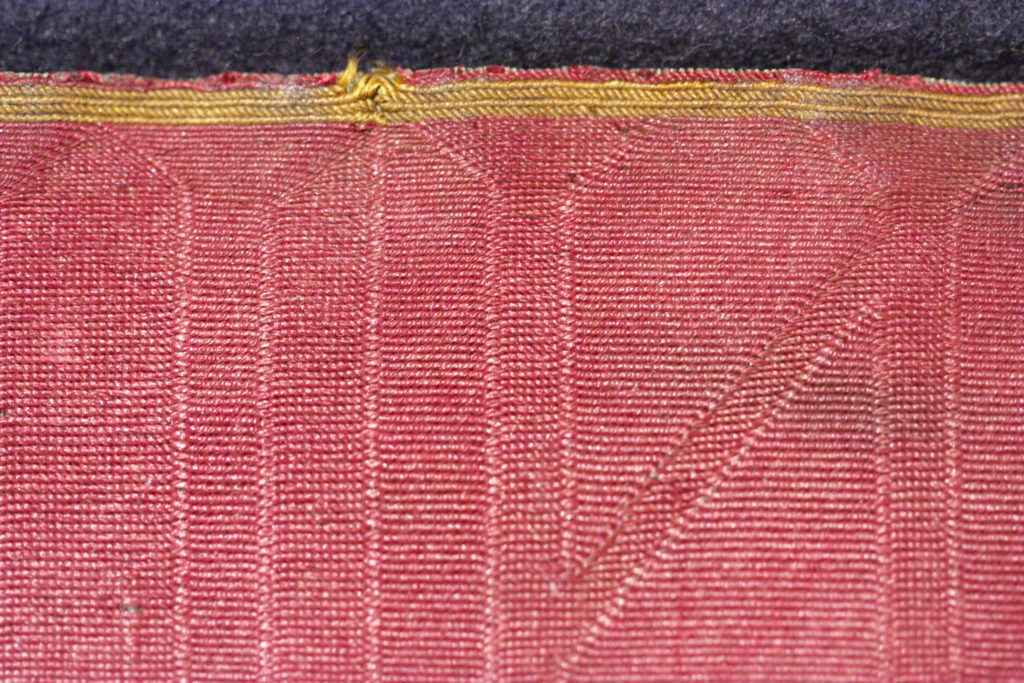
To my great delight, I have the permission to share some of my pictures from the Albecunde tablet weave with you... so here you go:


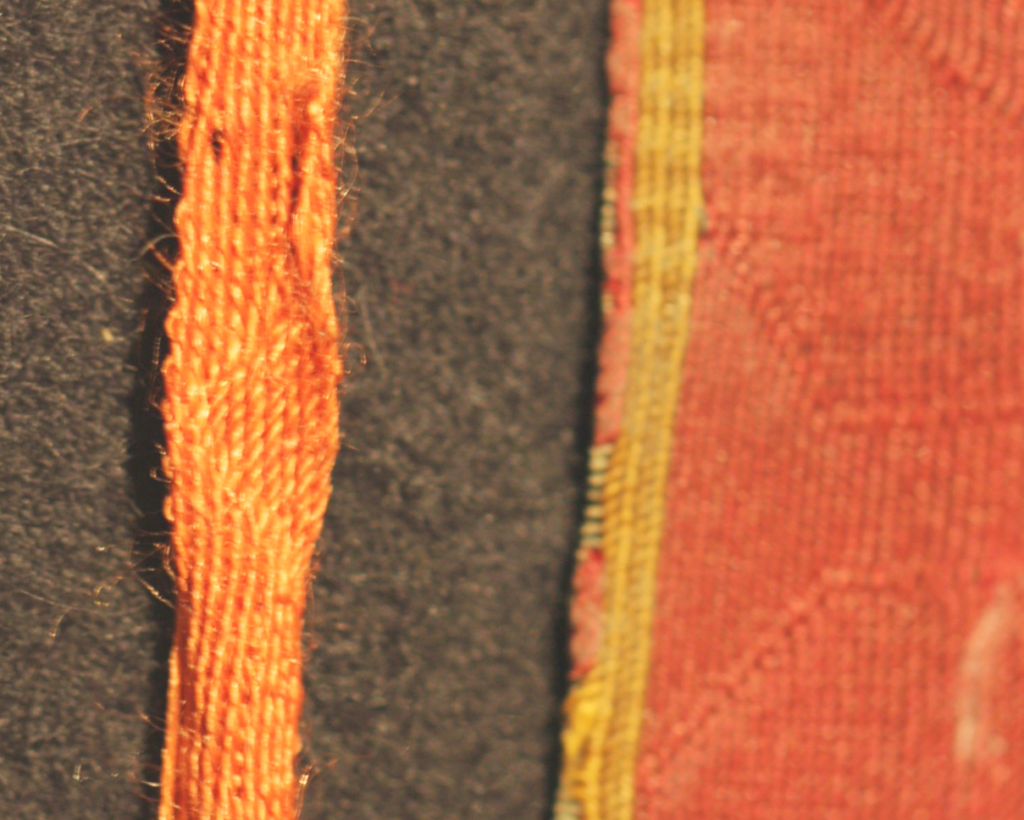
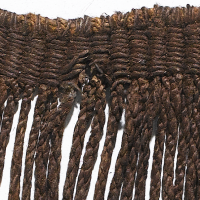
This is a close-up of a detail from the Albecunde weave. You can see that the weft threads are pressed in very, very closely. You can also admire the beautiful colour (after so many hundreds of years!)

At about the middle of the image, there's a general reversal of turn direction of all the tablets, including the 6 selvedge tablets (there's some damage at the selvedge in that spot as well).

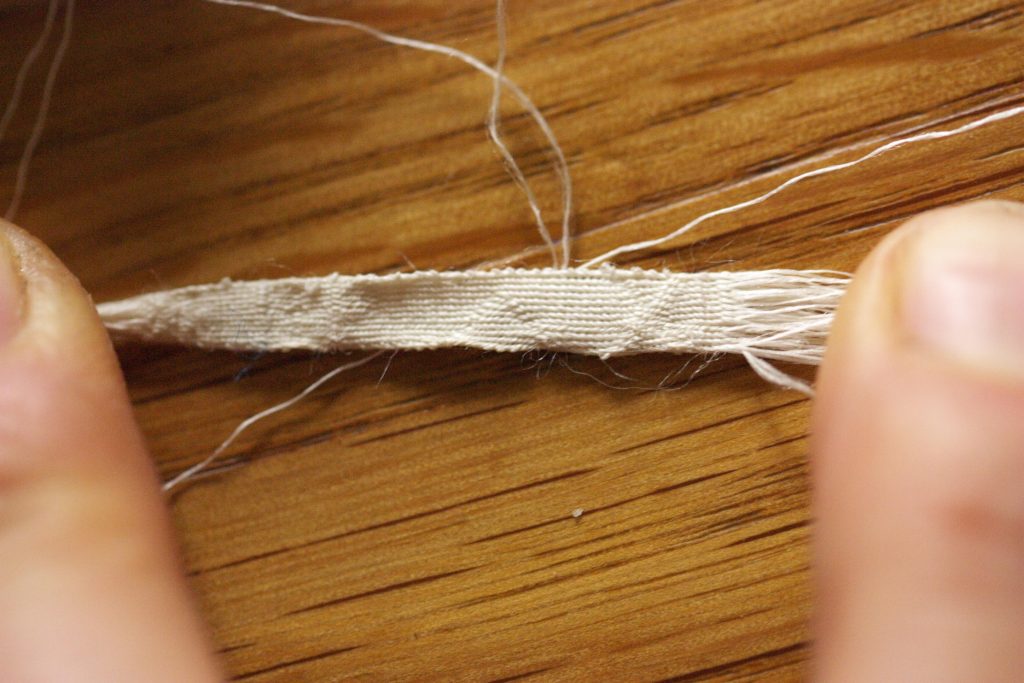
And here it is in blurry comparison to one of my bands, woven from the embroidery silk:


The individual tablet cords really are tiny... my band is about 4 mm wide with 9 tablets, and the original about 38 mm with 92 tablets.

You can visit the original in the Museum St. Afra in Augsburg, it is well worth a visit!
0
MäRZ
06
1

Teeny-tiny, and Shiny.

I've reported about the museum trip to see the Albecunde band... and of course, I had to do a little bit of testing. I used the Texel Stocking silk, which is 4-ply and only partly de-gummed; the individual strands are about 110 den in thickness, so I split up the yarn and pulled one of the strands through each of the tablet holes of one tablet.

That was fiddly, but not too bad; for my sanity, I only did 12 tablets anyways.

So... the result: The partly de-gummed silk is very, very pleasant to weave with. I'm getting a nice and tight structure as well; the silk is also still quite shiny even though there's some of the sericin still in. I also have the impression that the manipulation sort of splits the individual filaments apart, adding to the shine.

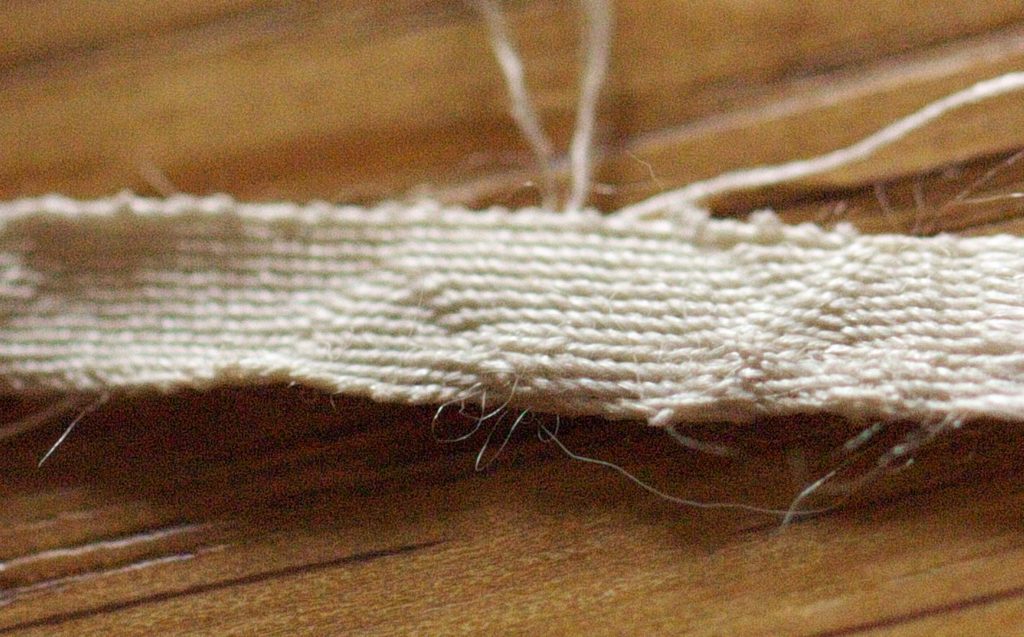
It's fine. It's tiny. It's relatively shiny. I probably don't need to mention that it is slow work, because it is so fine and the individual picks add very little to the length of the band. And of course there's not the bang effect the original gives, with its large width, but even white on white, the pattern is visible in a very subtle way:


I'm not sure yet why some of the patterning seems clearer than some other bits...


but as you can see, hopefully, there's a threading direction mistake (as, by the way, there was in the original for a bit) in one of the tablets. I'll probably play some more with this, and take some more macro pictures, and will hopefully figure out where the issues are. Might also be that the pattern will be easier to read on a coloured band. (I think I have some silk paint somewhere in a box in the basement...)

 
Also - this silk is too thin. If I calculate from the 4 mm the dozen tablets give me, I'd end up at 30 mm instead of  38 with 92 tablets (which is what the original has). So... about 150 den should do the trick, if mathematics don't mislead me here.

 
0
MäRZ
05
2

NESAT!

It's 2020... which means it is three years since the last NESAT conference. Which means that it's time for the next one. I already wrote about trying to get things done early this time around, and testing my demo. The conference is in May, so there's still a good bit of time until things get seriously deadline-y, but nevertheless I'm quite relieved that I have figured it out now.

I played around with the demo setup a bit more, cutting the number of tablets down from 12 to ten (which is just, juuuust enough to show the twill pattern rhythm, and the block that forms when a diagonal is cruising its way across the stack of tablets). I've also changed the sequence a bit, including a tiny strip of double face now, then diagonals, then diagonal patterning, and finally a little bit of patterning on 3/1 broken twill (which includes the crux of the thing, the direction change in twill background).

Cutting down to only ten tablets did make a difference. The larger difference was probably made by me abandoning my lovely, trusty weaving knife in favour of just the finger, and not bothering about the fact that my band width is not so even, and the wefts are sloppily tightened.

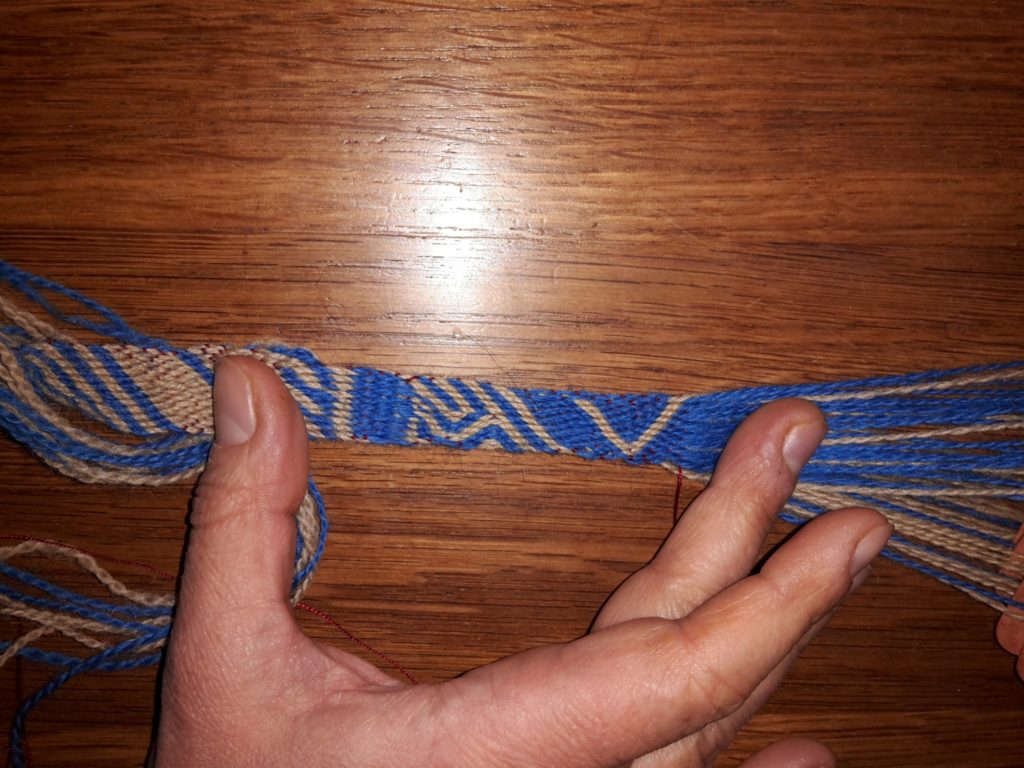
30 minutes is still a very, very short amount of time. It also still results in a very short bit of weaving:


However, the new sequence means I can explain things better as I go along, and that I can, miraculously, squeeze all the important bits into my time slot. Hooray!

Now I only have to make a suitable warp for the conference demo (as I've used up the one on the picture), make sufficient notes of what to do and what to explain at which stage, and then do another practice run or three shortly before the conference.

Which means that I'm now free to work on the other NESAT presentation - also about tablet weaving, but entirely different bands in an entirely different structure. Fun things!

 
0
MäRZ
04
2

Speckknödel!

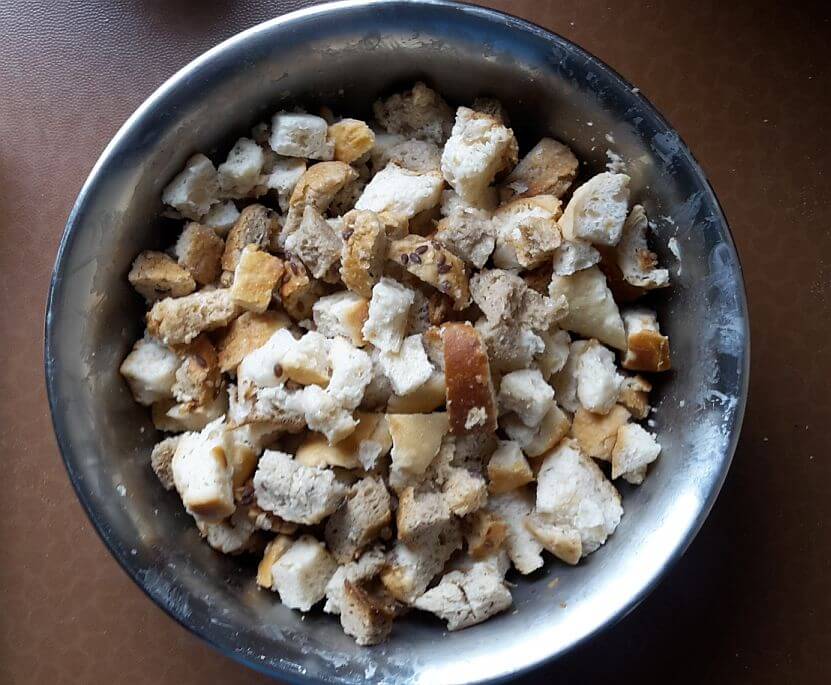
There is a number of recipes intended to use up bread that is getting old - and I'm rather fond of this type of food. Whenever bread hereabouts threatens to get too old, it gets cut up into cubes, these are dried, and then they get packed away until needed. (Because we buy our bread in relatively small units in the bakery close-by, this is a rare occurrence... but then, there's the Textile Forum, where the caterers tend to bring way, way too much bread. Which, you've guessed it, gets cut up into cubes... and travels back home with me, causing much joy and serving as the base for quite a few servings of bread-based meals. It's not only delicious, it's also cutting down on food waste. Two good things in one.)

[caption id="attachment_5086" align="alignnone" width="486"] Bread mix, soaking. As you can see, it's a wild mix of all kinds of different breads... which can be a little surprising sometimes, when there's suddenly some pumpkin seed turning up!


One especially delicious way to use up that bread are Speckknödel (bacon dumplings). I was first introduced to those in Austria, and they are wonderful. Wonderful. It's basically old bread soaked in milk and/or water to make it soft again, mixed with egg (to hold it all together), onion, and smoked bacon, seasoned with salt and parsley, and then simmered in water. Traditionally, they are served with browned butter; a salad goes along with them nicely, as does red cabbage, or some other cabbagy vegetable.

Here's the recipe I usually use - the amount of liquid you need may vary depending on your bread:

250 g dry bread, cut into small cubes (c 1 cm side length works very well)
250 ml milk (or half milk, half water)
2 eggs
1 medium onion (ca. 80 g)
2 tablespoons chopped parsley
80-100 g bacon (smoked bacon), diced
3 tablespoons flour (c 45 g)
salt
butter

Pour your liquid over the diced bread and let it stand for a while (at least an hour, so the moisture can spread out through the bread). Dice the onion finely, then sautee it until translucent. Mix onions and bacon with the moistened bread. Beat the eggs, add salt and chopped parsley, and add that mixture to the bread mix as well. Let sit for about 15 minutes.
In a sufficiently large pot, bring water to the boil. Add salt and turn heat down a bit. Form dumplings from the bread mix (I get about 12-14 dumplings from the mix) and gently place into the water; they should now simmer (not boil) for about 15 minutes.

Meanwhile, brown some butter in a small pan or pot.

[caption id="attachment_5087" align="alignnone" width="640"] Dumplings!


Serve dumplings with browned butter and salad, or another side. Leftover dumplings are very nice sliced up and fried in butter, or sliced up and eaten cold.

The water used to simmer the dumplings also makes a very nice base for a soup on the next day...
0
MäRZ
03
0

Aphid Attack.

Very obviously, spring has not only come for the plants and flowers outside, but also for aphids. (Oh, and the cat brought home the first tick of the year yesterday.)

I have a few cooking herbs in pots in the winter garden, and they get used in the kitchen whenever I feel like it, or sometimes they even inspire me to make something that uses a lot of a specific herb (usually when that has grown a lot, and needs pruning or cutting back, and I don't want to throw all of the cutoff parts away). Among those are rosemary, thyme, laurel, marjoram, parsley... and chives.

The latter have been struggling for a while and not grown very enthusiastically, and so I left them alone over the winter - and now I discovered that they had gotten a new fan club, consisting of a metric ton of black aphids. Unfortunately, I didn't take a photo, but basically the green bits of the chives were almost solid black with the little suckers... before I got them.

With the vacuum cleaner.

I have a new aphid-removal method, folks.

That was sort of a random-half-by-accident thing - I was vacuuming up bits of dirt and small dry leaves on the floor, and by accident a few of the chives stalks got pulled into the tube, and lo and behold - all the aphids from there were magically removed. So, obviously, I treated the rest of the chives the same. Instant reduction of the aphid colony by a lot!

Obviously, this method is best suited for robust plants with small leaves, so you can have them sucked into the front part of the vacuum cleaner's suction tube. Chives and marjoram (which also had a few of the guys), my experience says, are perfect for this and will take it like little troopers. This loving modern tech treatment, depending on the suction force you use, might also damage some of the leaves, but hey, there's always something.

The trick to it, as I have found out by now, is to do a few repeat aphid-sucking-sessions: There will probably be aphids on the top of the soil as well, which won't get sucked away, and some of them will just escape your loving ministrations. These, however, will later tend to take up the premium spots that were previously taken by their luckier (or, in this case, unluckier) colleagues and sit nicely on the leaves or stalks a few hours later. Premium spots indeed... to be spirited away by the magic of the suction tube. Repeat as necessary. Have aphid-free plants.

(If you are now thinking of aphid problems on plants outside in your garden, and extension cords to get your vacuum cleaner where it needs to be: We once vacuumed our lawn to remove lots and lots of anti-slip-on-ice gravel that had gotten there together with snow from the walkway during the course of the winter. The easiest way to get rid of those, in our reasoning, was to vacuum them away (it's an older, bag-free vacuum cleaner that is only used for rough things these days). It worked wonderfully, but we did get quite a few astonished looks from the neighbours, and some remarks as well. You might get the same for aphid treatment with a vacuum cleaner.)
0

By accepting you will be accessing a service provided by a third-party external to https://www.pallia.net/

Kontakt