Latest Comments

Guest - Aislinn Dyestuff Citizen Science.
09. Oktober 2026
This is a great project. I look forward to the results. Thanks for letting us know.
Guest - Aislinn Time for...
09. Oktober 2026
Looks delicious!
Guest - Katrin Sprang Discussion
18. September 2026
Hi Rachel, I have looked for more photos of you, but that was not very successful. I found a link on...
Guest - Beatrix Sprang Discussion
15. September 2026
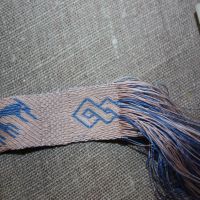
That lozenge pattern element is not a photograph, but a scan. So it should be to scale. But I pinned...
Guest - Katrin Sprang Discussion
15. September 2026
I was not referring to Rachel's reconstruction (is the reconstruction you refer to the one photograp...
MäRZ
06
0

Fibres in Early Textiles Conference

If you're interested in attending the Early Textiles Study Group conference "Fibres in Early Textiles" at the Uni Glasgow, 6-7 June 2019, registration is open - and places are limited, so you might want to register as soon as possible.

0
MäRZ
05
0

The times, they are...

...a-changing. Things, in my case.

I have mentioned that there has to be some iron gall ink making to be done - which also involves portioning that ink and packing it into suitable vessels.

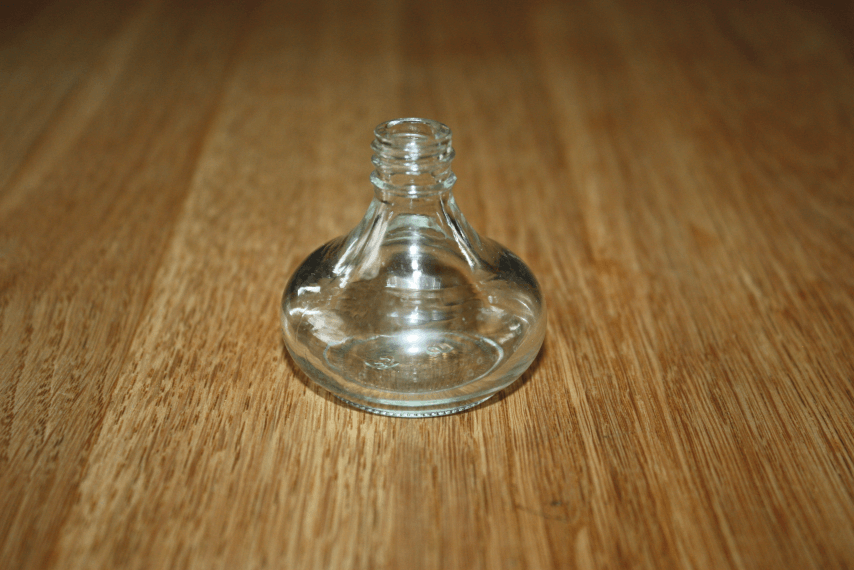
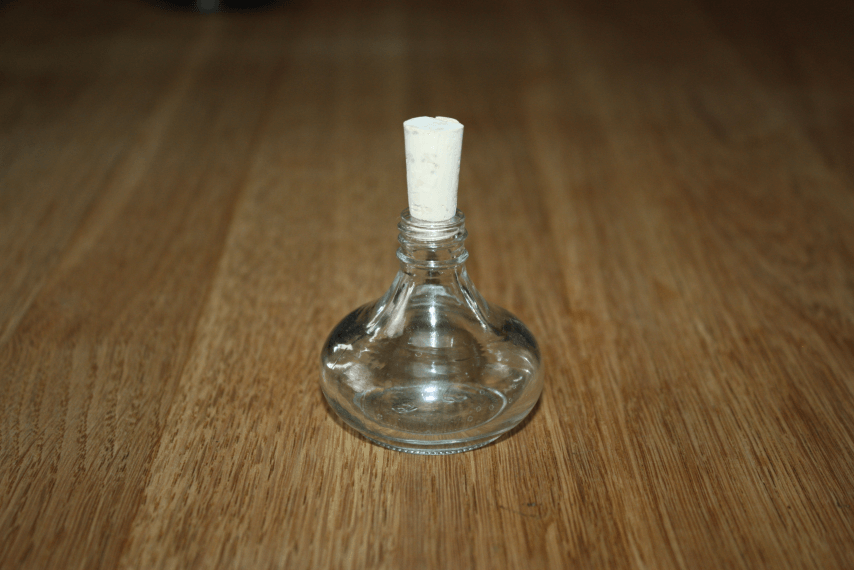
Back when I ordered the first batch of ink, I looked for small bottles that would not look obviously modern. I finally found some that loosely resembled an ink bottle I found on a late medieval image (which, to my chagrin, I did not write down, so I don't know which one it was anymore). So I ordered those, stoppered them with a cork, put on a plastic shrink collar for extra security before selling, and that was it.

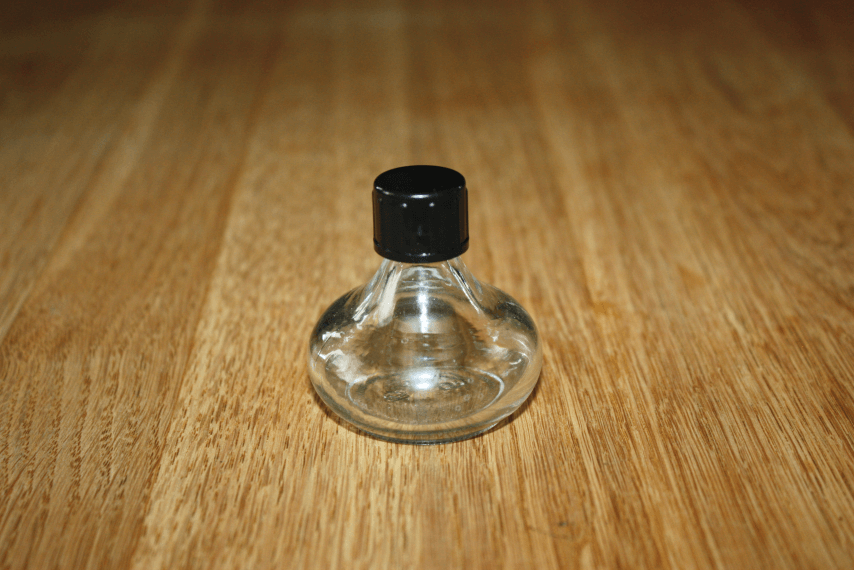
Now, however, these bottles are not available anymore. They have almost-twins, though - with the difference being that my previous ones were corkable only, and the current version has a screw-on top.


Which is, obviously, very much non-medieval. However, it is also a good bit safer against spillage than a cork. So after a good bit of thinking, and looking for an alternative bottle version that resembles medieval forms and is suitably small (which I did not find), I did order the modern twin of my old bottle.

I'd prefer selling the perfect ink bottle - but that is not possible unless I'd get a glassmaker to make the bottles to order, turning one of my lower-price items into something rather expensive. In addition, most images of scribes show the ink being held in horns for writing, and only some show bottles with more ink supply, those being considerably larger than the amounts needed by today's users. So these small bottles are a compromise from the very start.

Which means that in the future, if you buy ink from me, you will get a small bottle with a travel- and transport-safe, modern screw-on lid.


You will also, along with this, get a small cork stopper that you can use instead of the screw-on lid, if you want - because you like corks better, or because you will be using the ink in an environment where things should not be obviously modern.


And now I hope that this is a good enough compromise not only for me, but for my customers, too...
0
MäRZ
04
0

Needle Making Film

There's a nice little film on the website of the Heritage Crafts Association about the art of needle making - though it's mostly modern pre- industrial processes, it still is interesting.

You can watch it here - and maybe check out the rest of the website as well!
0
MäRZ
01
2

Warping.

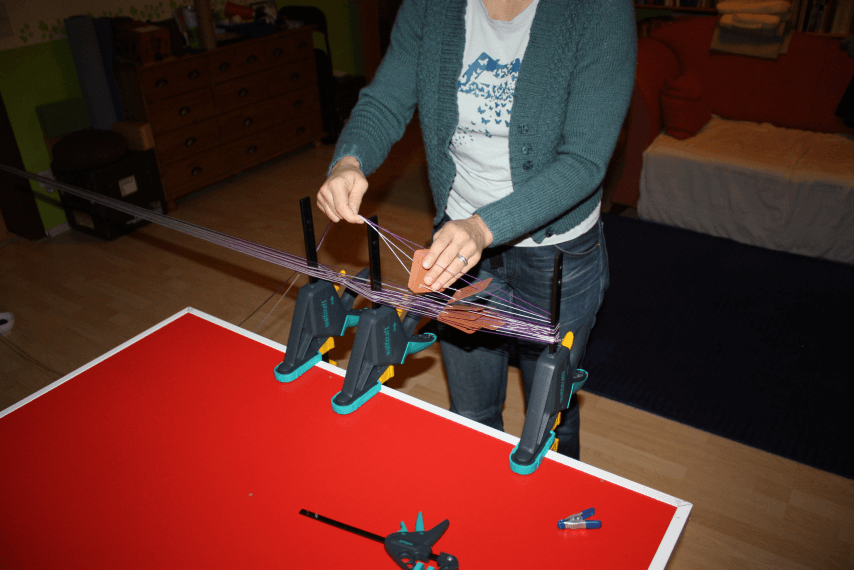
Because I'm busy with finishing up an article, and doing a bunch of other stuff in preparation of the fair season (which includes sorting through the goods inventory, and re-packing and re-organising things), you are getting a random tablet weave warping picture in lieu of a normal blog post:


I am easy to amuse or to make happy in some circumstances, and warping is one of them - I find it utterly satisfying to have the yarn flow out with even tension, and to have a nice, neat stack of tablets building up as I warp. (Which means, too, that my fingers itch to set tablets straight when someone else warps, and it's not a neat stack. Which, when you are showing how to warp to beginner weavers, is almost invariably the case...)
0
FEB.
28
0

Stoned?

Just in case you are not into textiles, but more into stones - or know someone who is: The ArchaeoParc Val Senales is having a Flint Knapping Symposium on May 29 to June 1. It's a conference for experts, museum professionals and hobbyists working with flint knapping techniques, intended as an opportunity to gather and share experiences.

I've been to the ArchaeoParc (we had the wonderful opportunity to hold a Textile Forum there), and it is a wonderful place with spectacular scenery, incredibly nice people and utterly delicious food. So if you needed an excuse to go there, this conference might just be it.

You can find more information about it here on the Museum website. Be aware that it is taking place during the main travel season of South Tyrol, so if you want to go, try to arrange registration and booking as soon as possible!

(And if you do go, please say hello to Johanna for me!)
0
FEB.
27
4

Hobby vs. Job.

One of the topics that come up from time to time is turning a hobby into a job, or a part-time job - people selling the things they are making.

One of the things that I always mention when this happens is the importance of calculating correctly. This means that if you would be working full-time in this new job, you should be able to make enough money to live off it. So you should calculate the price of your items accordingly - and that will give you a benchmark for what to ask, and should also give you an idea of whether turning your pastime into a job could work. Especially if you are thinking of quitting your current day job, you might want to check if you will be able to keep the standard of living that you are accustomed to, or if (and how much) you are willing to save in order to change to your new venture. Which means it's probably a good idea to list how much money you are spending each month, and how much of that is fixed (which includes, for instance, rents and insurances) and how much is fluid. I had a conversation about this fairly recently, and it only took about three minutes of mentioning what all has to be paid by the income of what is made (such as health insurance, website costs, savings for old age, light and heating for the workspaces, and a gazillion other things) to get my conversation partner think really hard about whether this would be a good idea or not.

In case your numbers come out favourably, and you are planning to go full blast into your new venture, it's also a good thing to keep in mind that your company will take some time to start up and to get known well enough to actually make money. Usually, it takes about two to three years for this - which means you should have some savings to keep you afloat during those lean times. Or start part-time, build up from there, and see if you can (and want) to go full-time after you are better established.

It may well be that, after looking at all these figures and doing the maths and thinking about it, you will prefer to leave things as they are - your day job as your day job, providing work and bread, and you hobby as just your pastime, providing fun and satisfaction (hopefully in addition to the satisfaction you get from your day job). And that is an absolutely valid decision. In fact, it may be the smartest decision in a lot of these cases.

One last thing that is sometimes forgotten, or not mentioned: If you turn your hobby into your work, you will lose the hobby. The way you look at things related to the hobby will change, and your whole attitude to this will change. It may stay fun work, but it will be work, and there will be days when you don't enjoy it that much.

When I went ahead and turned Living History stuff into part of my job, it changed a lot for me. I knew that would happen, so I wasn't surprised by it. However, the extent of the change actually did surprise me; I had not expected that much, and that deep of a change on how I look at things. It's hard to pinpoint all the little and large aspects, and even harder to explain. It also does not mean that I don't enjoy dressing in medieval garments and cooking food over an open fire and chat with people who do the same - but I'm still at my workplace, and I still have my professional hat on in some way, so it does feel very different from what it was before. So be aware that while trying to make money by doing something you love will not necessarily reduce that love, but it will most probably change things around it very much indeed.

There's nothing wrong with having a hobby you enjoy and not making anything out of it except your own, personal enjoyment. That is what pastimes, hobbies, and holidays are for, after all: Personal enjoyment. Plus, while a part of your enjoyment may lie in getting better at what you are doing, part of what makes a hobby so enjoyable is that there is little pressure to achieve something within a certain time, or someone else expecting you to perform to a given standard. (Obviously, if your hobby is competing in some way, this may not be true - but it should still give you personal enjoyment, and that's the point.)

Finally, there's a very nice article about just that topic - letting a hobby stay a hobby - here. Enjoy - and let me know what you think!
0
FEB.
26
1

Things you don't think about anymore...

On of the challenges when teaching is teaching things that have become second nature so much that you don't think about them anymore. It has been done so often, it is so basic to the task, that the muscle memory has long since taken over, and there's just no thought, no effort to the part anymore.

Which means that if you are teaching, it's a challenge not only for the student, but also for the teacher - and for the latter, it's actually a multi-part challenge.

Part one: Realise that you are doing something in a certain way, which your students are struggling with, because they are not doing it in just that way. This step becomes easier when you are aware of the fact that something like this may happen, and that you may not be aware of everything you do, and that there might be a small detail that you do that makes all the difference. Even if you know about this pitfall of teaching, though, sometimes part one will not happen, as you are concentrating too much on other stuff. This realisation, for me, needs to either have a large and looming problem which is too obvious to ignore or leave aside for later, or it needs enough time and free brain space for me to mull over what the problem might be, and then arrive at a conclusion. The latter sometimes happens only after a workshop has finished, and it hits me on the way home, or the next morning as I wake up. (Which tells you that these problems do stay with me, and irk me, and I really want to solve them.)

Part two: Find out what, exactly, you are doing, and how it differs from what your students are doing. That sounds easy, right? But this can actually be rather hard - see above, for things that have become so much second nature that you don't think about them anymore.

Case in point, not textile-related? A few days ago, we went into an indoor pool to teach a young man how to swim. Obviously you can only cover the very basics in just one session, so that's what we aimed for.

One of the very very basics is the fact that water offers little resistance to slow movements, and much resistance to quick ones. There's also more resistance, much more, if you have a larger surface area than if you have a small one. So if you want to push yourself into one direction, you go quick with your hands or legs, trying to press as much surface area against the water as possible, and to "rewind" for the next push, you go slower, with as little surface as possible.

Now, both the Most Patient Husband of Them All and me are "Generation Swimming Pool Boom". As we found out a bit later, Germany saw a huge amount of pools built in the 60s and 70s, and of the Germans between 30 and 50 now, almost 90% are swimmers (as in they can reliably keep over water and move forward for at least a few hundred metres). Swimming has been so normal for us, having learned how to do it as children, that this slow-fast-thing is nothing we'd think about. It is something, though, you have to experience, and then learn which part of the motion is supposed to be quick and which is slow. And there's more little details to the motions, things that are surprisingly hard to explain.

So part two means looking at what you do very closely, looking at what the students do very closely, and figuring out what the differences are. They might be as minute as reducing pressure by slightly opening your fingers at one point of the movement, something not blatantly visible but actually quite potent (it's what I do when I turn tablets when tablet weaving). As you've got to find the difference in a motion or a sequence of motions, this may take some time - which may or may not be available in a workshop or lesson situation, depending on how much of a "safety time margin" you have calculated into your lesson plan, and how the overall thing is going.

And then, of course, what follows is part three: Explain what you are doing, and teach this to the students. The explaining part, for subtle things, can also surprise you by not being straightforward; and then the students need to try the new method until they find the right motion, the sweet spot, or the correct amount of tension or pressure. This, too, may take more or less time, depending on how difficult the task is for the students, but if you are in luck, they can work on this while you are moving on to help someone else with their problems.

Part four, finally, is: Take notes of what you figured out, and taught, and how you taught it, for any future lessons in this regard. Once some detail like this has been identified, it's much easier to spot if that is a problem the next time around, but it's always helpful to make a note or two in the teaching script at the appropriate place... which can then serve as a reminder for you, not only about this particular thing, but about the fact that these hard-to-spot pitfalls may lurk somewhere else as well, and that you would do well by keeping an eye out for them.

So... have you made similar experiences? Have you stumbled over teaching something because parts of it were so second nature you had a really hard time passing them on? And did you manage to solve it?
0

By accepting you will be accessing a service provided by a third-party external to https://www.pallia.net/

Kontakt