Latest Comments

Guest - Aislinn Dyestuff Citizen Science.
09. Oktober 2026
This is a great project. I look forward to the results. Thanks for letting us know.
Guest - Aislinn Time for...
09. Oktober 2026
Looks delicious!
Guest - Katrin Sprang Discussion
18. September 2026
Hi Rachel, I have looked for more photos of you, but that was not very successful. I found a link on...
Guest - Beatrix Sprang Discussion
15. September 2026
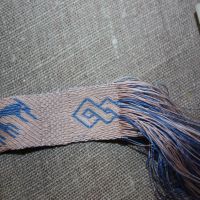
That lozenge pattern element is not a photograph, but a scan. So it should be to scale. But I pinned...
Guest - Katrin Sprang Discussion
15. September 2026
I was not referring to Rachel's reconstruction (is the reconstruction you refer to the one photograp...
FEB.
25
0

Time for Links again.

Here's a stack of links to various topics:

A Youtube video of a lecture given by Randy Pausch on how to achieve your Childhood Dreams.

A method on how to get vegetable matter out of wool, using a hand card - it's a rather time-consuming method from the looks of it, but a very interesting way to clean fibres.

An article on apparel for athletic activities from the 14th to the 19th century - open access (yay!).

Finally, in case you are in Scotland and interested in natural colours, there is a talk and workshop on Turkey Red on Saturday, March 2, 10 to 12:00 at Dumbarton Library.
0
FEB.
22
0

Hunting for Black.

I've run out of iron gall ink now, so it's time to get some more... or, to put it better, to make some more. Last time, I had a colleague make my batch, but as she's not working anymore, I have decided to do it myself this time. And obviously, the goal is to use an original medieval recipe...

...which poses a slight problem. Not because there are no recipes, no - quite the opposite. There are quite a lot, and though they are similar in regard to the ingredients, the details - and the amounts of the main ingredients that are given - can vary quite a lot. Some of them mention that one should be able to tell, from experience, how much exactly of one of the ingredients should go in.

Yeah. Only problem is that if you have no experience... well, you get the picture.

My search for recipes (which I have collected, and I will soon just pick one and go with it), though, has also brought me across an interesting database project: Colour Context, a database on colour practice and knowledge. It features transcribed recipes from a number of (mainly late-medieval) sources - so if you are interested in medieval colour, or artwork, this may be of interest for you.
0
FEB.
21
0

Needles, Haystacks, Pins, Sighs.

One of the things on my list of things I would like to do is make a short overview article about the sources for the different kinds of goods I carry - for myself, for the crafters who make these things for me, and of course for my customers. It's one of the things, however, that are usually a) not urgent, b) not crucial for being able to carry on, and c) taking a lot more time than expected or readily available.

From time to time, though, something comes up that prods me into looking for more info, and trying to collect that, and this has happened recently. The things under my scrutiny? Pins and needles. And oh, I can tell you... it's an abyss.

As is often the case, there is a little bit of literature that is easy to find, and that does give some information. For Germany, it's Stefan Krabath's work Die hoch- und spätmittelalterlichen Buntmetallfunde nördlich der Alpen, and for Britain, Chris Caple has written a number of things about pins. In addition, some pins and needles are listed in the context of works about textiles or garments or textile/garment accessories.

Overall, though, this is a group of finds which is hard to find - and even if pins or needles are listed in some archaeological publication, there is often not much information about them. Ideally, I'd like to know the material (brass? bronze? copper? some other alloy?), the length, the thickness of the shaft, the date (which can be a real problem, as these things are typologically long-lived) and in addition, I'd like to have a drawing or at least a photograph. In many cases, there is none of this apart from the mention and a very rough date... which does not help me at all in looking for pieces to get someone to replicate.

Added difficulty: Germans like to use that "needle in a haystack" idiom, which means that it's a very good idea to put "-heuhaufen" in your searchwords (though that in turn might toss out valid results, the usual dilemma).

So I'm looking into articles and trying to get enough material together - to both write up a little info thing, and to decide on what I would like to have made (and then the next step is to find out if the metalworking people I've contacted can, and will, do it).

And this, of course, is where I segue into a bleg - if you have any nice documentation of pins (preferably high medieval, as the late stuff is way easier to get info about), please let me know - I might end up with replicas of these in my shop...
0
FEB.
20
0

Spring is Coming!

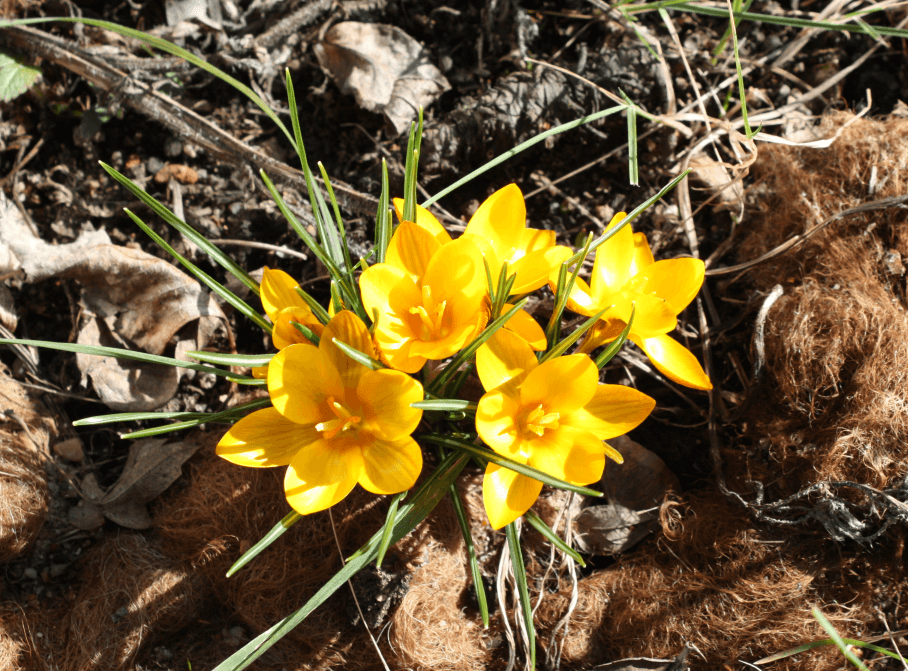
At least early spring is - as these guys in the garden stand testimony:


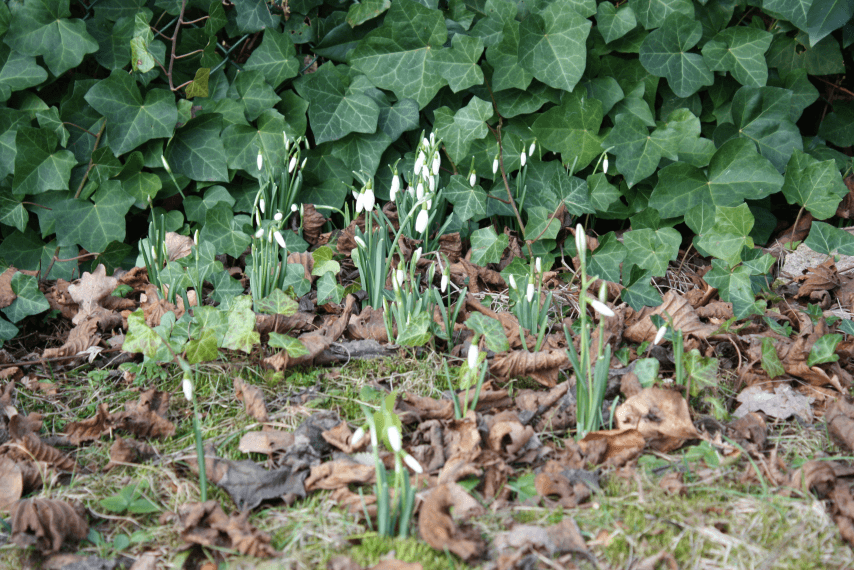
The crocus, as usual, is the first to go bloom. The snowdrops sit in a more shady part of the garden and will need a few more days, but they are obviously also getting ready:


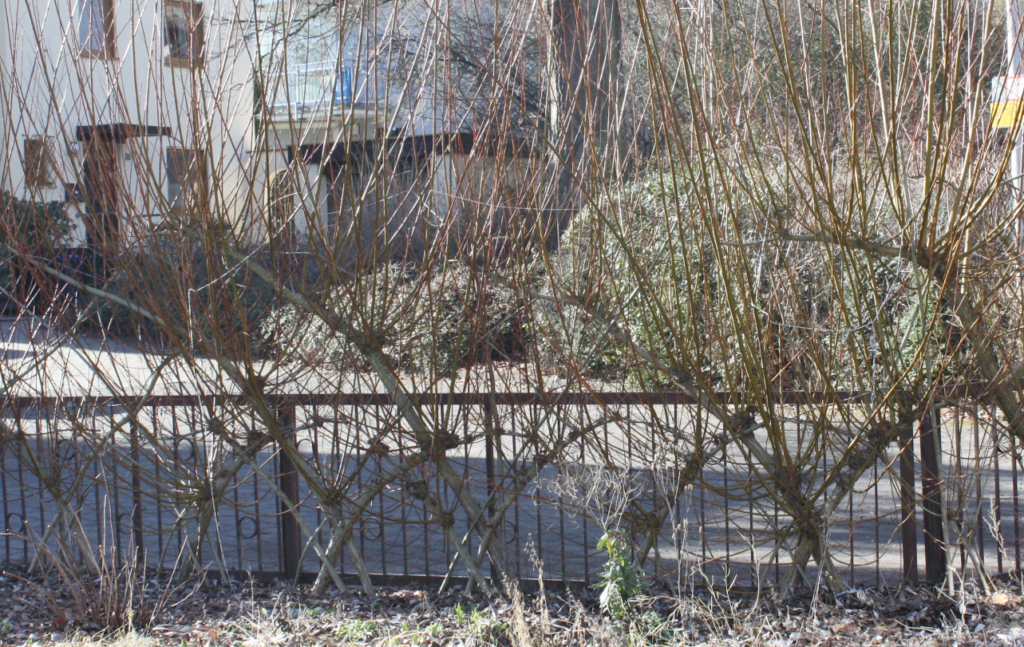
Early spring also means it's willow-pruning time, and our fence goes from its wild winter stage, which looks like this:


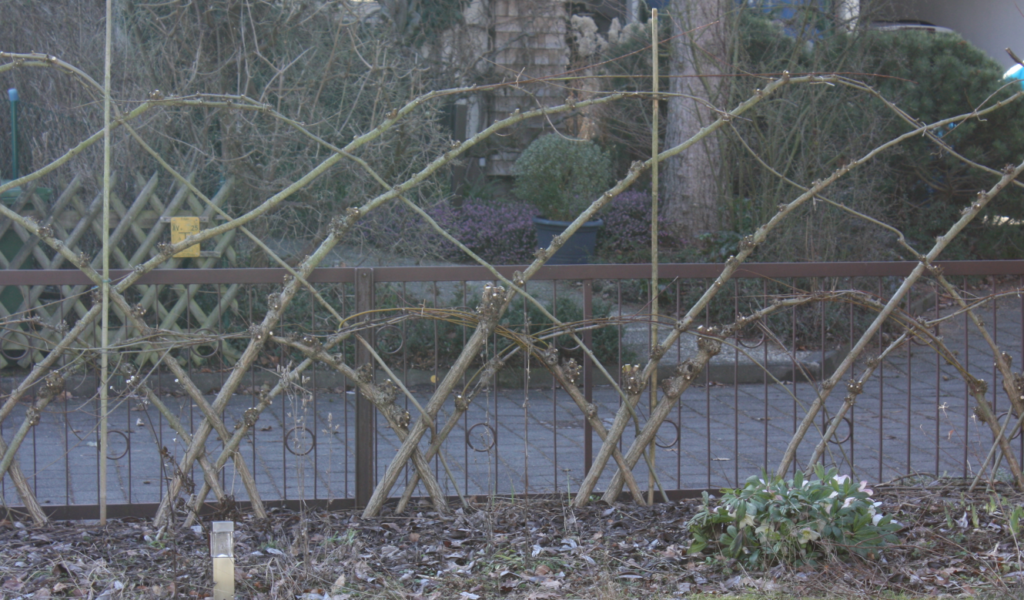
to being all bare of withies, ready to make new ones when spring truly comes:

0
FEB.
19
0

Procrasti-Bake?

Maybe, just maybe, I shouldn't have read that stuff about procrasti-baking.

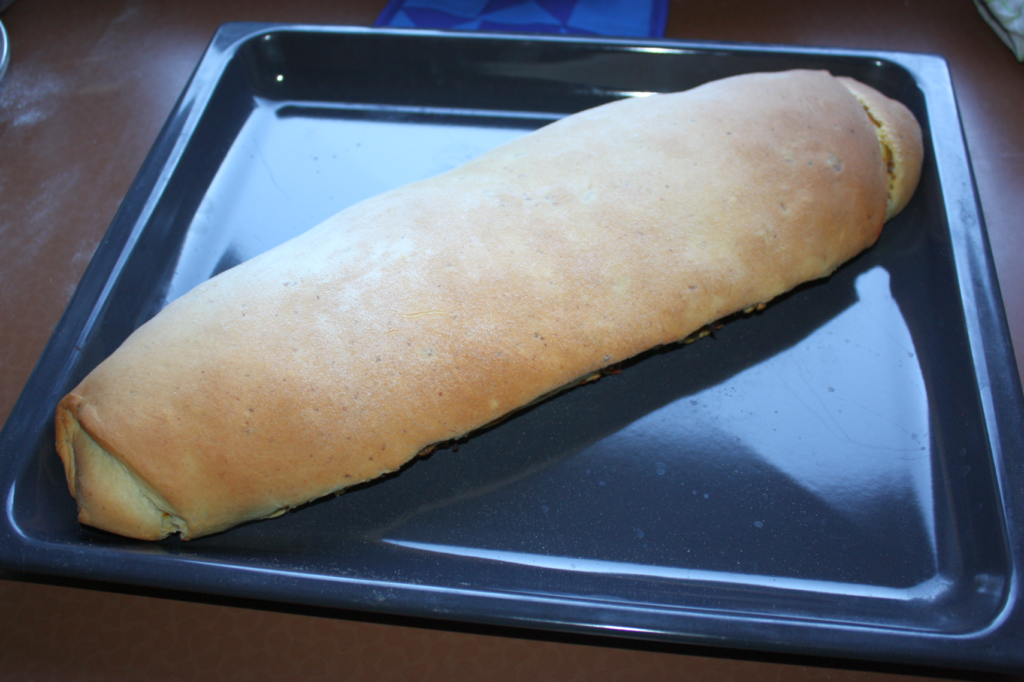
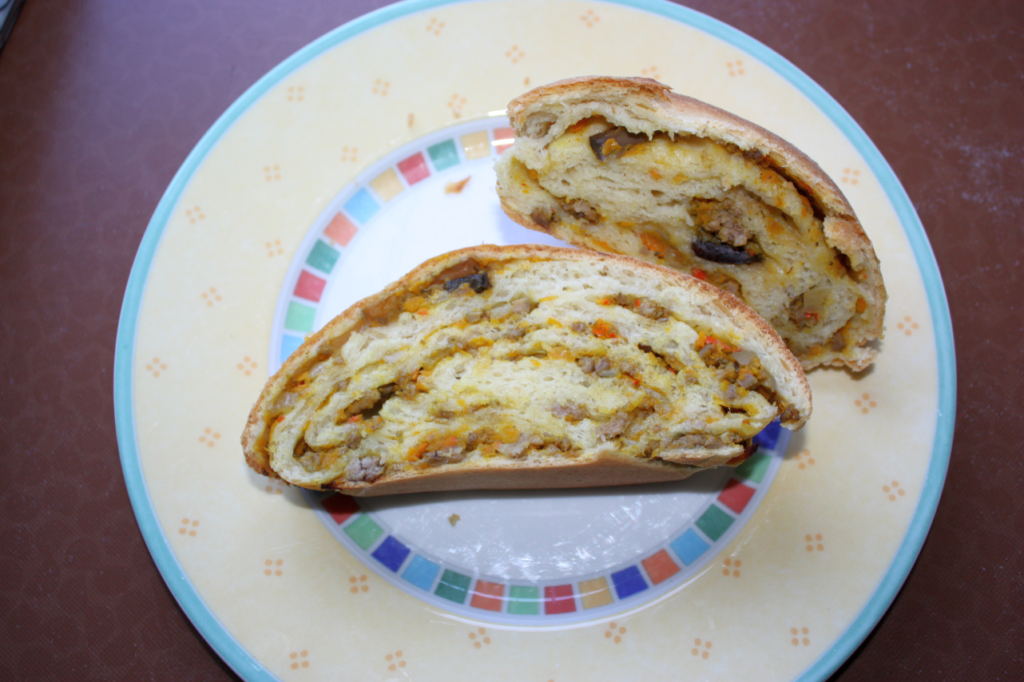
Though usually, I don't procrasti-bake, I procrasti-cook - doing something vaguely lunch-related which takes a longer time than I should actually use for cooking. At least for everyday normal lunch cooking. Sometimes, though, both things coincide. Like for this:


It's a Strudel, but not a classic one with Strudelteig, but with yeast dough. This special kind of dough contains boiled mashed potatoes, so it's not a normal one either. The recipe I found was for an apple filling, but I decided to make a version with a savoury filling:


That's minced meat, onion, pumpkin, and some olives, seasoned with rosemary, sage, thyme, and oregano. And though I botched and added too little salt to the dough, and though the filling was a little too sparse, the dough itself? It is awesome.

The mashed potatoes turn the thing into a wonderful silky-smooth something. Rolled out thinly, and then left to rise again for a sufficient amount of time (I think it needed a good hour or so), it bakes into a wonderfully fluffy thing. I will definitely make this again!

And in case you want to try it, too, here's the recipe for the dough (for the Germans, here's the original recipe on Chefkoch):

350 g flour
20 g yeast
60 ml milk (lukewarm)
250 g potatoes
2 medium eggs (I used 2 large eggs for double the amount of dough)
75 g butter

for the sweet variation: about 50 g sugar and 8 g vanilla sugar plus a pinch of salt; for the savoury version: salt to taste

Boil the potatoes and press them to mash while still hot (you can do that the day before).
Put the flour in a bowl and make a little hollow in the middle; crumble the yeast in there, add the milk and about a teaspoon of sugar, stir in some of the flour to make a (still liquid) dough and let it rise.

Melt the butter and let it cool down again. Add mashed potatoes, molten butter, salt, sugar for the sweet version and knead into a smooth dough.

Roll the dough out thinly (I use a large floured teatowel for this, which is also helpful in rolling up the thing and transferring it to the baking sheet) and spread with filling of your choice. A thin spread of jam will do a very nice job; you can of course turn this into a classic Apfelstrudel by adding apples, or fill it with some Quark concoction.

Roll your filled dough up and let it sit in a warm place to rise for at least half an hour. Bake at 180°C (fan oven) for 35-40 minutes. Enjoy (possibly with the addition of some vanilla sauce, or custard, or a bechamel sauce for a savoury version).

I like it best when hot, and it will heat up very nicely again in the microwave.
0
FEB.
18
0

Hugo Nominations!

Hugo nominations are open again, and as usual, I've not done much reading of new books and novelettes and short stories in 2018 - so I don't have a lot in my head to nominate.

I have, however, done some listening to stories on Escapepod and its sister podcasts - and my favourite story of 2018, by far, still is "A Cure for Homesickness". It's just beyond brilliant, and if you like stories about humans and aliens at all, go have a look at it (you can also read it beyond that link if you prefer that to listening).

There's a whole list of stories from EP that are nominate-able, and I loved quite a few of them - plus there are more eligible stories on Podcastle, Cast of Wonders (including "Ava Paints the Horses", which I had the pleasure to narrate), and - if you are into horror and not such a wimp as I am - Pseudopod.

So. I will go and nominate - and if you are, like me, one of those who can hand in a Hugo nomination, please do so. It doesn't matter if you have not read everything, and it's not necessary to fill in every slot or every category (most of them, on my ballot, will stay empty) - but it is a wonderful way to draw attention to something you really loved in 2018, and who knows, your nomination might be the difference for something ending up on the shortlist and something remaining unknown.
0
FEB.
15
1

The True Cost of Driving a Car.

One of the fun-not-fun things I get to do every year, at the start of the year, is do my car cost calculations for the tax stuff. The car we have (which stands in the garage most of the time) is owned not by us, or myself, but by my company, so its costs are part of my business costs.

I am, of course, allowed to use it for private things as well - but as it's the company's car, this counts, for all bureaucratic purposes, as something called "Leistungsentnahme - Nutzung von Gegenständen für Zwecke außerhalb des Unternehmens" (use of goods for purposes outside of business), and that, in turn, counts as part of the generated income... and that, in its own turn, is what I owe 19% VAT for.

If you are confused now, let me un-confuse you: I have a car (that I paid for), but if I use it for private purposes, I have to calculate the actual costs per kilometre, figure out how many km I have been driving for private stuff (which means keeping and then going through the vehicle log), calculate the value of that, and then pay the 19% of VAT of this value to the state. So I basically have to pay to use my own car... which is in some sense feeling so absurd that it makes me laugh a little inside every time.

The side effect of having a company car and having to do all this mathsy stuff on its costs? Getting a very, very clear picture of how much a klick of driving a car really costs. Now, mind you, our car gets relatively little use - I end up at significantly under 10,000 km per year, unless some really unusual, weirdly long journeys happen - and of course, figures can change. But if you've ever heard of the 0.3 € costs per km that are often used as a basis for calculating driving costs, and thought to yourself "well, that is way more than I pay", you were probably falling into the same trap that I did before changing to company car. Most people only look at the obvious running costs, which is the fuel (and maybe the oil), but really, that's just the tip of the iceberg. Yes, if you only reckon fuel costs, driving 500 km seems to cost very little in comparison to going with public transport, such as metro or train.

What gets forgotten, though, are all the other costs... and there are plenty of these. You have to buy the car. Insurance for the car is obligatory in Germany, plus there's car taxes. Maintenance costs - regular checks to keep things running - as well as repairs. Costs for the garage. New tires, necessary once in a while. Possibly membership in some club for accident and breakdown cover. Costs for TÜV (regular vehicle inspection).

Which means that many years, our car has not cost .3 € per kilometre driven, but something in the range of .34-.35 €. This means ten km cost three € fifty - that's a coffee in a café. Driving a hundred costs 35 €.

Of course, some of the costs per km will go down if you drive more. We have a diesel car, which becomes cheaper (because of high taxes, but low fuel costs, comparatively) if you drive more. (There are studies that come to the conclusion that electric cars are already the more cost-effective solution, though they do not state how many km per year they used as the basis for the calculations.) But then you will also have service intervals coming up faster, and there will be more wear and tear. So let's say I drive more and can calculate with .3 € - even with this number as the actual costs, public transport will often be cheaper. If I manage to get a super saver price, it's sometimes just a fraction of what the car would cost, less than half the price if I'm lucky.

Added bonus? If I'm sitting in the train, I can do whatever I want to. If I am sitting in the car, I have to drive. Maybe I can listen to some podcast on the side, but knitting or reading or writing are right out - which are all things I like to do during train rides. So if I can, I'll use the train for travel.

Obviously, there are things where this is not possible, such as fairs, when I fill the car with stuff - but I've successfully lugged stuff for a workshop or a work meeting in the huge suitcase I have just for these purposes all through Germany and, indeed, across borders. That suitcase fits about 16 clamps plus a lot of extra stuff. It's not fun to lug it up or down stairs when fully loaded, and not fun to run with it when the train is delayed and I have to hurry to catch the next one - but I still love being able to go to a work spot per train. I just try to see these things as free fitness training.

So - are you a train/public transport or car person? Have you ever figured out the true cost of your car kilometres?
0

By accepting you will be accessing a service provided by a third-party external to https://www.pallia.net/

Kontakt