Latest Comments

Guest - Aislinn Dyestuff Citizen Science.
09. Oktober 2026
This is a great project. I look forward to the results. Thanks for letting us know.
Guest - Aislinn Time for...
09. Oktober 2026
Looks delicious!
Guest - Katrin Sprang Discussion
18. September 2026
Hi Rachel, I have looked for more photos of you, but that was not very successful. I found a link on...
Guest - Beatrix Sprang Discussion
15. September 2026
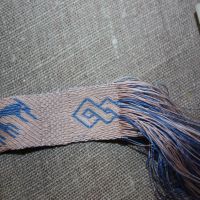
That lozenge pattern element is not a photograph, but a scan. So it should be to scale. But I pinned...
Guest - Katrin Sprang Discussion
15. September 2026
I was not referring to Rachel's reconstruction (is the reconstruction you refer to the one photograp...
NOV.
30
0

Catching up on Link Stuff.

There's a stack of lovely links to share with you, so you're not getting an "Old Knitting" post today (wait for tomorrow, though...)

Instead, here is other stuff I hope you'll enjoy:

Uppsala University has a new database called "Gender and Work", where you can search and find different sources regarding, well, gender and work. While the title sounds very international, it looks like the database interface and the base itself are Swedish only. Still, if you are looking for sources and can read Swedish, this might be a lovely tool for you.

The next one is definitely in English. I know this, because I have helped making it myself... as you might know, I am a fan of the wonderful Escape Pod, so when I met with Alasdair at LonCon, I volunteered, spur-of-the-moment, to be one of their narrators. Well, though my first story is not for Escape Pod, but for Cast of Wonders (which is a YA podcast, soon to be part of the Escape Artists flock), I'm very excited that it is live now. You can listen to me narrate "Fairy Bones" by Guy Stewart here. (My voice is a little nicer usually, those were the last dregs of the Cold of Doom that had me in its claws for a while.)

If you read German and are interested in material culture of the Middle Ages Roman Age, there's an interesting (and textile-/clothing-related) article at Archaeologik, titled "Von Menschen und Kapuzenmänteln oder Wie kommuniziert eine Gesellschaft mit Alltagsgegenständen?".

You prefer more English? Here you go. There's a long poem listing an incredible amount of weird pronounciation rules (or exceptions) in English, called, fittingly, "Chaos". Sometimes, people attempt to read it, and here's one of the many youtube videos of it:


In final news, I'm hard at work getting the new European Textile Forum pages finished and online. I've kept records of how the old pages did look (which included the programmes, well, at least mostly!) but there was no real, proper archive. This will change now for the better, and it will also make administration and preparation of the Forum easier for me in the future (at least I hope so).
0
NOV.
27
0

Very Old Knitting, Part 3.

As Harma pointed out yesterday in the comments, there' s an issue with crossed stitches in the knitting method I've shown. Well. Let' s tackle this issue right away, shall we?

I took very good care to follow the instructions exactly, including the direction the yarn wraps around the needle. Which, indeed, results in twisted stitches (the legs crossing) every other row... why? Because of the stitch alignment. Remember that I mentioned how the stitches lie on the needle in that method, partly with the right leg in front and partly with the right leg in the back?

Having twisted stitches every other row points to there being an issue in only one of the rows - either when working on to the left needle, or when working on to the right needle. So let's make things easier to sort it out by restricting ourselves to one direction only. This is done by working in the round (all the extant pieces I know of, by the way, were worked in the round). Or, if you are a lazy person like me who just wants to do a few test stitches and not fiddle too much, on a pair of double-pointed needles. (The trick is to just move the knitting over to the other end of the needle, let the yarn go right across the back of the fabric, and knit the next row in the one and only working direction.)

I'll be sticking with the first row for now... here we go:

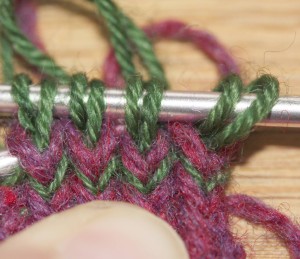
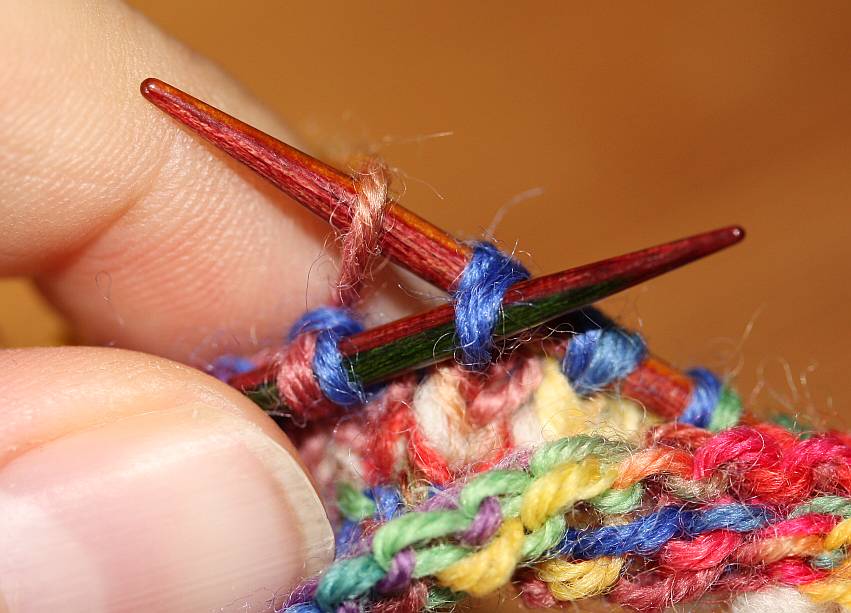
[caption id="attachment_2025" align="alignnone" width="300"]After a few rows of working on to the right needle. After a few rows of working on to the right needle.


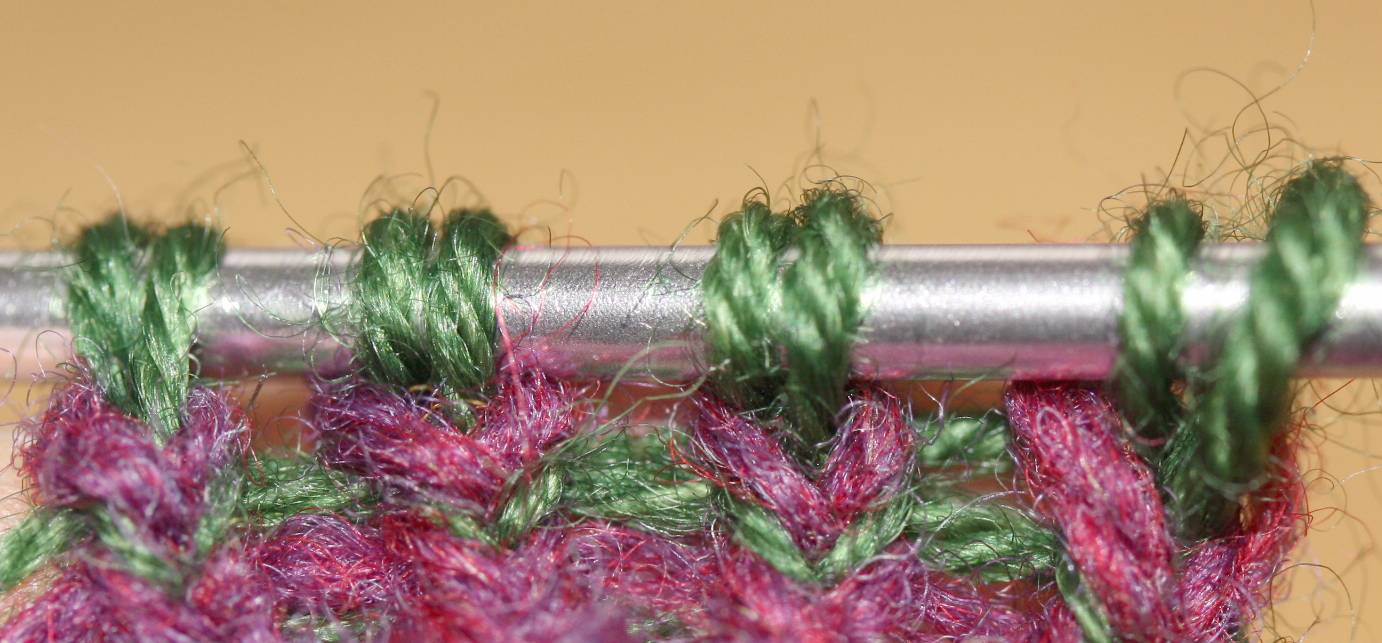
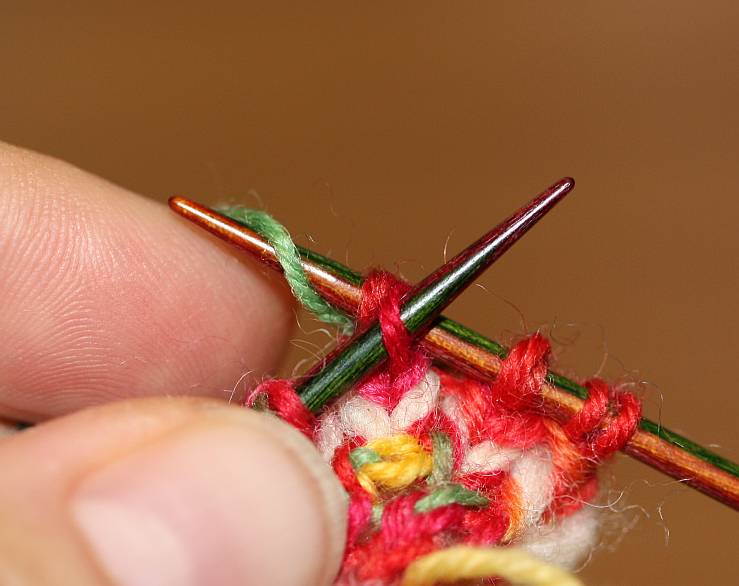
This is what it looks like after a few rows, always working from the left needle on to the right needle (following the instructions). All stitches are aligned in the same way: with the right leg in front of the needle, as customary in modern Western European knitting. And you can hopefully see that all the stitches are twisted - the left leg crosses over the right leg in every stitch. So this is the row, obviously, where something happens that should not happen.

Where does the twisting occur? Here' s what happens:

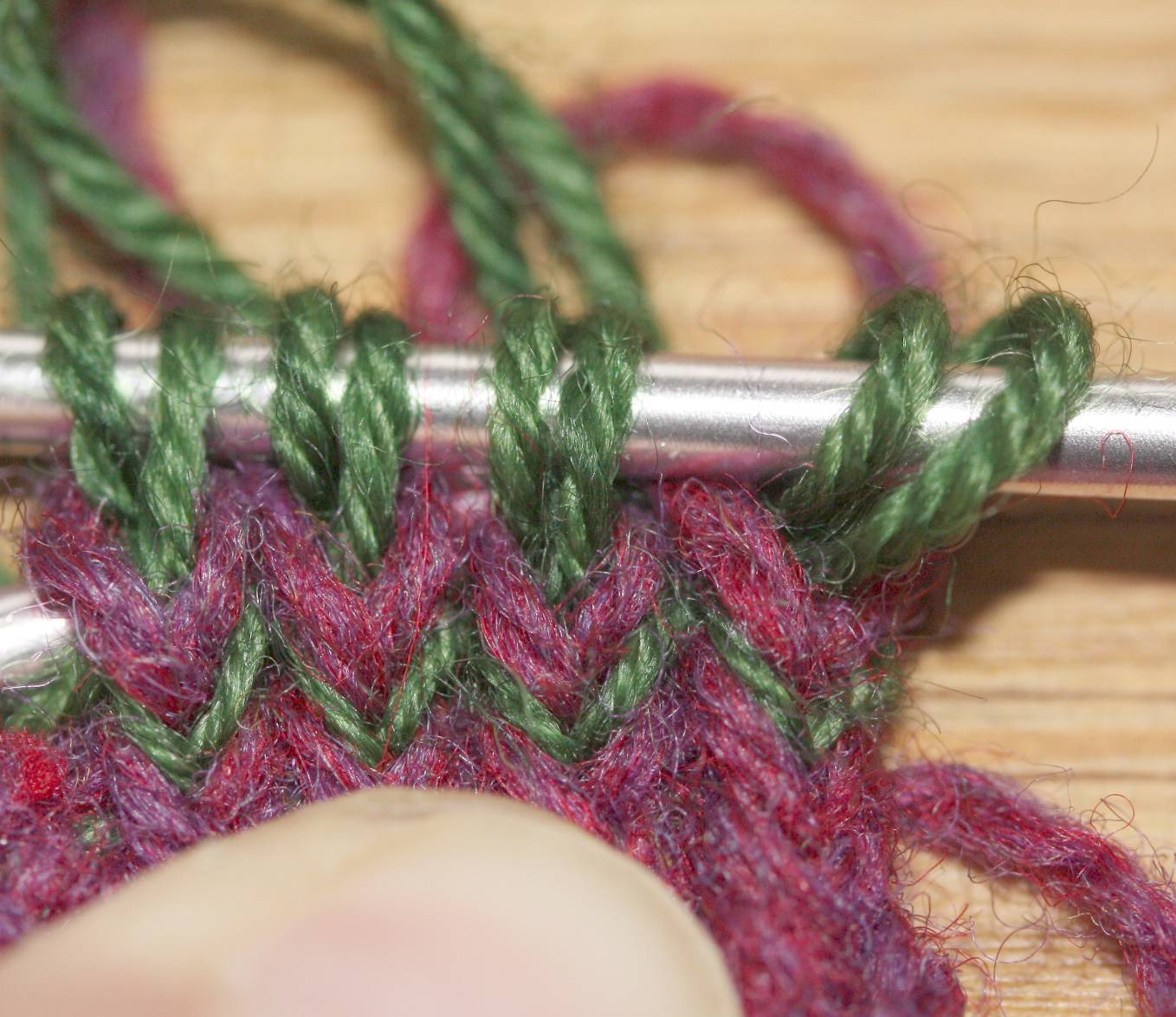
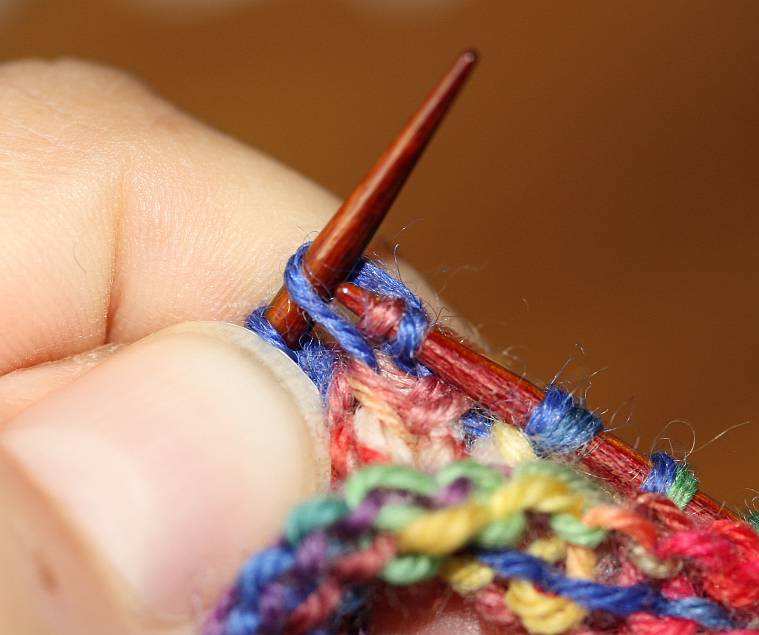
[caption id="attachment_1935" align="alignnone" width="300"]... and pull through. ... and pull through.


The right stitch, with its right leg in front of the needle, is drawn over the two newer stitches. The right leg is thus drawn to the left of the two stitches - resulting in a twisted stitch.

Sometimes it can be hard to see whether stitches are twisted or not - if in doubt (and the fabric can take it, obviously that' s not possible with archaeological knitting) just stretch the thing out.

If the stitches are untwisted, it opens up completely:

[caption id="attachment_2029" align="alignnone" width="300"]Knitting from the dolly, in its normal state... Knitting from the dolly, in its normal state...


[caption id="attachment_2030" align="alignnone" width="300"]... and stretched horizontally. Stitches and ladders between stitches both open up. ... and stretched horizontally. Stitches and ladders between stitches both open up.


When you stretch out the knitting with twisted stitches, the ladders between the stitches open up, but the stitches themselves are pulled tighter, forming firm little columns between the ladders:

[caption id="attachment_2031" align="alignnone" width="300"]IMG_8112 The knitting stretched out - you can see that the stitches are pulled tighter together. 


So. Our twisty issue lies with the stitches in the row working onto the right needle, and it' s related to the alignment of the stitch on the needle when pulling the stitch over. There you go. Next time, we'll take a look at the other row...
0
NOV.
26
0

What's this with the Patreon thing?

About a month ago, I posted about thinking to start a Patreon campaign. In the meantime, while building the new website, I've thought some more about it and, obviously, decided to try it out. You've probably seen that Patreon link thing right on top of the blog sidebar. Maybe you even clicked on it and had a look at my Patreon page (thank you!). And you're possibly wondering why I am doing this, and why now. So here's a list of questions (that I totally made up myself) , and my answers to them (not made up, of course).

Why are you doing this?
I love doing research on historical textiles, and textile techniques. I also love writing about them, and telling people about things, and teaching them. Getting to the Aha! moment of "this is how it can be done" is one of my favourite things, both when it happens to me and when I can help making it happen for others.

One of my ways of sharing textile research is this blog. However... I have to make a living somehow, and that means the blog doesn't always get the time, attention, and textile-research-related posts I would like it to have. Especially the latter.

Having some income through Patreon for the blog would help me in two ways at once: Firstly, it gives me an excuse to spend more time on textile research to blog, as people are obviously so interested in what I have to say that they are even willing to toss money at me for it. And secondly, having that money does help to relieve the pressure to get other things going to make the income I need, so I actually do have the time to spend.

So you would like me to pay money for something you do for free, and you do anyways?
Well, kind of. I'd like you to support the blog if you can and are willing to - and if you would like more posts on textile techniques and stuff. It's an experiment, of a kind. If this tanks and nobody hops on the Patreon train, I'll just go on like I do now - with a regular blog post every weekday, with the occasional gap, and an occasional larger post now and then. The blog will continue to be part of my workday, but it will also stay in the not-priority part of said workday.

If this patreon thing does work, however, the blog will get more of my time and attention, you will get more posts like I did in the last two days, and I'd be totally thrilled about all this. There's also a few more shenanigans in my wild patreon-related dreams, including tutorial videos - in case this really takes off. (Which would be so, so cool.)

What is Patreon, anyway?
It's like an on-going kickstarter, but based on a person's work instead of on a specific project. You support the creators you like by sending them money either per month (which is the model I chose, since the blog is a regular thing) or per Thing they create. You can cap your maximum monthly spendings on each artist. The lump sum of all your support money is deducted from your credit card at the start of the month, Patreon takes the fees due (card company and their own) and give the creators the rest of what they got paid.

Your Patreon isn't very popular, though. Why should I be (one of) the first to support it?
Um... well. There's this German saying that goes "Aller Anfang ist schwer" (every beginning is hard). Like on Kickstarter or any other crowdfunding thing, momentum is really important, and projects that have gotten a lot of love and support already are more likely to get more support, both financial and by spreading the word.

My campaign is new, and I'm not a big name, so it hasn't started with a lot of momentum right away. So why should you jump in? Because you like the blog and have a few dollars to spare? Because you like being first? Because someone has to do the first steps?

There's actually people on Patreon who bolster their patron numbers by mutual pledging, as in "I give you 2 bucks a month and you match my pledge and give me 2 bucks a month too". Well. I'm not going to do that, thankyouverymuch. If this thing goes on to be the least popular project ever - I'll wear it.

Okay. So what if I do it and don't like what I am getting?
You can opt out at any time and stop paying! If you feel like it, you can also let me know what you didn't like. I won't lie and say that I feel bursts of joy about being told about  things I'm not doing well, but I'm still happy to get negative feedback, as weird as that might sound. It's the easiest and most straightforward way to make me figure out what you like and don't like, and I can make changes based on that.

I'd like to support you, but not over Patreon/not with money. 
Thank you! You can support me in many other ways. Link to my blog when you find an interesting post. Tell people about my work. Tell them about the Patreon thing if you think they might want to support it. Consider buying things at my shop when you need textile tools. Tell other people about the shop. Comment on the blog (I love comments!). Write a review on one of my books, or on something you bought in the shop if you got something, and post it. (Amazon is the most helpful place for book reviews, by the way.) If you did buy something in my shop and there's a problem or something you don't like or that doesn't work properly, tell me about it. (If you do like things, feel free to tell me as well, that always brightens my day).

All these things help me, and let me do a better job. I love what I am doing, all aspects and elements of it (well, except maybe for the book-keeping...) and just getting feedback, both positive and negative, does help a lot.

So. Let's see how this Patreon thing goes, right?
0
NOV.
25
0

Very Old Knitting, Part 2.

So... as seen yesterday, working compound knitting (or double-depth knitting) on a dolly or similar thing is very easy. Let's add some challenge - off to the needles with this!

Ruth Gilbert (who is one of the reasons I started knitting a few years back) brought instructions with her to the Textile Forum, taken from Marianne Erikson's book Textiles in Egypt 200-1500 A.D. in Swedish Museum Collections, Gothenburg: Rohsska Museet. You can find them on p. 235, fig. 23. Or look at the following knitting pictures, where I'm following her instructions.

You're always working with a pair of stitches (so cast on double the amount you want to work).

Transfer both stitches to the right needle.

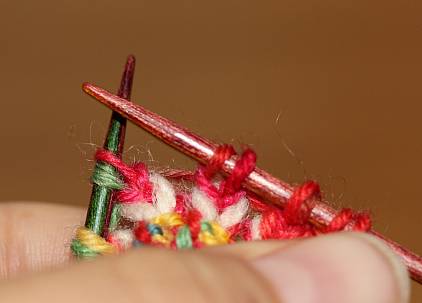
[caption id="attachment_1929" align="alignnone" width="422"]Unworked stitches on the right needle... Unworked stitches on the right needle...


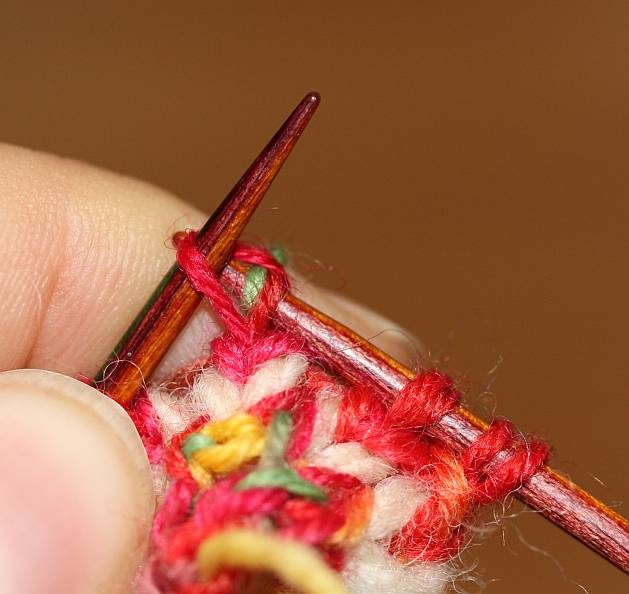
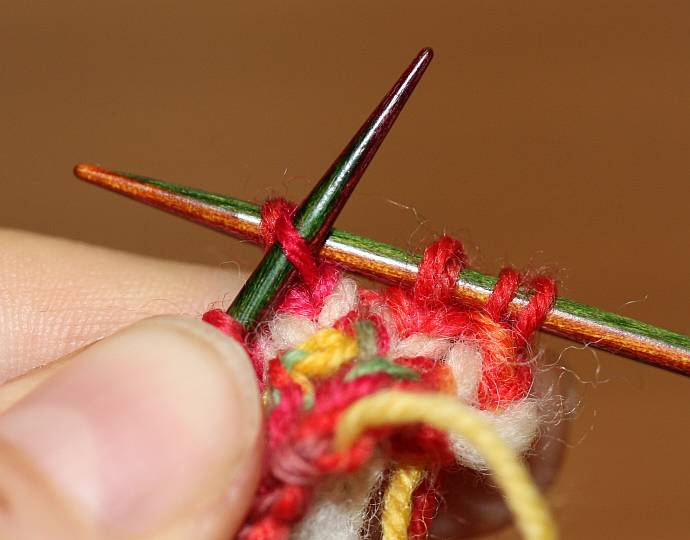
Insert left needle into the right stitch, loop yarn around right needle, and pull yarn and stitch through.

[caption id="attachment_1928" align="alignnone" width="420"]Needle inserted... Insert left needle into the right stitch...


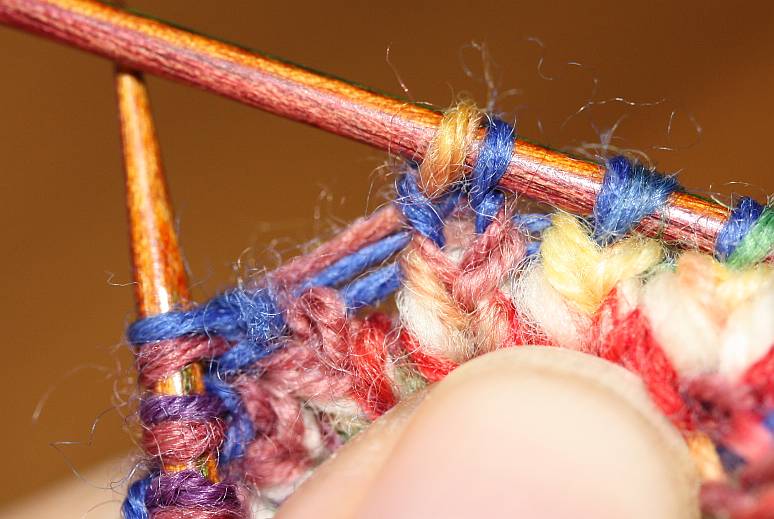
[caption id="attachment_1936" align="alignnone" width="420"]IMG_8086 ...loop yarn around...


[caption id="attachment_1935" align="alignnone" width="422"]... and pull through. ... and pull through.


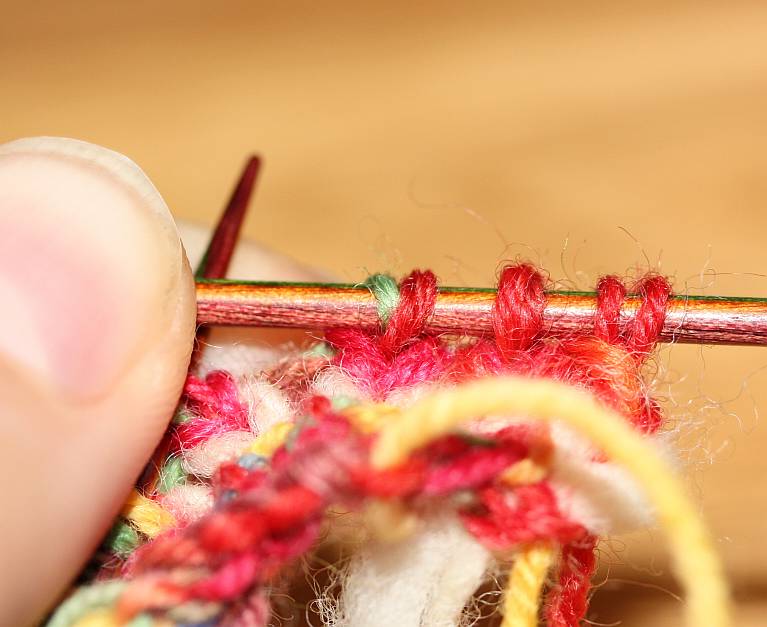
Note the alignment of the stitches: The older stitch lies to the right, its right leg behind the needle; the new stitch lies to the left, its right leg in front of the needle (as is the customary orientation in Western European knitting).

[caption id="attachment_1934" align="alignnone" width="300"]Stitch alignment. Stitch alignment.


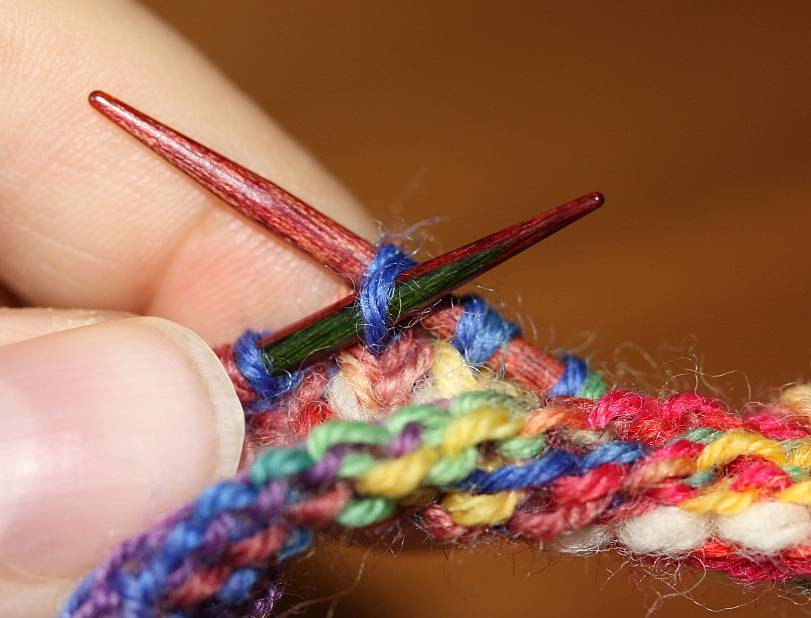
For the return row (if you are knitting flat), you insert the left needle into the second stitch on the right needle,

[caption id="attachment_1933" align="alignnone" width="300"]Insert left needle into right stitch on right needle... Insert left needle into right stitch on right needle...


loop the yarn around the right needle, and draw yarn and the stitch on the right needle through.

[caption id="attachment_1932" align="alignnone" width="300"]... loop yarn around... ... loop yarn around...


[caption id="attachment_1931" align="alignnone" width="300"]...and draw through. ...and draw through.


The older stitch now lies again to the right of the pair, with its right leg in the back; the old stitch on the right has its right leg in the front.

[caption id="attachment_1930" align="alignnone" width="300"]Stitch alignment. New stitch to the left, old to the right. Stitch alignment. New stitch to the left, old to the right.


Now transfer both stitches to the left needle and continue.

These instructions totally work - and they are a lot of slipping stitches. It gets less slippery if you work in the round (where you only use the instructions for the first row, working from left to right), but it still feels... awkward.

Is there a better way to do it? One more efficient, and involving less slipping? We'll see. Later this week.
0
NOV.
24
1

Very Old Knitting, Part 1.

After all the computery shenanigans, it's high time for a proper textile post again. And fortunately, I have just the topic!

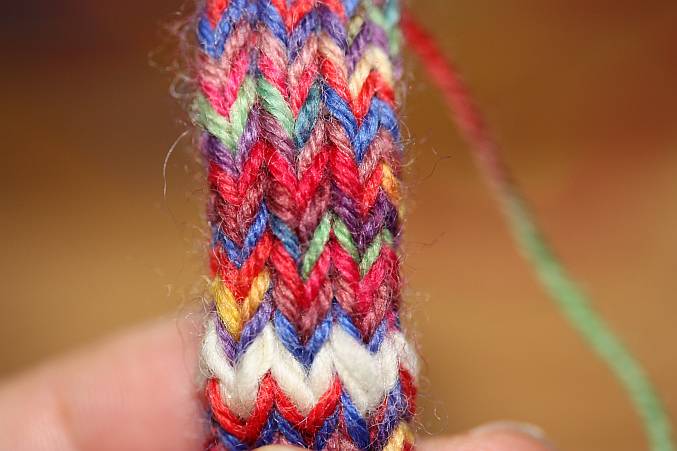
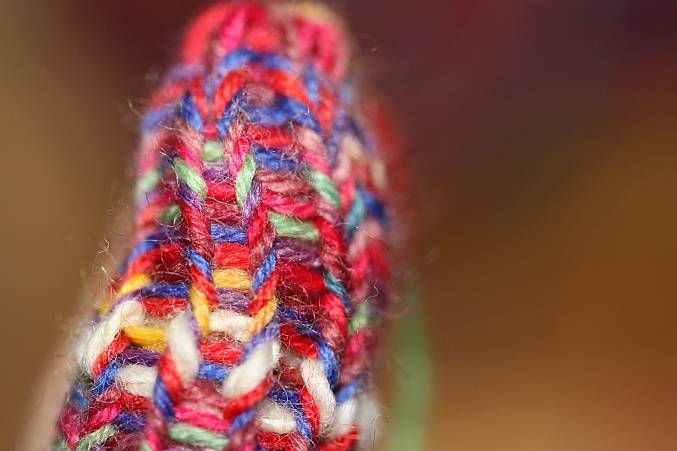
When I was at the Textile Forum, one of the presentations was about old knitting, more specifically what can be called "compound knitting". These really early knitting finds (from Egypt, dated to about the 5th to 7th century, to give you a rough timeframe) are not showing the same knit structure as we are used to. Modern knitting goes through the stitches in the last row to add the next row to the top. These finds done in compound knitting go through the last two stitches to add the next row. Are you confused yet?

The pieces presented at the Forum are all tubular, usually rather narrow, and sometimes striped across or worked in colour sections. They might have been worked on a knitting dolly, or worked on needles - it is hard to tell. We can look a bit at the different methods, though.

Compound knitting is very, very easy to do on a knitting dolly (or however you call these gadgets with pins to loop your yarn over) - you set up as usual, with base loops, and then you wrap the working yarn around the dolly twice instead of just once. Now when you are working your first round, lift the bottom loop over both the strands above it.

Here's how it looks when you are a few rounds in:

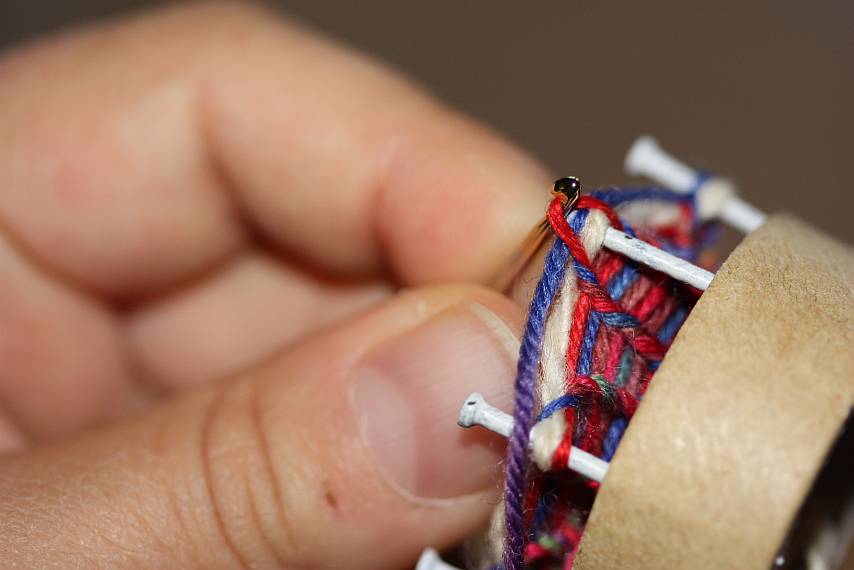
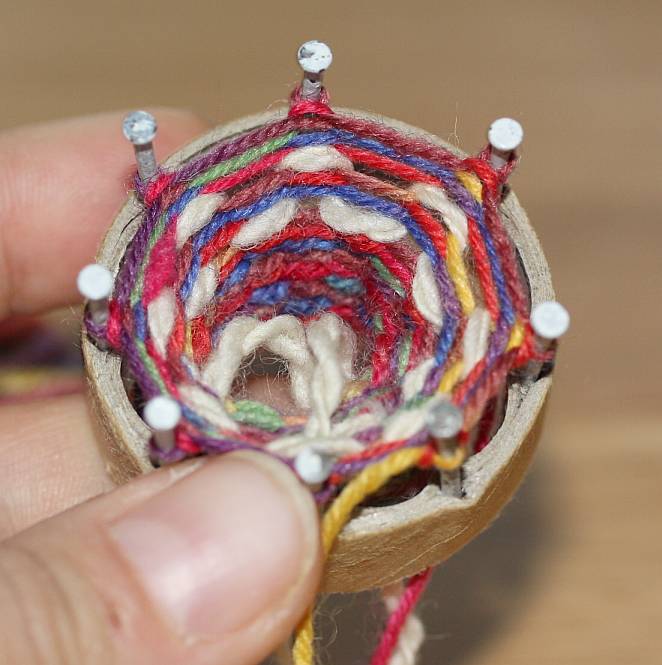
[caption id="attachment_1920" align="aligncenter" width="428"]Lifting the lowest of the loops on the dolly over the one on top of it and the working thread. Lifting the lowest of the loops on the dolly over the one on top of it and the working thread.


The white thread is there for better orientation. You can see the red (lowest) thread being lifted up over the white thread (which has been on the dolly for one round now) and the blue working thread. (The dolly, by the way, is a very crude homemade version that sports some nails left over from my active digging days.)

As a result, you get the compound stockinette fabric.

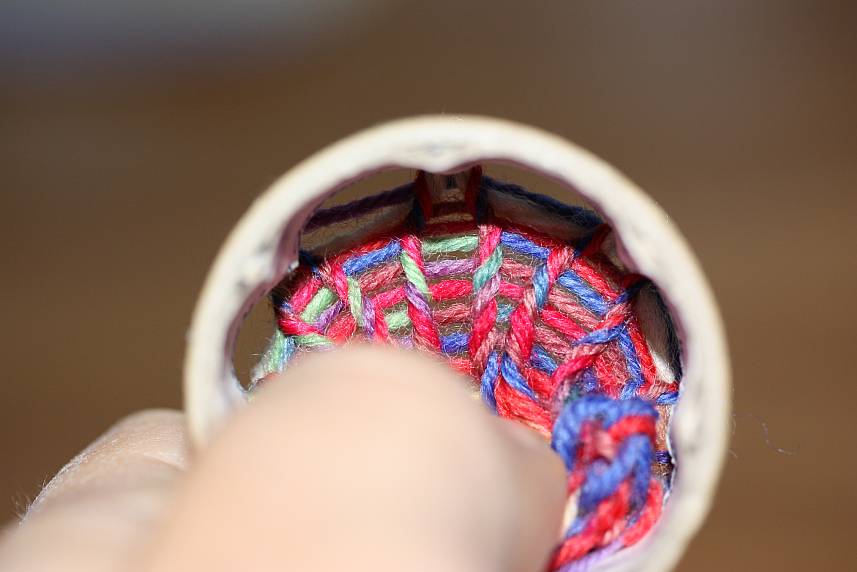
[caption id="attachment_1917" align="aligncenter" width="437"]Compound knitting on the dolly, knit side. Compound knitting on the dolly, knit side.


It doesn't look much different from regular modern knitting, but you can see that the stitches go through two of the previous rows - look at the green stitch in the top middle, for instance. This is even easier to see when you use a contrasting thread and look at that:

[caption id="attachment_1919" align="aligncenter" width="386"]Compound knitting on the dolly, seen from the inside. Compound knitting on the dolly, seen from the inside.


When you knit in a single row in a different colour in regular modern knitting, you have the little "dashes" on the purl side in one row, followed by a row of your regular colour, followed by the contrast colour row again. In compound knitting, the dashes are one extra row apart, as you can see in the picture.

Working this on a dolly takes no extra effort to do (it might be a tiny bit more fiddly to pick the loop to pull over, but it doesn't make much of a difference). The resulting fabric, though, is a different creature from regular modern knitting: it is much thicker while still very stretchy.

It gets really interesting when we try to take this to the needles, though... which is something for the next post.
0
NOV.
23
0

Man, I had not expected this.

Sometimes, you go into things a little naively, right? Well. When I was planning the blog migration, I was hoping that I'd like working with wordpress instead of blogger, but didn't test it much (as there was no viable alternative, I figured why test if I have to cope anyways).

In that case, it all worked out - I'm totally in love with the new blog platform. It's so much nicer, and so much easier to use, and it looks so much better, I'm over the moon (and I hope it's as much better for you as it is for me). Though I was in for a big shock this morning when I logged in and found that my user permissions had somehow, magically, changed to "subscriber" instead of "administrator", preventing me from doing any of the admin stuff like, say, moderate comments or write a new post. That must have happened when I told my account to call me "Katrin" and not "shopadmin", which I am, too, but not on the blog, thankyouverymuch. Good thing the Internet is there to tell me what admin rights look like in the mysql database (like this: a:1:{s:13:"administrator";s:1:"1";}), and where to find them in the table, so it was an easy fix.

Other things that I went in naively are not working as well yet. So I'm still hitting snags on the website relaunch, and some of them have hit me hard. Like the broken links problem.

The shop urls are rather robust, and so I had sort of figured that a simple redirect from the old shop subdomain to the new spot of the shop should work. (Naive, I know, but there wasn't really a way to test it either before the relaunch.) Well, it didn't (which you will have noticed if you've tried to click an older link to the shop from this blog, or anywhere else where the shop was linked to). I installed a plugin for Joomla called ReDJ (which has outstanding support, by the way, I totally recommend it), but it is not working for all old links yet. I'm working on it (or rather I have asked for help since I'm not able to figure it out on my own, see "outstanding support" further up).

These web page issues are like an itch I cannot stop to scratch, so I snuck some weekend work in. And that means that while a lot of the links are still broken, you will at least be getting a custom (and hopefully amusing) file-not-found page. Curious? You can try this if you want to know how it looks.

Some other things are also fixed now - there is a mobile blog menu (or should be - if you're reading this on a mobile device and cannot find a link to the menu at the very bottom, please let me know). There's also a fix installed for the nasty redirect to the main page, away from the shop, when you have logged into the shop. A few more other things are on my list, but they are not as time-critical (or as annoying), or as quick to implement and so will have to wait a few more days.

Other shop things will have to come first... like the addition of new spindle whorls (I have a new type to offer), and I also have cochineal powder for sale now. They need photographs first, though, and descriptions - the first I will be adding into the new shop. Stay tuned! And if you find something that doesn't work (in addition to the links, that is) please do let me know!
0
NOV.
20
0

Life is Good.

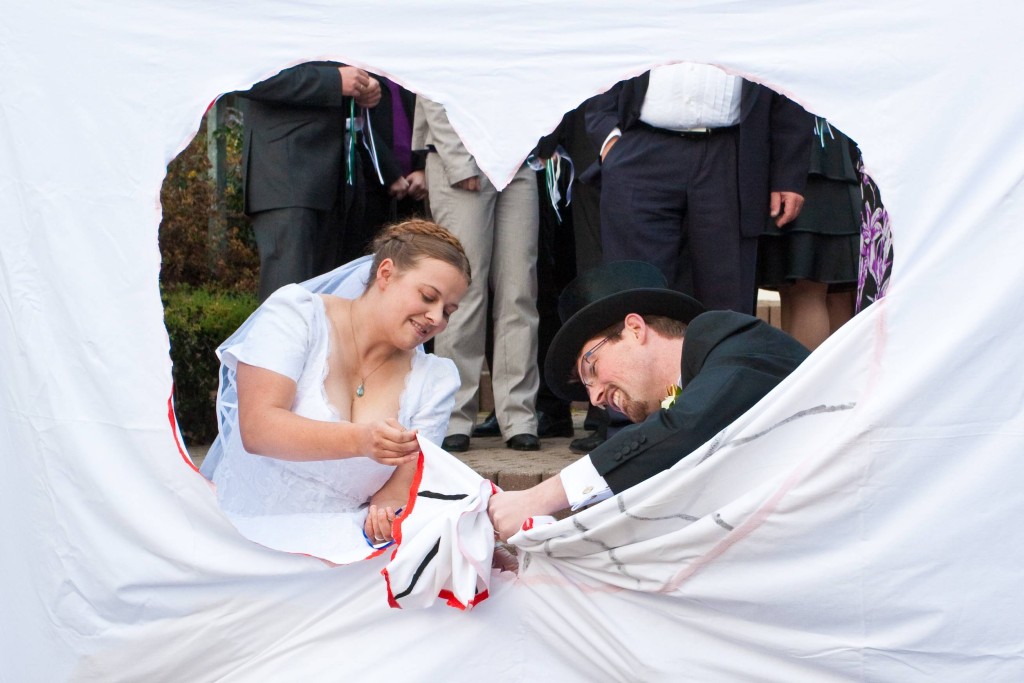
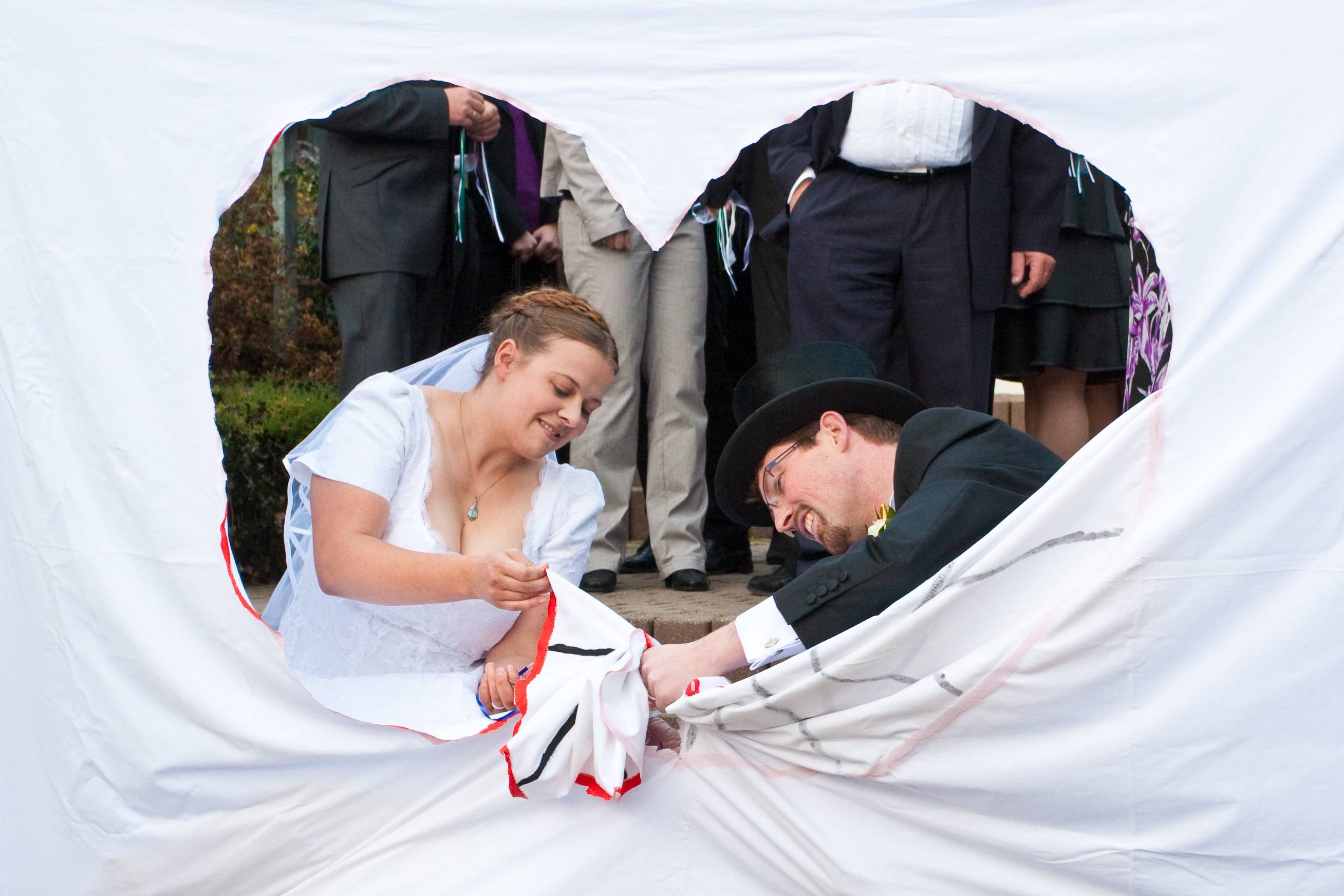
Today is Friday, and it's also November 20. Which means that five years ago, the Most Patient Man Of Them All became the Most Patient Husband Of Them All (by saying "yes" at exactly the right moment).

[caption id="attachment_1910" align="alignnone" width="640"]Wedding Day photo That was five years ago. The weather was much better than it is here today, though!


So today, he's having a day off, and we will be quietly celebrating our fifth wedding anniversary. Time really flies by - I can't believe how quickly these years went past.

Finding that special someone that you can share your life with? It really is the best thing that can happen in a life, and I consider myself a very, very lucky woman. Here's to the next five years - may they be as wonderful as the last.
0

By accepting you will be accessing a service provided by a third-party external to https://www.pallia.net/

Kontakt