Latest Comments

Guest - Aislinn Dyestuff Citizen Science.
09. Oktober 2026
This is a great project. I look forward to the results. Thanks for letting us know.
Guest - Aislinn Time for...
09. Oktober 2026
Looks delicious!
Guest - Katrin Sprang Discussion
18. September 2026
Hi Rachel, I have looked for more photos of you, but that was not very successful. I found a link on...
Guest - Beatrix Sprang Discussion
15. September 2026
That lozenge pattern element is not a photograph, but a scan. So it should be to scale. But I pinned...
Guest - Katrin Sprang Discussion
15. September 2026
I was not referring to Rachel's reconstruction (is the reconstruction you refer to the one photograp...
NOV.
15
3

Once upon a time...

Once upon a time, sheep's wool was a valuable resource, prized and traded across all of Europe. Once upon a time, sheep's wool was so valuable that a lot of effort went into breeding sheep to get good, well-spinnable crops of wool. Woolen cloth was used to make clothes, blankets, even sails and tents. Garments were tailored from woolen cloth that was so sturdy it would stand decades of wear. Good wool was highly prized.

Today, sheep are bred that will not give a crop of wool, because getting the sheep shorn will cost more - much more - than the normal market price will yield for the wool. Sheep are shorn with no regard to shearing quality, and the fleece taken off is not sorted, but just stuffed into sacks and put away. The only wool that will still get a slightly higher price (which is still in no relation to the worth of good wool as a material) is standard white merino wool, which will then be washed, straightened, and carded to death, resulting in the standard top that you can buy everywhere. Thread spun from that will not be very sturdy in comparison to wool that has not been treated to death.

And for all those of us who would like to work with wool different from this? We now have a problem, Houston. Because worth of the wool has gone down so far that wool will be thrown away (that can cost money in Germany, by the way, because it is "special refuse"), it is often given away for free - and that is further lowering the perceived value of wool. If we let this go on for another decade, who knows if it will be possible at all to get wool suitable for historical crafts anymore?

Which brings me to a question directly related to this. Would you, gentle readers, buy wool prepared in accordance to historical treatment/preparation of wool - that is, not washed (only rinsed, or not been in touch with water at all) and then combed so that you spin in the grease and then wash the yarn? Would you be willing to pay a fair price for wool like this, meaning that this wool would be much pricier than normal, factory-prepared wool? Or are you content with what is offered from the factories nowadays?
0
NOV.
12
0

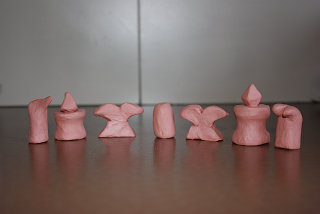
Anyone for a quick game of chess-figure-making?

Here's the promised explanation about what lurks in our kitchen, waiting for all the Hartenstein stuff to be finished:


Clay chess figures in classical 14th century forms. From left to right, you see knight, queen, rook, pawn, rook, king, and bishop.

For making this, I had help from Doris Fischer, who graciously provided me with information about typical chess figure forms. Thank you, Doris! She also wrote a book called "Mittelalter selbst erleben!" (published by Theiss); the book provides ideas, recipes and instruction well suited to project with children. If you would like to learn more about it, she has a German-language website here where you can learn more about the book and about medieval gaming.
0
NOV.
11
3

Wow.

We now interrupt our regular programme for a completely unscheduled and unexpected "Hooray!"

Yesterday, I received an e-mail telling me this little blog here has made it to a Top-50-List which you can find here - it's called  50 best blogs for Medieval History Geeks. And I was totally stunned and amazed to be in one list with the Great Ones of Medieval blogging, like the Medieval Material Culture Blog, Got Medieval, Unlocked Wordhoard and many more.

If you don't know the other blogs on the list, do go check them out (that's time well spent) while I am here, feeling totally cool because I've actually been listed in a Best-Of-List. Hooray!
0
NOV.
10
2

Everything normal.

Well, everything as normal as you could expect when I'm somewhere in the equation - my desk sports a good-sized list of to-do items, there's mail waiting to be carried out to a friendly letterbox this noon, and you can see a healthy mixture of clutter and actual desk surface here. Plus, there's Hartenstein project work scattered over the wintergarden and the living room, where I do most of my sewing work. Oh, and the kitchen sports some, too. (Wonder what? Maybe I'll show you tomorrow...)

But at least things are progressing quite nicely - and it's a good feeling to have my feet back under the self, work-wise, after the jumble of the last weeks. I still haven't gotten used to the fact that it does take me a few days after a conference until I'm fully back on the normal track. Well, hope springs eternal, as they say...
0
NOV.
09
0

Searchable Textiles Database

The Internet holds many surprises, and one of them is a searchable database associated with the book "Cloth and Clothing in Early Anglo-Saxon England, AD 450-700" (2007) by Penelope Walton
Rogers: http://ads.ahds.ac.uk/catalogue/archive/clothing_eh_2007/index.cfm

This covers the period AD 450-700 and includes 3802 records of textiles from 162 Anglo-Saxon cemeteries, searchable by using drop-down menus. I have only taken a very short look at it, and it will probably be most useful if you own the book the database goes with, but it might come in handy anyways...
0
NOV.
08
0

Pics from the Conference.

It's already been a week since I came back from the OEGUF conference, and I haven't even posted a picture of it yet. So... here's photographic proof that:


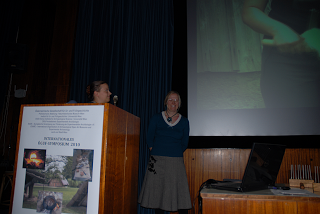
... I had something to say (this is me and Karina delivering a commentary to a short film showing different methods of preparing wool for spinning)...


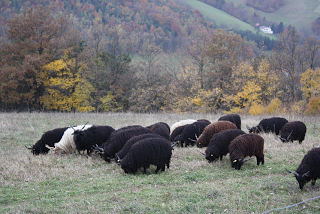
... I went on the excursion to Schwarzenbach to see, among other things like the museum and the "Keltenfest" area, a flock of Racka sheep...


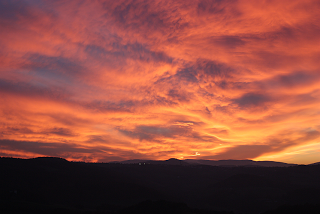
... and a most beautiful sunset...


... and also to the excursion to Asparn an der Zaya...


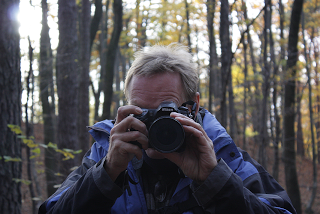
... and I did engage in Photo Wars with quite a few people.


Special thanks to Wulf Hein for the first photo and the shoot of myself in the Photo Wars!
0
NOV.
05
0

Button pictures.

I should have posted this yesterday, but I somehow hadn't gotten around to taking a pho was too lazy yesterday morning to take a picture. Here are the cloth buttons on one of the sleeves, already popped through their respective buttonholes.


That's a Euro one-cent piece included for scale. Welcome to 14th century button madness! I ended up attaching 22 buttons to that sleeve opening, so it will be about double that on the two sleeves together.

And those are definitely representative garments - because even if button-making is not taking so very long for each button once you have the method down pat, it is amazing how long the combination of making the button, attaching the button to the prepared (strengthened) edge and cutting and sewing the button hole will take. Those posh button rows are a time-consuming thing, and it is also rather time-consuming to button it all up when you are dressing in one of those things. Years ago, I made a hood with small cloth buttons after a find from London, and I have very rarely worn it buttoned, because it takes so long to pop every single button through its appropriate buttonhole.

Looks quite nice, though, doesn't it?
0

By accepting you will be accessing a service provided by a third-party external to https://www.pallia.net/

Kontakt