Latest Comments

Guest - Aislinn Dyestuff Citizen Science.
09 October 2026
This is a great project. I look forward to the results. Thanks for letting us know.
Guest - Aislinn Time for...
09 October 2026
Looks delicious!
Guest - Katrin Sprang Discussion
18 September 2026
Hi Rachel, I have looked for more photos of you, but that was not very successful. I found a link on...
Guest - Beatrix Sprang Discussion
15 September 2026
That lozenge pattern element is not a photograph, but a scan. So it should be to scale. But I pinned...
Guest - Katrin Sprang Discussion
15 September 2026
I was not referring to Rachel's reconstruction (is the reconstruction you refer to the one photograp...
MAY
24
0

Taxes... done.

There are a few dates each year that come... unexpectedly and very quickly. Birthdays are such dates. Christmas is one. And May 31... is another.

May 31 is the day when German tax paperwork stuff is due, so usually I finally sit down in the week before to round up all the papers and bills and notes and things to finish the thing off. Today was that day for this year, and now all I need is one final check and it can go its merry way to the tax office - hooray!

Because this also means I can concentrate again on other things. Such as making more distaffs, and preparing the next events - the Nadelwelt in Karlsruhe is getting closer and closer, and the week before I'll be at the Handwerkerfest at Adventon. I'm already looking forward to both, even though the list of things still to do before is a tiny bit scary... as these lists tend to be. (Usually it's not that bad, but writing down all the small odds and ends that should not be forgotten can make for a really impressingly long list - hence the scariness.)
0
MAY
19
0

Filtered light for textiles project

There's an interesting project for the possible protection of dyed textiles going on - tests into how filtered light influences the fading of dyes. The pilot project is described here, and it's scheduled to run for 12 weeks - so we might hear something about the results fairly soon-ish.

If you're a professional researcher and have received emails from students asking you stuff, you might be interested in reading this open letter to science students and science teachers. I haven't had problems with requests like that yet, but in general, I do agree with that letter - asking questions when it is necessary is a good thing, and can be the start of a helpful discourse for both parties. But contacting somebody just to have contacted a pro in the field? This is stealing everybody's time, to no real avail.

That's it on the link front. Somehow, it feels like we're already in the slack season - or my find-interesting-links-fu has deteriorated. Hopefully there will me more nice stuff around again soon!

 
0
MAY
11
0

Programme for the Museumstag is up!

I'm already looking forward to being in Darmstadt for the 22nd of May, where the Hessische Landesmuseum will be celebrating the International Museum Day with a lot of interesting things to see and do. Their programme is now up - you can have a look at it here.

If you're too far away to come and enjoy that day (and see me demonstrate old textile techniques), maybe you can find some museum in your area with a delightful programme? Here's a search portal for events in Germany. There's also an international page with a map, though it looks like most participants are in Germany, followed by Switzerland and Spain...
0
MAY
09
0

Back home. With boxes.

I'm back home from the long weekend, and it was a wonderful thing to hang out with this special bunch of friends - as most of us only meet once a year, for just this long weekend. The weather was lovely and sunny, and we managed to get outside to enjoy it, at least a bit... while most of our time was spent indoors, sticking bits of paper to bits of cardboard, with the occasional curse for various reasons (such as one of the bits not being the correct size, not being really true to the angles it should be in, or not sticking where/how it was supposed to be).

Something I find equally fascinating every single time we meet is how the individual preference for things done on that weekend has developed for each of us. We all started out taking the same course on basic hobby book-binding, with the same teacher (in that same youth hostel), some of us a few years earlier, some later - I was one of the last to take the course. So we all started out with the same knowledge, and a similar background. Now everyone has his or her speciality - some like to do books either from scratch or with pre-produced inner parts, some do lots of repair work on books. One of us likes to do a variety of things - boxes, photo albums, booklets, CD covers, with something different every year. One of us usually brings things she binds anew, for better useability, with little regard to how the book or catalogue (much of it are coin catalogues for numismatic purposes) looked originally - useability and practicability are priorities here. On the opposite end of that spectrum, someone else in the group repairs books, taking great care to keep the repairs as unobtrusive as possible, and to conserve as much of the original material as possible.

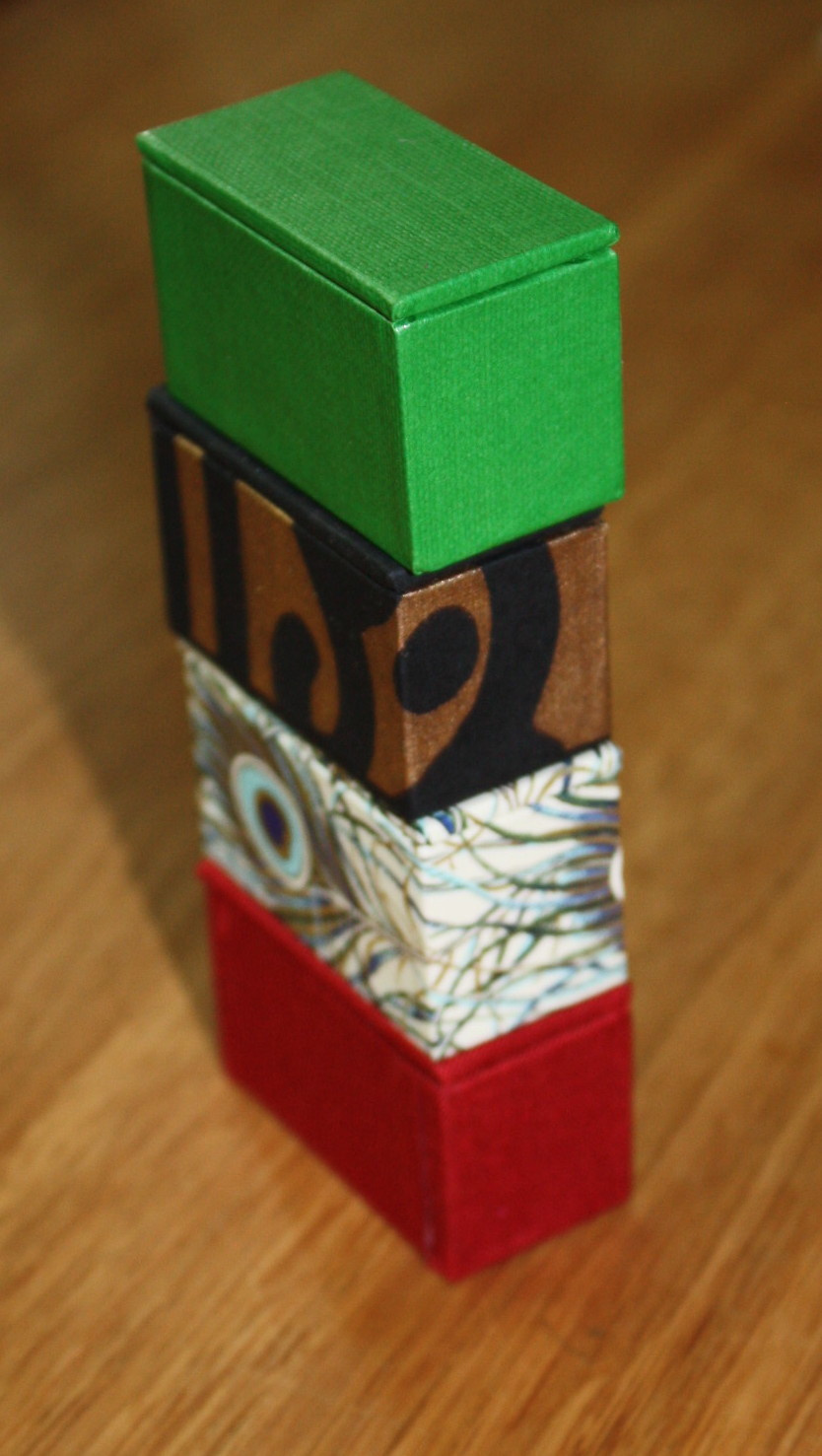
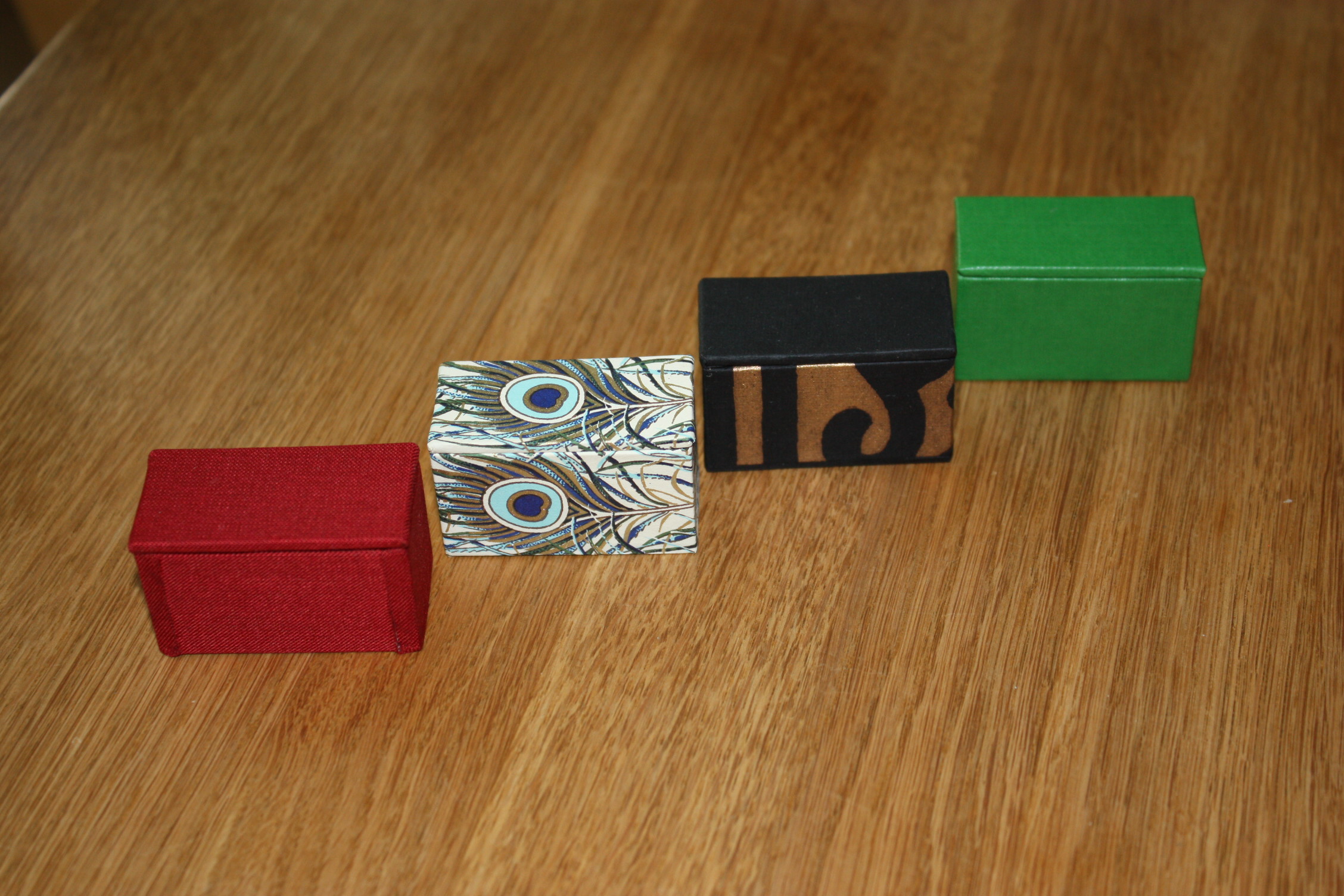
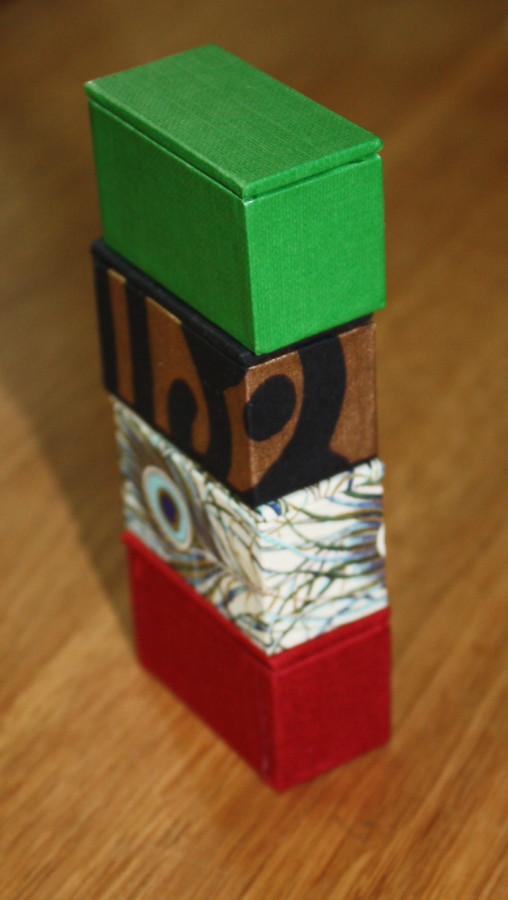
Me, I've been making at least one folder and at least one box per year for a long time now. I love boxes - they are sturdy, they are beautiful, and if you are making them yourself, you can have them any size and any colour and in any design. This year, I made four boxes in identical size:

IMG_8889
IMG_8887
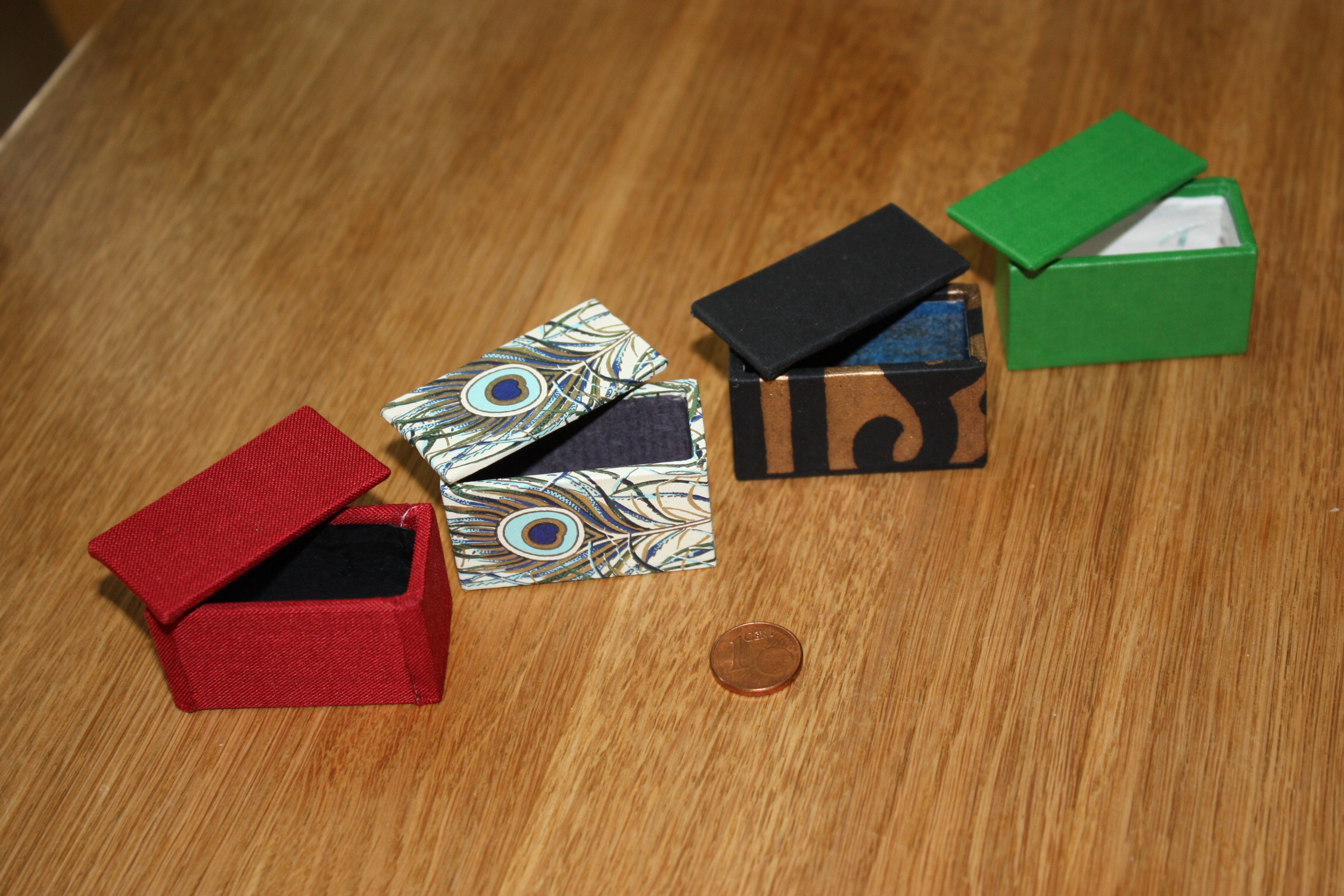
I had a huge amount of fun doing these, using bits of paper that I like but did not have a lot of anymore... because, you see, these boxes are ridiculously tiny:

[caption id="attachment_2398" align="alignnone" width="414"]IMG_8888 That is a 1-Euro-Cent piece hanging out with the boxes there. They are about 2.4 x 4.8 x 2.4 cm in size. See? Ridiculously tiny.


I'm not sure what I will put into these, or whether I will give some of them away. A small USB stick might just fit in one of them, or a small piece of jewellery. They are lovely, however, and I have to giggle whenever I see them, as they are so ridiculously tiny - but still proper boxes, with all the parts that have to be there for it to be a real box. (For the record, it's 7 pieces of cardboard for each of them, as the lid has two parts; plus 8 pieces of paper to stick onto and into the box (or more, depending on how you handle the inner wall coverings). Small boxes do take a little less time than large boxes, and those felt as if they were very quick to make, but they still do take a noticeable amount of time.

Well worth it, though, if you ask me!
0
MAY
03
0

Long Weekend Coming Up!

There's a long weekend coming up, with a public holiday here on Thursday (Ascension day), and we'll make good use of this. Really good use as in "stretch it into a super-long weekend by sticking a day off to each side of the holiday".

Which means I will not be blogging the rest of this week - I'll be back on Monday. Meanwhile, you can amuse yourself with the Cat's Meow here, a study about the vocalisations that cats use. The project has just kicked off, so there's not too much on the site yet - but it might be really interesting to watch. And while we're at the cat topic, here is a fitting image from discardingimages.

You could also amuse yourself with thinking up questions - it's been a good while since I've done an "ask me anything", and I think it's time for this again. So if there is something you would like to ask me, put it in the comments, and I'll do my best to come up with an answer, and blog about it next week.

Have a nice (maybe also long) weekend!
0
MAY
02
1

Reconstructions...

Reconstructions are a wonderful thing to show how something actually looked like in the past. However, they are also a dangerous thing - almost all reconstructions require a bit (often much more than a bit) of guesswork or conjecture, which, of course, also means they can include wrong guesses.

When a reconstruction is well made, though, it looks very convincing, no matter whether it includes wrong guesses or not. Which means that a reconstruction might lead to wrong assumptions. There's also the problem of where to reconstruct... and of how much. Building reconstructed houses right on top of their original sites, for instance, was sometimes done in the past, resulting in open-air museums... however, there's a bunch of issues associated with doing the in situ things, one of them being extra disturbance of the ground (where a future dig will not yield anything useful anymore, because of the modern building activities). The same is true for partially surviving buildings - putting the reconstructed part on top of the ruins is not only an issue for the ruin itself, it also usually means that it is hard to tell where the original ends and the reconstruction starts.

On the other hand, reconstructions are invaluable in showing how something actually looked, giving a much better idea of the importance of buildings and objects. Most lay people will need some help in understanding a ruin or bits and bobs from archaeological digs, and reconstructing does give that help, while also putting things into context nicely.

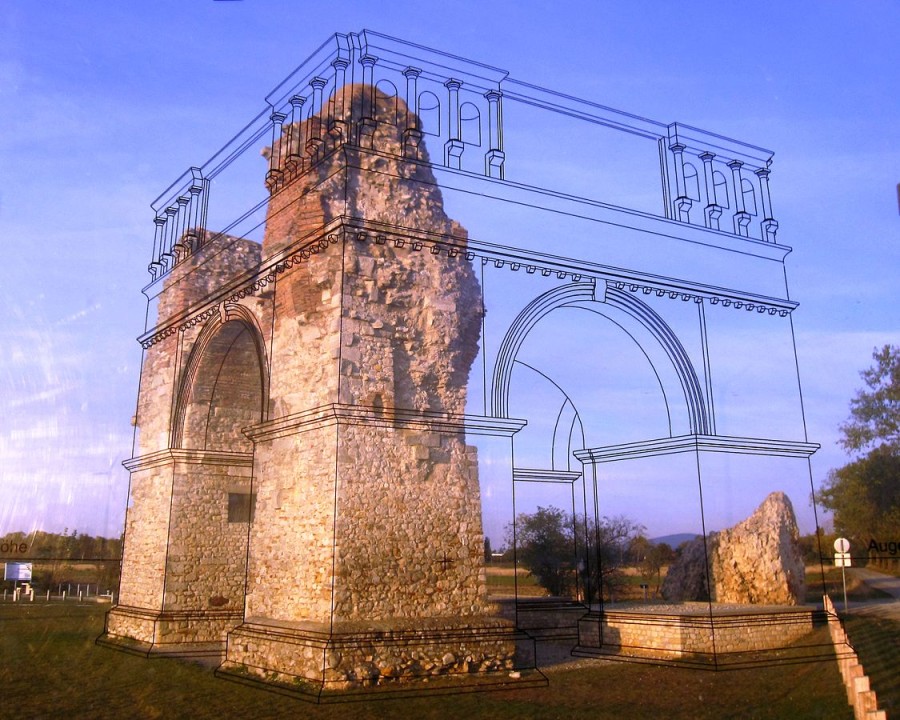
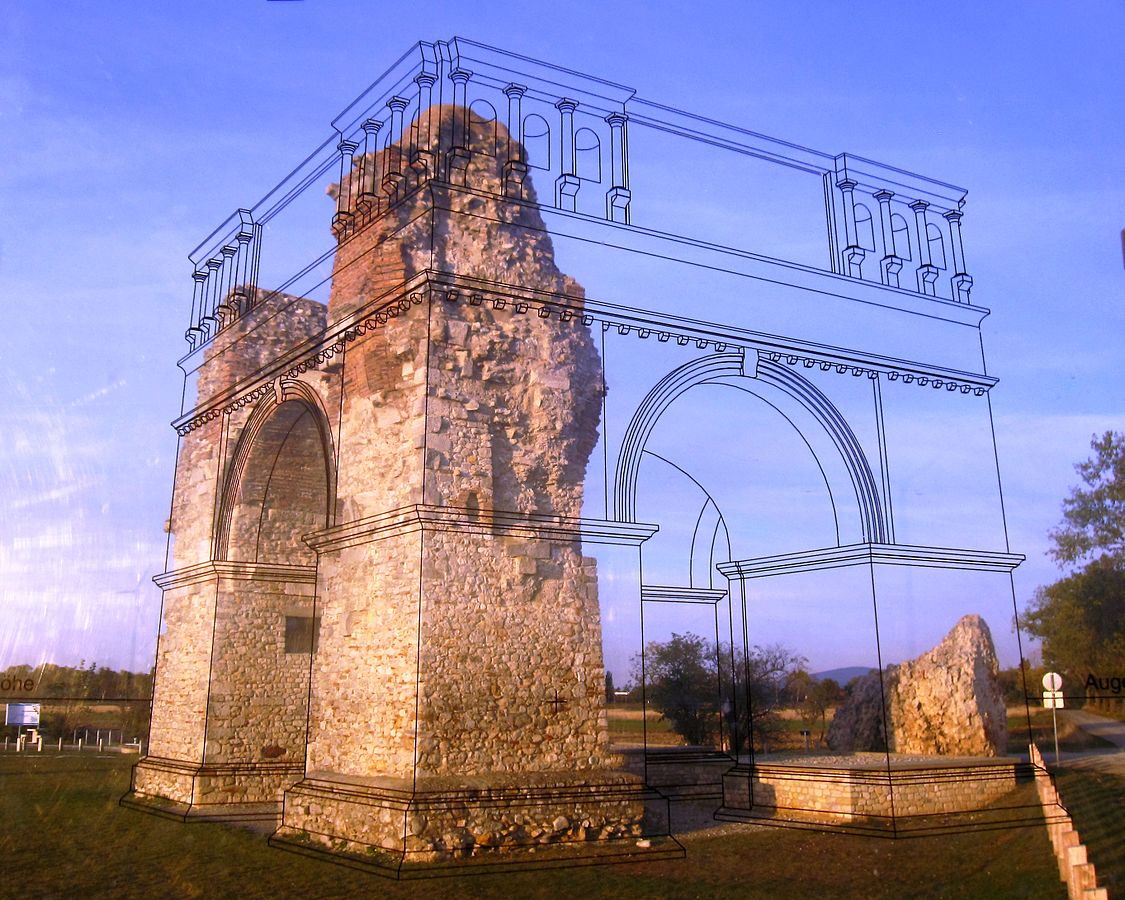
This is easier for artefacts, when you can just place the reconstruction next to the original in a museum case. It's a little more difficult for an ensemble such as a grave find or a large artefact, but still possible. Buildings pose a much bigger challenge - but there's a totally brilliant, easily reversible and very flexible way of showing how something might have looked:

[caption id="attachment_2390" align="alignnone" width="640"]Heidentor, Austria. Photo: Gryffindor, CC BY-SA 3.0, https://commons.wikimedia.org/w/index.php?curid=16996191 Heidentor, Austria. Photo: Gryffindor, CC BY-SA 3.0, https://commons.wikimedia.org/w/index.php?curid=16996191


Placing a glass or plastic sheet with the reconstruction lined out in a place where you can visually overlap them - this really is a wonderful way to show how a building might have looked; easy to update and easily reversible.
0
APR
29
0

Hugo Kerfuffle, 2016 Edition.

You might remember that last year, the Hugo Awards were surrounded by a lot of discussion - there had been slates for the nomination, which led to the domination of the nominees by slated works.

The voting was then very much influenced by reaction to those slates and the rather skewed selection of nominated works, resulting in a lot of "No Award" for the slated works. The group who'd done this (called "Rabid Puppies") then claimed victory and the successful destruction of the Hugos, more or less.

Well. It could be expected that this year, something puppy-ish would happen as well, and it did. The Hugo nominees for 2016 are, again, much dominated by works that were put on the Rabid Puppy slate - but this time, there are some works included that would have made the shortlist in any case... making the general "I will not vote for slated things" approach that many voters took last year somehow less attractive. (Want to know more about it? Here's John Scalzi's thoughts on the topic, and here Jim Hines'. Io9 has an article about it. If you still want more, search engines will throw more at you than you probably want to read...)

I'm a bit sad that there will be lots and lots of discussion again this year; that there will surely be some people not sure how to vote, or voting "no award" for works that would have deserved a Hugo because they were slated. (I'm also sad that Escape Pod didn't make the shortlist. It's not for lack of my nomination, though.) The Hugos are a special kind of award, since they are not handed out by a jury, but by anyone who has a membership for WorldCon, and it's a sad thing to see them dragged into political fights. So... we'll see what will happen in summer, when the voting is done.
0

By accepting you will be accessing a service provided by a third-party external to https://www.pallia.net/

Contact