Latest Comments

Guest - Aislinn Dyestuff Citizen Science.
09 October 2026
This is a great project. I look forward to the results. Thanks for letting us know.
Guest - Aislinn Time for...
09 October 2026
Looks delicious!
Guest - Katrin Sprang Discussion
18 September 2026
Hi Rachel, I have looked for more photos of you, but that was not very successful. I found a link on...
Guest - Beatrix Sprang Discussion
15 September 2026
That lozenge pattern element is not a photograph, but a scan. So it should be to scale. But I pinned...
Guest - Katrin Sprang Discussion
15 September 2026
I was not referring to Rachel's reconstruction (is the reconstruction you refer to the one photograp...
APR
28
0

What you see and what you don't.

There's currently a lecture series going on at the Uni Bamberg about wood, and they are so very nice to also stream it online - which means that I got to listen in yesterday. It was very interesting, and it showed again how blind one can be regarding things that were really well researched in a different discipline - just because there is no awareness of that research. Case in point: Dendrochronology has its origins in the natural sciences. Looking at the wood pieces also means looking at their shape, though, and at the pegs that can be found in some of them. The pegs are what remains of the method to secure several logs together into a raft, which was very well researched in historical books and works - but it took a good long while for the dendro folks to realise that. Because... well, because they were not aware of that work, and had not yet stumbled across it by chance, or by research.

This phenomenon of missing something entirely that has been a research topic in a different discipline is not that rare, and while it might not always happen so obviously on such a high (basically the system) level, I have seen it again and again happen with individual research things (my own personal ones included). It's a weird feeling and an eye-opener when you find out that there's a whole cosmos already existing.

The lecture fell in wonderfully with a video discussion I had right afterwards where I had the pleasure to discuss a fabric reconstruction in the works. As usual, it's not really easy to get the appropriate yarns, and it makes a difference on whether they are twisted hard or soft, and which loom is used, and which reed, and so on. This also is a fascinating universe on its own, and I always feel like while I am not able to step across the threshold, I do know just enough to stand in the open door and look inside this other world, and stand in awe and wonder.

It is such a privilege to work with colleagues who step out of their way to open that door for me, and share their insights and their process. 

There also is a plan to do a little bit of a write-up and a publication after the project, about some of the aspects - the tool influence (which was nicely visible already), but also the process of getting to such a reconstruction. I'm mostly involved with sourcing the information (including images) about the fabric, sometimes also with the wool threads, but then most of the pondering and evaluation goes to the weaver, and I can happily stand by and enjoy the ride.

(Until the thing is finished and in my hands. Then it's time for chocolate, tea, and some more chocolate to gather enough courage for the cutting... but that is a story for another day.)

0
APR
21
0

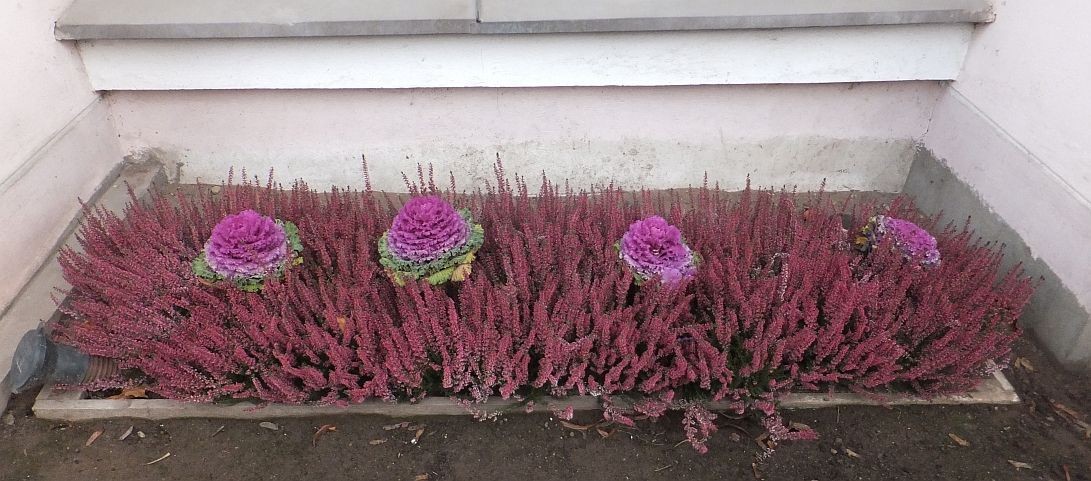
Cabbage.

Since I have nothing really relevant to blog about today, here's an image of decorative cabbages:

...and that's it. Nothing more to see here today.  

0
APR
16
0

Surprise Textile References! (Possibly, at least.)

The Most Patient Husband of Them All has surprised me with an explanation for the phrase "pop goes the weasel" which, in turn, had surprised him - and it's an unexpected textile reference! (Well, at least possibly.)

If we go and trust Wikipedia, one of the many explanations is that it references the spinner's weasel, also called a clock reel. There are, of course, some insecurities and other interpretations possible, but, well, it could quite well be that it did come from the clock reel, which makes a noise every X rotations (intended to let you know when a skein was complete, or a part-skein, depending).

Also, I really like clock reels. One day, I'd love to work with one of them, just to try it out.

0
APR
13
0

Weekend Over.

Is it really Monday already? 

But on the other hand, the weekend saw some nice hanging out, some bouldering, making a new batch of cat food so the furry lady can munch on something different, and some painting of miniatures. Which (the minis) will be seeing the gameboard this evening, if all goes according to plan!

The weekend also included some more puzzling over the Alpirsbach thing making, and I did get some helpful hints from Beatrix Nutz. Including the hint that they should not be called "trousers" but "hose" or, even better, "joined hose".

Eh. Terminology. I do like to complain about textile terminology and its many, many pitfalls and dark corners and its general horrible unreliableness, so it's good to see that at least there's reasons for my complaining! (In Middle High German, "hosen" would be the hose, too, but in modern German they are called "Beinling" and the full garment with everything covered and everything sewn together would be "Hose", in the singular, so of course I was assuming that English would handle it the same way and "trousers" are the full thing while "hose" are the Beinling equivalent. There you go.) 

0
APR
10
0

Definitely Spring Now.

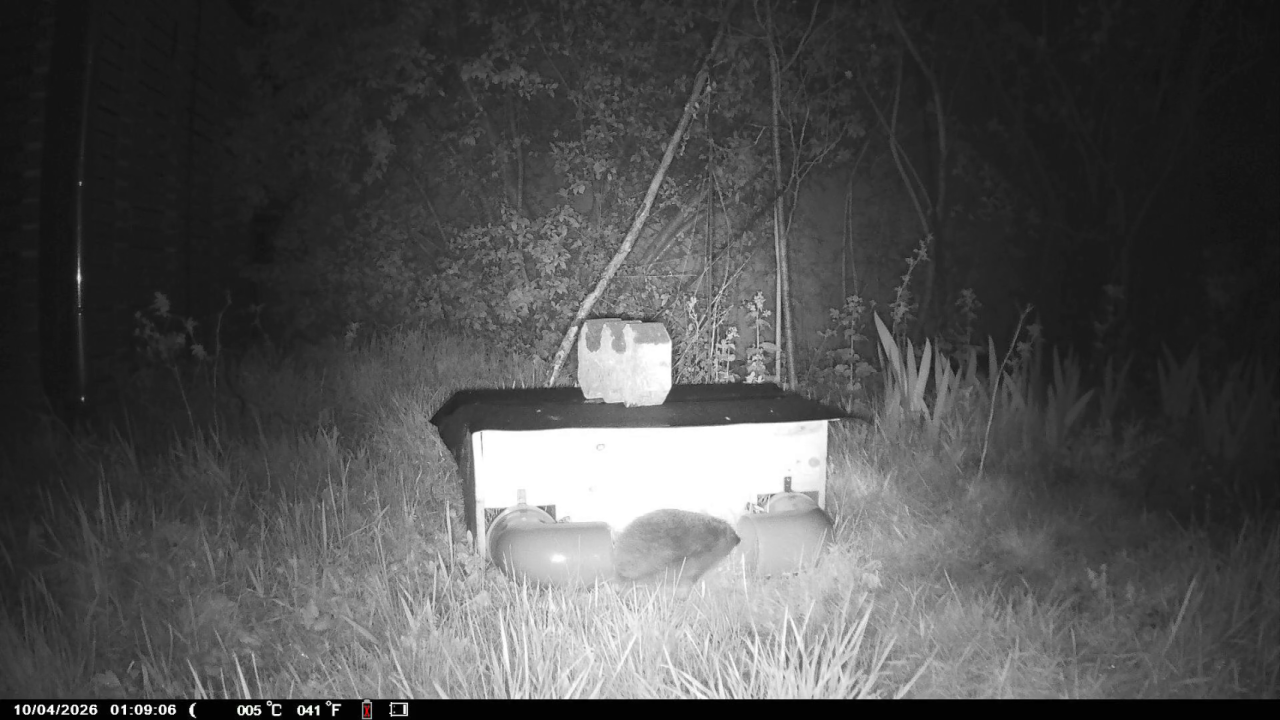
It's definitely spring here now. How I know? We had the first hedgehog visiting our hedgehog restaurant last night.

Since the untimely appearance of a small hedgehog here last year, in spring, at high noon, and said hedgehog coming back here after having been treated against parasites and gaining some weight, we have a hedgehog feeding station. 

A few days ago, we started putting a little bit of food inside over night in case there'd be a taker. And last night, that was the case. If that doesn't make spring... 

0
APR
08
0

Too Many Images.

Have I mentioned recently (or complained about, is probably more fitting) that I have really, really, really large numbers of yet-unsorted photos? No? Well, let it be said here, then. 

While I do have a lot of images that have been properly captioned, keyworded, and sorted into albums (and yes, the move to a new photo database has still not taken place, because I still haven't decided to commit to one) there are quite a few that I never tagged. So in an attempt to get at least down to reasonable numbers that are in the triple digits or so, there's been some effort of sorting lately. 

There is progress (that's the good news). There's still a lot of unsorted ones to do (that's the bad news). Occasionally, though, the sorting will turn up some memory of long(ish) ago, and that's nice.

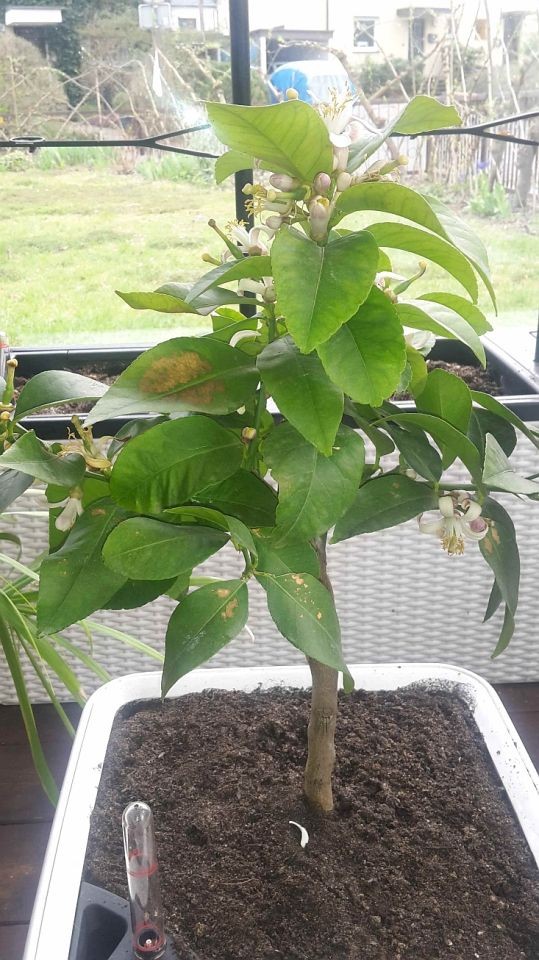
Case in point: I just found an old photo of our little lemon tree.

That was back in 2019, and it was already blooming enthusiastically then. It's much larger now, though also looks a little, well, unkempt - but I never got around to trimming it back to a nice shape as it insists on having either flowers or fruits on the long, gangly twigs.

But, you know... I don't really care, as long as it is happily producing lemons! 

0
APR
07
0

Exciting things...

Easter has not only brought some time with family and plenty of eggs (both the coloured-shell chicken version and the chocolate version), but also some more prep for the exciting trouser project to come.

The trouser find from Alpirsbach, most probably dating to the late 15th or very early 16th century, is rather well-known for being, well, one of a kind. The fabric was a linen 2/1 twill, which is unusual by itself. The cut though very nicely corresponds to trousers shown on artwork from the same period. You can see an image of the find here (on a German page).

I'm currently working on a request of a museum to have a reconstruction of the piece, with the feet parts on. First problem was to research the fabric and figure out if there's someone who can weave it, and I'm very happy that Marie Ekstedt Bjersing is now going to take on that challenge, as the fabric is quite unique as well - not only because of the binding, but also having a thin warp and a comparatively very thick weft.

My task will be to make the fabric into a garment, and as I'm writing this, some modern, machine-made fabric is hanging outside to dry so I can do a test run in order to understand the pattern correctly before I'm cutting into the good stuff.

So. Exciting things. 

0

By accepting you will be accessing a service provided by a third-party external to https://www.pallia.net/

Contact