Latest Comments

Guest - Aislinn Dyestuff Citizen Science.
09. Oktober 2026
This is a great project. I look forward to the results. Thanks for letting us know.
Guest - Aislinn Time for...
09. Oktober 2026
Looks delicious!
Guest - Katrin Sprang Discussion
18. September 2026
Hi Rachel, I have looked for more photos of you, but that was not very successful. I found a link on...
Guest - Beatrix Sprang Discussion
15. September 2026
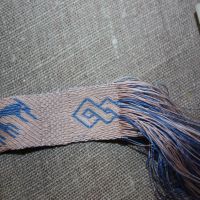
That lozenge pattern element is not a photograph, but a scan. So it should be to scale. But I pinned...
Guest - Katrin Sprang Discussion
15. September 2026
I was not referring to Rachel's reconstruction (is the reconstruction you refer to the one photograp...
JULI
20
0

More Bees and Beasties.

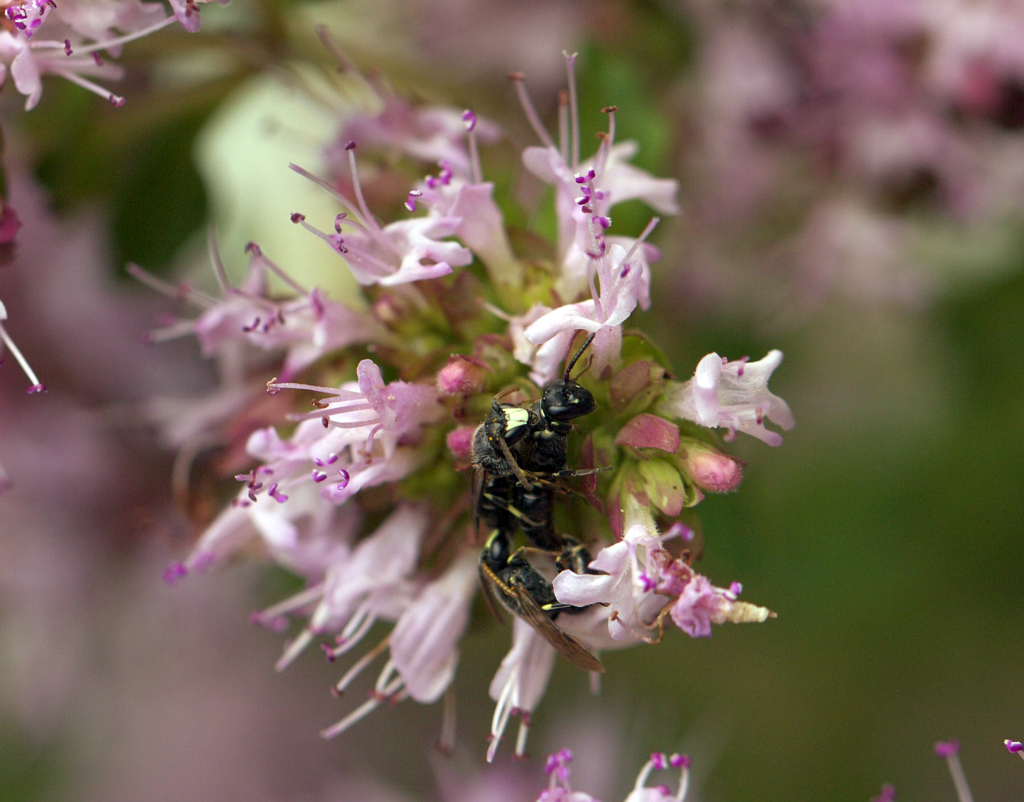
Here's some more from the Not-Lawn-Photosafari... including some scenes of life and death. Literally.

[caption id="attachment_5454" align="alignnone" width="508"] Some kind of Hylaeus bees, in German Maskenbienen, mating. Why there are three of them? I don't know, and they didn't tell.


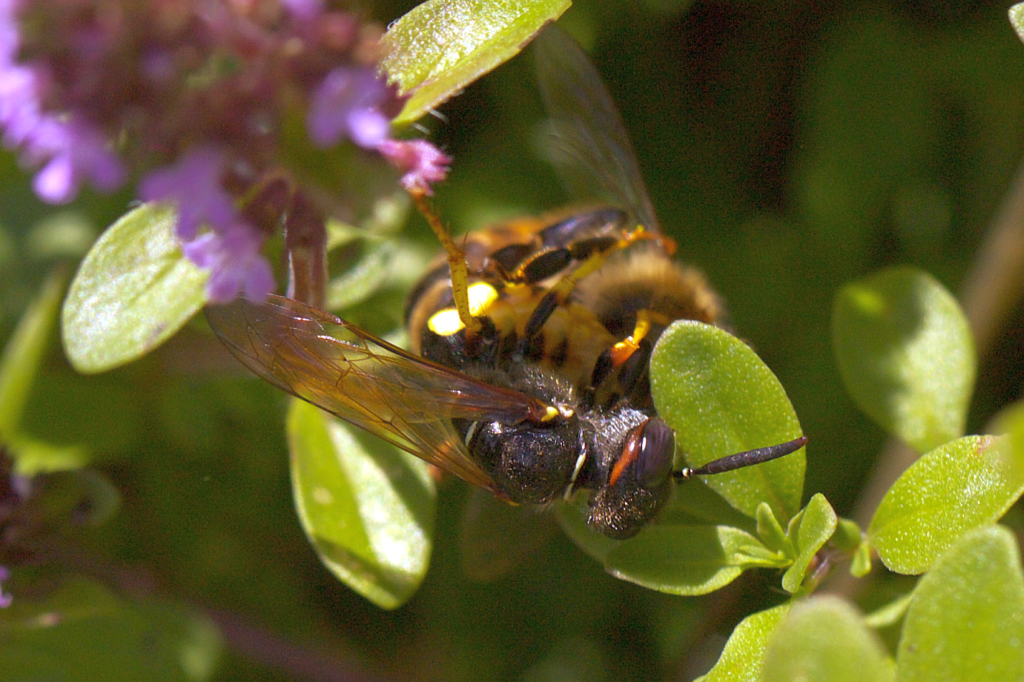
So much for the life - there were other dramatic things happening, too:

[caption id="attachment_5451" align="alignnone" width="428"] A wasp in a fight with a bee of some kind, probably trying to get some food for her young. (Both of them, in fact, were probably trying to get some food, but only one will go home successfully...)


And now for some calmer scenes:

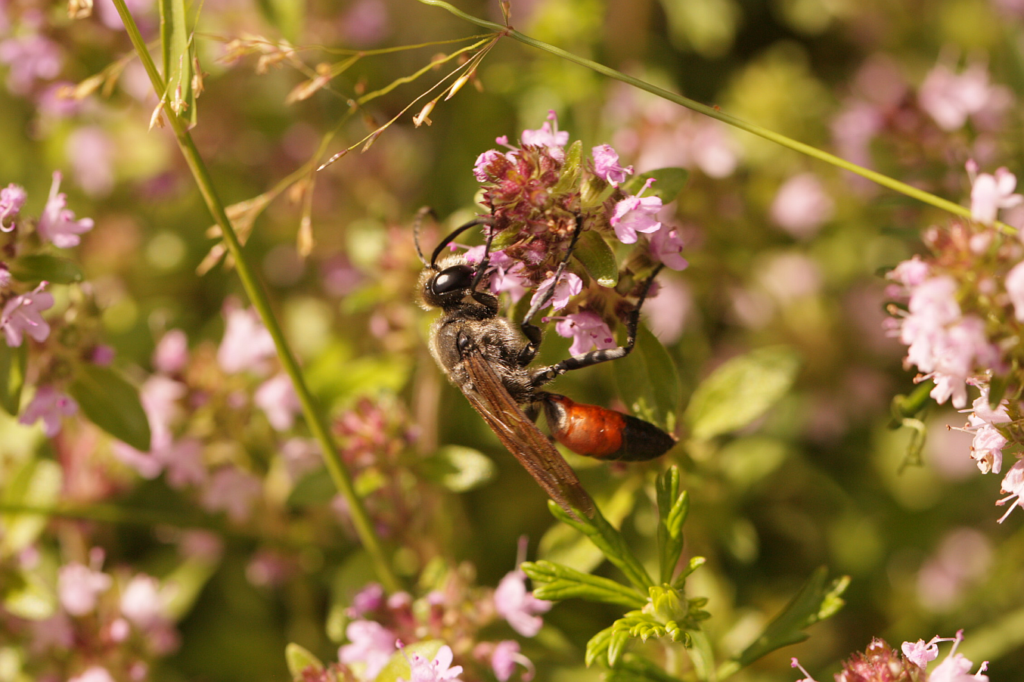
[caption id="attachment_5453" align="alignnone" width="428"] Some kind of wasp, as yet unidentified. There's lots of wasp-like insects with a red and black abdomen, as I've learned! It was about 3 cm in length, so fairly huge.


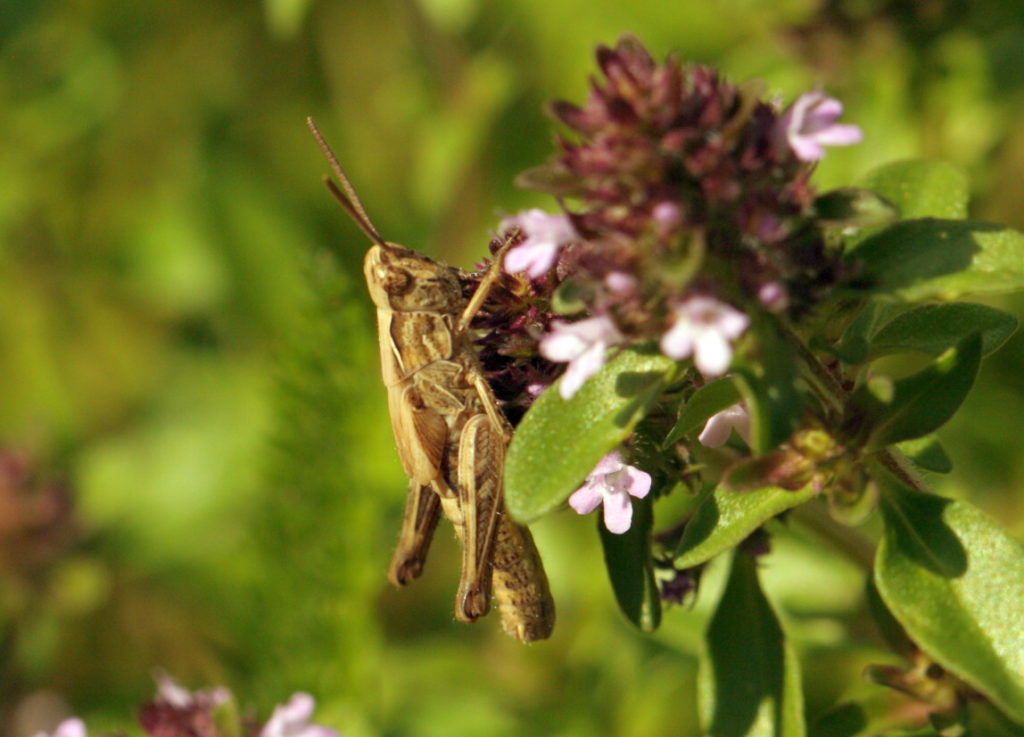
There's not just the humming sound of bees and other flying insects outside, too. There's also the lovely sound of grasshoppers making their "music", and I managed to get one of them banned onto digital "film":


I didn't even try to find out what genus or species that one is, but I absolutely adore the patterning on the legs and body. A very beautiful guy (or girl?)!
0
JULI
17
0

Too Many Tabs (Again)

Too many tabs open in my browser - you know what that means: Link Post!

I don't know if you know about the more-or-less satirical party "Die Partei" in Germany, but they actually have two people in the EU parliament. Both of them are sort of doing the job of a medieval fool, trying to point out the absurdities and stupidities that nobody else mentions or dares to mention. With varying effect - but who knows, maybe it will change something over time. At least it's a way of keeping updated on things that are happening in the parliament, and on getting a few insights of how stuff works there (or doesn't work).

One of them, Nico Semsrott, now has started a youtube series he calls the "Nico Semsrott Show", explaining stuff. Here's the first episode, in English (to reach more people) with German captions available:


This article about a special blue dye is already a bit older itself, but I found it still interesting - it was used to dye the tassels on prayer shawls, and provided by a species of Murex molluscs.

The melting glaciers in Norway reveal archaeological finds - which is a wonderful source for archaeology, but still feels like a bad thing overall to me. Climate change will kick us all in the ass before long.

Finally, here's a concert titled "The Wool Merchant and The Harp" in the Leeds programme, featuring Leah Stuttard playing the harp.

 
0
JULI
16
2

Open Access?

If you're reading research papers now and then (or frequently, of course), you will probably have stumbled across The Paywall more often than you'd like. Murphy's rules for reading scholarly work definitely includes one that says "The article that sounds most interesting will be inaccessible due to some reason, preferably a paywall."

So. You'd like to read something, but the publisher would like to have half an arm, or maybe quarter of a leg for access to the volume, issue, or article? There's a few ways to get the article of interest without paying yourself. If you have a library card for a Uni library (you usually can get those without much fuss for the country you live in), and the library is within reach and has online access to the journal (which you can usually find out via their database) - there you go, you can access and download the article from a library computer. Bring your own USB stick, or mail it to yourself.

If that's not the case, there's networks like academia.edu and researchgate.net. Both are free to join, and they offer the possibility to network with researchers, follow them (so you get to see if they add something new) and read their papers. Authors upload pdf copies of their work; it's still legal, as the copies are not freely available, but within a closed group. You can also request a paper if it's not uploaded yet, and hope the person in question isn't as slow as I am with adding new things.

What I most recently discovered is unpaywall.org, which is a database with free versions of paywalled articles. There are several ways to use the database for your research, such as integration in Zotero, but the easiest one I have found is to use Chrome with the unpaywall extension. When you are on a page with a doi, you can then hopefully see a green open padlock on the right side of your screen - click that, and you are taken to the place where the free version of the article lives. (I actually installed Chrome to try this out...)

Enjoy, and may you find and get all your desired articles this way!
0
JULI
15
0

Gotcha!

Today's not much going on outside, bee-wise, as it's raining. Finally! Hopefully there will be enough water coming down during the day to refill our rain barrel, which was almost empty with all the watering of the potted plants. It's still too dry anyways for the time of year - another sign of the climate change. Sigh.

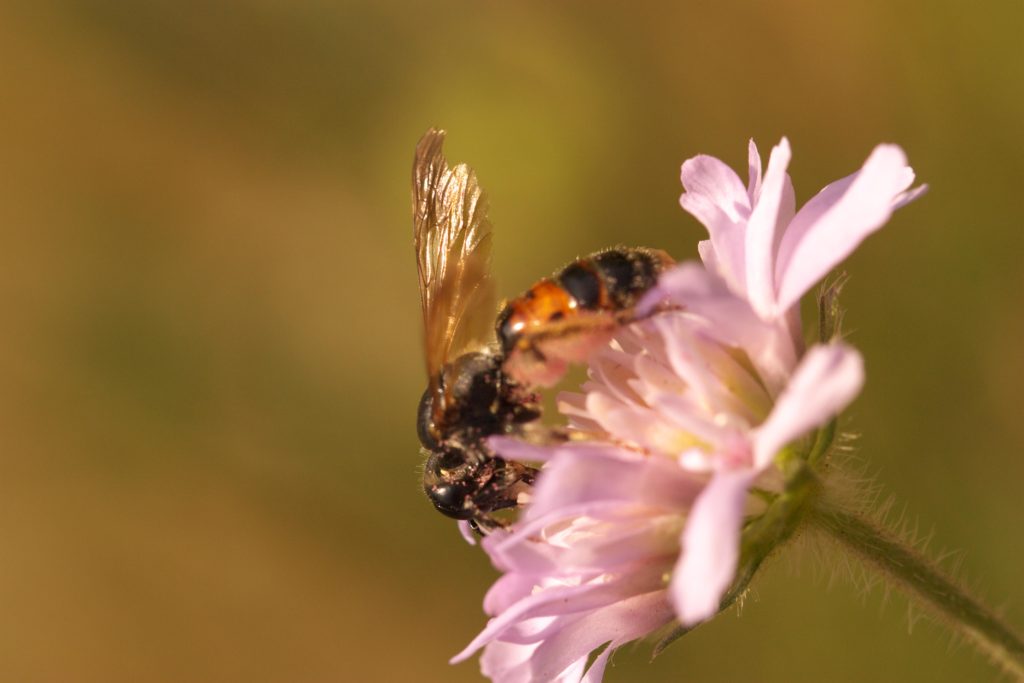
Good news, though: Yesterday was sunny and nice, and I did manage to take a few photos of the aforementioned red-listed little bee. No glorious photos, but decent enough to tell that it really is Andrena hattorfiana:


You can tell the species by the colouring of the abdomen - and the fact that the lady is gathering nectar and pollen from a specific flower genus, the Knautia flowers. Which happen to grow on our not-lawn...

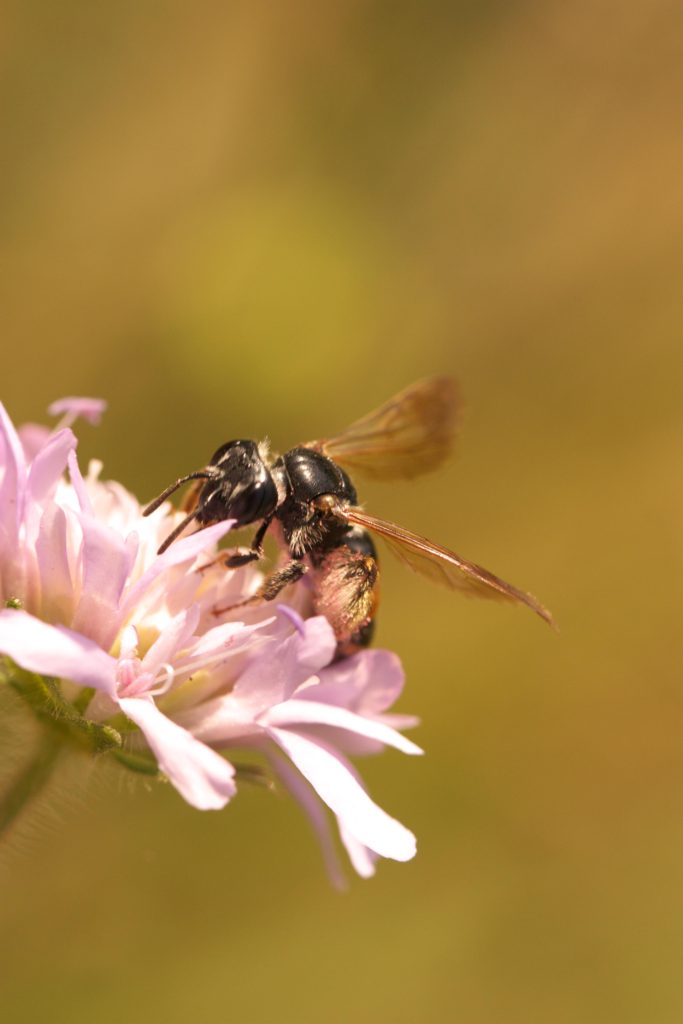
Here's a second shot of the bee:


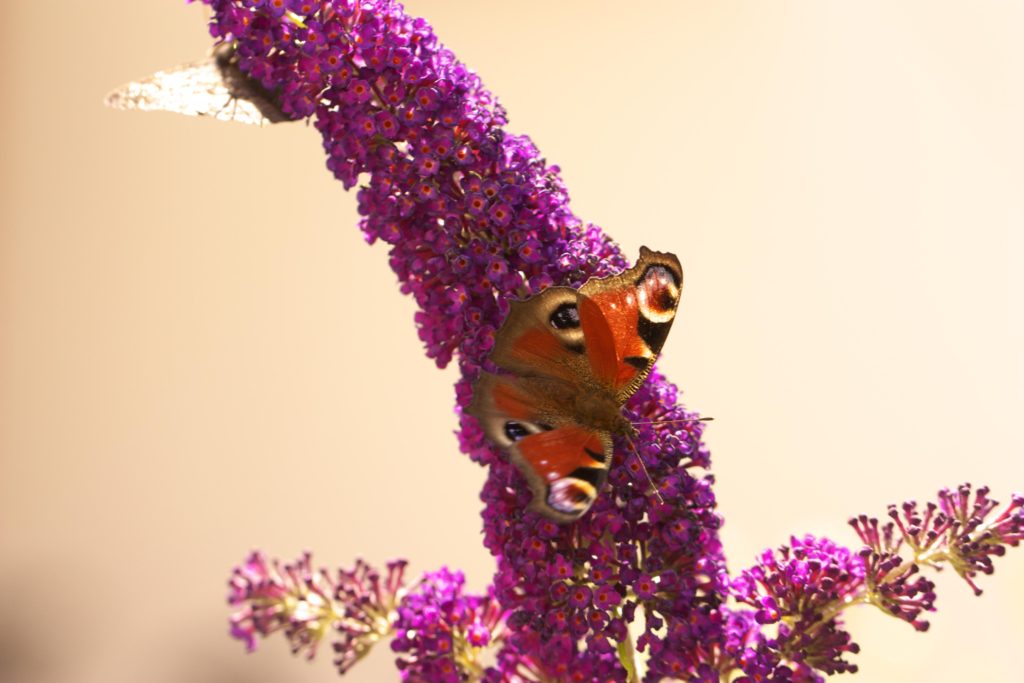
And as a bonus, an European peacock (Aglais io):


Actually it's two of them, one with closed wings is sitting right on top of the summer lilac flower.
0
JULI
14
2

Plying Off Two Spindles.

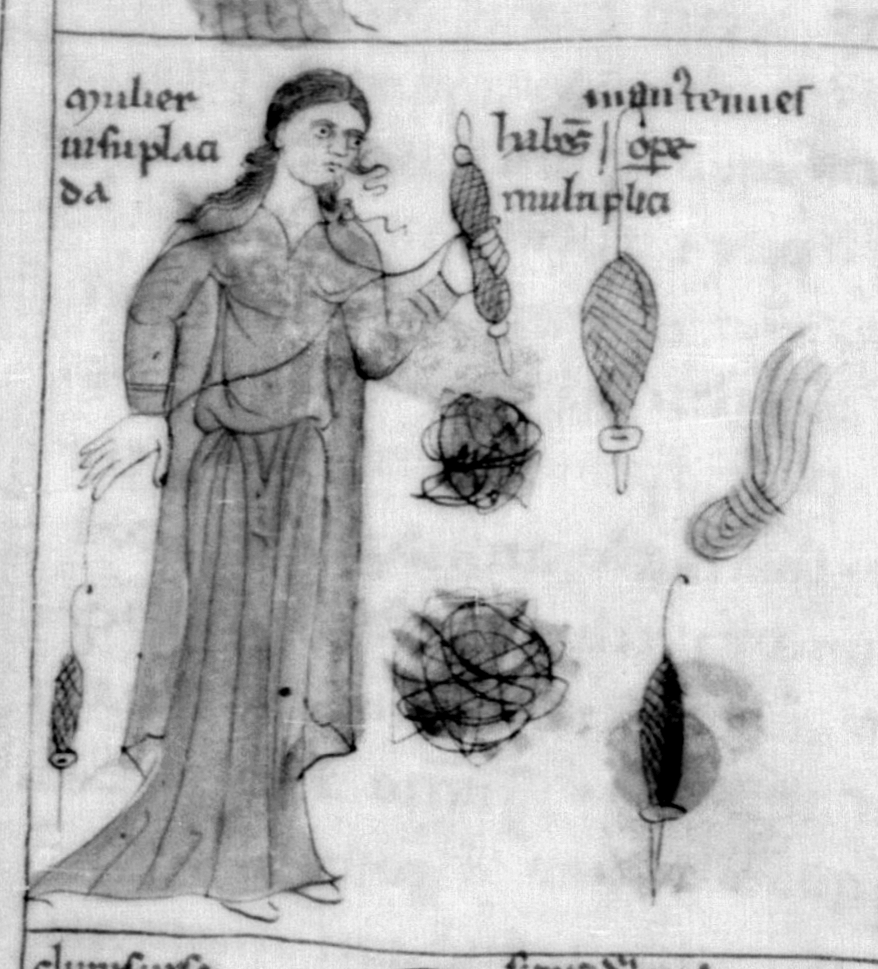
Back in May, I posted about a rare picture showing a woman plying, and there was a bunch of comments (thank you! It's always nice to have some feedback, and some discussion), and now I've finally gotten around to try it.

I dug out two spindles, one quite full and one with just a little yarn on it, and a third empty one, and gave it a go.

Here's the picture again:

[caption id="attachment_5309" align="alignnone" width="411"] Bibliothèque Nationale de la France, Manuscript Latin 7330, liber astrologiae Georgii Zapari Zothori Fenduli, c 1301-1400. Fol. 30r, if I’ve interpreted things correctly. Permalink to the page in the digital BNF.


Because the picture looked a bit like there might be one strand of yarn running around her neck, and the other straight, I tried that first, thinking it might be easier that way to control tension. Well. It didn't work at all for me; it was hard to impossible to control the two spindles and winding off the yarn from them.

Consequently, I tried it straight from the two spindles - and oh, yes, that is much easier for me. Rolling off yarn from the two spindles in the left hand went surprisingly well and evenly, even though there was much less on one of the spindles. What I did was pull a length of yarn out with the right hand, then set the spindle into motion, moving my right hand up and down the length of doubled yarn while the spindle turned, to let the twist distribute evenly. Once enough twist was in the two plies, I wound the finished bit onto the spindle, then repeated by winding (pulling) the next length.

I'm not the Queen of Plying, and it's neither a job I particularly like, nor one I'm very good at, no matter the tool and method. This way to ply, though, felt like it could offer more control that I've had with other methods, not least because it is possible to control both spindles in the left hand individually. Opening or closing the fingers in question some more can fine-tune the tension on one of the yarns, and it's even possible to give one of them some extra turning motion to even out things, or to help when yarn gets "stuck" unwinding, as it sometimes does.

So... back to the picture. While most of the commenters and me suspected that there might be one thread running behind her back, Satekai very rightly observed the woman's also wearing a cloak (which is magically staying in place, but never mind that for the moment), and the "yarn" going across her shoulder might just as well be the outline of her cloak on the shoulder. Which is an interpretation that I'd now totally second, after a) my try and b) judging from two other comments: Joy Wandrey saying she has had good success, and was able to control tension quite well plying off two spindles (I assume that was direct as well, as there's no mention of anything being led around anything else) and Jane's comment about having problems when plying off two spindles, one held in front and one behind.

This is definitely something that I'll try again. It would be wonderful to have a quick, easy, and reliable plying method, and one that is documented for the Middle Ages to boot!

 
1
JULI
13
1

More from the Not-Lawn.

The not-lawn is in blooming season now - almost all the wild thyme has flowers, and they are very much appreciated by a gazillion of flying insects. Which, to my great dismay, means that I actually have to wear shoes when crossing the not-lawn, or use the paved garden path, and keep to the more trodden-down other paths without bloom when going to the paved section. I got stung twice within a good week, even though I was walking very slowly and carefully, one wasp, one bee or probably bumble-bee. That is a good indicator of there being many more insects in our garden than last year, as I walked barefoot all year then and didn't get stung once!

Since I dislike wearing shoes at home, and the garden counts as "home", this does annoy me... but I can accept it due to the joy the number of bees, flies, wasps, grasshoppers, and butterflies the not-lawn brings. I even spotted one special bee that's on the red list, though I didn't manage to take a photo of it (yet).

There are some other beasties I did manage to get decent pics of, though:

[caption id="attachment_5441" align="alignnone" width="640"] Male Gallische Feldwespe (European Paper Wasp), polistes dominula. Note the yellow eyes!
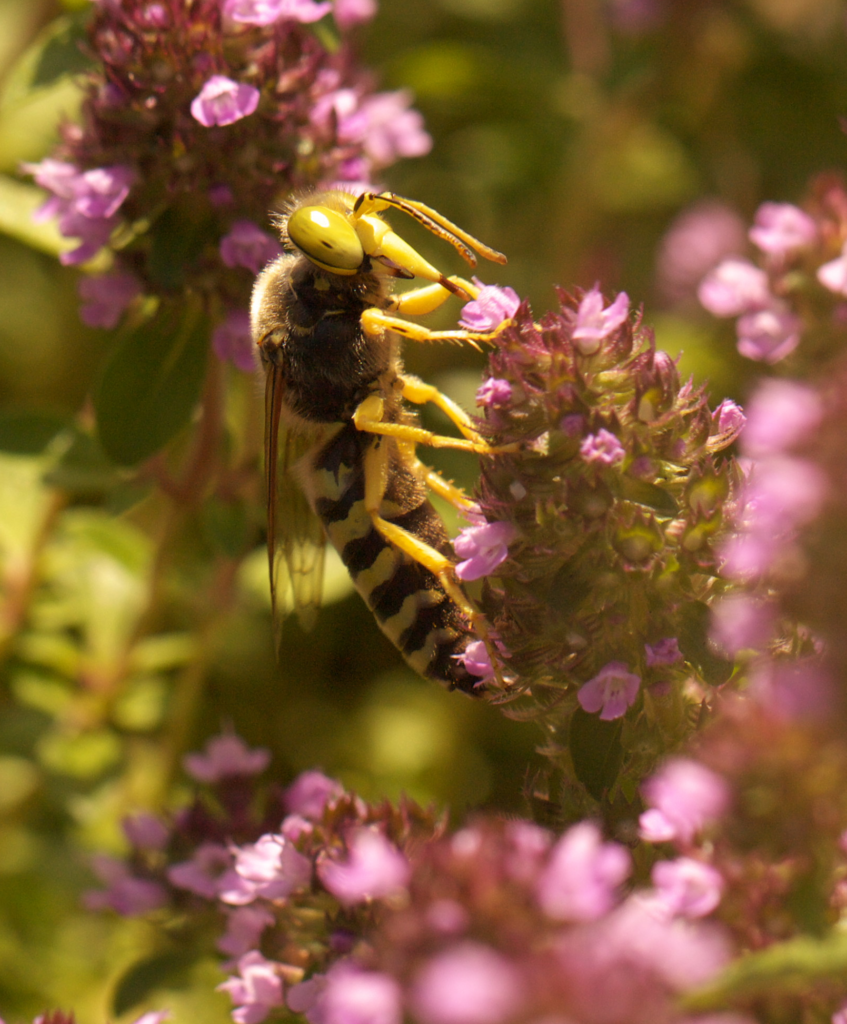

That was the first time we saw one of these; that guy was quite a bit larger than the ladies of the same species, which can be identified nicely by their long, orangey legs that hang down when they fly. It's one of the many wasp species that are entirely unattracted by meat or cake; they are also far less aggressive than "the" wasp Vespula germanica.

Next up: A very distinctive ass.

[caption id="attachment_5439" align="alignnone" width="567"] Gelbbindige Furchenbiene, Great Banded Furrow bee, Halictus scabiosae.
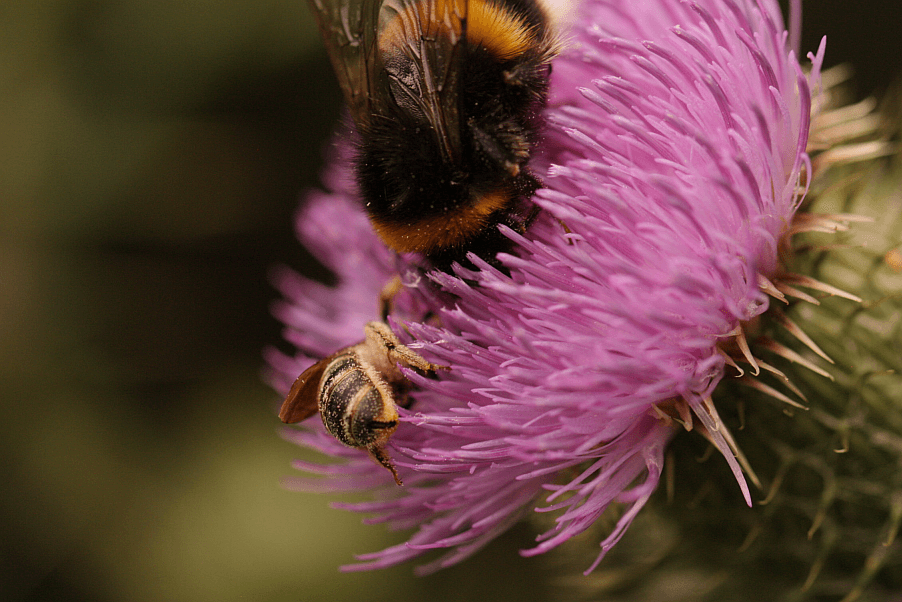

The furrow on the abdomen is what gives the name to this kind of bee. They're a rather frequent kind of wild bee.

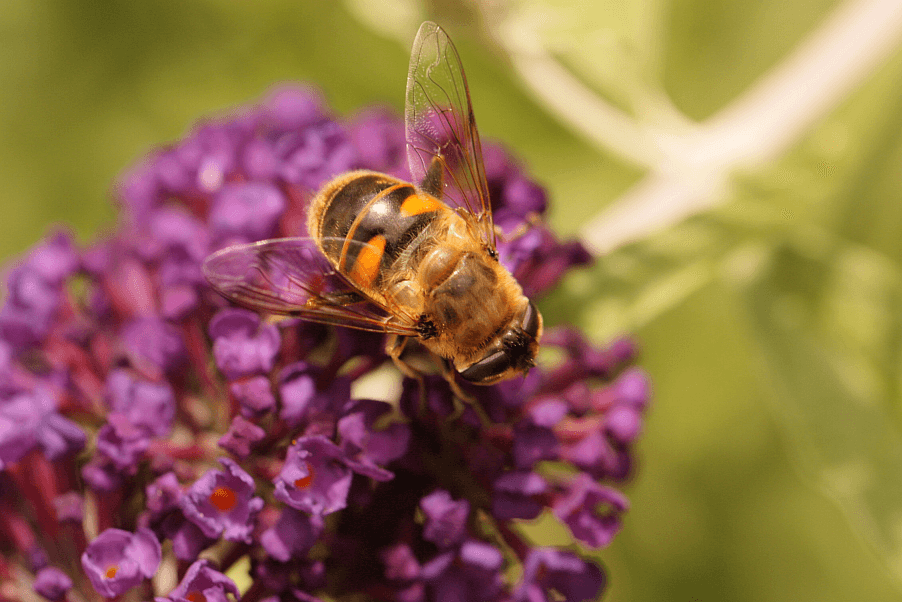
Next one is not a bee, but a kind of fly masquerading as a dangerous sting-posessing animal:

[caption id="attachment_5438" align="alignnone" width="902"] Probably Eristalis pertinax, a quite common kind of hoverfly.

Last one is one I haven't managed to identify yet - because there's oh-so-many different kinds of wild bees and other flying insects here in Germany. I'm actually content to roughly identify them (as in down to the genus, not necessarily the species, and not even considering the sub-species), but, well, with about 600 different species of wild bees in Germany... Sad thing, though: About half of this number is on the list of endangered species, as they are quite specific about their habitat or food plants. Which is one of the reasons I will handle wearing shoes to cross the not-lawn (and do it as little as possible).

So here's my unidentified red-ass-bottomed, ass-lifting little wild bee:
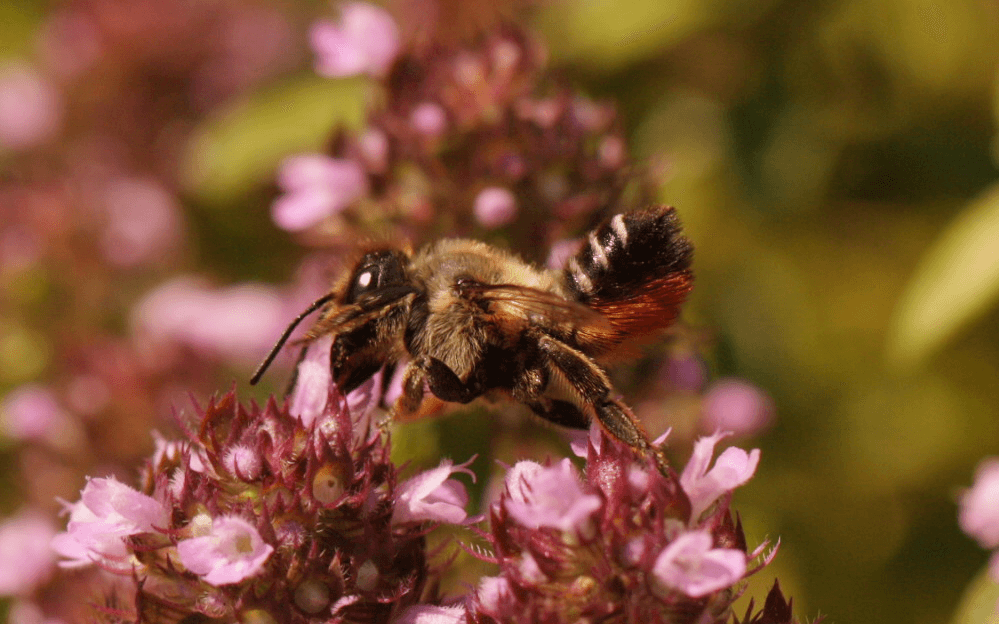


If someone happens to know what it is, please tell me!

And for the German readers among you, here's one of the many pages about wild bees in Germany, with some basic info. There'll probably be a few more posts about these small flying guys, as I'm entirely fascinated by them, and I quite enjoy going on photo safari with the macro lens!
0
JULI
10
0

Drying out.

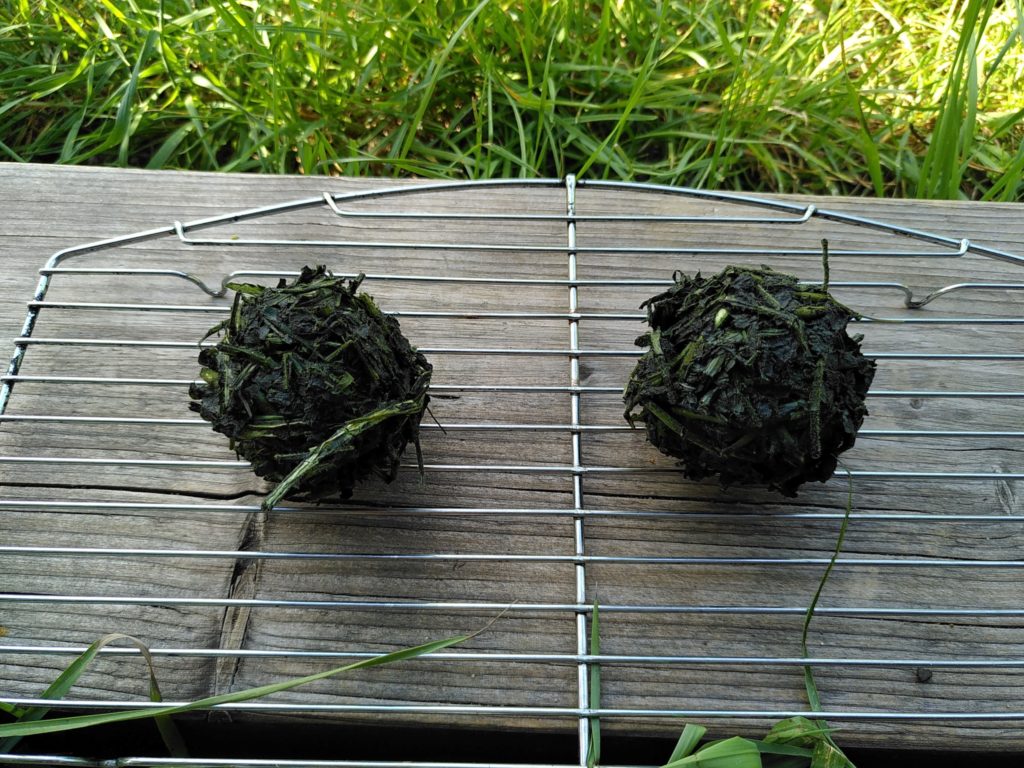
The two woad balls are drying slowly, and their outside is turning darker - blackish blue, or so I think.


Woad leaves, I also learned, have a rather characteristic smell... which is quite green, and quite interesting.

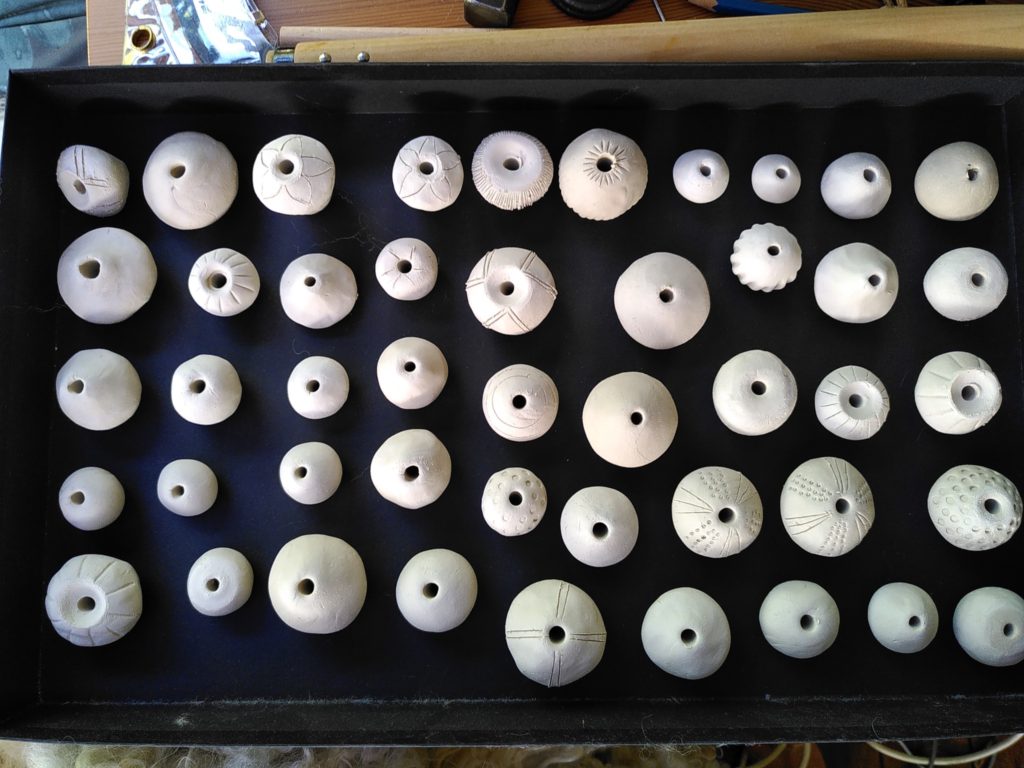
Another thing that is currently drying: The first batch of spindle whorls. It's time to make some more hand-formed ones, so I'll be doing that spread out over the next few days.


Which also means that if you have documentation about a (hand-formed) spindle whorl that you'd like to see in my shop, tell me about it! I'll then attempt to make a few approximations, and if they survive firing (which, sadly, can never be guaranteed) you can buy them...
0

By accepting you will be accessing a service provided by a third-party external to https://www.pallia.net/

Kontakt