Latest Comments

Guest - Aislinn Dyestuff Citizen Science.
09. Oktober 2026
This is a great project. I look forward to the results. Thanks for letting us know.
Guest - Aislinn Time for...
09. Oktober 2026
Looks delicious!
Guest - Katrin Sprang Discussion
18. September 2026
Hi Rachel, I have looked for more photos of you, but that was not very successful. I found a link on...
Guest - Beatrix Sprang Discussion
15. September 2026
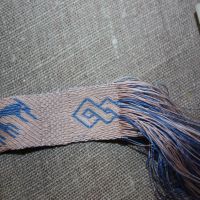
That lozenge pattern element is not a photograph, but a scan. So it should be to scale. But I pinned...
Guest - Katrin Sprang Discussion
15. September 2026
I was not referring to Rachel's reconstruction (is the reconstruction you refer to the one photograp...
JULI
09
2

Playing around.

Due to this year's special effects, there's been some more gardening than usual... and there's also been the first proper woad harvest, both seeds from the plants that are now two years old, and leaves from the new plants.

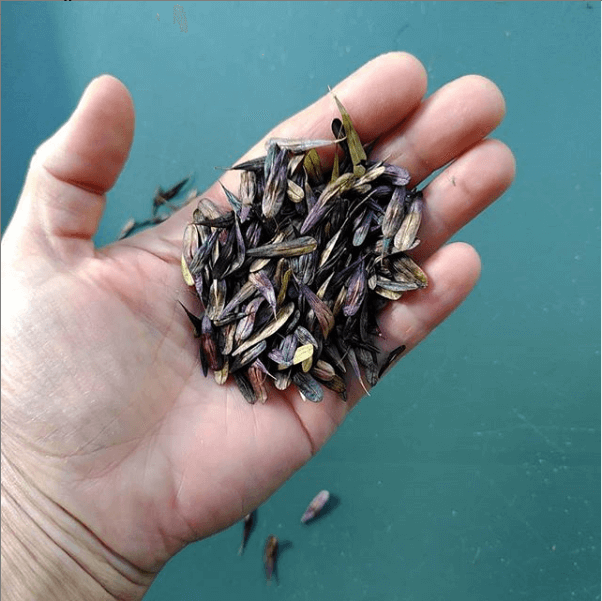
The seeds are beautiful too - I find their colours spectacular:


They are fully dry now, almost falling off the plants by themselves, and some of them are going to find their way into the shop in the next days.

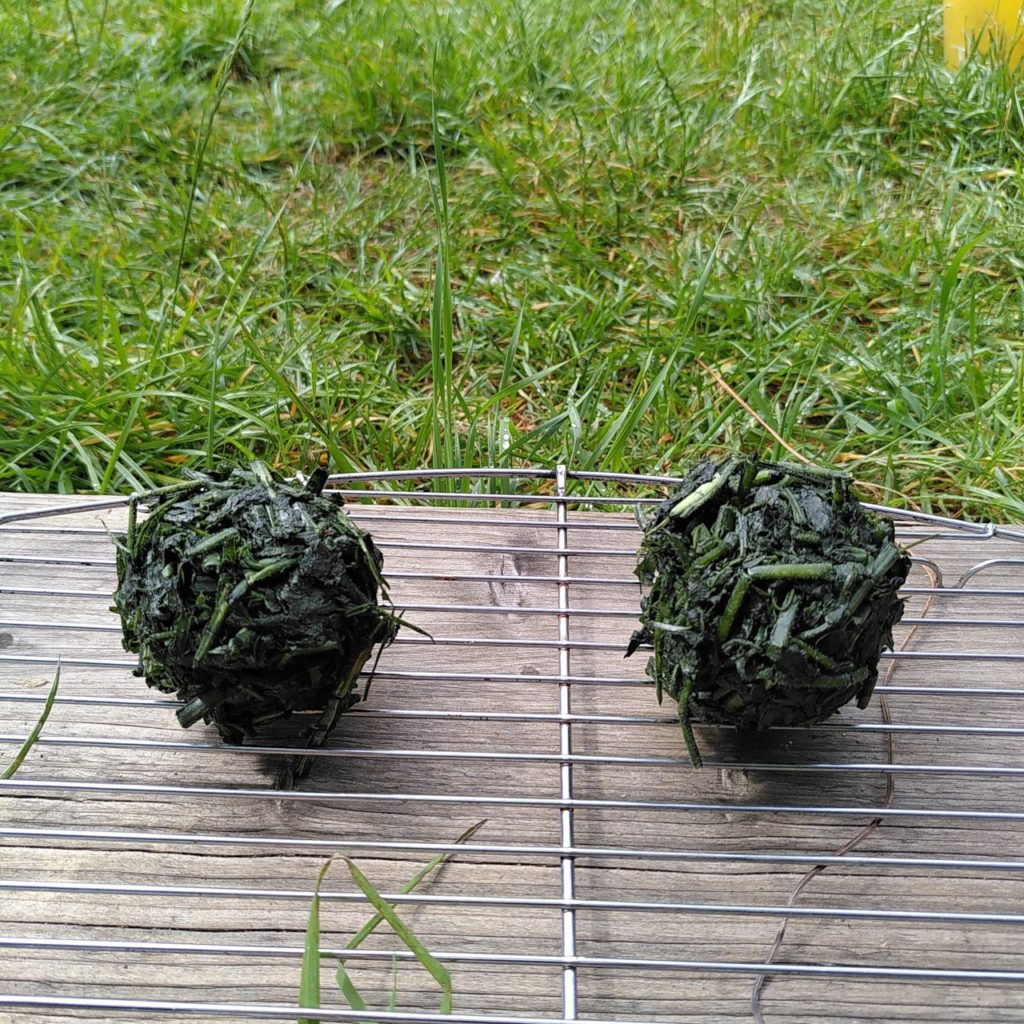
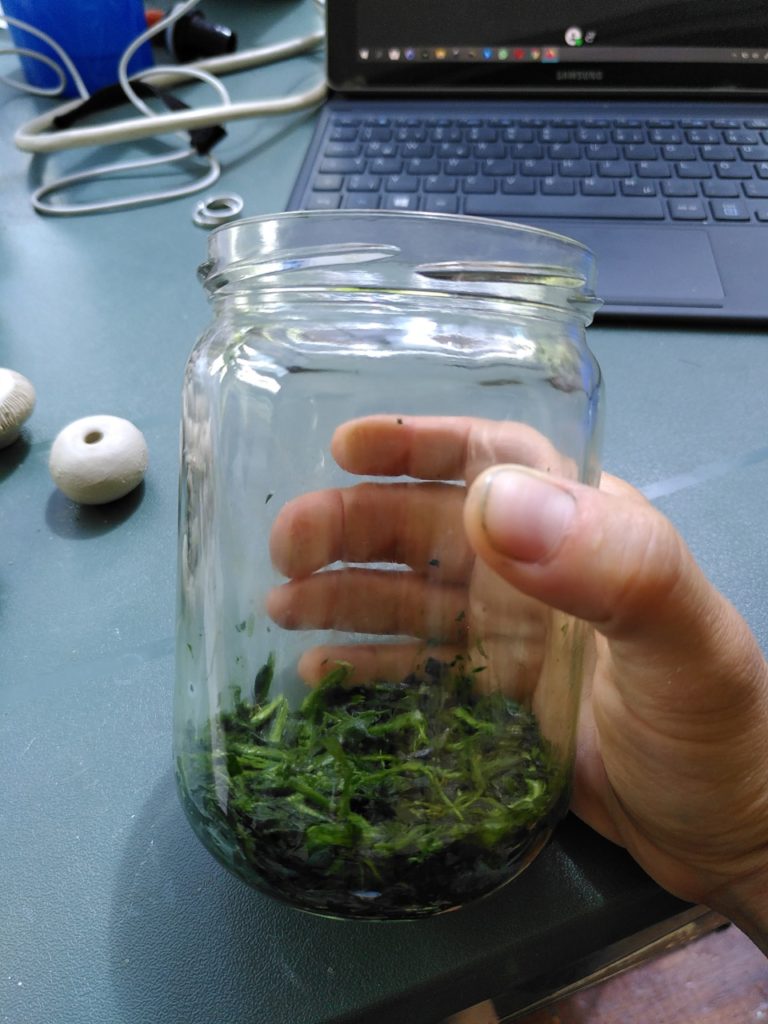
The leaf harvest wasn't huge, but enough for two woad balls, and there's a portion for a third ball currently sitting in a jar, as I want to try fermenting it for a bit before forming the ball.

[caption id="attachment_5428" align="alignnone" width="488"] My very first woad balls! My hands were bright green after making these... and there was even a hint of blueishness to the green after a while.


Now the whole thing has to dry out completely, and then it can be crushed and either couched (a kind of fermentation process) or used straight away for dyeing.

[caption id="attachment_5429" align="alignnone" width="382"] More woad crushed up, and ready to ferment for a bit. (Plus bonus fresh spindle whorls in the background...)


I'm having a lot of fun finally playing around with this!
0
JULI
08
4

Language Learning Thoughts.

As you can guess from yesterday's post, I have a bit of experience learning languages - to different stages, at different times, in different ways, and for different goals. So here's a few things that I meta-learned about language learning over the course of this, maybe you find them helpful.

Do keep in mind that I'm not one of those incredible people who speak 5 or 6 languages fluently - but I have managed to get enough skills in the appropriate areas to handle my needs. These are, mostly, reading archaeological papers about textiles - which can be done with just basic understanding of the language, passive skills only, the necessary special vocabulary and the enthusiastic use of (online) dictionaries. Reading about other topics, especially scholarly material that is not as down-to-earth as archaeology reports usually are, will require a higher language skill.

So, here you go - my insights about language learning:
  1. Find out what you want, and aim for that. If you only need to read-understand things, it makes limited sense to get a conversation course. For reading understanding, I have had good results with getting a basic overview about the language through the first chapters of a beginner course book, then switching over to actual reading. I learned how to read Middle High German and Swedish by getting a book in the original language, plus the German translation, and reading those in parallel with, again, enthusiastic use of a dictionary to support word identification. (The books were the Nibelungenlied, by the way, and Ronja Rövardotter.) I'd consider a book optimal for this approach if the original was written in your language of choice, and you already know the translation of the book, and you love it.
    With this approach, you can end up with fairly good reading skills. You will probably be quite helpless when trying to understand spoken language, though, and your active skills will be somewhere around zero, not just because of lack of practice in actively using vocabulary and grammar forming sentences, but also because pronounciation is actually a thing in most languages.
  2. If you are going for active skills, get started on them at once. This means actual conversation with actual people, at least in written form, better in spoken and written form. Whether you practise with a study buddy or with a teacher, or talk to your cat, or to your chair - as long as you form sentences and talk about things, it's good. Best is, of course, a native speaker teacher who is willing and able to correct you, but anything is better than nothing. There's platforms online where you can look for a conversation partner or study buddy, if you don't happen to have a native speaker among your friends who's willing to have their mother tongue smattered.
  3. This also means that a book course by itself, or a computer course with no additional real-life real-time interaction will probably not be the best choice for learning a language for active use. Though these can be very good tools to learn grammar, vocabulary, and phrases, my impression is that these courses then tend to build up a repertoire of fixed phrases that you will be able to understand and use - but no real language use practice.
  4. Speaking of practice: I find it easiest to learn a language when there's a use-case for it, and when the topics interest me. I do not need to learn how to order cask-drawn beer as opposed to bottled beer. I am vastly interested, though, in learning about different kinds of chocolate, climbing gyms, bicycles, and tablet weaving. So ideally, your conversational partners have similar interests, and you can stumble your way into the new language through topics that have relevance and value for you.
  5. Try to do something every day. Instagram, as I've recently discovered, holds a wealth of hashtags for language learners - giving you lots of small posts with images accompanying snippets of language info. Which is just brilliant for learning a little bit every day. Films and Youtube videos are also a nice way to learn, with the added bonus of hearing actual normal people speak the actual spoken version of the language at more or less normal speed!
Those are my findings - do you have any insights from your language learning adventures? Let me know in the comments!
0
JULI
07
9

If I could have a Superpower...

There's this thing about superheroes: They have superpowers. Each, usually, their own, and they range from superstrength (Hulk smash! Superman! And don't forget Pippi Longstocking) to mind-reading to throwing fireballs to flying to freezing things and whatnot else.

Well. Flying and smashing and being superstrong might all be cool... but if I'd get to choose a superpower, it would be Universal Incredible Language Skills - as in speak, read, and understand any language like a talented native speaker. toBecause that would make things so much easier. Archaeologists still publish their research in their home language, usually, so if you are looking for things outside your own country or language area, you need to at least know about some basic terms in your goal language to have a chance of finding stuff.

On a side note - there's pros and cons for publishing in your home language as well, of course. If you publish in English, you might have colleagues in your own area who don't find the research; if you publish in your language, it won't be as visible from outside your language area. Unless, of course, your home language is English. Then you're lucky - though you might then be one of the people who, when young, never got far with learning a foreign language because you could always get by with your own...)

Anyways, I was able to find a lot of non-German and non-English articles and books and publications when I was working on my thesis, and had to brush up my language reading skills considerably to be able to handle them. For some of the very exotic things, I had help from friends and family (my Dad was able to help with the Czech articles, and I had friends and fellow students help with Polish, and Icelandic; plus people to ask about the finer points of Middle High German. I also had some help for the not-so-exotic-but-still-hard-for-me Italian.

I was a lucky lady to find all that help. It didn't hurt either that I quite like languages, and that I had lessons in English, French, and Latin in school (though I was so bad at Latin that it doesn't really count), and learned a bit of Dutch, Spanish, and Swedish while at Uni. In most of the languages I can read, my passive understanding skills are way, way, WAY better than my active skills - which is to say I can read simple everyday things in newspapers and more or less understand the gist of them; I can read archaelogical papers and understand them (better than the news in most cases, funnily); but I will have a hard time understanding spoken language and will probably not be able to speak beyond very limited, very simple short sentences. I also have a sort of mashed-up language slurry in my brain for some groups; for instance, I read "Generic Scandinavian" and it will take me a while and some thinking to be able to tell Danish or Norwegian apart. Telling those apart from Swedish is easier, but I will still have to take a second look. My Spanish is so bad that it once took an Italian guy about 15 minutes of me talking at him to realise it was Spanish, not Italian. (It was a fun conversation nevertheless.)

So. Superpower of choice - Universal Language Skills.

In case you should happen to have them, or in case you happen to read Finnish, you can find the original documentation of excavations, plus a lot of other resources, at Kulttuuriympäristön Palveluikkuna. Have fun!
0
JULI
06
1

Leeds IMC is running...

... and even though it's virtual, I'm not there. If only because I heard about it too late - apparently, there was a very quick, very large rush of people registering for the conference, and the organisers had to cap it due to bandwith and virtual logistics limits.

Which, I think, is a very good thing - it does show that virtual conferences can be a thing, and maybe we'll have more of that in the future. I definitely hope so.

That said, there's a few free things on the programme, and you might want to check it out here - things are marked "open to the public" if you can get access without a IMC registration. Check the performances and tours & exhibitions parts if there's anything of interest for you!

The U of Leeds also posted this article about 8 ways to get a cultural fix back in April.
0
JULI
03
0

Linky Time.

Time to clear up some of the gazillion tabs here again!

First of all, if you're feeling slightly nerdy, here's an article on medium.com on a visualisation of the global development of COVID-19. It involves a few steps (and reading the instructions in the Medium article), but then you can have the thing plot a lot of different developments for you. What makes these plots really interesting is that the numbers have been normalised to the population size - so we're looking at the relative case numbers and their development, not at absolutes. This really is way cool. (I got the link sent by a neighbour who was involved in the project, by the way. The things you learn.)

Another neighbour was involved in some of the translation work done for a current virtual exhibition in Nuremberg: "Menschen machen Stadtgeschichte" - People making the city's history. Scroll down a bit for the English explanation and link to the English version.

Even more from people I actually know: My colleague Alexandra Makin has interviewed my other colleague Gwen Owen-Crocker for her new blog series "Early Medieval (mostly) Textiles". Go check it out here.

Yet another friend has pointed me to the (virtual) International Medieval Congress site, where I browsed through the conference programme and found a link to a modern Decameron - ten days with ten stories each, so a hundred altogether. The individual stories are rather short, so if you need a little something to watch and listen to now and then, go have a look. You can find the full list of videos here, and here's the very first one with the introduction for your convenience:

0
JULI
02
0

Procrastinating. Helpfully.

I have to do tax stuff. Which, as you probably know, is not my favourite task of them all... so I've been procrastinating this morning.

At least I've been procrastinating in a productive way - finding a slightly better way to get bibliographical data attached to the many .pdf articles that I have in storage (but not yet in the bib database I use), and doing some cleanup and maintenance work on said database. That includes correcting special characters that have not transferred correctly. A pain in the neck, especially if they are not the simple, regular ones that can be typed easily on my standard German keyboard.

I used to have a specialised keyboard when I was writing my thesis, adapted to include Danish, Polish, and Czech special characters, but that has not survived the changes of computer hardware and operating system that happened inbetween, and I haven't gotten around to setting that up again. For the moment, I've found a handy character list on the 'net to copy and paste the single individual characters; it's here, and includes HTML and ASCII codes, if you find those handy.

I've also looked into some other database stuff, though not quite as successfully yet. There's a few things I would like to organise better, so that I can use and access the information I have more easily, but haven't found a really good solution yet. The optimum would be something that also allows cooperation with colleagues via the 'net, while easy to use, linking things both online and in local storage together, and searchable. I might have a lead on something that sounds promising, but haven't looked into it much yet... and I shouldn't, today, since - see above - someone has to do my tax work... and the cat, while purring helpfully and being very cuddly as she currently lies on my arm (the left one, for a change, very unusual) refuses to do that.
0
JULI
01
0

Phew. Back online.

The shop is back online, after a short break overnight to implement the change in VAT rate that is in effect here in Germany starting today.

I think the change was one of these ideas that are well-meant and sound really good at first, but are not as brilliant on a second, closer look. For me, it was rather easy to implement, with a smallish shop and a decision on how to handle it that makes things much easier for me. Changing the tax rate was, in my case, quick and easy to do. The prices, though, will remain the same, as the shop fixes the brutto price (including the tax). As I have both things with reduced tax rate in the shop as well as normal rate things, and the printed matter is partly bound to the price (there's a German book price law, which means a new book will cost the same no matter where you buy it, and the price is fixed by the publishing house), I can't just slap a general discount on.

My solution is to offer a discount code - you can enter this in the appropriate field shown on the shopping basket page - and you'll get the price reduction on all the eligible items. (Or you can just pay the full price, if you want me to have a bit more revenue from your purchases, which will also be welcome.)

Other vendors have not had it this easy, though. Especially if you have an automatic cashier desk or similar things, I've heard that things could be very complicated, and nerve-wracking. In quite a few branches of trade, there's a lot of confusion on how to handle this, and whether it's better to pass on the reduction to the customer, or to keep the little extra revenue. It should be clear in gastronomics (which was, I think, the primary reason for the VAT rate reduction), but in other businesses, I wonder if the extra amount of work and hassle will really be worth it. It's extra-complicated in the book trade, due to the fixed-price law!

Just like in so many other circumstances, only time will tell whether this stunt will actually do something for German economy. In the meantime, you can enjoy the discount and with it the accompanying "krumme Preise", as we say in German - non-round, slightly weird numbers for the prices.

And that's it for the current behind-the-scenes report...
0

By accepting you will be accessing a service provided by a third-party external to https://www.pallia.net/

Kontakt