
Latest Comments

Guest - Aislinn Dyestuff Citizen Science.
09. Oktober 2026
This is a great project. I look forward to the results. Thanks for letting us know.
Guest - Aislinn Time for...
09. Oktober 2026
Looks delicious!
Guest - Katrin Sprang Discussion
18. September 2026
Hi Rachel, I have looked for more photos of you, but that was not very successful. I found a link on...
Guest - Beatrix Sprang Discussion
15. September 2026
That lozenge pattern element is not a photograph, but a scan. So it should be to scale. But I pinned...
Guest - Katrin Sprang Discussion
15. September 2026
I was not referring to Rachel's reconstruction (is the reconstruction you refer to the one photograp...
MAI
27
1

Peer Reviews.

Once upon a time, I gave a presentation about spinning at a conference, and now that presentation is being turned into an article. A peer-reviewed one... and I'm currently working on the peer's comments and input.

If you're not familiar with this process of peer-reviewed publishing, let me give you the quick rundown. You hand in your paper, the editor reads it and comments on it (though that stage is optional), and sometimes you're then asked to change/expand/amend things. After that, the draft is handed on to one or more reviewers; they usually get a list of questions to help them evaluate the paper, and to help the editor(s) evaluate the peers' feedback. Those questions usually include things like "Is the paper well-structured?" and "Does the paper add to scientific discourse on the topic?". Once the reviewers have sent back their feedback forms and the paper itself with their comments and suggestions for changes in it, you'll get the whole load back from the editors, without any indication of who your peer reviewers are. Then it's up to you to go through the feedback forms and comments, and use them to make your paper better.

If you're lucky, you are getting solid, constructive feedback on your content, pointing out where things are still unclear, or where something is missing. A peer review can also show how different views on a single topic can be, depending on the individual and their area of specialisation, or their academic background. Archaeologists, for instance, will look at other things, or at the same things differently, than historians or art historians.

In any case, once you've tweaked and added and changed and wrote your replies to comments for the editor to read, you send your paper back again. Then you might hear back from the editor once more, if there are still some things to resolve; otherwise it will go into the process of typesetting. Then you will see it once more for the final proofread... and after that, it's finally all done.

The peer review process is not perfect, but it will definitely help make a paper better by pointing out things that you have missed as an author. Whenever I get the reviews back, though, it takes me a while to process them before I can really get to work on them... it's critique, after all, and that always tends to hurt a bit, no matter how well-deserved, well-meaning, and well-phrased it may be.

After that initial bit of deep breathing and letting it sit for a day or two (or three), though, I've always ended up with a paper I felt was better than before. And, hooray, I'm almost done with the current one!
0
MAI
26
0

Night Watch.

If you've always had the desire to get up and close with Rembrandt's Night Watch, the Rijksmuseum now allows you to do so - virtually. You can find a hyper-resolution web version here, and every click of the mouse will bring you closer, and closer, and closer.

And here's a review of the experience - maybe giving you a guideline on what to look for.
0
MAI
25
5

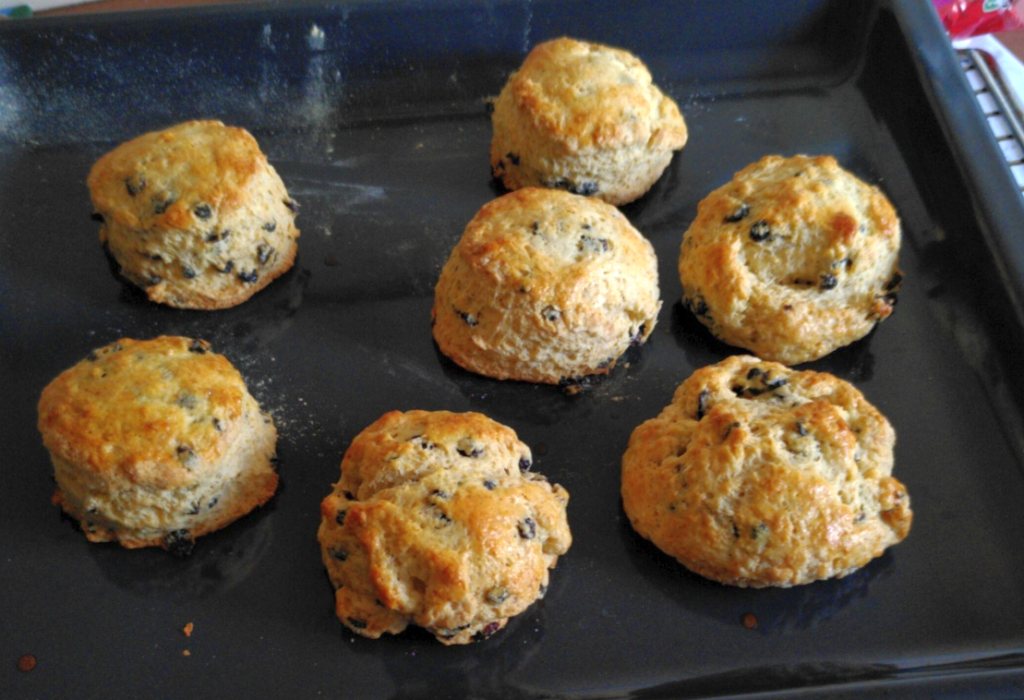
Scones.

In general, I'm not too fond of raisins. There are people who put them into apple cake, and into cheese cake, and I find that... um... unattractive. Very unattractive. Same is true for raisins in muesli, and in chocolate (there's nut-and-raisin chocolate available in Germany, and I only eat that very rarely as a reminder of childhood days). I'm also not too fond of them in trail mix.

There's a few places, though, where I find them acceptable - or even necessary. One prime example?

Scones.


I love scones. Preferably with clotted cream (which is hard to get in Germany). So here's my recipe for scones, just in case you are feeling like going on a bit of a pandemic baking spree, like so many others:

75 g raisins or currants (I prefer currants)
115 g buttermilk

75 g butter
45-50 g sugar
1 large egg
pinch of salt
15 g baking powder (amount generally recommended for 500 g of flour)
340 g flour (typically wheat, I use spelt)
optional: quarter teaspoon of baking soda (or less)

Soak raisins or currants in buttermilk for at least one hour.

Mix cold butter, flour, salt, baking soda and baking powder to prepare for making a shortcrust-type dough. Form into a ring on your work surface, add buttermilk, currants, and egg to the inside of the ring; knead until it forms a smooth dough.
Roll out your dough straight away (no rest needed), to about 2.5 cm of thickness on a floured surface, then use a glass or a suitably sized round cookie cutter to cut circles. Put on baking sheet and wash with leftover buttermilk or an egg-buttermilk-mix or just egg. (I tip the buttermilk and currants into the floury ring, then whisk the egg in the now-vacated bowl, then tip it into the ring as well. The bits of egg and buttermilk left in that bowl are enough  or almost enough to glaze the scones; they definitely are if another small bit of buttermilk is added.)

Bake at 189-190°C in a non-fan oven, for about 15 minutes.

They still taste nice the day after baking, and even the day after that. They never survived for longer in our household...
0
MAI
18
0

Carpe Diem...

The Most Patient Husband of Them All has a few days off this week, and I'm taking the opportunity to do so as well. Which means you'll get blog posts again as usual from next Monday - have a good time meanwhile!

0
MAI
15
2

Pics from the garden.

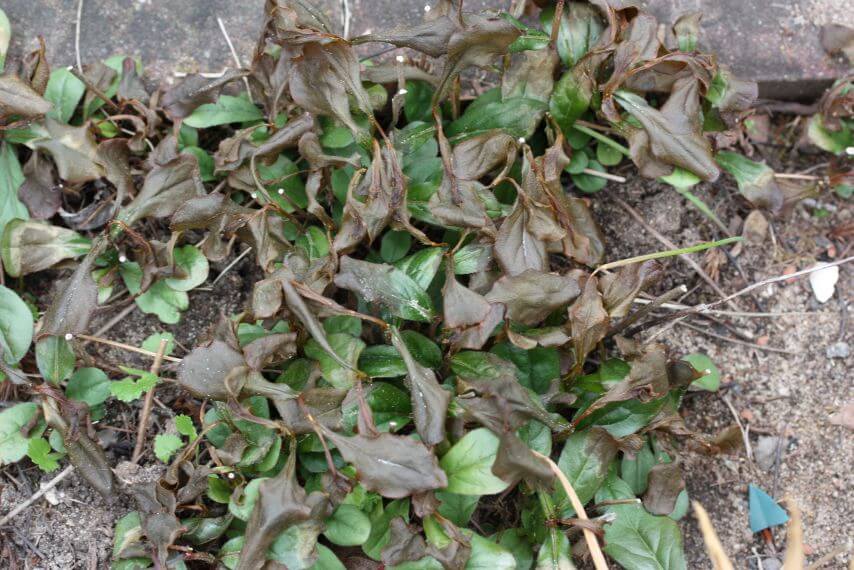
This is what happens if you don't realise that this kind of flower (Bleiwurz) is not too resistant against frost:


I can't remember seeing them freeze spectacularly like this in autumn, so possibly it was just the time of year. They'll recover, though, and they still have some time to do so until they are scheduled to bloom.

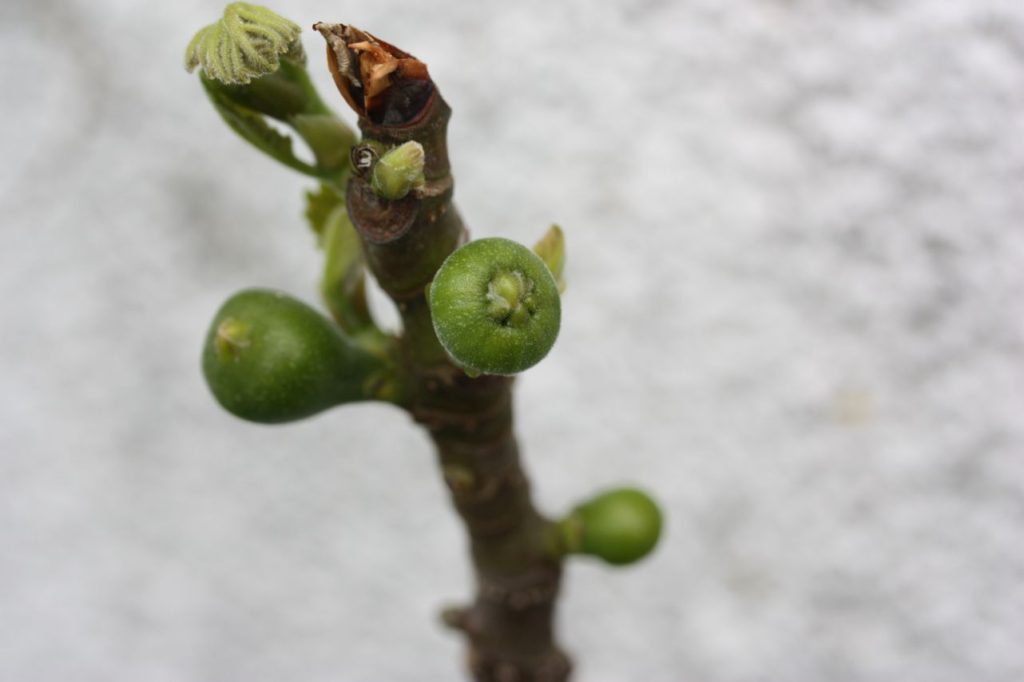
I did take care to cover the fig for the last few nights, to protect them against the Ice Saints. Which is very important, because:


Figs!

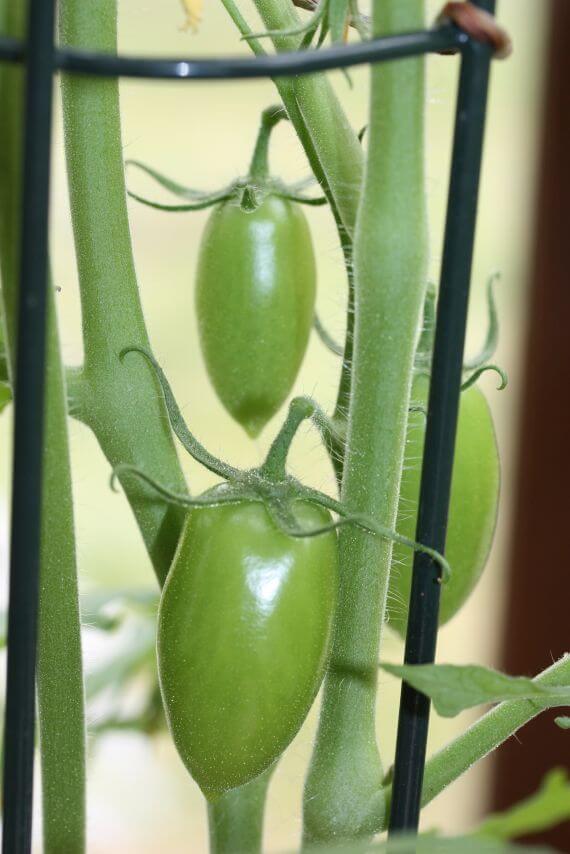
There's also the first tomatoes hanging around in the winter garden. The plant is from last year, which explains why it's already working on fruit:


I managed to get another tomato plant through the winter as well, but since it didn't really get going, I finally threw it out. This one, though... definitely a keeper, if it will keep.


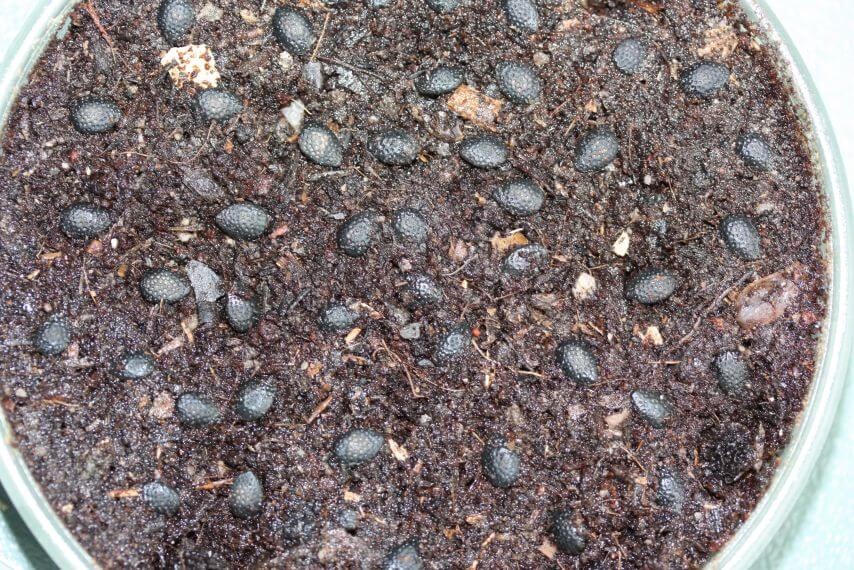
I have also finally done what I've been thinking about for years now: Try and raise some passionflower plants. They have beautiful flowers, and I find the fruit quite tasty. Our supermarket happened to have some purple passionfruit... so now I'm waiting for the seeds to germinate. Which can take a few weeks, according to the internet. We'll see!
0
MAI
14
0

In A Parallel Universe.

In the parallel universe where the Corona virus never transferred to humans, I'm bouncing around right now, packing the last bits and pieces into my backpack, and probably preparing food and coffee for the journey to the NESAT conference. I guess there's quite a bit of chaos in the study as well, more than usual, as I've only come back from the fair in Karlsruhe on Monday, and the list of post-fair homework (apart from "carry things back inside to empty out the car") is still untouched.

Instead, I'm sitting here at the home office desk, with the Most Patient of All Husbands sitting at his home office desk on the other side of the room. The tickets for the journey have all been cancelled or the dates moved to next year (when there will be a NESAT), and we'll be staying home, doing the social distancing thing.

It still feels weird.

There are a lot of things that have changed here in Germany, due to all the restrictions. For me, personally, it feels like things have already settled down a lot into a "new normal", not all of it brilliant, but mostly it's fairly comfortable. Our favourite market stall for Saturday grocery shopping is back after taking a break for a few weeks due to the situation, shops have re-opened, and we've established virtual meetings with some of our friends, so we do get some social contact. It's not the same as meeting like in pre-Corona times, but it does help to see friendly faces via videochat.

Germany is probably not a bad place to be in at the moment, even though there's rising stupidity here as well - people protesting against the restrictions, falling in with conspiracy theory groups, and generally not taking the virus too seriously anymore (because it wasn't so bad after all...) I just hope that stupidity of any kind, including the "race to be the most liberal in taking back the restrictions" that some politicians now seem to engage in, won't destroy the fragile success we had in slowing the virus spread. The smart thing, as far as I can see it, is still to stay at home as much as possible, keep a good distance to other human beings, and try to not get sick.

So that's what I'm trying to do - plus seeing the good things that come from the changed situation. We don't have to worry about our catsitter situation, for instance (as we're not going anywhere at the moment...). We're having boardgaming sessions with international participation. There's more digital events now, allowing me to easily and quickly connect with other colleagues from around the world, straight from my own living room. There's more people buying things locally (which is always a good thing). Some bad things in our society now come to light, and there's a possibility that some of them might be remedied. Of course this can't balance out all the deaths, and all the negative impact that the virus spread is having on everything everywhere - but we might as well try to make the best out of it!
0
MAI
13
0

Bird Feeding in Summer?

There's been a debate for years now about whether to feed birds year-round, or not. I've heard pros and cons for that, but never followed the debate really closely, as we're usually not feeding the birds (our neighbours upstairs and next door do that in winter, and I figured that would be enough).

Yesterday, though, I stumbled across a post on my Facebook feed about the dangers of feeding birds with the wrong feed in spring and summer - as that will actually kill their young. If you read German, you can read the full explanation here. For those of you not reading German, here's the short rundown:

Feeding birds during summer, especially in areas where they have little natural feed, is generally a good thing. But it has to be the right feed, else it will cause more harm than help. Suet-based feeds and fatty kernels are for winter feeding only; in summer, you should only feed small seeds from grass and wild flowers that also occur naturally in the area you live in. Another thing suitable for summer feeding is fresh or freshly killed insects. Never feed dried insects, as their salt content is too high for both adult and young birds.

One of the common statements is that the feed offered at feeding stations will only be consumed by the adult birds, who will feed "proper" things, such as insects, to their offspring. This is, unfortunately, not the case. The adults will also feed their young with the fatty seeds or suet-based feeds which are so easy to get from the feeding station. The small chicks cannot digest these foods; they block their intestines, and the chicks die over the course of several days with severe colics and constipation. (The German article linked to above also includes pictures, if you'd like to see what this looks like. Scroll down the page. Not for the faint of heart.) If they do survive, they often suffer misformations due to the malnutrition (too much fat, too little protein) from the inappropriate food. (Even winter feeding with fat food only can have negative consequences, as this study shows.)

So if you feed birds in your place - please take care to feed appropriate things only. The best way to support wild birds in your area is creating an environment where they find enough spaces to hide, build their nests, and where there are plants teeming with insect life so they can catch enough food for themselves and their brood. (Lawns are overrated anyways - go for a wild flower meadow instead. Not only will that be much more colourful, it will also save you all the work of lawn mowing...)
0

By accepting you will be accessing a service provided by a third-party external to https://www.pallia.net/

Kontakt