Latest Comments

Guest - Aislinn Dyestuff Citizen Science.
09. Oktober 2026
This is a great project. I look forward to the results. Thanks for letting us know.
Guest - Aislinn Time for...
09. Oktober 2026
Looks delicious!
Guest - Katrin Sprang Discussion
18. September 2026
Hi Rachel, I have looked for more photos of you, but that was not very successful. I found a link on...
Guest - Beatrix Sprang Discussion
15. September 2026
That lozenge pattern element is not a photograph, but a scan. So it should be to scale. But I pinned...
Guest - Katrin Sprang Discussion
15. September 2026
I was not referring to Rachel's reconstruction (is the reconstruction you refer to the one photograp...
MAI
10
0

"Making, Wearing, Displaying: Textiles and the Body"

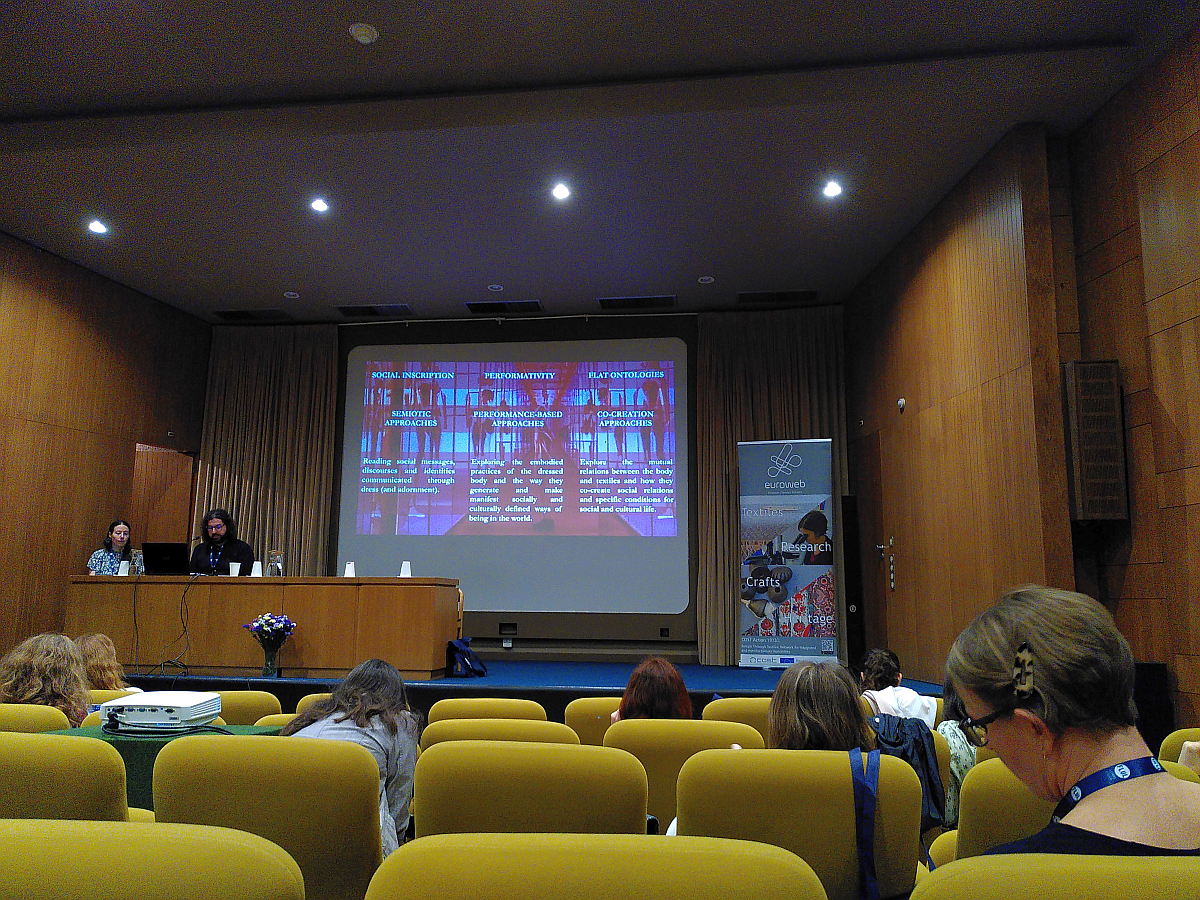
I'm back home from a wonderful workshop - and the title "Making, Wearing, Displaying: Textiles and the Body" really fit all the contents of the workshop.

We had a lovely mixture of papers and practical sessions, one of them involving modeling of various reconstructions of old garments. There was Iron Age and Bronze Age things, there were a few galloroman garments, and pieces from Xianjing - of which I got to model one. It was the earliest piece, put together from a lot of fabric that was mostly uncut, and a very interesting experience to wear. The two other garments from the same project were much more tailored and looked elegant from the get-go, while my gown felt more like hanging out on the couch and have chocolate and watch Netflix. (Or read a book, maybe.) While I've worn a good number of historical garments and garment reconstruction over the years, and most of them not just for half an hour or an hour, but for actual working and living in them, it was the first time I had something as loose-fitting and flowy, with no body shaping whatsoever. Very curious feeling for me.

There was also a workshop on Greek dancing (ancient Greek, of course), in the wonderfully warm sun, so it felt quite fitting. And then, of course, lots of papers about a huge number of aspects regarding textile and the body - from dental abrasions probably caused by textile work to a project looking at brain activity when doing textile work. The programme was really long and packed, but the organisers did an absolutely splendid job in how they arranged papers, breaks, and practical sessions to make it still easy to follow along and take in all the information.

We also got treated to a tour of the Ethnographical Museum in Lisboa, who graciously hosted us for the first two days, and to copious amounts of typical food and sweets (coffee breaks!) plus, of course, coffee.

Portuguese coffee is lovely, and I probably had too much of it - but did I mention it was delicious? 

After the conference, I had a bit of time left to explore the city. I spent most of the two days I had walking up and down the streets, looking at things at a flea market, seeing the loom weights (and the museum mascot cat) in the Museo Archqueologico do Carmo, plus the Natural Science Museum and the Botanical Gardens as well as many, many streets in different quarters. There would have been much more to explore, but there's only so much you can do in two days, especially if you also have to take breaks to sample the local delicacies. There had to be an adequate sample size for determining coffee quality, for instance, and since there is not only the signature "pastel de nata", but a plethora of sweet baked goods in Portugal, these had to be sampled too. 

Finally there were visits to a few supermarkets, because I always find it very interesting to see how goods differ from country to country, and on Sunday I spent some time doing what a lot of the locals did: Hang out in one of the parks, sitting on the grass and enjoying the day (in my case, with a bit of knitting). 

And then it was already time to go home... with a few delays along the way, which meant I arrived a bit later than planned, but not castastrophically late. Now it's time to get back to work - with new insights about displaying dress and the body. 

0
APR.
28
0

Round up the usual suspects!

Today was a day where I tried to finally take care of a stack of small tasks, some of which had already been on the to-do-list for a good while, and some that had just come up quite recently. It feels nice, somehow, to do those maintenance tasks! Some of it was writing mails, some was sorting through files, some was trying to figure out new software. There's been a change in my newsletter thingie not-so-recently, and I was looking to acquaint myself with some of the features of the new version, but when it was time to send the last few newsletters... well, I didn't get around to do it. Today, I finally managed to sit down with it and we had some quality time, so to say. 

Now I think I might test it with the current newsletter - and if it works well, I will switch over to the new version. Hopefully it will! 

Apart from all this, there's also been some conference preparation and pre-packing prep today. I'll be off to a EuroWeb workshop on Tuesday, where I will be meeting a number of my lovely colleagues for discussions about making, wearing, and displaying textiles and the body. I will also try very hard to stay within the 15 minutes timeslot for my presentation - talking (shortly) about subtle movements in crafts, especially in relation to teaching things. It's a fascinating topic for this meeting, and I am so much looking forward to it.

My going there, however, means that you'll be treated, again, to a few days of blog silence while I am off. Starting on Monday, as that is a public holiday - I'll be back on the blog on Wednesday, May 10. I hope you'll be able to enjoy a few lovely spring days until then, too!

0
APR.
27
0

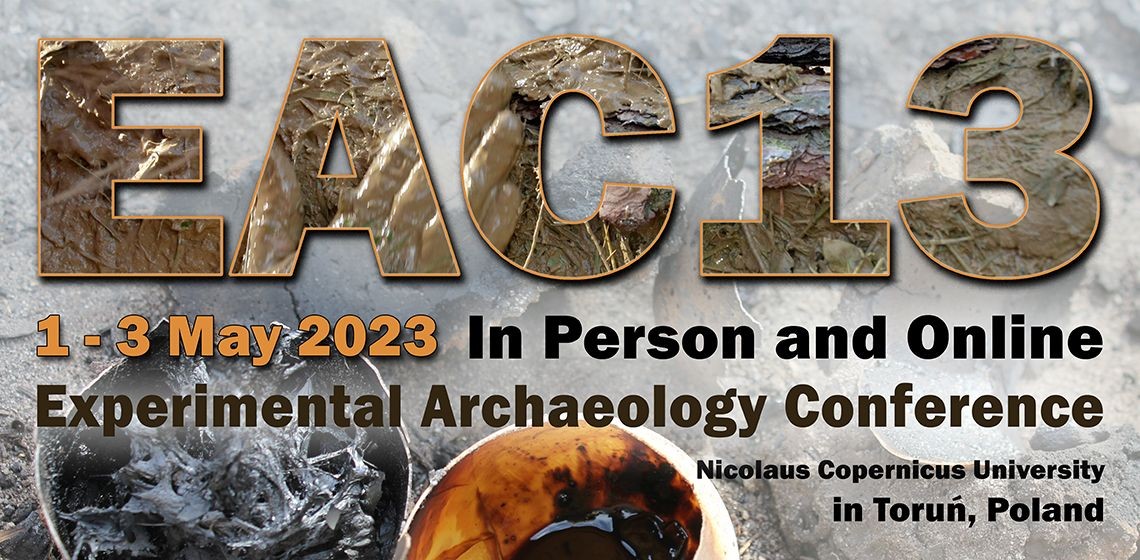
Experimental Archeology Conference coming up!

My blog thingie is, it seems, trying to make me look like a bit of a fool - I used one of the post drafts that had not gotten through, but the progamme then obligingly posted it under a different date. Very nice of you, blog thingie, thank you so much. Not.

On to nicer things than wayward software, though! There is a large Experimental Archaeology Conference coming up, running May 1-3. It's in Torun in Poland, but will be a hybrid event, so if you'd like to join in on short notice, you can.

13The full programme is here: https://exarc.net/meetings/eac13 and there is a session with focus on textiles on Monday, May 1, starting at 14:30 (Session 3.B).

You can follow the presentations online via https://www.youtube.com/@exarc. Links will also be included in the website. For extra chats and discussion there's a Discord server you can join. For more information on the conference, go here: https://exarc.net/meetings/eac13/how-attend.

So I hope there's something interesting on the programme for you, and that you will have fun participating!

0
APR.
26
0

Exhibition coming up!

In the last years, I had the pleasure of doing demonstrations and having museum cooperations that involved quite a bit of travel. There was work to be done in Brandenburg, Lübeck, Emden, Berlin, just to name a few of them. It's lovely to travel there, get to see those places, meet the people and (important part of any travelling I do) sample the local delicacies. 

I'm just as delighted, though, to have a museum cooperation just in front of my own doorstep for a change, though. 

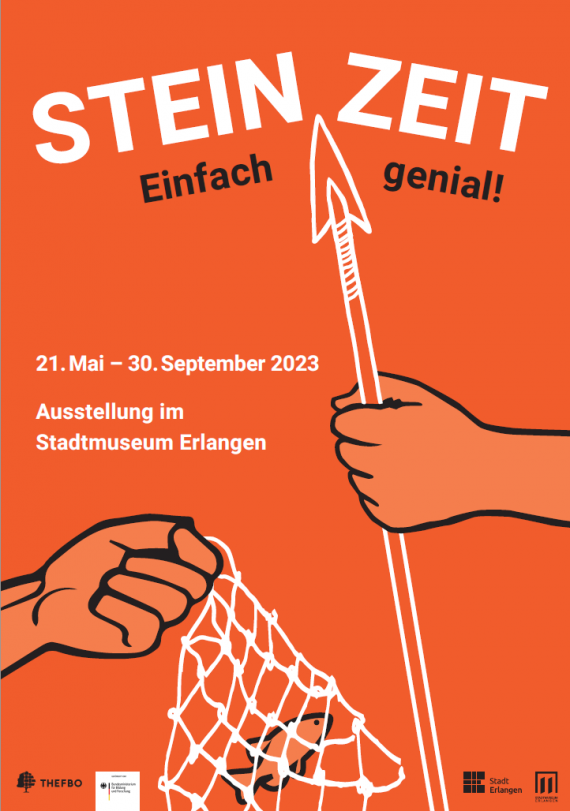
So I am very happy to share with you the  news about an exhibition coming up in my local museum, the Stadtmuseum Erlangen:

Die Ausstellung zeigt, wie vielseitig Gräser, Bast, Rinde und andere Materialien schon vor tausenden von Jahren eingesetzt wurden und lädt dazu ein, steinzeitliche Techniken selbst auszuprobieren.

I will be doing demonstrations of early textile techniques on the vernissage of the exhibition on May 21, starting after the official opening. There will be additional demonstrations on September 10 and on October 22, starting at 14:00 - plus one for the "Long Night of Science" on October 21, starting at 20:00.

I'm very, very much looking forward to this already. Almost no travel time! (There might still be sampling of the local delicacies, though. I will take any excuse for having delicious food of both the sweet and the savoury type... and Erlangen does offer nice specimens of both. Bonus: No exploring and luck necessary, I already know places to go to for the good stuff!)

0
APR.
25
1

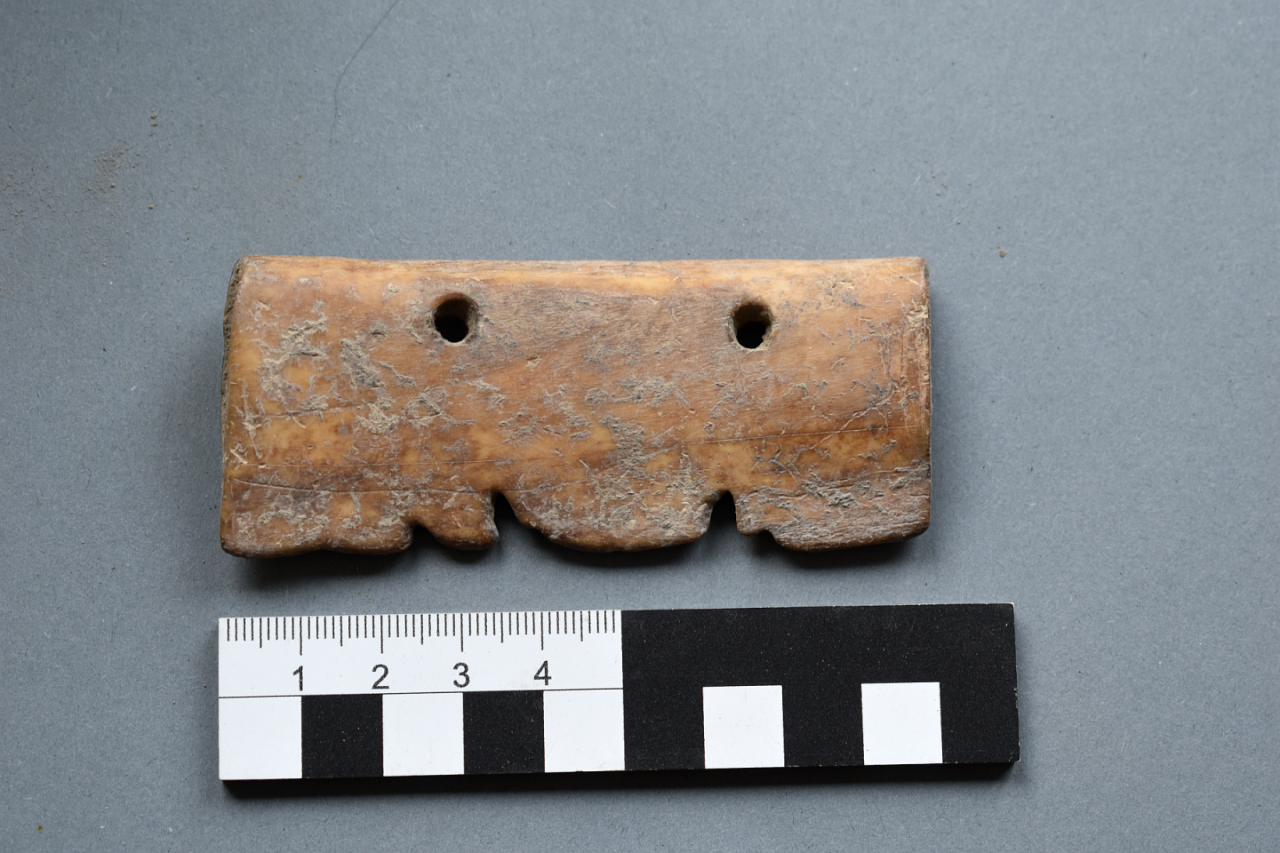
Mystery Bone Item.

Apparently the planned blog post for both Friday and yesterday never got through - if you can rely on anything, it's modern technology doing weird things once in a while.

To make it up for you, I have something very special today: A mystery! This piece of bone was found in a dig in Austria. It's rib bone of either horse or cow, with sawed-off sides (not polished or smoothed). Both lengthwise edges are worn smooth or wear-polished.

If you've seen anything like this before, or have an idea for what it could have been used, please let me know!  

0
APR.
19
0

Unfolding Top.

Somehow time's always too short to get all the things done. Case in point? One of the many, that is? 

I've had a revamp of the distaff spinning kit in the pipeline for a while, and there has actually been progress, but it's not completely finished. One of the reasons for that is the Most Patient Husband of Them All, who did a proofreading stint of the draft and had a few very sensible comments... one of them being about the unequal lenght of the pieces of combed top on the distaff band in the dressing instructions photos.

So "new photos" got on the list... and they have happened this week, so one step further along. 

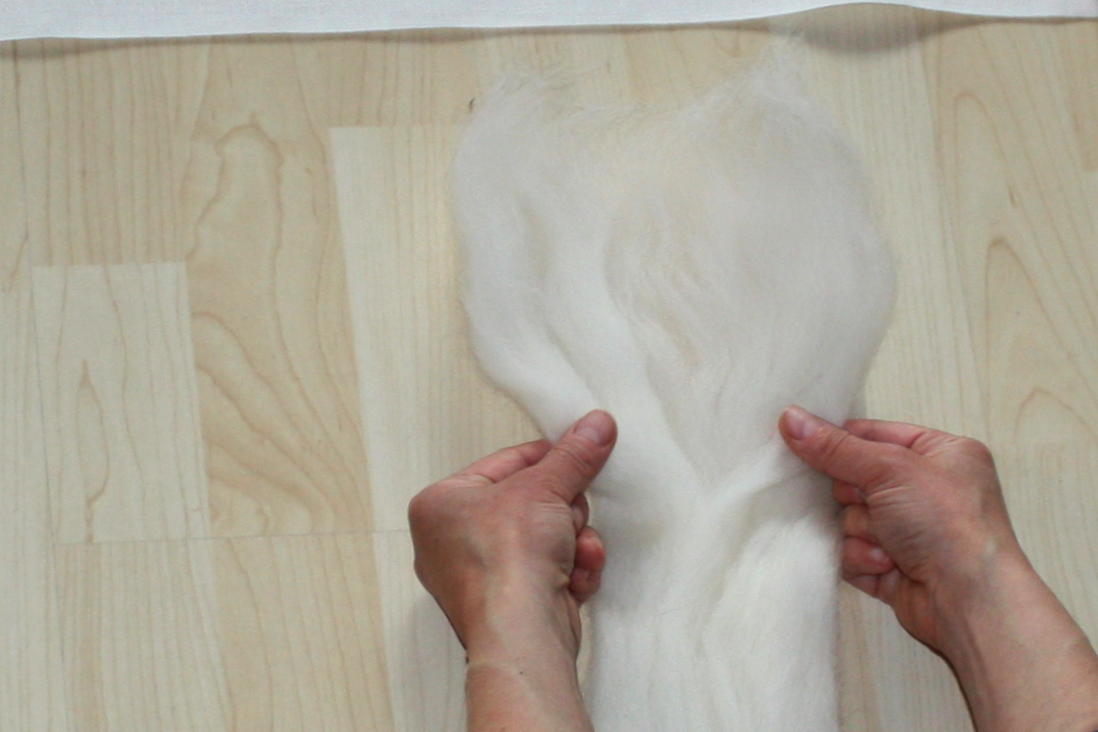
Since I wrote the last distaff dressing instructions, I've changed my process a little, and it now includes unfolding the top.

Most of the pieces of combed top you can get commercially produced are a rather solid, thick band of fibres. However, there's usually something like a seam in the middle of it on one side, and it can be unfolded, leaving you with a wide, thin band of wool - something that is nice to use for dressing the distaff, and unfolding the top also helps in loosening up the fibres a little where they were compressed due to storage of the top. It works well, too, with just the folded tops, but I think it's even better when taking this extra step.

It's fascinating, by the way, to look back occasionally and see how different processes evolved over time - sometimes by chance, sometimes due to some problems, sometimes due to a change in materials, or getting more familiar with a certain material or preparation. 

0
APR.
18
0

Stuff for the Germans.

Here's some stuff for the Germans among you (or those happy to travel and having some German...)

First, another weaving workshop in Krefeld, run by Barbara Thomas, who will teach about early composite fabrics. The workshop will be October 16-20, and you can find more information about it here. 

Second: There's an exhibition about Pestilence and Cholera in the Staatsbibliothek Bamberg - it's opening on Sunday, April 23. The topic? Plagues and how they were handled in the Early Modern Age. "Pest und Cholera" will run until July 2023.

And now I'll get back to my current project - finding evidence about how turning up in just your undergarments was regarded in the Middle Ages...

0

By accepting you will be accessing a service provided by a third-party external to https://www.pallia.net/

Kontakt