Latest Comments

Guest - Aislinn Dyestuff Citizen Science.
09. Oktober 2026
This is a great project. I look forward to the results. Thanks for letting us know.
Guest - Aislinn Time for...
09. Oktober 2026
Looks delicious!
Guest - Katrin Sprang Discussion
18. September 2026
Hi Rachel, I have looked for more photos of you, but that was not very successful. I found a link on...
Guest - Beatrix Sprang Discussion
15. September 2026
That lozenge pattern element is not a photograph, but a scan. So it should be to scale. But I pinned...
Guest - Katrin Sprang Discussion
15. September 2026
I was not referring to Rachel's reconstruction (is the reconstruction you refer to the one photograp...
MäRZ
01
0

The Syke Presentation is Online.

If you'd like to watch the presentation I gave in Syke - here you go! It's all in German (sorry English-only speaking readers).

It wasn't possible to do a livestream, but I'm delighted that there was the possibility to make a recording, and put that online. I hope you'll enjoy it - I certainly did!

0
FEB.
28
0

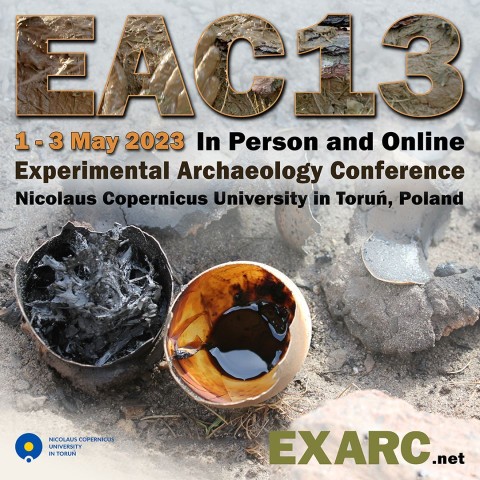
EAC13 Experimental Archaeology Conference

Just this weekend, I found myself in the middle of a discussion about changes the pandemic has made to our working life, and the pros and cons of home office and company office. The verdict (at least for me) was - a lot of things very, very much depend on individual circumstances. There's people who find it much easier to stick their head in a colleague's office and ask a question, or ask around at the coffee machine and water cooler, and others find it easier to quickly type a question into a group chat or send an email around.

There's people who can work comfortably from home, having enough space and enough of an internet connection, and there's others who can't. There's those who are on the phone with faraway colleagues most of the time anyways and those who need to handle things that can only be handled in person on site. So - it very much depends.

One thing that the pandemic has changed, though, is the openness towards online-only and hybrid events - and I, for one, am still utterly delighted that a lot of conferences now offer online participation or online streaming. I'm especially delighted if said online participation is free (or has a very low fee) because it's often been the case that a conference had two or three presentations that sounded very interesting to me, but for those it would not have been sensible, or affordable, to travel to a medium to very distant place and do the whole conference. With the hybrid events, I can now tune in to what I would like to see in those cases - and that's just utterly, gloriously wonderful.

And all that is a very wordy lead-in to tell you that the Experimental Archaeology Conference in Torún, Poland, will also be a hybrid event. Online participation is free; the list of sessions and presentations is now online, and you can register for it to keep updated and get info material:

The conference website is https://exarc.net/meetings/eac13 and session 3.B is a textile session - plus there's a lot of other interesting papers about all kinds of experimental archaeology topics. 

0
FEB.
27
0

Back from the North.

I'm back home, back at the desk, and back trying to keep up with... well, everything. There's my tablet weaving workshop coming up next weekend that has to be prepared, plus the website needed some updating of software and some maintenance, and there go the hours faster than you can say "I think I need more coffee."

My little excursion up north, to Syke, was wonderful - and I had a lot of fun presenting the Bronze Age garments that were made for the Forum Gesseler Goldhort. Which, by the way, is not only a lovely museum with prize-winning modern architecture presenting the spectacular gold finds made just a few kilometers away - the rest of the museum is a treasure trove of early modern work and farming tools. (It's actually just the kind of museum that I love to spend time in when on holidays, where I have a rather strict "no medieval stuff" policy. Because it's holidays.) 

On the way back home, I made a stop in Bremen and visited the St-Peter-Cathedral and the Cathedral Museum. Both are free entry, and very much worth a visit - if you're interested in textiles, the museum especially, as they have garments from medieval (13th century) bishop's graves on display.

Like always when I'm looking at medieval textiles in a museum display and it's properly done, I'm at the same time delighted about the low light levels and annoyed by them. That was the case there, too. It would be wonderful to have even better eyes or to get closer to the pieces, but I can tell you that even with murky lighting, murky colours (due to a few centuries in burial) and through the glass of the cases, they are very spectacular. There's lots of gold thread, silk embroideries, tablet weaves with brocades and very nice fabrics - among them a diamond twill in silk (in form of a cushion).

I took some really, really crappy phone pictures as a form of digital note-taking, but it was so dark that it was even hard to take a good picture of the little plaques explaining what each piece was... so, well, you can imagine that it's really not much more than a memory aid. Still a very nice thing to be able to do...

0
FEB.
22
0

Done!

I've finished preparing, practising, and fine-tuning the presentation for Syke tomorrow evening - so all that remains to do in preparation for tomorrow is packing my stuff (including the computer, of course, and the presentation on an extra USB stick, just in case).

Because I was curious, I looked at my time tracker and did the math on how long it actually took me to put together the presentation. It was a nice, fun, and good thing to revisit all the stuff, and to be fair it was an unusual type of presentation because usually I can re-use or adapt already existing slides... but yes, it did eat up quite a few hours.

As a general rule, academic-style presentations get a small monetary honoration. As a second part of that general rule, that is never enough to cover the actual time invested in preparing and practising the presentation - even if you're fairly quick about it. Third part of the general rule: As these presentation invitations usually mean going somewhere to meet colleagues, being able to present your work, and then connecting and discussing and sort of having something like a mini-conference, nobody really minds.

I'm rather happy with the whole thing too, now that it's all prepped and set, and hope the listeners will be, too. 

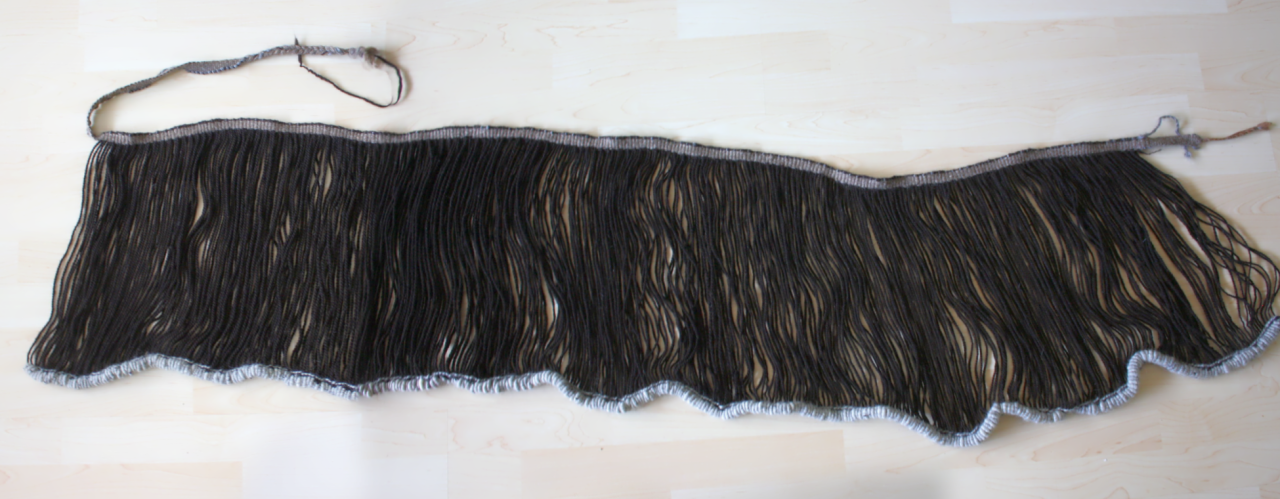
Also it made me finally put together the individual images of the corded skirt for the panorama picture:

and that, due to some reason, makes me really happy as well.

As I'll be travelling tomorrow and on Friday, there will be blog silence - see you again on Monday!

1
FEB.
21
0

A New Thing...

It has finally happened - I have had to replace my trusty old Powerpoint for a new programme version.

Sometimes I jokingly say that as an archaeologist, I have a deep love for old stuff, and that includes running old (and very old) programmes on my computer. Part of the reason for this is a "never change a running system" approach, part is that I know the old ones so well that I am wary of getting used to a new one, part of it is the lack of desire to spend money on something new if the old thing still does its job, and part is just plain laziness. Probably.

However... I'm now on a computer with Windows 10. My oldest still-sort-of-working programme is CorelDraw, version number 7. That came out in 1996. That was back on Windows 95 - and it's a medium-sized miracle that the programme has been ported from computer to computer and OS version to OS version and still sort of works.

Sort of, I say, because these days (after the last port) it sometimes jumbles up text bits, and some other weird effects happen. I've worked on transitioning to Inkscape for a while now, and I'm almost there. Fortunately the photo editing programme, from the same suite as CorelDraw, still works flawlessly, because there are some processes that just go so smoothly and easily there as opposed to trying to find a replacement.

My PP issues were something else though - my Office Suite is not quite as old (about 3 years younger, actually), and at some point during the last ports it seems to have lost its ability to play video clips. Which is no issue in my usual presentations, but for the Bronze Age garment one on Thursday, the plan was to show a number of short videos, as the work stages are so much easier to explain that way.

So. New Powerpoint. Fortunately (as I don't want to lose my old trusty Word 2000, which also plays along with a very old citation programme, which the newer versions don't) the old Office suite is so outdated that the new one does not recognise it as kin, and I can still run the old one. Hopefully without glitches - I will find out in the next week or so, when I use it properly.

For now, though... placing those video clips where they are supposed to go, and finishing the presentation. Yay!

1
FEB.
20
1

Spring is coming!

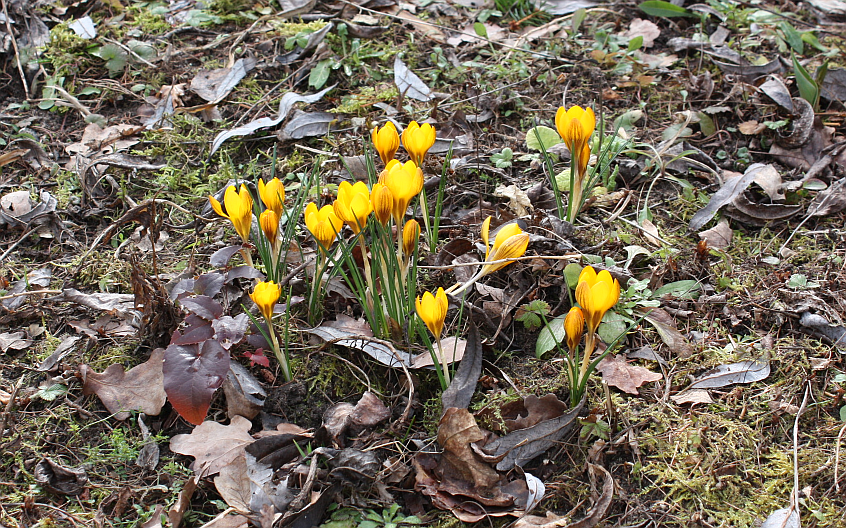
It's beautiful and sunny and warm outside - spring is definitely coming! The crocuses have started blooming: 

We've almost finished pruning the willow fence, and it's high time for this before the shoots start trying to make leaves. There will be another little pruning session later this afternoon - once I've finished the post stuff, and dealt with the rest of the emails, and finished the other paperworky things that have to be dealt with today.

Sometimes I wonder why there seems to be more desk work on the days with splendid weather...

0
FEB.
17
1

Something for the knitters - centered 3-to-2 decrease

A good while ago, I stumbled across a rather unusual centered decrease in Ravelry, dubbed "bunny-ears decrease". It's a centered decrease that reduces three to two knit stitches. The decrease is not hard to work, is perfectly symmetrical, and not very obvious in the finished piece. So it did become one of the tools in my knitting skillset, and I've put it to good use whenever something unobtrusive was needed as a decrease. Slants as in k2tog or ssk are nice, but only if you want a slanty decrease that is rather more than less visible, especially if you have technical reasons that will stack your decreases, or have them placed in a way that will look weird if they slant.

If that sounds interesting for you, I point you to the site of Naomi Parkhurst, String Geekery. You can find her detailed blog post with photos, drawings, and different instructions on how to work this lovely decrease here.  

0

By accepting you will be accessing a service provided by a third-party external to https://www.pallia.net/

Kontakt