Latest Comments

Guest - Aislinn Dyestuff Citizen Science.
09. Oktober 2026
This is a great project. I look forward to the results. Thanks for letting us know.
Guest - Aislinn Time for...
09. Oktober 2026
Looks delicious!
Guest - Katrin Sprang Discussion
18. September 2026
Hi Rachel, I have looked for more photos of you, but that was not very successful. I found a link on...
Guest - Beatrix Sprang Discussion
15. September 2026
That lozenge pattern element is not a photograph, but a scan. So it should be to scale. But I pinned...
Guest - Katrin Sprang Discussion
15. September 2026
I was not referring to Rachel's reconstruction (is the reconstruction you refer to the one photograp...
AUG.
16
0

Computer Troubles.

Just when you really don't need it - though when do you? there's computer troubles.

Yesterday afternoon, my email programme crashed and complained about a faulty database... and the HDD that said database resides on started making noises. Now... any noise coming from an HDD that is usually quite quiet definitely falls under "that is not a good sound".

And indeed it wasn't. I did try repairing the drive (no luck), scanning and recovering data (also no luck, the programme crashed while trying to recover things, and probably that happened because of Final Death of the drive), and a few other options - all to no avail.

A replacement drive was ordered at night, and then I can do a last try to get the data on the drive. And now, I guess, I will find out how well my backup solution has worked...

0
AUG.
15
0

And Once More.

One of the things scheduled for the summer break (for the days I was not on vacation, or relaxing) was taking care of the website migration to the next major version of Joomla. Ah, website stuff again! Just the thing for late summer, right?

Of course I didn't manage to completely finish the whole shebang, but the major problems have been found, identified, and taken care of. Fortunately there were not too many of them, nor were they very hard to fix; for the most part, it's semi-brainless work to re-install newer versions of the many add-ons and extensions that accumulate over time. (And that even though I try hard to keep things as slim and streamlined as possible...) 

Now I "only" need to fix the smaller things that get jumbled during transition. That's mostly shop layout tweakings so everything is properly legible and all the legal shenanigans are covered. All that gets done on a test site, which is a clone of the live site, and I jot down the single steps to take in a list. Once everything is done and fixed and wrapped up, the live site will go offline for the transition (because it would be irksome if somebody ordered a stack of things just then), and get cloned again, and then I will go through that lovely list step by step to pull the old version over into Joomla 4.

The current website has also suffered a few little mishaps during the last update, which I (rather stupidly) did just before we went off on holidays. Most of the time, the updates go smoothly and not much is changing, but sometimes, stuff gets jumbled, or mis-aligned, or something gets lost in transition, or a link disappears - small things like that. Of course some of this happened during the last update... which I will hopefully catch all during the works on the site in the next few days. If things go well, end of next week might be realistic for the actual transfer...


0
AUG.
12
0

Revisiting, Re-Making, Part 2.

There is, of course, also the issue of... underwear. With the dress I wrote about goes a specific underdress, also a reconstruction, and also one that was probably not made of one hundred percent good choices.

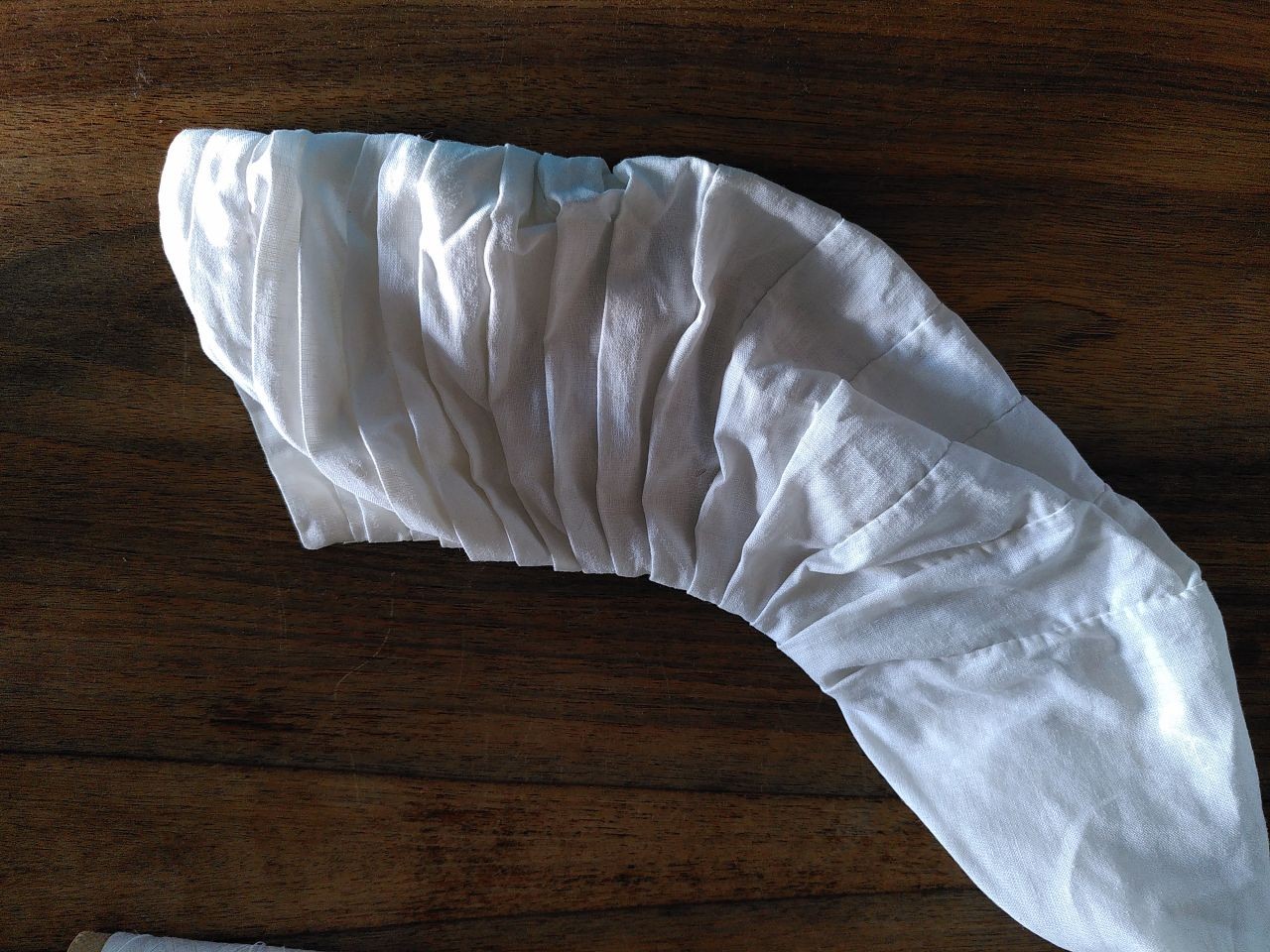
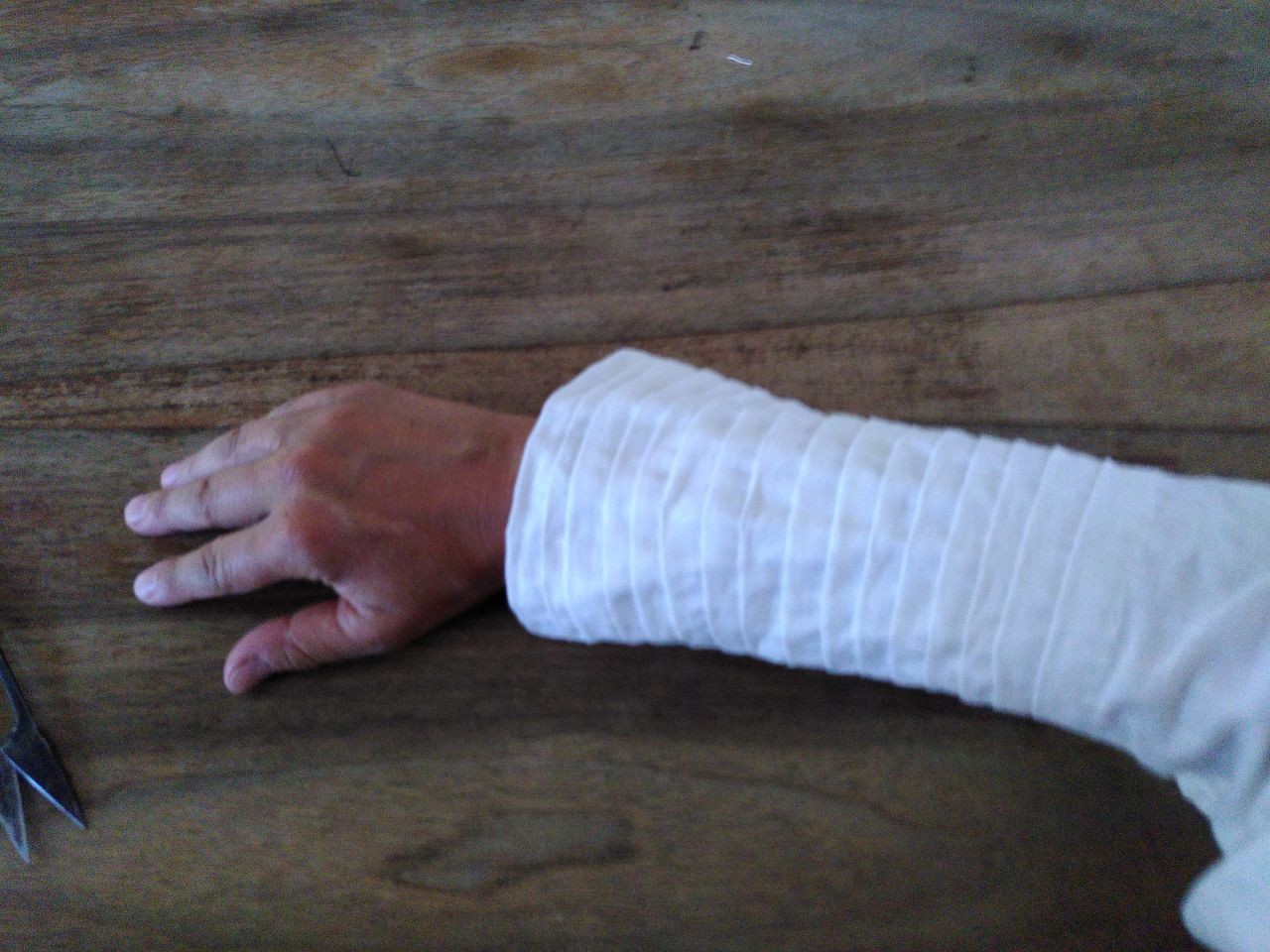
When I looked at images of the dresses with the pendant sleeves back when I did the reconstruction, most of them showed a kind of pleated sleeve on the women's underarms. So I went and did a pleated underdress with a pleated sleeve - preparing the pleat lines by drawing a needle tip through the fabric and then pressing the pleats in with a glass slickstone.

It did work quite well, but after washing, the pleats do mostly fall out. That's not such a horrible thing on the body of the underdress, as the pleats are only, if at all, visible at the neck opening, but the sleeves... well.

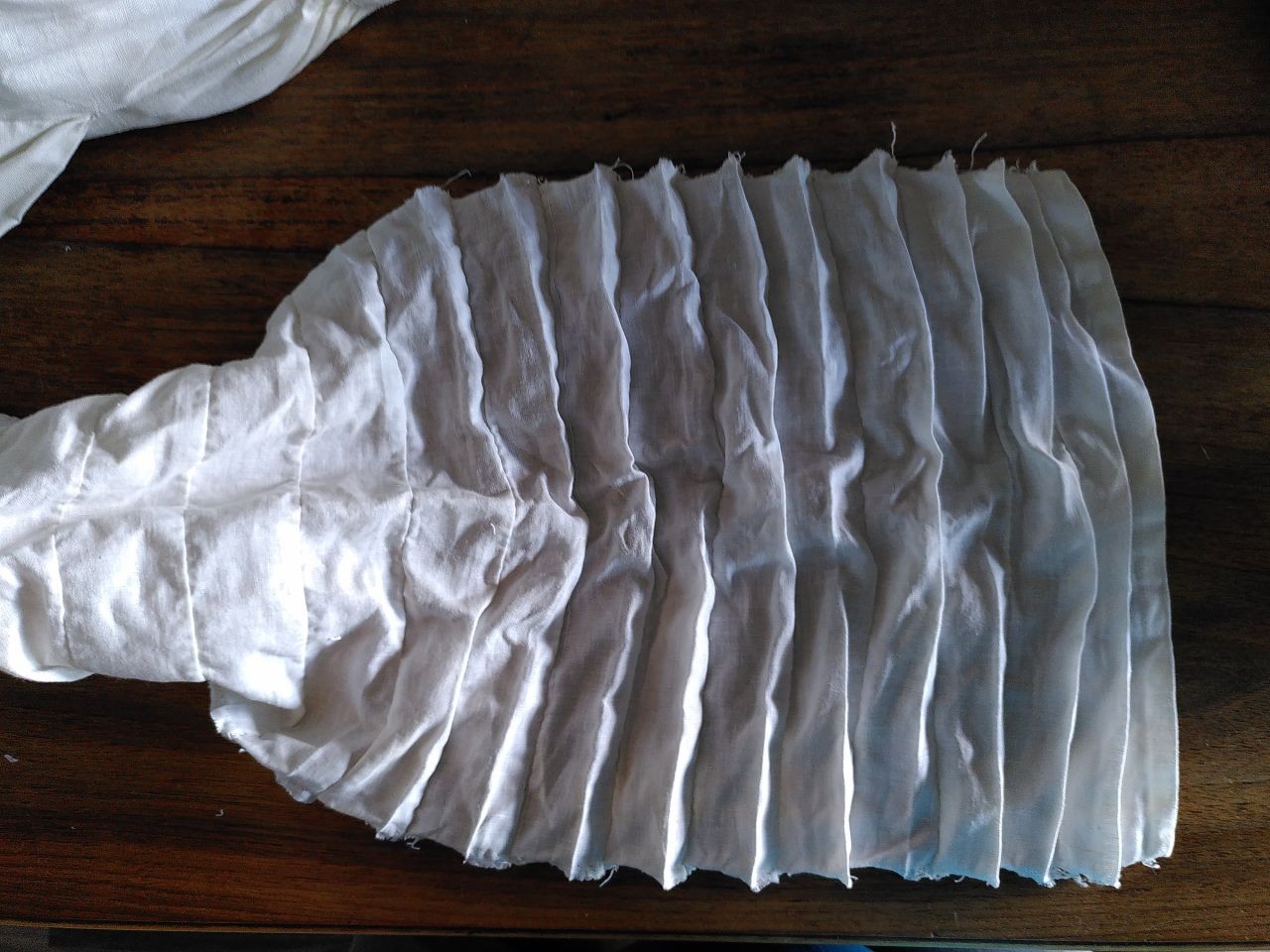
After fiddling around a bit with re-pleating them, trying out various methods and sequences and even using a (modern) iron, I did come to the conclusion that the easiest and nicest way to get the problem fixed would be sewing in the folds.

There was a bit more fiddling and then the additional insight that it would be much easier to get the folds in properly with less fiddling and more space to work. So I un-did the seam holding the underarm part together, unfolded all the thing, and then set to work sewing in the pleats.

It was still a little fiddly to sew them in, especially towards the top (where, thanks to the still complete seam, the sleeve wanted to curve) but it was much less obnoxious than trying to get everything sorted with the seam in. And in the end, I was successful - the pleats are not completely regular, but I don't really mind. They are in, they are fixed, and I will be able to wear a properly pleated thing on the weekend of the demo... 

1
AUG.
11
1

Revisiting, Re-Making.

Many years ago,back in the twothousands, I did a reconstruction of a dress from c 1200 with long pendant sleeves - a variation that can be seen in illustrations from that time.

Back then, I was still a student, so the budget was limited. That led to the use of a chemically dyed fine wool fabric. That is still something that I'm fairly okay with; the colour may not be the perfect woad blue, but the fabric is, altogether, something I'd still see as acceptable for a dress in that style. It's a very fine wool fabric, densely woven, and dyed an expensive colour - it will pass.

What would not pass, however, is the decorative band that I had sewn to the edges of the sleeves and the neck opening. It was a tablet-woven band. That, per se, might be okay... but it was woven in linen (chemically dyed, of course). Even worse, it was a very simple threaded-in pattern in the typical modern 4-forward-4-backward-sequence... so not acceptable at all.

The dress got a bit of wear when it was fairly new, and then it spent a lot of years in the wardrobe due to different reasons. One reason was that I'd wear more practical, more common-person dresses for my work at the market stall. The posh dress is surprisingly comfortable and it's perfectly possible to move in it, but it's still not the thing I'd choose to wear for getting the housework done. So simple, plain dresses got worn instead. There also was a timespan when I would not have fit into that dress... which I now do again.

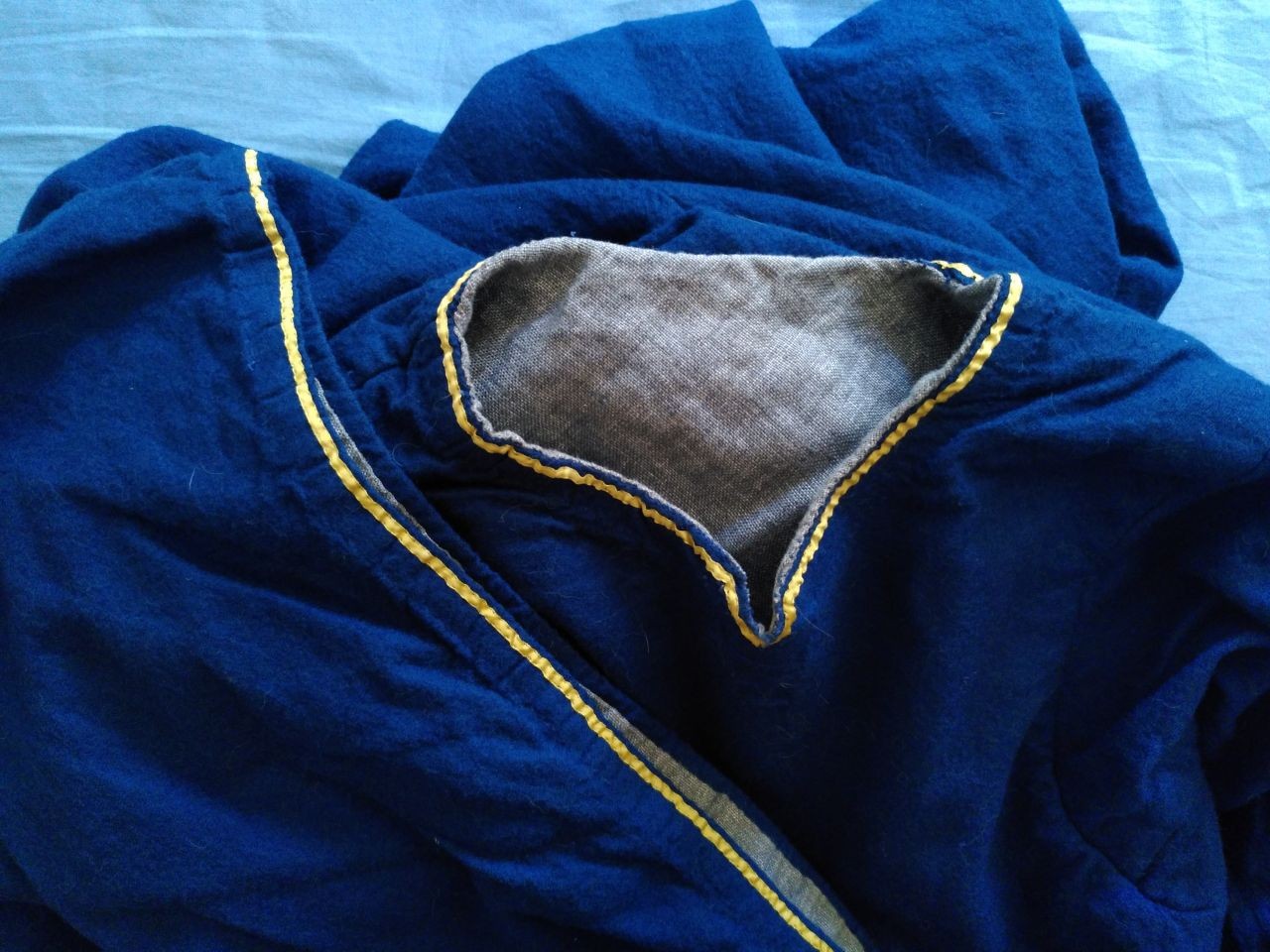
As this year's Archäotechnika is about the medieval elite, though, I took the dress out of its storage, and got ready for a little bit of updating. The old band was removed, and instead I stitched a plant-dyed silk band onto it. 

The updated neck opening and part of the sleeve. The yellow is a really nice contrast for the deep blue...

There was the temptation to decorate it with a band woven in silk and gold, but the one I have was, sadly, a bit too short. Plain fine silk is not as posh and valuable as the gold-and-silk band, but that sort of fits in with the dress itself being wool and not silk, if you ask me. I'm going for "noble, but not filthy rich" here, sort of. 

I'm still debating if I should add a second band with a little gap in between the two...  should I?

0
AUG.
10
0

Embroidery Prepping.

I'm absolutely delighted to be part of the Archaeotechnika this year, and doubly so to get to do some embroidery demonstration there. I really like to embroider, but I seem to get around to it way, way too rarely - but this demonstration means I get to do it for two days straight.

Plus a little extra time to prep, because obviously if the goal is to show gold embroidery, it's no use to spend the first few hours of demo time checking the frame, inking the contours and stitching the contour lines... so that is what I've been doing here as prep.

First step, however, was to choose appropriate motifs. Something that is appropriately medieval, from the time of around 1200 (because the dress reconstruction I'll be wearing is from about that time), that has gold, and that is adequately easy to stitch. 

I ended up looking at the Ashmolean Bestiary, half by chance (because I was browsing the Bodleian Library catalogue for MSS from the timespan), and I've picked the image from fol. 47r, which is a crow.

There's two gold parts, the frame and the circular background, so plenty of space for couched work and the opportunity to do both linear and circular gold; I'll be doing the silk parts in split stitch and the contours in stem stitch. 

To show how the un-stitched thing looks, I might ink in another motif on the side, but haven't decided yet what it is going to be. Another bird? Maybe the delightfully weird neck-bird from fol. 82r? 

0
AUG.
09
0

Weaving Workshop for Complex Weaves

If you're interested in the complex weaves Taqueté and samite, there's a workshop at the Haus der Seidenkultur in Krefeld coming up in September. It's held by a lovely colleague of mine, Barbara Thomas, and she's doing it once in German and once in English.

The project "Ancient Silk Splendour – recreated" led to the development of a weaving class, designed by experts from the German Textile Museum and the House of Silk Culture from Krefeld. The class teaches the theoretical basics of ancient patterned weaves, but also how to practically recreate them.

The dates are 19.–23. September 2022 (for the class in german) and 26.–30. September 2022 (for the class in english). The fee is 635,- € per participant, with a maximum of 8 participants per class.

If this sounds interesting for you, you can find out more about the workshop and how to register at the Haus of Seidenkultur website. 

0
AUG.
08
0

I am back!

I'm back from a lovely, long summer break - it was definitely very summery and quite, quite hot. In fact, it was hotter than I'd have needed... 

We spent some time with friends, and went on holidays to Finland to see the midnight sun. If you're used to nights being dark, even at the height of summer, it feels surreal to be in a place where it just doesn't get dark at all. We made good use of the night light - and had naps in the afternoon to make up for that, too.

Finland is a really beautiful country, with a lot of forest and an incredible amount of lakes. Our plan was to do some lake exploration via canoe, so we had a rental canoe for a few days, a map of a part of the lake district... and, unfortunately, a lot of (head)wind. So much wind that we had to change our plans regarding the tour and shorten it a bit. After all, we were on holidays and not on a torture-yourself-mission...

It was nice to paddle, though we had underestimated two things: the size of the lakes and the amount of summer cottages on their shores (and on the islands in the lakes). Having paddled the German Mecklenburger Seenplatte, I was subconsciously expecting something similar only larger - and yes, the Finnish lake district is much larger, but the lakes themselves also are much, much larger. That means a lot of open water to paddle through. Now that, in decent weather and by itself, is technically not a problem - but it felt like we were not getting ahead at all, because the perspective on those large lakes, when you are paddling towards something in the far-ish distance, just does not change much. We usually paddle at about 4 km per hour if on flat water with no significant wind influence, which is not so fast that you can see things change quickly... hence it felt, sometimes, like standing at one point and paddling forever. It got better, at least for me, towards the end of our tour, since you sort of learn that it just feels like you're in one spot but you are actually moving, but the general effect was still there.

The second underestimated thing really were the cottages. I knew that in Finland, having a summer cottage is totally a thing and about every family has at least one - but I never made the next step in thinking about this: All these cottages have to be somewhere. That's just logical, right? Well, one premium spot to put a summer cottage is, obviously, in a nice, quiet, secluded(ish) place on the shore of a lake... which meant that there were some stretches on our trip where you could not land your canoe unless you wanted to do so on somebody's more-or-less front lawn.

So basically, you were in nature, with very few other humans to be seen, but with traces of human habitation and civilisation everywhere (in form of the cottages, mostly). There was very little in terms of infrastructure though - no cafés or shops like you'd find at every stone throw in Mecklenburg. We had brought our own food, and water logistics stuff (a filter and a UV water sterilisation pen, because you don't want to catch a nasty stomach bug especially while on holidays), and that was quite necessary. We also had our trusty little tent and put that up on our own tiny private islands for several nights, which was a lot of fun and felt really special for us. (In Finland, you can put your tent up about everywhere, though common decency demands not to do that on someone else's front lawn. In Germany, there's a general prohibition against so-called "wild camping"; you can ask the owners of land if you may put up your tent there, or use designated spaces which you can find in limited numbers in some areas, but you're not allowed to just pitch it anywhere else. In many areas, that means you need to find the next commercial campsite... which will be populated with other people and cost you money, but - on the upside - will provide you with sanitary installations and typically a little shop, café, and the possibility to get fresh baked goods in the morning. However, all that means that just going "ah, here's a nice spot, let's use that" is not something we're used to.)

Our method of travel - trains and ferries - also worked very well. Going all the way up north that way did take a good bit of time altogether, but most of our travelling was done at night, with overnight ferries and night trains, and that was very, very pleasant. We had planned the journeys basically so that we would travel in the night and then spend the day in the town before moving on through the night again. It means declaring the journey a part of the holidays, and that was what we did, and thoroughly enjoyed it. I can highly recommend this! Finnish night trains are also quite nice and comfy, and you can even have a 2 person cabin with your own toilet and shower. So you spend a nice day wandering a city, doing a bit of sight-seeing, then go to the train station in the evening, board your train and have a relaxing hot shower while racing through the Finnish landscape before crawling into bed - and then you wake up the next morning somewhere else. Ah, it's just wonderful.

(If you're planning travel like this, and you use a train to get to your night travelling thingie, make sure you leave enough of a time gap before your night train or ferry leaves, just in case your previous transport is delayed for some reason. It will make the overall travel time a bit longer, but reduces stress immensely - and you can always go for a little stroll to stretch your legs if you are on time, and have a coffee or something to eat a few metres away from the train station.)

And now it's time to get back to good old work! There's a few projects to finish, and other things coming up, such as the embroidery demonstration in Brandenburg. First, though: Sending off all the orders that arrived during the summer break. 


(This post, weirdly, did not have its correct date when I posted it, but one in June. Don't ask me how that happened.)

0

By accepting you will be accessing a service provided by a third-party external to https://www.pallia.net/

Kontakt